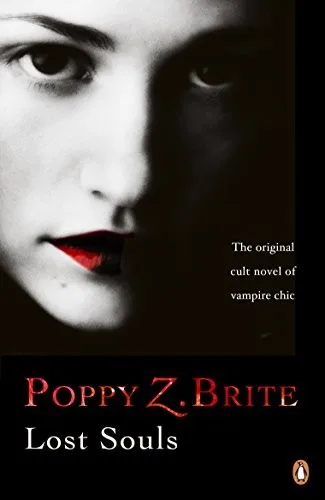
Lost Souls
 84
84

Lost Souls
Brite’s "Lost Souls" doesn’t merely tell a story; it conjures an atmosphere so thick with dread and ecstatic decay that the reader feels perpetually on the edge of an abyss. The character of Liam, perpetually seeking a sense of belonging while entangled in a web of supernatural darkness, is a compelling anchor. However, the novel occasionally falters under the weight of its own stylistic ambitions, with certain passages becoming dense to the point of obfuscation. A particular strength lies in Brite's unflinching depiction of the sacred and profane intertwined, exemplified in the visceral descriptions of spiritual transformation amidst squalor. The work’s exploration of the demon Moloch as a figure of both terror and twisted affection is its most striking element. "Lost Souls" remains a potent, if occasionally overwhelming, exploration of damnation and the flicker of hope within it.
📝 Description
84
### What It Is
Poppy Z. Brite's "Lost Souls," first published in 1992, plunges readers into a world saturated with the macabre and the divine, a narrative that blurs the lines between horror, dark fantasy, and the occult.
### Who It's For
This work is intended for those who find solace in the shadows and intrigue in the forbidden. Readers who appreciate prose that is both visceral and poetic, and who are unafraid to confront the darker aspects of human nature and existence.
### Historical Context
Emerging in the early 1990s, "Lost Souls" arrived during a period of renewed interest in gothic and horror literature, influenced by authors like Clive Barker and Anne Rice. Brite's unique voice offered a fresh, often unsettling perspective.
### Key Concepts
The novel explores themes of damnation, redemption, and the search for meaning in extreme circumstances. It delves into the nature of the soul, the allure of evil, and the possibility of finding grace in the most unlikely of places. The narrative often positions characters at the precipice of spiritual crisis.
💡 Why Read This Book?
• Gain a unique perspective on the nature of spiritual corruption and salvation, as seen through the characters' desperate search for meaning, a journey distinct from typical theological explorations. • Experience Brite's distinctive prose that melds horror with a lyrical, almost religious intensity, offering a stylistic approach to the gothic that few other authors achieve. • Understand the enduring appeal of dark fantasy as a vehicle for exploring profound existential questions, particularly how the narrative uses the character of Moloch to represent complex spiritual forces.
⭐ Reader Reviews
Honest opinions from readers who have explored this book.
❓ Frequently Asked Questions
When was Poppy Z. Brite's "Lost Souls" first published?
"Lost Souls" by Poppy Z. Brite was first published in 1992, positioning it within the wave of dark fantasy and horror literature of that era.
What are the main themes explored in "Lost Souls"?
The novel primarily explores themes of damnation, spiritual seeking, the nature of evil, and the search for grace and belonging in extreme circumstances.
Is "Lost Souls" considered a horror novel?
Yes, "Lost Souls" is often categorized as horror, but it also incorporates elements of dark fantasy and gothic literature, distinguishing it from more conventional horror narratives.
Who are some of the key characters in "Lost Souls"?
Key characters include Liam, who is central to the narrative's spiritual and existential journey, and the demonic figure Moloch, who represents a complex force of temptation and spiritual entanglement.
What is the general tone and style of "Lost Souls"?
The tone is often dark, visceral, and poetic, characterized by Brite's evocative prose that blends the grotesque with the sublime, creating a unique and intense reading experience.
Does "Lost Souls" have any esoteric or occult elements?
Absolutely. The novel delves into themes of demonic presence, spiritual crisis, and the search for salvation, often employing occult imagery and concepts to explore its narrative.
🔮 Key Themes & Symbolism
The Nature of Damnation
The novel grapples with the concept of damnation not as a simple punishment, but as a complex state of being, often self-imposed or a consequence of profound spiritual disassociation. Brite presents damnation as a pervasive atmosphere, a spiritual sickness that infects characters and their surroundings, blurring the lines between internal states and external reality. The narrative questions whether damnation is an inescapable fate or a condition that can be confronted and potentially transcended through acts of grace or profound self-awareness, even within the abyss.
Seeking Grace in Darkness
Central to "Lost Souls" is the persistent, often desperate, search for grace and redemption amidst overwhelming darkness and depravity. Characters are frequently depicted in states of extreme suffering or moral compromise, yet they harbor an underlying yearning for connection or spiritual solace. Brite explores how glimmers of the divine or moments of profound human connection can manifest even in the most hellish environments, suggesting that the possibility of grace exists irrespective of one's outward circumstances or perceived sins.
Moloch as a Spiritual Force
The character and concept of Moloch are pivotal, representing a multifaceted entity that embodies temptation, destruction, and a twisted form of spiritual allure. Moloch is not merely a villain but a force that tests the very essence of the soul, drawing individuals towards oblivion or a profound, albeit dark, transformation. Brite uses this figure to explore the seductive nature of evil and the complex psychological and spiritual hold such forces can exert on the human psyche.
The Intertwining of Sacred and Profane
A hallmark of Brite's work in "Lost Souls" is the seamless blending of the sacred and the profane. Religious imagery and spiritual quests are often juxtaposed with graphic violence, sexuality, and decay. This creates a unique tension, suggesting that the divine can be found, or at least sought, within the most earthly and often debased experiences. The novel challenges conventional notions of purity and sin, proposing that spiritual truth can emerge from the most unlikely and unsettling intersections of existence.
💬 Memorable Quotes
“The damned are the ones who fail to learn.”
— This interpretation suggests that damnation is not a static state but a consequence of spiritual stagnation or an unwillingness to evolve. It implies that the true 'damnation' lies in a refusal to engage with life's lessons, particularly those found in suffering or moral compromise.
“Love is a form of madness.”
— This quote posits a connection between intense emotional states, particularly love, and a departure from rational thought. It hints at the potentially destructive or consuming nature of deep affection, framing it as a force that can overwhelm reason and lead individuals down unconventional or perilous paths.
“There is no salvation without sacrifice.”
— This concept underscores a common esoteric principle: that significant spiritual or personal attainment requires a relinquishing of something valuable. It implies that true redemption or growth is not passively received but actively earned through acts of profound self-denial or loss.
“The soul remembers its origin.”
— This paraphrased concept touches on the idea of inherent spiritual nature or divine spark within every being. It suggests that despite earthly experiences or perceived corruption, the soul retains a memory or connection to its primordial source, hinting at an innate potential for return or remembrance.
“Evil has its own peculiar beauty.”
— This interpretation highlights the aesthetic and psychological allure that darkness and malevolence can possess. It suggests that Brite explores the captivating, even seductive, aspects of the forbidden and the morally corrupt, challenging conventional moral judgments.
🌙 Esoteric Significance
Tradition
While "Lost Souls" does not strictly adhere to a single esoteric lineage, it draws heavily from Gnostic and certain libertine traditions. The Gnostic emphasis on a fallen world, the search for hidden knowledge (gnosis), and the concept of a flawed creator or demiurge finds echoes in the novel's depiction of spiritual alienation and the search for salvation outside conventional religious frameworks. The libertine aspect is present in its frank exploration of sexuality, transgression, and the potential for spiritual awakening through forbidden experiences.
Symbolism
The figure of Moloch serves as a potent symbol, representing not just a demonic entity but the destructive allure of power, addiction, and spiritual annihilation. The constant motif of decay and ruin symbolizes the fallen state of the world and the characters' internal spiritual disintegration. Conversely, moments of profound human connection, often occurring amidst squalor, symbolize the persistent possibility of grace and the sacred manifesting in the profane.
Modern Relevance
Contemporary dark fantasy authors and practitioners of certain occult subcultures continue to engage with Brite's willingness to explore the intersection of the sacred and the profane. The novel’s unflinching look at the psychological and spiritual toll of trauma and transgression, and its assertion that redemption can be found in unexpected places, remains relevant to modern discussions on healing, identity, and spiritual exploration outside traditional dogmas.
👥 Who Should Read This Book
• Readers interested in transgressive fiction and dark fantasy who seek narratives that challenge conventional morality and explore the extremes of human experience. • Students of comparative religion and occult studies interested in how fictional narratives can illuminate concepts of damnation, grace, and spiritual crisis through symbolic representation. • Fans of literary horror who appreciate evocative prose and atmospheric storytelling, particularly those drawn to works that blend the visceral with the philosophical.
📜 Historical Context
Poppy Z. Brite's "Lost Souls," published in 1992, emerged during a vibrant period for dark fantasy and horror, a time when authors like Clive Barker were pushing genre boundaries with visceral and psychologically complex narratives. The early 1990s saw a resurgence of interest in gothic themes and the occult, influenced by figures such as Anne Rice, whose "Vampire Chronicles" offered a blend of supernatural horror and romantic introspection. Brite’s work distinguished itself with its raw, often transgressive, portrayal of spiritual crisis and its unapologetic exploration of taboo subjects. While not directly engaging in the same philosophical debates as G.K. Chesterton's explorations of faith and doubt, "Lost Souls" shared with contemporary works a fascination with the extremities of human experience and the nature of good and evil. The novel was met with considerable attention for its daring subject matter and distinctive prose, solidifying Brite's reputation as a unique voice within the literature of the uncanny.
📔 Journal Prompts
The character Liam's search for belonging amidst profound darkness.
Moloch as a representation of destructive spiritual forces.
The interplay between sacred imagery and profane settings.
Moments of unexpected grace in the narrative.
The concept of damnation as a spiritual state rather than a place.
🗂️ Glossary
Damnation
In the context of "Lost Souls," damnation refers to a state of profound spiritual alienation, suffering, and disconnection from grace, often characterized by moral decay and existential despair.
Grace
The novel explores grace not as divine favor bestowed easily, but as fleeting moments of connection, redemption, or spiritual illumination that can occur even in the darkest circumstances.
Moloch
A figure in "Lost Souls" representing a powerful, destructive, and seductive spiritual force associated with annihilation, addiction, and a twisted form of transcendence.
Transgression
Actions or states of being that violate societal norms, moral codes, or religious doctrines, often explored in the novel as pathways to profound spiritual or psychological experiences.
Esoteric
Relating to or accessible only by a select few; pertaining to mystical, spiritual, or occult knowledge that is often hidden or requires specialized understanding.
Gothic
A literary style characterized by elements of horror, death, and gloom, often featuring settings of decay, supernatural occurrences, and psychological dread.
Visceral
Relating to or affecting the internal organs in a way that is deep and instinctive; often used to describe writing that evokes strong physical or emotional reactions.