Little, Big

 75
75

Little, Big
John Crowley’s "Little, Big" is a book that, much like its own subject matter, seems to exist slightly out of sync with conventional literary timelines. Its strength lies in its astonishing prose, which imbues the mundane with an almost unbearable, luminous significance. The depiction of Edgewood, the family home, is a masterclass in creating a place that feels both intimately familiar and profoundly strange. However, the sheer density of its narrative, while admirable, can sometimes feel overwhelming. The plot meanders through generations, and while each character’s journey is compelling, keeping track of the myriad familial connections and the subtle interplay between the human and "little" worlds requires considerable attention. A passage describing Sunling's unique relationship with the natural world, for instance, perfectly captures the book's ability to make the magical feel utterly real. Ultimately, "Little, Big" is a singular achievement in speculative fiction, demanding but richly rewarding.
📝 Description
75
John Crowley's "Little, Big" began its multigenerational saga in 1987.
John Crowley's "Little, Big" traces the hidden history of the "Little People" and their influence on the human world, beginning with the birth of George Smellie. The narrative follows the family of Smoky and Sunling through decades, centering on their peculiar home, Edgewood. This house functions as a threshold where the ordinary and extraordinary meet, blurring the lines between myth and daily life.
This novel appeals to readers who appreciate complex narratives and a deep consideration of family, fate, and the unseen forces shaping existence. It blends magical realism, folklore, and philosophical inquiry, transcending typical genre boundaries. Those seeking a meticulously crafted world with a rich, palpable atmosphere will find "Little, Big" a rewarding experience.
Published in 1990, "Little, Big" emerged during a time of renewed interest in mythopoetic fiction and fantasy that engaged with literary depth. Crowley's work arrived alongside authors who also pushed genre limits. The novel's structure and thematic depth set it apart, earning critical recognition and a place on the Nebula Award ballot.
💡 Why Read This Book?
• You will learn how the concept of "The Place," a hidden dimension, can be interpreted as a metaphor for consciousness or liminal states, offering a unique perspective on reality distinct from typical fantasy settings. • You will feel the impact of the "Little People," a folkloric element that Crowley uses to explore the subtle, often unnoticed, magical underpinnings of everyday life, providing an experience of enchantment beyond typical magical systems. • You will gain insight into the cyclical nature of family sagas, as depicted through the generations of the Smellie family and their connection to Edgewood, offering a narrative depth that challenges linear storytelling conventions.
⭐ Reader Reviews
Honest opinions from readers who have explored this book.
❓ Frequently Asked Questions
When was John Crowley's 'Little, Big' first published?
John Crowley's "Little, Big" was first published in 1990, marking a significant entry into the literary fantasy landscape of that era.
What is the central premise of 'Little, Big'?
The novel follows the Smellie family across generations, exploring their connection to the "Little People" and a hidden realm, blurring the lines between myth and reality.
Is 'Little, Big' considered a fantasy novel?
While often categorized as fantasy, "Little, Big" transcends simple genre classification, incorporating elements of magical realism, folklore, and literary fiction with a unique esoteric tone.
What is Edgewood in 'Little, Big'?
Edgewood is the central family home in "Little, Big," acting as a nexus point where the human and the supernatural worlds frequently intersect, imbued with a peculiar atmosphere.
Who are the 'Little People' in the book?
The "Little People" are a mysterious, often unseen race or entity that influences the human characters and their world, drawing on folkloric traditions and serving as a key esoteric element.
What themes does 'Little, Big' explore?
The book explores themes of family, fate, the cyclical nature of time, the power of stories, and the hidden magic within everyday existence, often through an esoteric lens.
🔮 Key Themes & Symbolism
The Intertwined Worlds
The core of "Little, Big" lies in its exploration of two coexisting realities: the human world and the area of the "Little People." Crowley masterfully depicts how these worlds are not separate but deeply interconnected, with the latter subtly influencing human lives, destinies, and perceptions. This interplay suggests an underlying magical fabric to existence, a concept central to many esoteric traditions that posit unseen forces shaping the material plane. The narrative suggests that true understanding requires acknowledging these hidden connections.
Family and Legacy
The novel is a profound meditation on family lineage, inheritance, and the continuation of secrets across generations. The Smellie family, bound by their connection to Edgewood and the "Little People," carries a legacy that transcends ordinary human experience. This theme echoes esoteric ideas of ancestral memory and karmic threads, where past actions and inherent natures ripple through time, affecting descendants. The book examines how identity is shaped not just by personal choices but by the weight of inherited mysteries.
The Nature of Reality
"Little, Big" challenges conventional notions of reality by integrating myth, folklore, and the supernatural into a seemingly ordinary setting. The "Place" and the "Last Door" serve as symbolic gateways, prompting readers to question what constitutes reality. This aligns with Gnostic and Hermetic perspectives that suggest the perceived world is but a shadow of a deeper, more fundamental truth. Crowley invites contemplation on the subjective nature of experience and the potential for expanded consciousness.
The Power of Story and Myth
Central to the narrative is the idea that stories and myths are not mere fictions but potent forces that shape our understanding and our world. The "Little People" themselves are beings of myth, and their interaction with humans is mediated through narrative and belief. This appeals to esoteric thought that emphasizes the creative power of language and imagination, and the role of archetypal narratives in structuring human consciousness and collective experience. The act of storytelling becomes a form of magic.
💬 Memorable Quotes
Direct passages from the work, attributed to the author.
“The world is a great, silent, and mysterious place.”
— This statement captures the novel's pervasive atmosphere of less-obvious layers and unspoken truths. It suggests that beneath the surface of everyday life lies a vast, complex reality that is not easily apprehended by ordinary senses or rational thought.
“There are doors, and there are doorways.”
— This aphorism points to the distinction between mundane passage and significant transition. It implies that some passages lead to mere changes of location, while others, the "doorways," lead to fundamental shifts in perception, reality, or being.
“Love is the only thing that can change the world.”
— While seemingly simple, this concept in the context of "Little, Big" suggests that profound, selfless connection is the ultimate transformative force, capable of bridging the gap between the human and the hidden realms.
“Everything is connected, even if we cannot see it.”
— This reflects the novel's central esoteric theme: the underlying unity and interconnectedness of all things, a principle that suggests a hidden order governing the seemingly disparate events and beings within the story.
“The stories we tell ourselves are the most important.”
— This highlights the power of internal narrative and self-perception in shaping one's reality. It suggests that our personal myths and beliefs are fundamental to our experience of the world and our place within it.
🌙 Esoteric Significance
Tradition
"Little, Big" draws significantly from Western esotericism, particularly drawing on themes found in folklore, fairy tales, and Gnostic concepts of hidden realities. It aligns with traditions that explore the permeable boundary between the mundane and the magical, suggesting that our perceived reality is but one layer of a more complex, enchanted cosmos. It departs from strict adherence to any single lineage, instead creating a unique synthesis that emphasizes the immanent magic within the ordinary.
Symbolism
The "Little People" themselves function as potent symbols, representing the hidden forces, the subconscious, or the elemental beings often discussed in Hermetic and animistic traditions. Edgewood, the house, symbolizes a nexus or a sacred space where the veil between worlds is thin, a common motif in magical lore. The "Last Door" represents ultimate transformation, gnosis, or transition, akin to alchemical processes or the attainment of enlightenment in various mystical paths.
Modern Relevance
Contemporary authors and practitioners interested in magical realism, folk horror, and eco-mysticism often cite "Little, Big" as an influence. Its exploration of nature spirits, the power of place, and the subtle magic woven into everyday life appeals to modern eco-conscious spirituality and those seeking to reconnect with a sense of wonder. Thinkers exploring the 'thin places' where the spiritual world is perceived to be closer to our own find Crowley's depiction of Edgewood particularly relevant.
👥 Who Should Read This Book
• Readers of literary fiction interested in speculative elements: Those who appreciate intricate prose and complex character development will find a rewarding narrative that transcends genre conventions. • Students of comparative mythology and folklore: Individuals exploring the "Little People" motif and its variations across cultures will discover a modern, sophisticated interpretation of these ancient beings. • Seekers of magical realism: Those drawn to narratives that blend the ordinary with the extraordinary, creating a sense of wonder and questioning the nature of reality, will find "Little, Big" a compelling example.
📜 Historical Context
When "Little, Big" was published in 1990, the literary landscape saw fantasy increasingly recognized for its potential for complex allegory and profound thematic exploration, moving beyond the sword-and-sorcery tropes that had dominated earlier decades. John Crowley’s work arrived in the wake of authors like Ursula K. Le Guin and Gene Wolfe, who had already begun to elevate the genre with literary ambition. Crowley’s intricate prose and philosophical depth distinguished him, placing "Little, Big" in conversation with a broader literary tradition rather than solely within genre fiction. The novel’s critical reception was strong; it was a finalist for the Nebula Award for Best Novel in 1991, signifying its impact and recognition among peers and critics alike. It offered an alternative to the more overtly political or postmodern narratives prevalent at the time, focusing instead on mythopoetic resonance and the subtle magic inherent in existence.
📔 Journal Prompts
The nature of Edgewood as a liminal space.
The significance of the "Little People" in shaping human lives.
The cyclical patterns within the Smellie family's history.
The symbolic meaning of "The Last Door."
How stories and myths influence perceived reality.
🗂️ Glossary
Little People
Mysterious, often unseen beings or entities that exist alongside the human world, influencing events and characters in "Little, Big." They draw on folkloric traditions and represent hidden forces.
Edgewood
The central family home in the novel, serving as a nexus point where the human and supernatural realms frequently intersect. It is imbued with a peculiar atmosphere and significance.
The Place
A hidden realm, state of being, or dimension that is accessible to certain individuals, particularly those connected to the "Little People." It represents a deeper layer of reality.
The Last Door
A recurring motif and symbolic concept representing ultimate transition, profound change, or a final point of understanding or departure within the narrative's unfolding destiny.
Smellie Family
The central family whose multigenerational story is chronicled in "Little, Big," defined by their unique connection to Edgewood and the hidden world.
Sunling
A significant character within the Smellie family, known for her unique relationship with the natural world and her connection to the esoteric elements of the narrative.
George Smellie
The patriarch whose birth initiates the sprawling narrative of "Little, Big," tracing his lineage and the hidden history of his family.
🔮 Readers Also Liked
Browse all →








More by John Crowley, John Crowley
All books →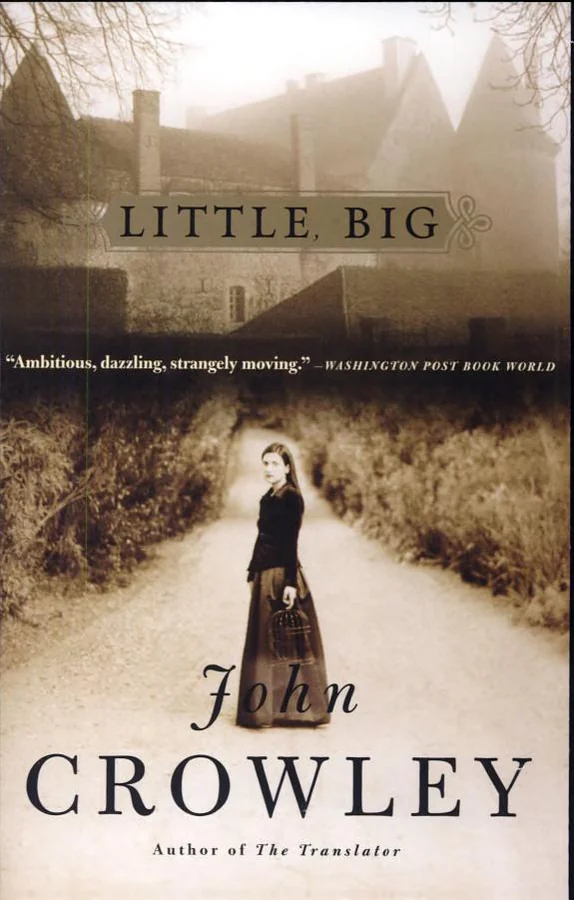
More Free Occult Philosophy Books
View all →