Les gnostiques
 72
72

Les gnostiques
Lacarrière’s "Les Gnostiques" provides a clear, if somewhat generalized, entry point into the multifaceted world of Gnosticism. Its strength lies in its narrative flow, charting the development and diverse expressions of Gnostic thought from its early manifestations to its eventual suppression. The author avoids overly academic jargon, making complex ideas digestible for a general audience. However, this accessibility comes at the cost of depth. For instance, the discussion of the Valentinian school, while present, feels somewhat superficial, lacking the detailed engagement with their intricate cosmology that a specialist might desire. The book’s treatment of the Nag Hammadi discoveries, while acknowledging their importance, could have offered more specific insights into how these texts reshaped understandings of early Gnostic diversity. Despite this limitation, "Les Gnostiques" remains a valuable primer for those beginning their exploration of this ancient spiritual path.
📝 Description
72
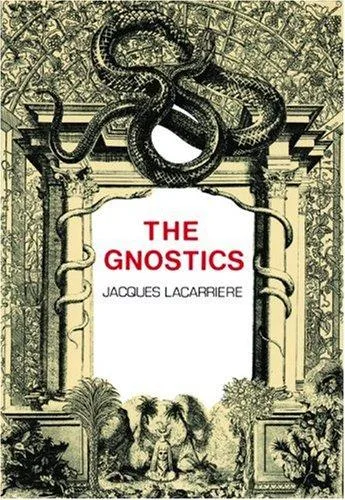
### What It Is Jacques Lacarrière's "Les Gnostiques" offers an accessible overview of Gnosticism, a complex set of ancient religious and philosophical movements. The book explores the diverse beliefs and cosmologies of various Gnostic sects that flourished in the early centuries CE.
### Who It's For This work is for readers new to the esoteric study of Gnosticism. It serves as a foundational text, introducing core doctrines, key figures, and the historical landscape in which Gnosticism emerged and interacted with other traditions. It is particularly suited for those seeking an intellectual rather than a purely devotional or practical approach.
### Historical Context Lacarrière situates Gnosticism within the Hellenistic period, a time of intense intellectual and religious ferment across the Mediterranean world. This era saw the syncretism of Greek philosophy, Jewish traditions, and Eastern mysticism, creating fertile ground for novel spiritual expressions like Gnosticism. The book examines how these movements arose in response to prevailing philosophical and religious ideas.
### Key Concepts The text introduces fundamental Gnostic concepts such as the Demiurge, the Pleroma, the divine spark within humanity, and the role of gnosis (knowledge) as a path to salvation. It explains the dualistic worldview often present, contrasting the material world with a higher, spiritual reality. The book also touches upon the figure of Sophia and her role in the cosmic drama.
💡 Why Read This Book?
• Gain an introduction to the concept of the "divine spark" within humanity, a core Gnostic idea suggesting an innate connection to the transcendent that can be awakened through knowledge. • Understand the role of the "Demiurge," the often-misunderstood creator figure in Gnostic cosmology, and its significance in distinguishing between the material and spiritual realms. • Explore the historical context of Gnosticism's emergence in the Hellenistic period, learning how it interacted with and diverged from contemporary philosophical and religious currents.
⭐ Reader Reviews
Honest opinions from readers who have explored this book.
❓ Frequently Asked Questions
What is the primary focus of Jacques Lacarrière's "Les Gnostiques"?
The book offers an overview of Gnosticism, exploring its diverse beliefs, cosmologies, and historical development across various sects that emerged in the early centuries CE.
When was "Les Gnostiques" first published?
Jacques Lacarrière's "Les Gnostiques" was first published in 1989, providing a modern introduction to ancient Gnostic thought.
What are some key Gnostic concepts discussed in the book?
The book covers concepts such as the Demiurge, the Pleroma, the divine spark, gnosis, and the dualistic worldview characteristic of many Gnostic systems.
Who is Sophia in Gnostic tradition as presented by Lacarrière?
Sophia is typically presented as a divine emanation whose actions, often involving a desire to understand the unknowable, lead to the creation of the material world and the subsequent entrapment of divine sparks.
Does "Les Gnostiques" discuss the Nag Hammadi library?
Yes, the book acknowledges the significance of the Nag Hammadi discoveries as crucial sources for understanding the breadth of Gnostic literature and thought.
What historical period does Lacarrière connect Gnosticism to?
Lacarrière situates Gnosticism within the Hellenistic period, a time of significant intellectual and religious syncretism in the Mediterranean world.
🔮 Key Themes & Symbolism
The Divine Spark and Salvation
Lacarrière illuminates the Gnostic concept of the "divine spark"—a fragment of the divine trapped within the material human being. Salvation, in this view, is achieved not through adherence to dogma or ritual alone, but through "gnosis," a direct, intuitive knowledge of one's true, transcendent origin. This inner awakening allows the spark to escape the material prison and return to the Pleroma, the fullness of the divine realm. The book explores how this emphasis on inner knowledge differentiated Gnosticism from other contemporary religions.
Cosmic Dualism and the Demiurge
A central theme is the Gnostic dualistic cosmology, which posits a fundamental opposition between the spiritual, unknowable God and the flawed, material world. Lacarrière explains the role of the Demiurge, often identified with the God of the Old Testament, as the imperfect creator of this lower realm. This entity is distinct from the true, supreme God. The text details how this framework explains the perceived imperfections and suffering in the world, viewing it as an accidental byproduct of a lesser divine power's activity.
The Figure of Sophia
The myth of Sophia (Wisdom) is a recurring motif explored in "Les Gnostiques." Lacarrière recounts the narratives where Sophia, through her desire to comprehend the divine essence or create independently, inadvertently brings forth the Demiurge and the material cosmos. Her fall from the Pleroma and her subsequent efforts to regain her place, often aided by divine messengers or through her progeny (like the Archons), are central to many Gnostic cosmogonies. Her story highlights themes of imperfection, longing, and the potential for redemption.
Gnosis as Liberation
The book emphasizes "gnosis"—esoteric knowledge—as the key to liberation from the chains of the material world and its rulers (Archons). This knowledge is not merely intellectual but experiential and intuitive. Lacarrière shows how Gnostics believed that acquiring this special insight would reveal the true nature of reality, the illusory character of the material cosmos, and the individual's divine origin. This path offered an alternative to salvation through faith or works, focusing instead on self-realization.
💬 Memorable Quotes
“The material world is seen as an error, a flawed creation.”
— This concisely captures the Gnostic perspective that the cosmos we inhabit is not the perfect creation of the supreme God, but rather a deficient product of a lesser, often ignorant, divine being.
“Salvation comes through knowing oneself and one's divine origin.”
— This interpretation highlights the core Gnostic emphasis on gnosis as the pathway to liberation, where self-awareness of one's transcendent nature is paramount for escaping the material realm.
“The Demiurge is the architect of this imperfect reality.”
— This phrase defines the Demiurge's role as the creator of the material universe, differentiating this lesser deity from the true, unknowable Supreme God in Gnostic theology.
“The Pleroma represents the fullness of divine light and being.”
— This describes the Pleroma as the ultimate spiritual reality, the perfect realm from which divine emanations originate and to which trapped divine sparks aspire to return.
“Archons are cosmic rulers who maintain the illusion of the material world.”
— This explains the function of the Archons as subordinate powers that keep humanity bound to the material plane, often through ignorance or manipulation, thus hindering spiritual ascent.
🌙 Esoteric Significance
Tradition
Lacarrière's work engages with the Gnostic tradition, a diverse set of religious and philosophical movements that flourished primarily in the 2nd and 3rd centuries CE. While distinct from Hermeticism or Kabbalah, Gnosticism shares with them a focus on esoteric knowledge (gnosis) as the means of salvation and a dualistic worldview that posits a transcendent God separate from the material cosmos. It departs from mainstream Christianity by often reinterpreting biblical narratives and figures, particularly the creator God, and by emphasizing an innate divine spark within the individual.
Symbolism
Key symbols in Gnosticism, as explored by Lacarrière, include the "Pleroma," representing the divine fullness or totality of spiritual being, and the "Demiurge," the imperfect creator of the material world. The "divine spark" is another crucial symbol, signifying the fragment of the supreme God trapped within human consciousness, yearning for liberation. These symbols collectively articulate a cosmology of entrapment and potential escape, a core Gnostic narrative.
Modern Relevance
Contemporary interest in Gnosticism, influenced by works like Lacarrière's, continues to resonate within various spiritual and philosophical circles. Modern interpreters often draw on Gnostic ideas to critique established religious and societal structures, emphasizing individual spiritual autonomy and the pursuit of inner knowledge. Thinkers exploring consciousness studies, existentialism, and alternative spiritualities find fertile ground in Gnostic themes of liberation, hidden knowledge, and the critique of material existence.
👥 Who Should Read This Book
• Individuals new to esoteric studies seeking an introduction to Gnostic thought without dense academic prose. • Comparative religion scholars interested in understanding the diversity of early Christian and Hellenistic spiritual movements. • Readers drawn to philosophical explorations of dualism, consciousness, and the nature of reality.
📜 Historical Context
Published in 1989, Jacques Lacarrière's "Les Gnostiques" arrived during a period of renewed academic and popular interest in esoteric traditions. The late 20th century saw a significant surge in Gnostic studies, partly fueled by the ongoing scholarly engagement with the Nag Hammadi library, discovered in 1945. These Coptic texts offered direct access to Gnostic writings, challenging earlier interpretations based primarily on the critiques of Church Fathers like Irenaeus of Lyons. Lacarrière's work engaged with this evolving landscape, presenting Gnosticism not as a fringe heresy but as a complex spiritual phenomenon that interacted with Hellenistic philosophy, Neoplatonism, and early Christian thought. While contemporaries like Elaine Pagels were meticulously examining the Nag Hammadi texts for their social and historical implications, Lacarrière aimed for a broader synthesis, making the diverse schools of Gnosticism accessible to a wider readership.
📔 Journal Prompts
The concept of the "divine spark" within the material self.
Reflecting on the "Demiurge" as a creator figure.
The role of "Sophia" in the Gnostic creation myth.
The meaning of "gnosis" beyond intellectual understanding.
Contrasting the material world's perceived flaws with divine perfection.
🗂️ Glossary
Gnosis
Esoteric knowledge, often intuitive and experiential, believed by Gnostics to lead to spiritual liberation and understanding of divine truths.
Demiurge
In Gnosticism, the imperfect creator of the material universe, often identified with the God of the Old Testament, distinct from the supreme, unknowable God.
Pleroma
The totality of divine powers and the spiritual realm in Gnostic cosmology, representing the fullness of God's being.
Divine Spark
A fragment of the divine essence believed to be trapped within human beings, representing their true, transcendent nature.
Archons
Cosmic rulers or intermediaries in Gnostic cosmology, often seen as servants of the Demiurge who maintain control over the material world and hinder spiritual ascent.
Dualism
A philosophical or religious concept asserting that reality consists of two fundamental, often opposing, principles, such as spirit and matter, good and evil.
Hellenistic Period
The historical era between the death of Alexander the Great (323 BCE) and the rise of the Roman Empire (c. 31 BCE), characterized by cultural diffusion and intellectual syncretism.






![Emanations of Lordly Grace [Al-Fuyudat al-Rabbaniyya]](/img/thumb/emanations-of-lordly-grace-al-fuyudat-al-rabbaniyya-ismail-muhammad-said-al-qadiri-216185.webp)