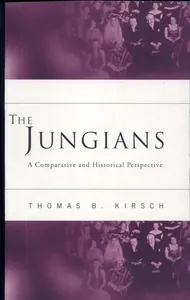
Jungians

 82
82

Jungians
Thomas B. Kirsch’s "Jungians" provides a necessary, if somewhat cautious, overview of Carl Jung's enduring psychological framework. Its strength lies in its clarity; Kirsch manages to distill intricate theories into comprehensible prose, avoiding the jargon that often fences off Jungian thought. The discussion of the collective unconscious, for instance, is particularly well-handled, offering a solid introduction to the idea of shared psychic inheritance. However, the work occasionally feels too deferential to its subject, perhaps due to its initial publication date in 2012, leading to a less critical engagement with some of Jung’s more controversial or dated notions. A passage detailing the concept of synchronicity, while accurate, could have benefited from exploring its more speculative implications or modern interpretations. Ultimately, "Jungians" serves as a competent, if not revolutionary, introduction to the field.
📝 Description
82
### What It Is "Jungians" by Thomas B. Kirsch, first published in 2012, offers an accessible entry point into the complex world of Jungian psychology. It functions not as a dense academic treatise, but as a guide designed to illuminate the core tenets and enduring influence of Carl Gustav Jung's thought. The work unpacks concepts that have permeated various fields, from literature and art to spiritual inquiry and personal development.
### Who It's For This book is for anyone seeking to understand the foundational ideas of analytical psychology as developed by Jung and his subsequent interpreters. It is particularly suited for students, therapists, and enthusiasts of esoteric thought who wish to grasp the psychological frameworks that explain the human psyche’s deeper motivations and symbolic language. Readers interested in the intersection of psychology and spirituality will find this volume beneficial.
### Historical Context The publication in 2012 arrives at a moment when Jungian psychology, though perhaps less dominant in academic circles than in the mid-20th century, maintains a robust presence in clinical practice and cultural discourse. Kirsch’s work engages with the legacy of Jung and his followers, placing it within a lineage that includes figures like Marie-Louise von Franz and James Hillman. It addresses the ongoing relevance of Jungian concepts in a world grappling with meaning and individuation.
### Key Concepts The book explores several critical Jungian concepts. It examines the nature of the unconscious, distinguishing between the personal and the collective unconscious. Archetypes, as universal patterns of behavior and imagery, are explained. The process of individuation, the lifelong journey toward psychological wholeness, is presented as a central aim. Concepts like the anima/animus and the shadow are also likely discussed as vital components of the psyche.
💡 Why Read This Book?
• Understand the core tenets of Jungian psychology, including the collective unconscious and archetypes, as presented in the context of early 21st-century scholarship. • Grasp the concept of individuation, a central aim in Jungian analysis, and how it relates to personal development, providing a framework for self-understanding. • Gain insight into the ongoing relevance of Carl Jung's work, appreciating its influence on fields beyond clinical psychology as explored in the book.
⭐ Reader Reviews
Honest opinions from readers who have explored this book.
❓ Frequently Asked Questions
When was "Jungians" by Thomas B. Kirsch first published?
Thomas B. Kirsch's "Jungians" was first published in 2012, offering a contemporary look at Jungian psychology.
What are the main concepts discussed in "Jungians"?
The book covers key Jungian concepts such as the personal and collective unconscious, archetypes, the anima/animus, the shadow, and the process of individuation.
Is "Jungians" suitable for beginners in psychology?
Yes, "Jungians" is designed to be accessible to those new to Jungian psychology, explaining complex ideas in clear language.
Who was Carl Gustav Jung?
Carl Gustav Jung (1875-1961) was a Swiss psychiatrist and psychoanalyst who founded analytical psychology, developing concepts like the collective unconscious and archetypes.
What is the process of individuation in Jungian psychology?
Individuation, as explored in Jungian thought, is the psychological process of integrating the conscious and unconscious aspects of oneself to achieve wholeness and self-realization.
Does "Jungians" discuss other Jungian figures?
The book likely engages with the legacy of Jung and his followers, potentially referencing figures like Marie-Louise von Franz or James Hillman who contributed to the field.
🔮 Key Themes & Symbolism
The Collective Unconscious
Kirsch's "Jungians" elaborates on Carl Jung's groundbreaking concept of the collective unconscious, positing a universal psychic inheritance shared by all humanity. This realm transcends personal experience, containing archetypes—primordial patterns and images that shape our perceptions and behaviors. The book likely illustrates how these archetypes manifest in myths, dreams, and cultural symbols, suggesting a deeper, interconnected psychic reality that influences individual and collective human life beyond the scope of personal memory or biography.
Archetypes and Individuation
Central to the Jungian framework explored in this book is the concept of archetypes, such as the Shadow, the Anima/Animus, and the Self. Thomas B. Kirsch likely guides readers through understanding these primordial patterns not as fixed entities but as dynamic potentials within the psyche. The book connects the recognition and integration of these archetypes to the process of individuation, Jung's term for the lifelong journey toward psychological wholeness and the realization of one's unique potential, distinct from societal or parental conditioning.
The Nature of the Psyche
"Jungians" delves into Jung's complex model of the psyche, differentiating it from Freudian psychoanalysis. It highlights Jung's emphasis on the ego, the personal unconscious, and the overarching collective unconscious. The work likely examines how these layers interact, influencing consciousness, behavior, and spiritual development. Kirsch’s exposition aims to clarify Jung’s view of the psyche as a self-regulating system striving for balance and integration, a departure from purely mechanistic or reductionist psychological theories.
Synchronicity and Meaning
The book probably touches upon Jung's concept of synchronicity, which describes meaningful coincidences that appear to be acausally connected. Kirsch may present synchronicity not as mere chance but as a manifestation of the underlying order of the psyche and the universe, bridging the inner world of psychological experience with external events. This concept is crucial for understanding Jung's view on how individuals find personal meaning and connection in the unfolding of their lives.
💬 Memorable Quotes
“The collective unconscious contains archetypes, the inherited patterns of human experience.”
— This concisely captures a foundational Jungian idea: that our psychic makeup is not solely a product of personal history but includes universal, pre-existing structures.
“Individuation is the process of becoming a whole, unique person.”
— This highlights the central aim of Jungian psychology—not conformity, but the development of the authentic self through integration of all psychic components.
“Archetypes shape our perception and behavior through universal patterns.”
— This explains the active role of archetypes, suggesting they are not just passive concepts but dynamic forces influencing how we interact with the world.
“Meaningful coincidences, or synchronicities, suggest an acausal connecting principle.”
— This paraphrases Jung's idea of synchronicity, implying a deeper, non-causal order that links inner psychic states with outer events.
“The shadow represents the aspects of ourselves we repress or deny.”
— This defines the shadow archetype, emphasizing its role as the 'dark side' of the personality that must be acknowledged for psychological integration.
🌙 Esoteric Significance
Tradition
Jungian psychology, while grounded in clinical practice, possesses strong esoteric underpinnings, aligning it with traditions that explore the deeper, symbolic layers of the human psyche. It shares conceptual territory with Hermeticism and Gnosticism in its emphasis on inner transformation and the uncovering of hidden knowledge. Jung's exploration of archetypes and the collective unconscious can be seen as a modern reinterpretation of universal symbolic languages found in ancient mystery traditions and alchemical texts, offering a psychological framework for spiritual seeking.
Symbolism
The work likely delves into key Jungian symbols. The concept of the 'Self' often symbolizes the ultimate goal of individuation, representing wholeness and the integration of all psychic opposites, analogous to the alchemical 'Philosopher's Stone'. The 'Shadow' represents the repressed, darker aspects of the personality, crucial to acknowledge for authentic self-awareness. The 'Anima' and 'Animus' represent the contrasexual elements within the psyche, symbolizing the integration of masculine and feminine energies necessary for psychological balance.
Modern Relevance
Contemporary thinkers and practitioners in fields ranging from depth psychology and transpersonal psychology to mythology studies and even certain strands of literary criticism draw heavily on Jungian concepts. Modern therapeutic approaches, such as Jungian analysis, archetypal psychology (promoted by figures like James Hillman), and art therapy, continue to utilize and adapt Jung's ideas. The ongoing exploration of consciousness, dreams, and symbolic meaning in popular culture and spiritual circles also reflects the enduring impact of Jung's work.
👥 Who Should Read This Book
• Students of analytical psychology and Carl Jung's theories seeking a clear exposition of core concepts like archetypes and the collective unconscious. • Therapists and counselors interested in integrating Jungian perspectives into their practice, particularly concerning the unconscious and individuation processes. • Individuals engaged in personal growth and spiritual exploration who wish to understand the symbolic language of their inner lives and the quest for psychological wholeness.
📜 Historical Context
Published in 2012, Thomas B. Kirsch's "Jungians" arrives in an era where analytical psychology, while perhaps not the dominant force it was in the mid-20th century, continues to hold significant sway. Jung's ideas, which emerged in dialogue with Sigmund Freud's psychoanalysis but diverged significantly, gained considerable traction through the mid-20th century. Kirsch’s work engages with this legacy, implicitly positioning Jungian thought against the backdrop of other psychological schools, such as behaviorism and cognitive psychology, which were more prevalent in mainstream academic psychology by 2012. The book acknowledges the contributions of later Jungian analysts, possibly including figures like Marie-Louise von Franz, who were instrumental in developing and disseminating Jung’s concepts after his death in 1961. The reception of Jungian psychology itself has been varied, with some critiques focusing on its perceived lack of empirical testability, yet its influence on literature, art, and depth psychology remains undeniable.
📔 Journal Prompts
The archetypes of the collective unconscious: how do they manifest in your dreams or daily life?
Reflect on the process of individuation and your personal journey toward wholeness.
Consider the concept of the Shadow: what aspects of yourself do you tend to repress?
Analyze a meaningful coincidence (synchronicity) you have experienced and its potential significance.
Explore the role of the Anima/Animus in your relationships and self-perception.
🗂️ Glossary
Collective Unconscious
A hypothesized layer of the unconscious mind containing inherited universal patterns and images (archetypes) shared by all humanity, distinct from the personal unconscious.
Archetype
Universal, archaic patterns and images that derive from the collective unconscious and are the psychic counterpart of instinct. Examples include the Mother, the Hero, the Shadow.
Individuation
The lifelong psychological process of differentiation of the self, involving the integration of conscious and unconscious aspects of personality to achieve wholeness.
Shadow
The unconscious or repressed aspects of the personality that the conscious ego does not identify in itself. It is often perceived as negative but is essential for wholeness.
Anima/Animus
The unconscious feminine aspect in a man (Anima) and the unconscious masculine aspect in a woman (Animus), representing contrasexual psychic components.
Synchronicity
Meaningful coincidences that appear to be causally unrelated but are experienced as having significant meaning for the observer.
Ego
The center of consciousness; the part of the psyche that is aware of itself and its surroundings, acting as the seat of personal identity.