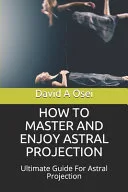
How to Master and Enjoy Astral Projection
 82
82

How to Master and Enjoy Astral Projection
David A. Osei's "How to Master and Enjoy Astral Projection" offers a pragmatic framework for a subject often shrouded in mystique. The work's strength lies in its systematic breakdown of techniques, moving from preliminary mental exercises to the actualization of an out-of-body state. Osei avoids overly esoteric jargon, making the process seem less daunting than many other texts on the subject. A particularly valuable section details the importance of maintaining lucidity and control once the astral body has separated from the physical. However, the book could benefit from a more robust exploration of the ethical considerations and potential psychological impacts of frequent astral travel, a point only briefly touched upon. The assertion that one "glides by the whole of his life in the thick of a vast and populous unobserved world" sets a compelling premise, but the subsequent practical advice, while clear, sometimes lacks the depth to fully address the nuances of navigating such a "world." It serves as a solid, accessible introduction for the earnest explorer.
📝 Description
82
### What It Is This work provides a structured approach to understanding and engaging with the phenomenon of astral projection, often referred to as out-of-body experiences (OBEs). It moves beyond anecdotal accounts to offer practical guidance, suggesting that the astral plane is a tangible dimension accessible through focused mental discipline. The text outlines methods for inducing, controlling, and recalling experiences during these non-physical journeys. It posits that the unconscious mind, when freed from the constraints of the physical senses during sleep or trance states, can perceive and interact with this unseen world.
### Who It's For Individuals curious about consciousness, psychic phenomena, or non-physical exploration will find this book of interest. It is aimed at those seeking to consciously explore realms beyond the physical, whether for personal growth, spiritual understanding, or simply to satisfy a deep-seated curiosity about the nature of reality. Beginners to the subject matter will benefit from the step-by-step instructions, while more experienced practitioners may find new perspectives or refinements to their existing techniques.
### Historical Context The concept of astral projection has roots in ancient mystical traditions, with documented explorations in Hermeticism, Theosophy, and various Eastern spiritual practices. The early 20th century saw a surge of interest in such phenomena, fueled by movements like Spiritualism and the formation of organizations such as the Theosophical Society, founded by Helena Blavatsky in 1875. Authors like Sylvan Muldoon and Oliver Fox were active in popularizing OBEs during this period, often engaging with the scientific and spiritual communities of their day. This book contributes to that ongoing discourse.
### Key Concepts The text breaks down astral projection into manageable components. It introduces the idea of the astral body as a subtle vehicle for consciousness, distinct from the physical form. It discusses techniques for developing mental focus, visualization, and relaxation, considered prerequisites for achieving an OBE. Furthermore, it addresses the nature of the astral plane itself, describing it as a multidimensional reality populated by various entities and energies, accessible when the physical senses are temporarily suspended.
💡 Why Read This Book?
• Gain practical, actionable steps for initiating and controlling astral projection, directly referencing Osei's methods for developing mental focus and relaxation, which are essential for separating the astral body. • Understand the nature of the astral plane as a distinct dimension, as described by Osei, and learn about the subtle energies and entities one might encounter beyond physical perception. • Develop techniques for retaining lucidity and memory during out-of-body experiences, drawing from the book's guidance on conscious awareness and recall during sleep or trance states.
⭐ Reader Reviews
Honest opinions from readers who have explored this book.
❓ Frequently Asked Questions
What is the primary goal of astral projection as presented in David A. Osei's book?
The primary goal is to consciously separate the astral body from the physical form, allowing for exploration of non-physical realms and gaining awareness of the "unobserved world" that exists alongside our physical reality.
When was "How to Master and Enjoy Astral Projection" first published?
The book was first published on December 11, 2019, offering contemporary guidance on the practice of astral projection.
Does the book discuss the potential dangers of astral projection?
While the book focuses on mastering and enjoying the experience, it implicitly addresses safety through its emphasis on control and lucidity, suggesting that a conscious, disciplined approach mitigates risks.
What kind of preparation is recommended before attempting astral projection according to the book?
The book recommends developing mental focus, visualization skills, and deep relaxation techniques as essential prerequisites for achieving a successful and controlled astral projection.
Is astral projection presented as a spiritual or psychological phenomenon in this text?
The book presents astral projection as a phenomenon that bridges both spiritual and psychological aspects, viewing it as an exploration of consciousness beyond the limitations of the physical body.
Who is the author of "How to Master and Enjoy Astral Projection"?
The author is David A. Osei, who first published the work in 2019, providing readers with a guide to understanding and practicing astral projection.
🔮 Key Themes & Symbolism
Consciousness Beyond the Physical
The central theme revolves around the idea that human consciousness is not confined to the physical body. Osei posits that during altered states, such as sleep or trance, the "astral body" can separate and traverse other dimensions. This exploration is framed not as fantasy, but as access to a tangible, albeit unseen, reality that coexists with our own. The work emphasizes the potential for conscious interaction within this non-physical domain, suggesting profound implications for self-understanding and perception of existence.
Practical Techniques for OBEs
This book distinguishes itself by offering detailed, step-by-step methodologies for inducing and managing astral projection. Key concepts include cultivating specific mental states, employing visualization exercises, and mastering relaxation. The emphasis is on a disciplined, systematic approach, moving beyond mere theory to actionable practice. Osei guides the reader through the process of achieving separation, maintaining awareness, and recalling the experience, making it accessible to those dedicated to learning the skill.
The Nature of the Astral Plane
Osei's work describes the astral plane as a distinct dimension, populated by various energies and entities. It is presented as a reality that can be navigated and understood through focused intent and awareness. The text implies that this plane is not merely a subjective internal landscape but an objective environment with its own characteristics and inhabitants. Understanding this plane is crucial for safe and meaningful astral journeys, according to the author's framework.
💬 Memorable Quotes
“man glides by the whole of his life in the thick of a vast and populous unobserved world.”
— This opening statement frames the core premise: our everyday awareness is limited, missing a significant, populated dimension of existence that becomes accessible through altered states of consciousness.
“During sleep or in trance, if the insistent physical senses are for the time in abeyance, this other world is to some extent opened to him...”
— This highlights the mechanism through which access to the unobserved world is gained – the temporary suspension of physical senses, allowing for perception of subtler realities.
“he will occasionally bring back from those circumstances more or less faint memories of what he has encountered and heard there.”
— This acknowledges the fragmented nature of recall from non-physical experiences, suggesting that even partial memory indicates the reality and impact of these encounters.
“The beginning point which it is essential to make clear in describing this astral...”
— This signals the author's intention to establish a foundational understanding, indicating a methodical approach to explaining the complex subject of astral projection.
“Although for the most part altogether unconscious of it...”
— This suggests that awareness of the 'unobserved world' is largely latent, implying that the book aims to awaken this dormant perception and conscious engagement.
🌙 Esoteric Significance
Tradition
This work aligns with the broad tradition of astral projection literature found within Hermeticism and modern Theosophy, which conceptualize subtle bodies and planes of existence. It departs from purely philosophical or religious interpretations by emphasizing practical, repeatable techniques for experiential exploration. Unlike some older texts that might be embedded in specific religious doctrines, Osei's approach is more universally applicable to anyone seeking to explore consciousness beyond the physical form, focusing on the 'how-to' rather than strict adherence to a particular dogma.
Symbolism
The concept of the 'astral body' itself is a key symbol, representing the vehicles of consciousness capable of traversing non-physical realms. The 'unobserved world' functions as a symbolic representation of the hidden layers of reality accessible through altered states. The act of 'gliding' or 'projection' symbolizes liberation from physical constraints and the expansion of awareness beyond the mundane, pointing towards a deeper, multi-dimensional existence.
Modern Relevance
Osei's practical, no-nonsense approach to astral projection resonates with contemporary practitioners of lucid dreaming, remote viewing, and various forms of consciousness hacking. It finds relevance within communities exploring expanded states of awareness for personal development and spiritual insight, often discussed in online forums and modern metaphysical circles. Thinkers and practitioners interested in the intersection of consciousness, neuroscience, and esoteric experience may find value in its methodical framework.
👥 Who Should Read This Book
• Aspiring practitioners of out-of-body experiences seeking a structured, step-by-step guide to initiating and controlling astral projection, benefiting from Osei's practical methodologies. • Individuals interested in the nature of consciousness and exploring realms beyond the physical, who will gain insights into the concept of the astral plane and its potential inhabitants. • Those curious about the historical and contemporary discourse surrounding psychic phenomena, looking for a modern text that bridges older esoteric traditions with accessible techniques.
📜 Historical Context
Published in 2019, David A. Osei's work emerges in an era where interest in consciousness studies, parapsychology, and esoteric practices has seen a resurgence, partly fueled by online communities and accessible digital resources. This revival echoes the enthusiasm of the late 19th and early 20th centuries, a period marked by figures like Helena Blavatsky and the Theosophical Society, which sought to synthesize Eastern and Western esoteric traditions. During that earlier period, competing schools of thought included the more empirically-focused Society for Psychical Research, which investigated phenomena like telepathy and mediumship, often with skepticism. Osei’s book, while contemporary, taps into this long-standing human fascination with non-physical realities, offering a modern, practical guide that stands alongside earlier influential works by authors like Sylvan Muldoon. The 2019 publication date places it firmly within a contemporary landscape of self-help and spiritual exploration literature.
📔 Journal Prompts
The concept of the "unobserved world" and its implications for daily perception.
Your personal readiness for detaching from insistent physical senses.
Developing mental focus techniques for sustained awareness.
Recalling faint memories from altered states of consciousness.
The potential inhabitants and energies of the astral plane.
🗂️ Glossary
Astral Body
A subtle, non-physical body or vehicle of consciousness that is believed to be capable of separating from the physical body and traveling in non-physical realms, such as the astral plane.
Astral Plane
A dimension or plane of existence distinct from the physical world, often described as a realm of thought, emotion, and energy, accessible during altered states of consciousness.
Trance State
An altered state of consciousness characterized by deep relaxation and heightened focus, where the physical senses may be diminished, facilitating access to other states of awareness.
Lucidity
The state of being fully conscious and aware during an altered state of consciousness, such as during sleep or astral projection, allowing for control and clear recall.
Unobserved World
A term used to describe the vast, populated dimension of reality that exists beyond the scope of ordinary physical perception and consciousness.
Physical Senses
The faculties of sight, hearing, smell, taste, and touch, which are the primary means of perceiving the physical world; their abeyance is key to astral projection.
Mental Discipline
The practice of training the mind to focus, control thoughts, and maintain awareness, considered essential for successfully navigating altered states and astral projection.