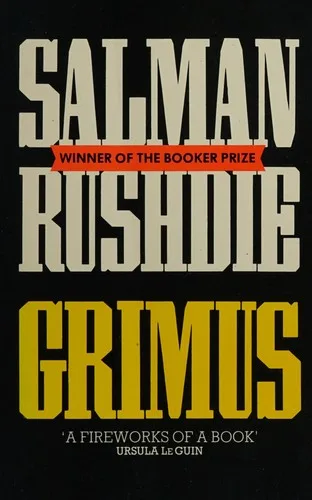
Grimus
 73
73

Grimus
Salman Rushdie's *Grimus* is less a novel and more a dense, ambitious thought experiment disguised as prose. From its opening pages, it assaults the reader with a torrent of neologisms, mythic allusions, and philosophical musings that feel both exhilarating and exhausting. The sheer linguistic energy is undeniable; Rushdie constructs sentences that spiral and bloom with an almost alchemical fervor. However, this same density can become a formidable barrier. The narrative structure, while intentionally fragmented, sometimes feels deliberately obscure, making sustained engagement a significant effort. A passage describing the city of 'Salzburg' (a clear nod to the real city, but transformed) showcases this duality: its evocative descriptions are profound, yet the allegorical weight can feel overwhelming. Despite its challenges, the book's audacious attempt to build an entire mythology from language is its singular strength. It is a work that demands patience but offers a unique, albeit often bewildering, glimpse into the mind of a writer finding his voice.
📝 Description
73
### What It Is Grimus, Salman Rushdie's inaugural novel, published in 1979, is a sprawling, allegorical narrative that defies easy categorization. It is less a traditional story and more a labyrinthine exploration of language, myth, and the nature of identity. The novel follows the protagonist, Flapping Eagle, on a quest that leads him through a surreal landscape filled with enigmatic characters and philosophical digressions.
### Who It's For This work is intended for the dedicated reader, one who appreciates literary puzzles and conceptual depth over conventional plot structures. It appeals to those interested in early postmodern literature, experimental narratives, and the philosophical underpinnings of myth-making. Readers seeking a straightforward adventure will find Grimus challenging, but those who enjoy deconstructing narratives and exploring the limits of language will be rewarded.
### Historical Context Published in 1979, Grimus emerged from a literary landscape influenced by post-structuralism and a growing interest in metafiction. Rushdie, in his debut, was already demonstrating the stylistic inventiveness that would later define his career. The novel's reception was notably muted compared to his later successes, a common fate for ambitious first works that diverge significantly from established literary norms. It predates the major cultural impact of authors like Italo Calvino, whose own allegorical works like *If on a winter's night a traveler* (1979) also played with narrative form.
### Key Concepts The narrative engages with concepts of the city as a microcosm of the world, the power of names and language to shape reality, and the search for immortality or transcendence. It critiques stagnant traditions and celebrates the fluid, transformative nature of existence. The work often uses the motif of a journey, not just physical but spiritual and intellectual, as a means of uncovering hidden truths or confronting existential dilemmas.
💡 Why Read This Book?
• You will learn about the intricate relationship between language and reality through Rushdie’s experimental use of neologisms and mythic structures, particularly evident in his creation of the city of 'Salzburg'. • You will encounter the concept of the 'Grimus' itself, an immortal being, and explore its allegorical representation of stagnation versus transformation, a core theme in early Rushdie. • You will gain an appreciation for early postmodern narrative experimentation by examining how Rushdie, in his 1979 debut, subverts traditional storytelling to explore philosophical ideas.
⭐ Reader Reviews
Honest opinions from readers who have explored this book.
❓ Frequently Asked Questions
What is the primary allegory in Salman Rushdie's Grimus?
The primary allegory in Grimus revolves around the journey of Flapping Eagle and his confrontation with the immortal Grimus. It explores themes of stagnation versus change, the limitations of eternal life, and the power of human will to overcome existential inertia.
Who is the protagonist of Grimus?
The protagonist of Grimus is a character named Flapping Eagle, who embarks on a quest that takes him through a fantastical and symbolic landscape to confront the titular immortal being.
What is the significance of the city of 'Salzburg' in Grimus?
The city of 'Salzburg' in Grimus serves as a symbolic landscape, representing a place of both cultural richness and potential stagnation. It's a microcosm within the novel where the protagonist encounters various characters and philosophical ideas.
When was Salman Rushdie's first novel, Grimus, published?
Salman Rushdie's first novel, Grimus, was published in 1979, marking his debut as a novelist before his more widely recognized works.
Does Grimus have a traditional plot structure?
No, Grimus notably diverges from traditional plot structures. It is characterized by its allegorical nature, philosophical digressions, and experimental use of language, making it more of a conceptual exploration than a linear narrative.
What literary movements influenced Grimus?
Grimus is influenced by early postmodern literature and experimental fiction, incorporating elements of metafiction, allegory, and a deep engagement with language and myth-making.
🔮 Key Themes & Symbolism
The Nature of Immortality
Grimus, the titular character, represents an extreme form of eternal existence, one that has led to profound stagnation and detachment. The novel probes whether true fulfillment lies in endless life or in the human capacity for change, growth, and eventual mortality. Flapping Eagle's quest is, in part, a confrontation with this static state, questioning the desirability of immortality when it erodes the essence of being alive and experiencing the flux of existence.
Language as Reality
Rushdie's early work is a playground for linguistic invention. The novel demonstrates a belief that language doesn't merely describe reality but actively constructs it. Through neologisms, wordplay, and the weaving of complex mythologies, the narrative suggests that the very fabric of existence can be shaped and reshaped by words. This theme is crucial for understanding Rushdie's later explorations of narrative power and cultural identity.
The City as Microcosm
The city of 'Salzburg' and other fantastical locales within Grimus function as symbolic landscapes that mirror broader existential and philosophical concerns. These settings are not merely backdrops but active participants in the narrative, embodying ideas about community, isolation, tradition, and progress. The journey through these symbolic spaces is integral to the protagonist's internal transformation and understanding of the world.
Quest and Transformation
At its heart, Grimus is a quest narrative, though one that eschews conventional heroic arcs. Flapping Eagle's journey is a spiritual and intellectual odyssey aimed at confronting the ultimate stasis embodied by the immortal Grimus. The transformative power of this journey, regardless of its literal outcome, is central. It highlights the inherent human drive to seek meaning and evolve, even in the face of seemingly insurmountable existential quandaries.
💬 Memorable Quotes
“The world is a mirror.”
— This concise statement encapsulates the novel's view of reality as a reflection, suggesting that what we perceive externally is intrinsically linked to our internal state and the narratives we construct.
“To be immortal is to be a statue.”
— This phrase critiques the nature of eternal life as presented in the book, equating it with a lack of growth, change, and dynamism – the very qualities that define living beings.
“Language is the most powerful weapon.”
— This reflects the novel's preoccupation with the power of words to shape perception, create worlds, and influence thought, positioning linguistic dexterity as a primary force.
“The past is a foreign country.”
— This concept highlights the unreliability and transformative nature of memory and history, suggesting that our understanding of the past is always mediated and can never be fully recaptured.
“Every question is an answer.”
— This aphorism points to the inherent circularity and interconnectedness of inquiry and knowledge within the novel's philosophical framework, suggesting that the act of questioning itself reveals truths.
🌙 Esoteric Significance
Tradition
Grimus engages with a syncretic esoteric tradition, drawing loosely from Gnostic ideas of flawed creation and the search for gnosis (knowledge), as well as Hermetic principles concerning the microcosm and macrocosm. It departs from strict adherence to any single lineage, instead forging its own path through a labyrinth of myth and philosophical inquiry, reminiscent of alchemical processes that transmute base elements into something profound.
Symbolism
Key symbols include the city of 'Salzburg', representing a complex human construct that can be both a source of cultural richness and spiritual stagnation, mirroring the stagnant immortality of Grimus himself. The concept of the 'Grimus' figure embodies the perils of eternal, unchanging existence. The journey motif itself symbolizes the seeker's path toward self-discovery and enlightenment, navigating internal and external obstacles.
Modern Relevance
Contemporary thinkers and practitioners interested in narrative theory, the philosophy of identity, and the transformative power of language find resonance in Grimus. Its exploration of constructed realities and the malleability of meaning appeals to post-structuralist thought and those who examine the deep structures of myth in modern society. It serves as a foundational text for understanding Rushdie's later engagement with postcolonial identity and the creation of hybrid realities.
👥 Who Should Read This Book
• Aspiring novelists and literary critics interested in early postmodern narrative techniques and linguistic experimentation. • Students of comparative mythology and religious studies seeking works that synthesize diverse mythic traditions into new allegorical frameworks. • Readers who appreciate dense, philosophical fiction and enjoy deconstructing complex narratives that challenge conventional storytelling.
📜 Historical Context
Published in 1979, *Grimus* arrived at a time when literary experimentation was flourishing, particularly with the rise of postmodernism and metafiction. Salman Rushdie’s debut novel was a bold entry into this landscape, showcasing an audacious blend of myth, philosophy, and linguistic play that set it apart. While authors like Italo Calvino were exploring similar narrative structures, Rushdie’s approach was distinctly his own, drawing heavily on diverse mythologies and creating a unique fictional universe. The novel’s reception was largely muted; it did not achieve the widespread acclaim of his later works, a fate not uncommon for ambitious first novels that challenge reader expectations. Its complex allegorical nature and dense prose made it a difficult, though rewarding, read for many. The book's initial obscurity contrasts sharply with Rushdie's later global recognition, making its 1979 publication a significant, albeit quiet, moment in contemporary literature.
📔 Journal Prompts
The concept of 'immortality as stagnation' in Grimus.
Flapping Eagle's journey through symbolic landscapes.
The function of neologisms in constructing Grimus's reality.
Reflecting on the 'statue' metaphor for eternal life.
The 'Grimus' figure as an archetype of unchanging existence.
🗂️ Glossary
Grimus
The titular immortal being who resides in a decaying state of eternal existence, representing stagnation and the potential pitfalls of unending life.
Flapping Eagle
The protagonist of the novel, who undertakes a quest that leads him to confront Grimus and explore the nature of existence and transformation.
Salzburg
A symbolic city within the novel, serving as a microcosm of human society, culture, and philosophical ideas, often depicted with a blend of wonder and decay.
Neologisms
Newly coined words or phrases used extensively by Rushdie in Grimus to create a unique linguistic landscape and explore the power of language to shape reality.
Gnosis
A concept often associated with Gnostic traditions, referring to a form of intuitive spiritual knowledge or enlightenment, which characters in Grimus may seek.
Allegory
A narrative in which characters and events represent abstract ideas or principles, used extensively in Grimus to convey philosophical and existential themes.
Metafiction
Fiction that self-consciously draws attention to its own status as a work of fiction, often by commenting on its narrative construction, a technique employed in Grimus.