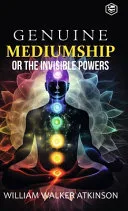
Genuine Mediumship Or the Invisible Powers (Deluxe Hardbound Edition)
 84
84

Genuine Mediumship Or the Invisible Powers (Deluxe Hardbound Edition)
William Walker Atkinson’s 1919 work, *Genuine Mediumship Or the Invisible Powers*, offers a refreshingly pragmatic perspective on psychic development. Unlike many contemporaries who relied solely on faith or anecdotal evidence, Atkinson, under his Swami Bhakta Vishita persona, dissects mediumship as a cultivable faculty. He moves beyond the "born psychic" myth, presenting a structured, almost scientific, approach to honing one's sensitivity. His explanation of "attunement" as a necessary prerequisite for reception is particularly clear, emphasizing the importance of mental and spiritual preparation. A notable strength is his insistence on ethical conduct and self-control as integral to genuine mediumship, a theme often underdeveloped in popular accounts of the era. However, the text occasionally suffers from the somewhat dated psychological frameworks of the early 20th century, which might require modern readers to bridge some conceptual gaps. The emphasis on precise mental control, while valuable, could feel overly rigid to those accustomed to more fluid, less disciplined models of psychic engagement. Still, for its systematic approach and ethical grounding, *Genuine Mediumship* remains a valuable, if occasionally challenging, resource for understanding psychic development.
📝 Description
84
### What It Is Genuine Mediumship Or the Invisible Powers presents William Walker Atkinson's comprehensive 1919 treatise on developing psychic abilities. The work argues against the notion that true mediums are exclusively born with their gifts, asserting instead that mediumship is a faculty that can be cultivated through dedicated practice and understanding. Atkinson, writing under the pseudonym Swami Bhakta Vishita, dissects the mechanics and ethics of psychic communication, offering a structured approach for aspiring sensitives and those seeking to comprehend the phenomena.
### Who It's For This book is intended for individuals interested in the practical cultivation of mediumistic abilities, regardless of their prior experience. It appeals to those who question innate talent as the sole determinant of psychic prowess and seek systematic methods for personal development. Students of spiritualism, psychical research, and esoteric traditions will find Atkinson's analysis particularly relevant. It also serves those who wish to understand the underlying principles and potential pitfalls associated with channeling and psychic perception.
### Historical Context Published in 1919, Genuine Mediumship emerged during a period of intense global interest in spiritualism and psychical phenomena, fueled by the losses of World War I and the work of figures like Sir Arthur Conan Doyle. Atkinson's text positions itself within this broader movement, offering a more analytical and less purely devotional approach compared to some contemporary spiritualist literature. It contrasts with purely faith-based testimonies by focusing on psychological and energetic principles, seeking to provide a 'how-to' guide for developing what were often seen as miraculous gifts. The era was marked by burgeoning interest in psychology and the subconscious, which Atkinson integrated into his explanations.
### Key Concepts Atkinson outlines several core concepts central to developing mediumship. He details the importance of "attunement," the process of aligning one's mental and spiritual state to receive subtle impressions. The "control" concept refers to the disciplined management of one's own psychic energies and the discernment of external influences. He also discusses the "etheric plane" as a medium through which spiritual information is transmitted and perceived. The work emphasizes "self-discipline" and "ethical considerations" as foundational, arguing that true mediumship requires not only ability but also integrity and purity of intent. The development of "intuition" and "clairvoyance" are presented as achievable results of consistent practice.
💡 Why Read This Book?
• Learn systematic techniques for developing psychic sensitivity, moving beyond the belief that mediumship is solely an innate gift, as detailed in Atkinson's 1919 text. • Understand the crucial role of "attunement" and "self-discipline" in psychic reception, concepts rigorously explored within the book's framework. • Gain insight into the ethical considerations and practical mechanics of channeling and psychic communication, principles foundational to Atkinson's approach.
⭐ Reader Reviews
Honest opinions from readers who have explored this book.
❓ Frequently Asked Questions
What is the primary argument of William Walker Atkinson's Genuine Mediumship?
Atkinson's core argument, presented in his 1919 work, is that mediumship is not an exclusive birthright but a developable faculty. He posits that through specific mental training, ethical discipline, and understanding of psychic principles, individuals can cultivate their innate psychic potential.
Who was Swami Bhakta Vishita, the pseudonym used by the author?
Swami Bhakta Vishita was one of the pseudonyms used by the prolific writer William Walker Atkinson. He employed numerous names to explore different philosophical and spiritual traditions, allowing him to engage with a wide range of subjects, including occultism and mental science.
When was Genuine Mediumship Or the Invisible Powers originally published?
The original publication date for Genuine Mediumship Or the Invisible Powers was 1919. This places the work within the early 20th-century spiritualist and New Thought movements, a period of significant public interest in psychic phenomena.
What specific psychic abilities does Atkinson discuss developing?
Atkinson discusses the development of various psychic abilities, including clairvoyance (clear seeing), clairaudience (clear hearing), and the general faculty of mediumship, which involves acting as a channel for subtle or spiritual information and entities.
Does the book offer practical exercises for developing mediumship?
Yes, the book provides a systematic framework and discusses principles that guide the reader toward practical development. While not always presenting explicit step-by-step exercises in a modern format, Atkinson details the mental states, disciplines, and understandings required for cultivation.
What is the significance of 'attunement' in Atkinson's work?
In Atkinson's framework, 'attunement' is the crucial process of aligning one's mental and vibrational state with the subtle energies or intelligences one wishes to perceive or communicate with. It's presented as a prerequisite for clear reception.
🔮 Key Themes & Symbolism
Cultivation of Psychic Faculty
Atkinson fundamentally challenges the notion of innate psychic talent, framing mediumship as a skill to be deliberately developed. He outlines a process involving mental discipline, focused intent, and understanding the energetic principles at play. This theme is central to the book's purpose: to demystify psychic abilities and make them accessible through systematic effort. The work argues that consistent practice, much like learning any other skill, is key to unlocking one's latent potential for spiritual perception and communication, thereby empowering individuals to explore their inner capabilities.
The Ethics of Mediumship
Central to Atkinson's treatise is the paramount importance of ethical conduct for the practicing medium. He stresses that genuine mediumship requires purity of motive, integrity, and self-control. The work explores the potential dangers of straying from ethical principles, including the risk of attracting negative influences or misinterpreting communications. Atkinson advocates for a disciplined approach that prioritizes truthfulness and spiritual advancement, ensuring that the development of psychic powers serves a higher purpose rather than egoic gratification or manipulation.
Mechanics of Psychic Communication
The book delves into the operational aspects of psychic phenomena, explaining how communication across planes of existence might occur. Atkinson discusses concepts like "attunement" to specific vibrations, the role of the "etheric plane" as a conduit, and the necessity of "control" over one's own mental and energetic faculties. This analytical approach seeks to provide a logical framework for understanding psychic experiences, moving beyond mere belief to an exploration of underlying mechanisms and processes involved in channeling and spiritual intercourse.
Self-Mastery and Discipline
A recurring motif is the indispensable role of self-mastery in the pursuit of genuine mediumship. Atkinson emphasizes that developing psychic abilities is intrinsically linked to the discipline of one's own mind, emotions, and will. He outlines the need for consistent practice, mental clarity, and emotional stability as foundations upon which psychic sensitivity can be reliably built. This focus on inner control ensures that the medium acts as a clear and reliable channel, free from personal biases or disturbances.
💬 Memorable Quotes
“The student must learn to control the body, the emotions, and the mind.”
— This statement underscores Atkinson's belief that psychic development is inseparable from personal discipline. He asserts that mastery over one's physical, emotional, and mental states is a prerequisite for effectively channeling or perceiving subtle energies.
“True mediumship is a sacred trust, not a mere parlor trick.”
— Here, Atkinson distinguishes between genuine psychic ability and sensationalism. He emphasizes the ethical responsibility inherent in mediumship, framing it as a serious spiritual practice that demands integrity and respect, rather than entertainment.
“One must become attuned to the vibrations of the unseen.”
— This highlights the concept of "attunement" as central to psychic reception. Atkinson explains that sensitive perception requires harmonizing one's own energetic frequency with that of the spiritual or subtle realms.
“The mind is the gateway through which all impressions must pass.”
— This quote emphasizes the critical role of the mind in processing psychic information. Atkinson suggests that the quality and clarity of one's thoughts directly influence the reception and interpretation of subtle impressions.
“Discernment is the guardian of the developing medium.”
— Atkinson stresses the importance of critical judgment and discernment. This faculty is presented as essential for distinguishing between genuine spiritual guidance and misleading influences or personal projections.
🌙 Esoteric Significance
Tradition
Atkinson's work draws heavily from the New Thought movement and Western Esotericism, particularly its focus on mental science and the power of consciousness. While not strictly adhering to a single lineage like Hermeticism or Kabbalah, it integrates principles of energetic vibration and mental projection common in these traditions. It offers a practical, accessible approach to developing psychic abilities, framing them as natural extensions of human consciousness rather than solely supernatural gifts, fitting within the broader trend of modernizing and psychologizing esoteric concepts in the early 20th century.
Symbolism
While *Genuine Mediumship* is less rich in overt symbolism than some other esoteric texts, the concept of the "etheric plane" functions symbolically as a liminal space or intermediary realm between the physical and spiritual. The "gateway" of the mind serves as a symbolic threshold through which psychic impressions must pass. The process of "attunement" itself can be seen as a symbolic act of aligning oneself with higher frequencies, representing a striving for spiritual harmony and connection.
Modern Relevance
Atkinson's emphasis on the cultivable nature of psychic abilities and the importance of mental discipline continues to resonate with modern practitioners of manifestation, law of attraction, and energy healing. Contemporary authors exploring consciousness studies and personal development often echo his ideas about the mind's power and the need for focused intent. His systematic approach informs modern courses and workshops on developing intuition, clairvoyance, and mediumistic skills, making his foundational work relevant to current spiritual and self-help movements.
👥 Who Should Read This Book
• Aspiring mediums and sensitives seeking a structured, non-dogmatic approach to developing their psychic faculties, grounded in the principles outlined by Atkinson in 1919. • Students of New Thought and early 20th-century esoteric movements interested in practical applications of mental science and consciousness exploration. • Individuals curious about the mechanics of psychic communication and the ethical considerations involved, seeking to understand phenomena beyond anecdotal accounts.
📜 Historical Context
Published in 1919, *Genuine Mediumship* emerged during a period of heightened interest in spiritualism and psychical research, particularly in the wake of World War I. The era saw figures like Sir Arthur Conan Doyle championing spiritualist causes, and movements like Theosophy, founded by Helena Blavatsky, were influential in esoteric circles. Atkinson's work distinguished itself by offering a more psychological and less overtly religious framework than much contemporary spiritualist literature. While figures like Helena Blavatsky focused on esoteric doctrines and ancient wisdom, Atkinson aimed for a more accessible, practical guide to developing psychic faculties, grounding his ideas in New Thought principles and mental science. The book implicitly engaged with the burgeoning field of psychology, attempting to explain psychic phenomena through mental and energetic mechanisms rather than purely supernatural intervention. Its reception was likely within the existing readership of New Thought and occult literature, seeking systematic methods for personal development.
📔 Journal Prompts
The necessity of "self-discipline" for psychic development.
Personal practice of "attunement" to subtle energies.
Ethical boundaries in psychic communication.
The role of "control" over one's mental state.
Discernment in interpreting psychic impressions.
🗂️ Glossary
Attunement
The process of aligning one's mental and vibrational state with a specific frequency or intelligence, enabling reception of subtle impressions or communication.
Etheric Plane
A subtle, non-physical plane of existence described as lying close to the physical world, often considered a medium for psychic impressions and spiritual communication.
Control
The disciplined management of one's own mental, emotional, and psychic faculties to ensure clarity, integrity, and effective functioning as a medium.
Discernment
The faculty of critical judgment and wisdom, essential for a medium to distinguish between genuine spiritual influences and misleading or erroneous ones.
Psychic Faculty
The inherent capacity of an individual to perceive or interact with subtle energies, information, or intelligences beyond the normal range of the five physical senses.
Vibrations
In this context, refers to the energetic frequencies associated with different states of consciousness, entities, or planes of existence, which can be perceived or tuned into.
Mental Science
A philosophical and practical approach emphasizing the power of the mind to influence reality, health, and spiritual development, prominent in the New Thought movement.