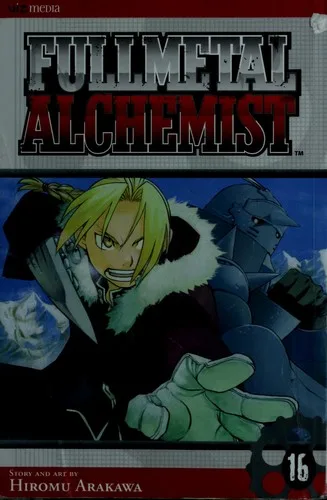
Fullmetal Alchemist Volume 12
 75
75

Fullmetal Alchemist Volume 12
Volume 12 of Fullmetal Alchemist presents a dense narrative that demands close attention. Arakawa skillfully escalates the stakes, particularly concerning the escalating conflict with the Father and the Homunculi, which forms the backbone of this installment. The exploration of the Homunculi's origins and their individual motivations becomes increasingly central, offering a chilling look at artificial existence. One particular strength lies in the visual storytelling, where Arakawa conveys complex emotional states and dire situations with remarkable clarity. However, the sheer volume of plot threads being juggled can occasionally feel overwhelming, with certain character subplots momentarily losing momentum amidst the grander conspiracy. A passage detailing the creation of a specific Homunculus, for instance, is both horrifying and intellectually stimulating, showcasing the series' capacity for dark allegory. This volume is a crucial, if demanding, chapter in the ongoing narrative.
📝 Description
75
Fullmetal Alchemist Volume 12, serialized starting in 2004, continues Edward and Alphonse Elric's quest through a world of alchemy.
Hiromu Arakawa's "Fullmetal Alchemist" Volume 12 deepens the saga of brothers Edward and Alphonse Elric. They confront the fallout from their forbidden alchemical experiments and the hidden powers controlling Amestris. This installment ratchets up the mystery surrounding the Homunculi and the state military's true agenda.
Readers will find themselves drawn into the complex plot and character developments. The volume touches on ethical quandaries, what it means to be human, and the corrosive effects of unchecked power. Those who appreciate detailed world construction and characters with shifting moral compasses will find ample material here.
Published in the mid-2000s, "Fullmetal Alchemist" gained popularity during a surge in international manga and anime interest. Its philosophical depth invited comparisons to classical thought and allegorical literature. While other shonen manga explored adult themes, Arakawa's distinct fusion of steampunk visuals and alchemical symbolism made it stand out. The series built its reputation through dedicated fan engagement and critical praise within the manga community, rather than immediate academic study.
💡 Why Read This Book?
• You will learn about the alchemical principle of Equivalent Exchange and its ethical implications, as seen in the struggles of Edward and Alphonse Elric concerning their quest for the Philosopher's Stone. • You will gain insight into the origins and philosophical nature of the Homunculi, artificial beings created through forbidden alchemy, as their backstories are further revealed. • You will experience the escalating political and military machinations within Amestris, particularly as the true nature of Father's plan begins to take shape in the mid-2000s.
⭐ Reader Reviews
Honest opinions from readers who have explored this book.
❓ Frequently Asked Questions
What is Equivalent Exchange in Fullmetal Alchemist Volume 12?
Equivalent Exchange is the core principle of alchemy in the series, dictating that to gain something, one must sacrifice something of equal value. Volume 12 showcases this through character choices and the consequences of alchemical acts, reinforcing its philosophical weight.
Who are the Homunculi and what is their significance?
The Homunculi are artificial beings created through forbidden alchemy, often embodying specific sins. Volume 12 delves deeper into their origins and their connection to Father, revealing their complex and often tragic existence.
What is the Philosopher's Stone in this volume?
The Philosopher's Stone is a legendary alchemical substance sought for its power to bypass Equivalent Exchange. Volume 12 continues to explore its dangerous allure and the immense cost of its creation.
When was Fullmetal Alchemist Volume 12 originally published?
Fullmetal Alchemist Volume 12 was originally published in Japan in 2004, continuing the serialization that began in 2001.
What is Amestris in the context of Volume 12?
Amestris is the primary nation where the Fullmetal Alchemist story unfolds. Volume 12 reveals more about its military structure and the shadowy political undercurrents that influence its leadership.
Does Volume 12 introduce new alchemical concepts?
While it reinforces established concepts like Equivalent Exchange, Volume 12 primarily focuses on the application and consequences of known alchemical principles, particularly concerning the creation and nature of the Homunculi.
🔮 Key Themes & Symbolism
The Cost of Forbidden Knowledge
Volume 12 profoundly examines the pursuit of knowledge that transgresses natural or divine laws. The Elric brothers' journey, marked by their early attempt at human transmutation, serves as a constant reminder of the severe price of forbidden alchemical arts. This theme is amplified by the origins of the Homunculi, beings born from alchemical transgression, highlighting the corrupting influence and existential dilemmas that arise from seeking power beyond natural limits. The narrative consistently questions whether the ends justify the means when dealing with forces that fundamentally alter existence.
The Nature of Humanity and the Soul
The series, and Volume 12 in particular, grapples with defining what constitutes a soul and humanity itself. Through the existence of artificial beings like the Homunculi and the disembodied souls of Alphonse Elric, the narrative probes the essence of consciousness and identity. It questions whether life can be artificially created or if a soul is an ineffable quality. The concept of Equivalent Exchange often forces characters to confront what they value most, reflecting on the spiritual and emotional components that define a person beyond their physical form.
Corruption and Power
This installment vividly illustrates how absolute power, particularly when wielded by secretive organizations like the military or clandestine groups manipulating events, leads to profound corruption. The machinations of Father and his subordinates reveal a chilling disregard for life and morality in pursuit of grander, often sinister, objectives. The narrative critiques unchecked ambition and the exploitation of others for personal gain, showing how the desire for control can dehumanize both the oppressor and the oppressed, turning individuals into mere tools for a larger agenda.
Cycles of Revenge and Redemption
Fullmetal Alchemist Volume 12 continues to explore the destructive cycles born from past grievances and the arduous path toward redemption. Characters are often driven by a desire for vengeance, stemming from personal tragedies and systemic injustices. However, the story also presents opportunities for characters to break these cycles through understanding, forgiveness, and sacrifice. The narrative suggests that true strength lies not in perpetuating conflict but in confronting the past and seeking reconciliation, though this path is fraught with difficulty and requires immense personal growth.
💬 Memorable Quotes
Direct passages from the work, attributed to the author.
“The body is a temple. It is not meant to be desecrated.”
— This sentiment reflects the ethical boundaries explored in the series, particularly concerning human transmutation. It highlights the sanctity of life and the physical form, suggesting that attempting to forcibly alter or create life through alchemy violates a fundamental natural order.
“I will not be a tool for your ambitions.”
— This declaration signifies a character's refusal to be manipulated or used for another's nefarious purposes. It speaks to themes of autonomy, free will, and the rejection of being subservient to corrupt powers or ideologies.
“Alchemy is the study of understanding decomposition and recomposition. And then, to grasp the idea of the one, the single, the ultimate principle.”
— This provides a philosophical definition of alchemy within the series, framing it not just as a science but as a quest for fundamental truths about existence. It suggests a journey from understanding the broken down to comprehending the unified whole.
“It's a metaphor. The truth is, I don't want to see anyone else die.”
— This statement reveals the underlying emotional motivation behind a character's actions, moving beyond simplistic goals to express a deep-seated desire to protect others. It highlights the human cost of the conflict and the personal stakes involved.
💡 Key Ideas
Editorial paraphrase of the work's core concepts — not direct quotes.
There is no such thing as a painless lesson. They just don't exist. Sacrifice is necessary. If you want to obtain something, you must lose something of equal value.
This quote captures the central alchemical tenet of Equivalent Exchange. It underscores the narrative's consistent theme that significant gains or changes in the world of Fullmetal Alchemist always come at a profound cost, forcing characters to make difficult choices and accept consequences.
🌙 Esoteric Significance
Tradition
The work draws heavily on Hermetic alchemy, particularly the principle of Equivalent Exchange, mirroring concepts like 'As Above, So Below' and the search for the Philosopher's Stone as a means to transcend material limitations. It also echoes Gnostic ideas concerning the flawed nature of the material world and the existence of malevolent, demiurgic forces (represented by Father and the Homunculi) attempting to control humanity. The series departs from strict tradition by grounding these concepts within a pseudo-scientific, steampunk framework and focusing on a secular ethical dilemma rather than purely spiritual salvation.
Symbolism
The Ouroboros, depicted as the symbol of the Homunculi, represents cyclicality, self-creation, and destruction—a potent alchemical motif signifying unity and the eternal return. The Philosopher's Stone itself is a powerful symbol of ultimate knowledge and power, representing the alchemist's major work, the ability to transmute and overcome natural laws, often at a terrible cost. Blood, frequently used in transmutations, symbolizes life force and sacrifice, essential components in the alchemical process as depicted in the series.
Modern Relevance
Contemporary thinkers exploring transhumanism and bioethics find resonance in Fullmetal Alchemist's engagement with artificial life and the manipulation of the human form. The series' critique of state-sponsored atrocities and unchecked scientific ambition speaks to modern concerns about governmental overreach and the ethical responsibilities of researchers. Schools of thought focusing on narrative ethics and the philosophical implications of fantasy worlds often cite the series as a prime example of complex moral reasoning within popular media.
👥 Who Should Read This Book
• Students of Hermetic and Gnostic philosophy: Readers interested in how ancient esoteric concepts like transmutation, the flawed creator, and the pursuit of ultimate knowledge are reinterpreted through a modern narrative lens. • Fans of ethical and philosophical fiction: Individuals who appreciate complex moral dilemmas, explorations of the human condition, and morally ambiguous characters within a compelling plot. • Comparative mythology and folklore researchers: Those seeking to understand how archetypal symbols and alchemical motifs are adapted and presented within contemporary popular culture and sequential art.
📜 Historical Context
Fullmetal Alchemist Volume 12, released in 2004, emerged during a burgeoning era for Japanese manga's global influence. Serialized from 2001, Hiromu Arakawa's work gained significant traction within the shonen demographic, a market then dominated by series like Naruto and Bleach. Unlike purely action-focused contemporaries, Arakawa's narrative integrated complex philosophical and ethical questions, drawing parallels to classical Hermetic traditions and Gnostic thought regarding transmutation and the nature of existence. While not subject to overt censorship in its original publication, the series' mature themes—including war, genocide, and the consequences of scientific hubris—were notable for a mainstream shonen title. Its critical reception was overwhelmingly positive, distinguishing it from simpler adventure stories and solidifying its reputation for intellectual depth within the genre.
📔 Journal Prompts
The Homunculi's symbolic representation of sins.
Edward's internal conflict regarding Equivalent Exchange.
The ethical implications of the Philosopher's Stone's creation.
Alphonse's struggle with his disembodied soul.
The military's role in perpetuating cycles of violence.
🗂️ Glossary
Alchemy
The pseudoscientific and philosophical tradition concerned with transformation, particularly the transmutation of base metals into gold and the creation of an elixir of immortality. In Fullmetal Alchemist, it operates under strict laws, primarily Equivalent Exchange.
Equivalent Exchange
The fundamental law of alchemy within the series: to obtain something, one must lose something of equal value. This principle governs all alchemical transmutations and carries significant ethical weight for the characters.
Homunculi
Artificial beings created through forbidden alchemy, often embodying one of the seven deadly sins. They are central antagonists, driven by their creator, Father, and possess unique abilities.
Philosopher's Stone
A legendary alchemical substance said to allow for transmutations without the need for Equivalent Exchange. Its creation is depicted as a horrific process involving the sacrifice of countless lives.
Amestris
The primary nation in which the Fullmetal Alchemist story is set. It is a militaristic state with a complex political structure and a history of conflict.
State Alchemist
Alchemists sanctioned and employed by the military of Amestris. They are granted significant resources and authority but are also bound by military orders.
Transmutation Circle
The intricate geometric patterns required to perform alchemical reactions. Drawing a circle correctly is crucial for successful transmutation.
🔮 Readers Also Liked
Browse all →








More by 荒川弘
All books →





More Free Occult Philosophy Books
View all →