Foundations of Atlantis, Ancient Astronauts and Other Alternative Pasts
 74
74

Foundations of Atlantis, Ancient Astronauts and Other Alternative Pasts
Jason Colavito’s *Foundations of Atlantis, Ancient Astronauts and Other Alternative Pasts* confronts the sensationalism of pseudoarchaeology with a much-needed dose of critical analysis. Colavito excels at dissecting the flimsy evidential basis for popular theories, particularly the ancient astronaut hypothesis. He carefully traces how texts like the *Mahabharata* or interpretations of Egyptian hieroglyphs are twisted to fit pre-conceived notions. A notable strength is his clear exposition of how scholars historically understood these same texts and artifacts, providing a vital corrective. However, the book occasionally feels like a sustained demolition, and while necessary, a deeper exploration into *why* these theories hold such sway beyond simple misinterpretation might have added another layer. The way Colavito deconstructs the origins of the Atlantis myth, tracing it from Plato to Ignatius Donnelly, is particularly illuminating. Ultimately, this is a rigorous, if sometimes dry, examination that serves as an essential antidote to the more fanciful accounts of our past.
📝 Description
74
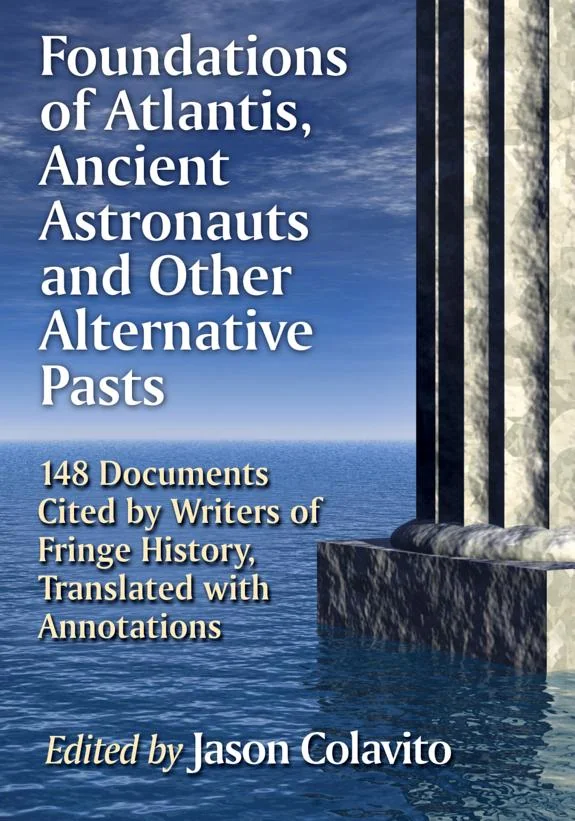
### What It Is Foundations of Atlantis, Ancient Astronauts and Other Alternative Pasts, by Jason Colavito (first published 2015), meticulously examines claims of ancient civilizations interacting with extraterrestrial visitors or possessing advanced knowledge beyond their historical context. Colavito analyzes popular theories surrounding Atlantis, ancient astronaut hypotheses, and other speculative historical narratives, scrutinizing the evidence presented by proponents. The book questions the validity of interpretations of ancient texts and artifacts, presenting a scholarly counter-argument to fringe historical accounts.
### Who It's For This work is for critical thinkers and students of history, archaeology, and mythology who are interested in debunking pseudoscientific theories. Readers seeking a rational, evidence-based perspective on ancient mysteries, alternative history, and the popular imagination surrounding ancient astronauts and lost civilizations will find it particularly valuable. It appeals to those who question sensationalized claims and desire a deeper understanding of how historical narratives are constructed and distorted.
### Historical Context Colavito’s book emerged in an era saturated with popular media dedicated to ancient alien theories, exemplified by television series like *Ancient Aliens*, which gained significant traction in the late 2000s and early 2010s. This period saw a resurgence of interest in Erich von Däniken's controversial 1968 book *Chariots of the Gods?*, which posited extraterrestrial influence on ancient cultures. Colavito’s work serves as a direct academic counterpoint to these pervasive, often uncritical, narratives, engaging with the scholarly debate surrounding pseudoarchaeology and its public appeal.
### Key Concepts The book dissects the concept of the "ancient astronaut" theory, challenging the notion that ancient peoples lacked the capacity for innovation and instead relied on external, often alien, intervention. It explores the misinterpretation of mythological narratives and archaeological findings to fit pre-determined conclusions. Colavito also addresses the myth of Atlantis, not as a literal historical event, but as a philosophical construct that has been co-opted by alternative history movements to suggest lost super-civilizations with advanced technology.
💡 Why Read This Book?
• You will learn how specific ancient texts, such as the Mahabharata, have been misinterpreted by ancient astronaut theorists, gaining critical skills to evaluate historical claims about extraterrestrial influence. • You will understand the historical trajectory of the Atlantis myth, from Plato's original dialogues to its modern speculative iterations, allowing you to differentiate philosophical allegory from pseudo-historical fact. • You will grasp the scholarly consensus on ancient technologies and cultural development, providing a solid foundation for assessing arguments that attribute ancient achievements to alien intervention.
⭐ Reader Reviews
Honest opinions from readers who have explored this book.
❓ Frequently Asked Questions
What is the primary argument against the ancient astronaut theory in Colavito's book?
Colavito argues that ancient astronaut theories rely on a fundamental misunderstanding and misrepresentation of ancient texts, artifacts, and the capabilities of ancient peoples. He demonstrates how evidence is selectively interpreted to fit a pre-determined narrative of alien intervention.
How does Colavito address the myth of Atlantis?
He traces the myth's origins to Plato's philosophical dialogues and its transformation into a historical or pseudo-historical concept by later writers like Ignatius Donnelly, highlighting how it's been used to support theories of lost, advanced civilizations.
Does Colavito provide alternative explanations for ancient mysteries?
Yes, Colavito often provides conventional archaeological and historical explanations for phenomena that proponents of alternative theories attribute to aliens, emphasizing human ingenuity and cultural development.
What is the significance of Jason Colavito's work in the field of alternative history?
Colavito is recognized for his rigorous debunking of pseudoscientific claims in history and archaeology. His work challenges popular narratives and advocates for evidence-based scholarship, contributing to a more critical public understanding of the past.
When was Foundations of Atlantis, Ancient Astronauts and Other Alternative Pasts first published?
The book was first published on March 6, 2015.
What academic disciplines inform Colavito's analysis?
Colavito draws on a range of academic disciplines including history, archaeology, mythology, classics, and comparative religion to critically examine alternative historical claims.
🔮 Key Themes & Symbolism
Misinterpretation of Ancient Texts
The work scrutinizes how sacred texts, epics like the Mahabharata, and religious narratives from various cultures are selectively quoted and reinterpreted to support the ancient astronaut hypothesis. Colavito illustrates how these texts, when examined within their original cultural and linguistic contexts, do not support claims of extraterrestrial visitation but rather reflect ancient human beliefs, cosmologies, and storytelling traditions. This theme underscores the importance of scholarly exegesis over speculative readings.
The Atlantis Mythos
Colavito traces the evolution of the Atlantis legend from Plato's philosophical allegory to its modern incarnation as a literal lost continent inhabited by advanced beings. He analyzes key figures like Ignatius Donnelly who popularized the idea in the late 19th century, demonstrating how the myth has been repurposed by pseudoarchaeologists to suggest a global pre-Diluvian civilization with technological prowess, often linked to ancient astronaut theories.
Pseudoarchaeology and Pseudoscience
A central theme is the critique of pseudoarchaeology, which often presents speculative theories as historical fact without rigorous evidence. Colavito examines the methodologies employed by proponents of alternative histories, highlighting their reliance on anecdotal evidence, logical fallacies, and a disregard for established archaeological and historical consensus. The book positions these theories within a broader cultural fascination with mysteries and the unknown.
Human Ingenuity vs. Alien Intervention
Colavito consistently argues for the capacity of ancient humans to achieve remarkable feats of engineering, art, and social organization through their own ingenuity. He counters the 'alien intervention' narrative by showcasing archaeological evidence and historical records that demonstrate the development of complex societies, monumental architecture, and sophisticated knowledge systems through gradual human effort and innovation over millennia.
💬 Memorable Quotes
“Evidence for long-ago astronauts or early transatlantic voyages can be found in ancient texts.”
— This phrase, often cited by proponents of alternative histories, represents the core assertion that Colavito aims to dismantle. He scrutinizes the methods used to 'find' such evidence, arguing it stems from eisegesis rather than sound scholarship.
“The public enjoys such questions, which have spawned countless books, movies and television series.”
— This observation highlights the cultural appeal and commercial viability of ancient mysteries and alien contact narratives, suggesting that popular fascination often precedes or overshadows rigorous factual investigation.
“But too often sources remain obscure and some w”
— This incomplete sentence from the original blurb points to a common critical issue: the reliance on poorly sourced or misrepresented information within fringe historical theories, a practice Colavito systematically addresses.
“The work explores the misinterpretation of mythological narratives.”
— This paraphrased concept indicates Colavito's focus on how ancient stories and myths are taken out of their cultural context and forced to fit modern speculative frameworks, particularly those involving extraterrestrials.
“The book questions the validity of interpretations of ancient texts and artifacts.”
— This signifies Colavito's methodological approach: a critical examination of how specific interpretations of historical evidence are constructed, challenging their scholarly foundation and logical coherence.
🌙 Esoteric Significance
Tradition
While not strictly within a defined esoteric lineage like Hermeticism or Kabbalah, Colavito's work engages with the *results* of esoteric and occult thought as it intersects with history. Movements like Theosophy, founded by Helena Blavatsky in the late 19th century, greatly influenced modern Atlantis myths and ideas of ancient advanced races. Colavito critiques the historical methodology often employed by such traditions, which prioritizes mystical revelation or intuition over empirical evidence, thereby challenging the foundations upon which many esoteric historical narratives are built.
Symbolism
The book implicitly addresses symbols found within ancient astronaut theories, such as pyramids, megalithic structures, and depictions of deities or figures in ancient art, which are often reinterpreted as alien technology or spacecraft. Colavito deconstructs these interpretations, returning them to their original cultural and religious contexts where they represented human cosmology, divine power, or ancestral reverence, rather than extraterrestrial origins. The 'star' symbol, frequently used in ancient astronaut iconography, is examined not as a marker of alien visitors but as a representation of celestial deities or navigation.
Modern Relevance
Colavito's critical approach remains highly relevant today as pseudoarchaeological theories continue to proliferate online and in popular media. Thinkers and researchers focused on critical thinking, skepticism, and evidence-based historical analysis draw on his work to debunk misinformation. His arguments are essential for contemporary scholars and educators seeking to counter the spread of alternative history narratives that often co-opt esoteric symbolism for non-scholarly ends, particularly in online communities and speculative fiction genres.
👥 Who Should Read This Book
• Skeptical students of history and archaeology: Readers who want to understand the scholarly refutation of popular ancient astronaut theories and Atlantis myths will find Colavito's evidence-based approach invaluable. • Enthusiasts of comparative mythology: Those interested in how myths are interpreted and often distorted by modern speculative theories will gain insight into the critical analysis of ancient narratives. • Critical thinkers and media literacy advocates: Individuals seeking to develop skills to identify and counter pseudoscientific claims in popular culture will benefit from Colavito's methodical debunking techniques.
📜 Historical Context
Published in 2015, *Foundations of Atlantis, Ancient Astronauts and Other Alternative Pasts* arrived during a period of intense public engagement with pseudoarchaeology, largely fueled by cable television programming like *Ancient Aliens*. This era saw a significant resurgence of interest in figures like Erich von Däniken, whose 1968 book *Chariots of the Gods?* had previously popularized the ancient astronaut theory. Colavito’s work functions as a direct academic counterargument to these widespread, often uncritical, narratives. It engages with a long-standing tradition of speculative history that began to gain momentum in the late 19th and early 20th centuries with authors like Ignatius Donnelly, who reinterpreted Plato’s Atlantis myth. In this context, Colavito’s book is part of an ongoing scholarly effort to maintain historical integrity against sensationalist interpretations, standing in contrast to the popular works of his time.
📔 Journal Prompts
The interpretation of the Mahabharata as evidence for ancient astronauts.
Plato's Atlantis versus Ignatius Donnelly's Atlantis.
The methodological flaws in pseudoarchaeological arguments.
Reconstructing the original context of ancient artifacts.
The cultural appeal of lost civilizations and advanced ancient technologies.
🗂️ Glossary
Ancient Astronaut Theory
The hypothesis that extraterrestrial beings visited Earth in ancient times and influenced human culture, technology, and religion. Proponents often cite ancient texts, artifacts, and structures as evidence.
Pseudoarchaeology
A pseudoscientific approach to interpreting the past that relies on speculative theories and misinterpretations of archaeological and historical evidence, often ignoring scholarly consensus.
Atlantis
A legendary island or continent first mentioned by Plato in his dialogues *Timaeus* and *Critias*. It has been mythologized as a lost civilization of advanced technology, often incorporated into alternative history theories.
Eisegesis
The process of interpreting a text by reading one's own ideas, assumptions, or biases into it, rather than deriving meaning solely from the text itself. This is often contrasted with exegesis.
Exegesis
Critical explanation or interpretation of a text, especially of scripture. In a broader sense, it refers to scholarly analysis that seeks to understand a text within its original context.
Pseudoscience
A claim, belief, or practice presented as scientific but lacking in adherence to the scientific method, unsupported by empirical evidence, and often unverifiable or unfalsifiable.
Mythology
The collection of myths, especially one belonging to a particular religious or cultural tradition. It encompasses stories about gods, heroes, and the origins of the world.