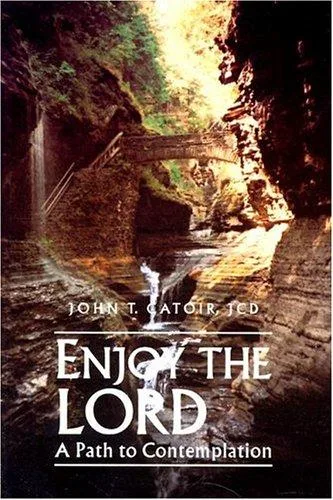
Enjoy the Lord
 82
82

Enjoy the Lord
John T. Catoir’s "Enjoy the Lord" offers a welcome respite from the often-complexified language surrounding spiritual disciplines. The book’s strength lies in its direct, almost conversational tone, which makes profound spiritual concepts accessible without resorting to jargon. Catoir’s interpretation of contemplative prayer, particularly his emphasis on finding the divine in ordinary moments, is compelling. However, the work occasionally verges on the overly simplistic, particularly in its treatment of potential spiritual obstacles, which are sometimes glossed over rather than explored in depth. A passage discussing the "prayer of quiet" vividly illustrates the book's gentle yet insistent call to inner stillness. Ultimately, "Enjoy the Lord" serves as a gentle, encouraging companion for the spiritual seeker.
📝 Description
82
### What It Is "Enjoy the Lord" is a spiritual guide by John T. Catoir, first published in 1986. It presents a series of meditations and reflections aimed at fostering a deeper, more personal relationship with the divine. The work does not adhere strictly to one religious dogma but draws from a broad spectrum of mystical traditions, encouraging readers to find their own path to spiritual fulfillment.
### Who It's For This book is for individuals seeking to deepen their spiritual practice beyond conventional religious structures. It appeals to those interested in contemplative prayer, esoteric Christianity, and personal mysticism. Readers who appreciate introspective writing and are looking for practical ways to integrate spiritual awareness into daily life will find value here. It is suitable for both those new to contemplative paths and those with established practices.
### Historical Context Published in 1986, "Enjoy the Lord" emerged during a period of renewed interest in spirituality and mysticism, separate from mainstream religious institutions. This era saw a rise in New Age thought and a greater openness to diverse spiritual traditions. Catoir’s work, while rooted in Christian contemplative practice, aligns with this broader movement by emphasizing personal experience and inner transformation over strict adherence to external doctrines. It offered an alternative to more dogmatic spiritual texts.
### Key Concepts The central concept is the cultivation of a direct, intimate "knowing" of God, moving beyond intellectual assent to a felt experience. This involves practices of stillness, interior prayer, and a conscious turning toward the divine presence within. The work explores the idea of God as immanent, present in all aspects of life, and accessible through focused attention and surrender. It advocates for a joyful, rather than fearful, approach to spirituality.
💡 Why Read This Book?
• Gain practical methods for cultivating inner stillness, drawing from Catoir's specific guidance on "the prayer of quiet," a technique detailed in the book for achieving direct communion. • Discover a unique perspective on the immanence of the divine, informed by the book's exploration of finding God not in grand gestures but within the mundane activities of daily life, as presented in its meditations. • Engage with a spiritual approach that bridges esoteric Christian contemplation with broader mystical traditions, offering insights not typically found in conventional religious instruction as Catoir weaves them together.
⭐ Reader Reviews
Honest opinions from readers who have explored this book.
❓ Frequently Asked Questions
When was John T. Catoir's "Enjoy the Lord" first published?
John T. Catoir's "Enjoy the Lord" was first published in 1986, a period marked by a growing interest in personal spirituality and contemplative practices.
What is the primary focus of "Enjoy the Lord"?
The book's primary focus is on developing a direct, personal relationship with the divine through contemplative prayer and inner reflection, encouraging a joyful spiritual path.
Does "Enjoy the Lord" belong to a specific religious tradition?
While rooted in Christian contemplative practice, the book draws from various mystical traditions, emphasizing personal spiritual experience over strict adherence to any single dogma.
What kind of spiritual practices does the book suggest?
It suggests practices like stillness, interior prayer, and conscious awareness of the divine presence, aiming to integrate spirituality into everyday life.
Who would benefit most from reading "Enjoy the Lord"?
Individuals seeking to deepen their spiritual lives, explore contemplative prayer, or find a more personal connection with the divine beyond conventional religious frameworks would benefit.
Is this book considered esoteric literature?
Yes, "Enjoy the Lord" is categorized as esoteric due to its focus on inner mystical experience and contemplative techniques that go beyond ordinary religious instruction.
🔮 Key Themes & Symbolism
The Prayer of Quiet
This central theme revolves around cultivating a state of profound inner stillness where the soul can directly experience the presence of God. Catoir elucidates this as a passive yet active state, requiring surrender and receptivity. It’s not about forceful effort but about allowing divine grace to work within. The book guides the reader toward recognizing and resting in this quiet space, moving beyond discursive thought to a direct, intuitive knowing of the divine, a core practice in Christian mysticism.
Immanence of the Divine
Catoir emphasizes that God is not a distant deity but is intimately present within all creation and, most importantly, within the individual soul. This concept challenges the notion of a separate, external God, urging readers to perceive the divine spark in everyday moments and experiences. The work encourages a constant awareness of this immanent presence, transforming ordinary life into a sacred encounter and fostering a continuous dialogue with the divine throughout the day.
Joyful Spirituality
A distinctive aspect of "Enjoy the Lord" is its promotion of a joyful approach to spiritual life, contrasting with common perceptions of spirituality as austere or burdensome. Catoir posits that true spiritual seeking leads to an authentic happiness and peace that comes from union with God. This joy is presented not as fleeting pleasure but as a deep-seated contentment derived from cultivating a loving relationship with the divine, making the spiritual path itself a source of fulfillment.
Interior Life
The book strongly advocates for prioritizing the development of one's interior life over external religious performance or intellectual understanding alone. Catoir guides readers to turn inward, exploring the landscape of their own souls to find God. This focus on the inner journey suggests that true spiritual growth occurs through self-awareness, introspection, and cultivating a personal relationship with the divine that transcends outward rituals or dogma.
💬 Memorable Quotes
“The Lord asks us to enjoy Him.”
— This statement encapsulates the book's central thesis: spirituality should be approached with joy and a sense of delightful communion, rather than obligation or solemnity. It reframes the divine relationship as one of shared enjoyment.
“Turn inward and you will find Him.”
— This paraphrased concept highlights the book's emphasis on introspection and the immanence of God. It suggests that the divine is not found in external searching but through cultivating inner awareness and stillness.
“God is present in every moment.”
— This interpretation underscores the book's message about divine immanence. It encourages the reader to perceive the divine not just in special occasions but in the continuous flow of daily life, transforming the mundane.
“Stillness is the gateway to divine connection.”
— This paraphrased concept points to the importance of contemplative practices. It suggests that by quieting the mind and external distractions, one creates space for a direct experience of the divine presence.
“Love is the essence of our relationship with God.”
— This interpretation emphasizes the relational aspect of spirituality as presented by Catoir. It posits that the core of connecting with the divine is rooted in mutual love and affection, fostering a personal bond.
🌙 Esoteric Significance
Tradition
The work aligns most closely with the tradition of Christian Mysticism, particularly the contemplative path exemplified by figures like St. Teresa of Avila and St. John of the Cross. It shares their emphasis on interior prayer, the soul's direct encounter with God, and the development of spiritual virtues. However, its accessible language and broad appeal also situate it within the wider esoteric milieu of the late 20th century, which sought to make mystical insights available to a lay audience interested in personal spiritual growth beyond conventional religious boundaries.
Symbolism
While not heavily reliant on overt symbolism in the manner of Hermetic or Kabbalistic texts, "Enjoy the Lord" uses the concept of 'stillness' as a primary symbolic gateway. This stillness represents not merely an absence of noise but a sacred space within the soul where the divine presence can be apprehended. The 'interior life' itself functions symbolically, representing the inner landscape of the soul as a sacred territory to be explored. The 'joy' mentioned in the title can be seen as symbolizing the fruits of divine union – peace, contentment, and a deep sense of fulfillment.
Modern Relevance
Catoir's emphasis on cultivating an inner life and experiencing the divine immanently continues to resonate with contemporary spiritual seekers. Modern practices in mindfulness, contemplative meditation, and 'spiritual but not religious' movements echo the principles laid out in "Enjoy the Lord." Thinkers and practitioners focused on ecumenical spirituality, interfaith dialogue rooted in shared mystical experience, and the integration of spiritual practice into daily life draw upon the accessible, experiential approach championed in the book.
👥 Who Should Read This Book
• Individuals exploring Christian contemplative prayer who seek practical guidance on achieving inner stillness and direct experience of God, moving beyond intellectual understanding. • Seekers interested in the intersection of spirituality and daily life, looking for ways to perceive the divine immanent in ordinary moments and activities. • Readers drawn to introspective and devotional literature who appreciate a gentle, encouraging tone in their exploration of a personal relationship with the divine.
📜 Historical Context
When John T. Catoir's "Enjoy the Lord" was published in 1986, the spiritual landscape was marked by a growing divergence from institutionalized religion. The New Age movement was gaining traction, fostering an environment where personal experience and eclectic spiritual paths were increasingly valued. Within Christianity, there was a concurrent resurgence of interest in contemplative traditions, often pursued outside of traditional parish structures. Authors like Thomas Merton, though deceased by 1986, had paved the way for a renewed appreciation of mystical thought. Catoir's work fit into this milieu, offering a bridge between classical Christian contemplative practice and a broader, more individualistic spiritual seeking. While not facing overt censorship, its emphasis on direct experience over dogma placed it alongside other contemporary works exploring interior prayer and mysticism, distinguishing itself from more theologically rigid or psychologically focused self-help literature of the era.
📔 Journal Prompts
The "prayer of quiet" as a method for experiencing divine presence.
Cultivating joy in the spiritual journey as described by Catoir.
Identifying moments of divine immanence in everyday activities.
Reflecting on the nature of the "interior life" and its development.
The concept of "enjoying the Lord" and its personal implications.
🗂️ Glossary
Interior Prayer
A form of prayer that focuses on the inner spiritual life, emphasizing direct communion with God through contemplation and meditation rather than rote recitation or petitionary requests.
Divine Immanence
The belief that God or the divine is present within the universe and within individuals, not as a distant creator, but as an inherent and accessible force or presence.
Prayer of Quiet
A state of contemplative prayer characterized by profound inner stillness and a direct, intuitive apprehension of God's presence, often described as a passive yet receptive spiritual state.
Contemplation
A form of prayer or meditation focused on silent, loving union with God, involving deep reflection and a passive receptivity to divine grace, moving beyond discursive thought.
Spiritual Life
The aspect of human existence concerned with the pursuit of meaning, purpose, and connection to the transcendent or divine, often involving practices of prayer, meditation, and self-reflection.
Divine Presence
The awareness or experience of God or the sacred being actively and intimately present, often felt in moments of prayer, meditation, or deep connection with the surrounding world.
Stillness
A state of mental and emotional quietude, often cultivated through prayer or meditation, creating an inner space conducive to spiritual awareness and direct experience of the divine.