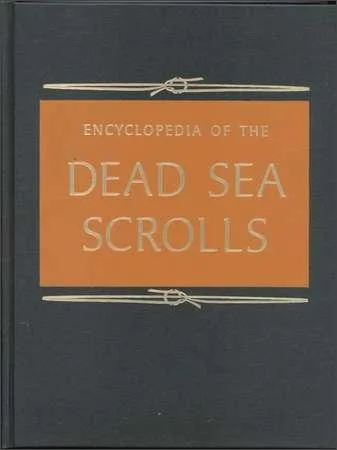
Encyclopedia of the Dead Sea Scrolls
 79
79

Encyclopedia of the Dead Sea Scrolls
Schiffman’s Encyclopedia presents a formidable consolidation of knowledge regarding the Dead Sea Scrolls, a necessary undertaking given the sheer volume of material and ongoing scholarly discourse. Its strength lies in its systematic organization and the breadth of topics covered, from textual analysis to community studies. A notable aspect is the detailed examination of the Qumran sect’s distinct legal interpretations, offering a granular view of sectarian practice in the Second Temple era. However, for the non-specialist, the sheer density of information and academic terminology can present a steep learning curve. While Schiffman aims for accessibility, the work occasionally presumes a familiarity with the scholarly debates surrounding the scrolls. The section on the "Community Rule" (Serekh HaYahad) provides a solid, albeit dense, overview of the sect’s organizational structure and ideals. Ultimately, it functions best as a reference for those already immersed in the subject, rather than an introductory primer.
📝 Description
79
### What It Is The Encyclopedia of the Dead Sea Scrolls, first published in 2000 by Lawrence H. Schiffman, serves as a comprehensive reference work for scholars and enthusiasts alike. It meticulously catalogues and explains the vast array of texts discovered in caves near the Dead Sea, primarily between 1947 and 1956. The work aims to provide an accessible yet scholarly overview of these crucial historical documents, covering their content, origins, and significance.
### Who It's For This encyclopedia is an essential resource for anyone seriously engaged with the study of Second Temple Judaism, early Christianity, and ancient Jewish history. Students of biblical studies, archaeology, and religious history will find its detailed entries invaluable. It is also suited for curious lay readers seeking a thorough understanding of the scrolls' context and impact beyond sensationalized accounts.
### Historical Context The discovery of the Dead Sea Scrolls, beginning in 1947, revolutionized the understanding of Judaism and Christianity during the Second Temple period. These manuscripts offered a window into a diverse religious landscape previously only glimpsed through later rabbinic texts or the New Testament. Schiffman's work situates these findings within the intense scholarly debate of the late 20th century, addressing the questions surrounding the Qumran community and the scrolls' interpretation.
### Key Concepts The encyclopedia unpacks concepts central to the scrolls, such as the Qumran sect's eschatological beliefs, their unique interpretations of biblical law (Halakha), and their messianic expectations. It details the different manuscript types—biblical, sectarian, and apocryphal—and explores the paleographical and linguistic evidence used to date and attribute them. The work clarifies the relationships between the Qumran community and other Jewish groups like the Pharisees and Sadducees.
💡 Why Read This Book?
• Gain a structured understanding of the Qumran sect's unique Halakha, learning about their specific interpretations of Jewish law that differed significantly from contemporary Pharisaic traditions. • Explore the historical context of the Second Temple period (circa 516 BCE–70 CE), understanding the diverse religious landscape that influenced early Christianity and Rabbinic Judaism. • Grasp the significance of identifying different manuscript types—biblical, sectarian, and apocryphal—and the scholarly methods, like paleography, used to date and understand them.
⭐ Reader Reviews
Honest opinions from readers who have explored this book.
❓ Frequently Asked Questions
When were the Dead Sea Scrolls discovered?
The initial discovery of the Dead Sea Scrolls occurred in 1947 by Bedouin shepherds in caves near Qumran, with further significant finds continuing until 1956.
What is the primary language of the Dead Sea Scrolls?
The majority of the Dead Sea Scrolls are written in Hebrew, with a substantial portion in Aramaic, and a smaller number in Greek.
Who was the Qumran community?
The Qumran community is widely believed to be the group responsible for creating and collecting many of the Dead Sea Scrolls, likely a sectarian group with distinct religious beliefs and practices.
What is the significance of the "Community Rule" (Serekh HaYahad)?
The "Community Rule" is a key sectarian document detailing the organization, laws, and ideals of the Qumran community, offering insight into their communal life and religious commitments.
How do the Dead Sea Scrolls relate to the Bible?
Many of the scrolls are copies of books later included in the Hebrew Bible, providing the oldest known manuscripts of these texts and confirming their ancient transmission.
What is paleography in the context of the Dead Sea Scrolls?
Paleography is the study of ancient handwriting, used by scholars to date the Dead Sea Scrolls by analyzing the evolution of script styles over time.
🔮 Key Themes & Symbolism
Qumran Sectarianism
The encyclopedia extensively details the unique characteristics of the Qumran community, positing them as the primary custodians of the Dead Sea Scrolls. It examines their strict adherence to a communal rule, their distinct interpretations of Jewish law (Halakha), and their eschatological outlook, which included specific messianic expectations. Schiffman analyzes texts like the "Community Rule" (Serekh HaYahad) and the " Damascus Document" to illuminate their ascetic lifestyle, communal property, and rigorous initiation rites, presenting a vivid picture of a devout, separatist group within Second Temple Judaism.
Biblical and Apocryphal Texts
A significant portion of the work is dedicated to the biblical manuscripts found among the Dead Sea Scrolls, including the oldest surviving copies of books from the Hebrew Bible. Schiffman discusses the textual variations and the implications for biblical transmission history. Beyond canonical works, the encyclopedia also covers the numerous apocryphal and pseudepigraphal texts discovered, which were not included in the later Jewish or Christian canons. These texts offer crucial insights into the broader religious and literary world of ancient Judaism.
Second Temple Judaism
The encyclopedia serves as a critical lens through which to view the religious and intellectual ferment of the Second Temple period (c. 516 BCE–70 CE). It situates the Qumran sect within the spectrum of Jewish thought at the time, exploring their relationship with other movements like the Pharisees and Sadducees. By analyzing the scrolls' content, Schiffman illuminates the diverse theological currents, legal debates, and messianic hopes that characterized this pivotal era, shaping both Rabbinic Judaism and early Christianity.
Manuscript Discovery and Study
The work provides context for the remarkable discovery of the scrolls, beginning in 1947, and the subsequent decades of archaeological and scholarly endeavor. It touches upon the challenges of acquisition, preservation, and decipherment. Schiffman explains the methodologies employed in studying these ancient documents, including paleography (the study of handwriting for dating purposes), linguistic analysis of Hebrew and Aramaic, and comparative textual criticism, offering a behind-the-scenes look at the academic process.
💬 Memorable Quotes
“The "Community Rule" outlines the obligations for new members joining the "covenant community."”
— This highlights the structured and deliberate process of communal entry for the Qumran sect, emphasizing commitment and adherence to specific regulations before full acceptance.
“Paleographical analysis helps establish the chronological framework for the Qumran corpus.”
— This points to the crucial role of studying ancient script styles in dating the scrolls, providing a scientific basis for understanding their historical placement within the Second Temple period.
“The scrolls reveal a Judaism far more diverse than previously assumed.”
— This interpretation underscores the revolutionary impact of the scrolls, demonstrating that Second Temple Judaism was not monolithic but comprised various sects and theological viewpoints.
“Scholars debate the precise identity of the Qumran community and their relationship to other Jewish groups.”
— This acknowledges the ongoing scholarly discussion and lack of absolute consensus regarding the Qumran sect's specific affiliations and distinctiveness within the broader Jewish landscape.
“The Temple Scroll is the longest of the discovered manuscripts.”
— This fact emphasizes the scale and scope of the Dead Sea Scrolls library, noting a particularly extensive text that offers unique perspectives on Temple practices and purity laws.
🌙 Esoteric Significance
Tradition
While not overtly part of a specific esoteric tradition like Kabbalah or Hermeticism, the Dead Sea Scrolls, particularly sectarian texts, engage with themes of hidden knowledge, purity, and divine illumination that resonate with esoteric thought. The Qumran community's focus on interpreting scripture for hidden meanings, their emphasis on spiritual purity, and their anticipation of a divinely revealed future align with motifs found in various mystical and Gnostic traditions. Schiffman's work provides the scholarly foundation for understanding these potentially esoteric dimensions within an ancient Jewish context.
Symbolism
The scrolls often employ symbolic language related to light and darkness, purity and impurity, and the celestial bodies. The Qumran community saw itself as the "sons of light," contrasting with the "sons of darkness," a dualistic motif common in esoteric traditions. Concepts of ritual purity were paramount, symbolizing spiritual cleansing and separation from the profane world. The precise dating of events by astronomical observation also hints at a symbolic ordering of time aligned with cosmic principles, a feature often explored in mystical traditions.
Modern Relevance
Contemporary scholars and practitioners exploring Jewish mysticism, early Christian origins, and comparative religion frequently draw upon the foundational research presented in works like Schiffman's encyclopedia. The scrolls' insights into sectarianism, messianism, and apocalyptic thought continue to inform discussions in fields ranging from New Testament studies to modern Kabbalistic interpretations of ancient Jewish texts. The ongoing academic engagement with the scrolls ensures their continued relevance for understanding the historical roots of diverse spiritual and religious paths.
👥 Who Should Read This Book
• Academic researchers and graduate students in Religious Studies, Ancient History, and Biblical Archaeology seeking detailed, fact-based analysis of the Dead Sea Scrolls and their context. • Advanced lay readers interested in the historical and textual foundations of Judaism and Christianity, desiring a scholarly yet comprehensive overview of primary source material. • Comparative religion scholars examining sectarianism, apocalyptic literature, and legal traditions in the ancient Near East, needing a resource for understanding a key Jewish movement of the Second Temple period.
📜 Historical Context
The discovery of the Dead Sea Scrolls, commencing in 1947, occurred during a period of intense intellectual and political upheaval following World War II and the establishment of the State of Israel. This era saw a surge in archaeological exploration and a heightened scholarly interest in the origins of Judaism and Christianity. The scrolls fundamentally challenged existing understandings of Second Temple Judaism, a period already being re-examined through the lens of early Christian and later Rabbinic texts. Scholars like Yigael Yadin and Geza Vermes were actively engaged in interpreting these findings. Schiffman's work emerged within a robust academic discourse, contributing to debates surrounding the Qumran sect's identity, often contrasted with the dominant Pharisaic interpretations of Jewish law. The meticulous cataloging and analysis offered in his encyclopedia helped consolidate a vast and often fragmented body of evidence.
📔 Journal Prompts
The Qumran sect's concept of "sons of light" versus "sons of darkness": how does this dualism manifest in personal belief systems?
Reflect on the "Community Rule" (Serekh HaYahad) and its implications for communal living and individual responsibility.
Consider the significance of biblical manuscript discoveries like those from Qumran for textual integrity.
Analyze the historical context of the Second Temple period as presented, noting its impact on subsequent religious developments.
Examine the role of Halakha (Jewish law) within the Qumran community as detailed in the encyclopedia.
🗂️ Glossary
Halakha
The collective body of Jewish religious laws derived from the Written and Oral Torah, encompassing rituals, ethics, and social regulations. The scrolls show sectarian interpretations of Halakha.
Paleography
The study of ancient handwriting. In Dead Sea Scrolls research, it's a critical method for dating manuscripts by analyzing script styles and their evolution over time.
Second Temple Period
The era of Jewish history extending from the rebuilding of the Second Temple in Jerusalem (c. 516 BCE) until its destruction by the Romans in 70 CE.
Apocrypha
Biblical or religious writings not included in the accepted canon of scripture by Jews or Protestants, but often found in ancient collections. Several apocryphal works were found among the scrolls.
Sectarian Texts
Manuscripts originating from specific Jewish religious groups or sects active during the Second Temple period, such as the Qumran community, detailing their beliefs and practices.
Eschatology
The theological study of end-time events, including concepts of the final judgment, the messianic age, and the ultimate destiny of humanity and the cosmos.
Qumran
An archaeological site near the Dead Sea where the Dead Sea Scrolls were discovered. Associated with a Jewish sect that likely produced or collected many of the scrolls.