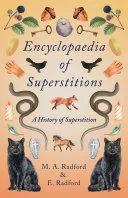
Encyclopaedia of Superstitions - A History of Superstition
 83
83

Encyclopaedia of Superstitions - A History of Superstition
The sheer scope of M. A. Radford and E. Radford's Encyclopaedia of Superstitions is its most striking feature. Published originally in 1947, it offers an almost exhaustive catalog of human belief in the uncanny, meticulously organized for easy reference. The strength lies in its encyclopedic nature, presenting over 2,300 entries without extensive interpretation, allowing readers to draw their own conclusions. A notable weakness, however, is its sheer density; the lack of deep analysis for each entry can sometimes feel overwhelming. The section detailing superstitions surrounding mirrors, for example, is extensive but could benefit from more exploration of the symbolism beyond simple bad luck. Despite this, the work remains an invaluable, if somewhat dry, reference for anyone serious about the history and anthropology of belief. It is an indispensable catalog for the curious.
📝 Description
83
First published in 1947, this encyclopaedia documents over 2,300 superstitions.
M. A. Radford and E. Radford's Encyclopaedia of Superstitions catalogs beliefs and practices from ancient and modern folklore. The work meticulously documents more than 2,300 distinct superstitions, covering common omens to obscure folk rituals. It seeks to provide a historical and cultural overview of why these beliefs arose and how they persisted across different societies.
This compendium is a valuable resource for folklorists, cultural anthropologists, historians of religion, and anyone interested in belief systems. Scholars can trace the lineage of specific folk practices, while general readers can explore the origins of everyday superstitions. Those studying comparative mythology or the evolution of human thought will find it particularly useful.
Placed within the post-war intellectual climate of 1947, the Radfords' approach offered a systematic way to study superstitions from diverse cultures. It predates much modern academic discourse on cognitive biases and the sociology of belief, standing as an early, extensive survey of these phenomena.
This book sits within a tradition of cataloging popular beliefs and practices that often fall outside mainstream religious or academic discourse. It approaches folklore not merely as quaint relics but as expressions of human psychology and societal needs for meaning and order. By systematically documenting these often-unwritten traditions, the Radfords contribute to understanding the underlying currents of human belief that persist across cultures and time, a pursuit common in esoteric studies.
💡 Why Read This Book?
• Gain insight into over 2,300 superstitions, understanding their historical roots and cultural variations as presented in the 1947 original publication. • Explore the origins of specific omens and rituals, such as those concerning black cats or broken mirrors, as meticulously documented by the Radfords. • Appreciate the enduring patterns in human belief systems, observing how common anxieties and desires manifest in superstitious practices across different eras and locales.
⭐ Reader Reviews
Honest opinions from readers who have explored this book.
❓ Frequently Asked Questions
When was the Encyclopaedia of Superstitions first published?
The Encyclopaedia of Superstitions was first published in 1947, with subsequent editions like the one from April 18, 2013, making it accessible to modern readers.
How many superstitions are included in the book?
The encyclopaedia features an extensive collection, listing over 2,300 superstitions from various cultures and historical periods.
What is the primary focus of M. A. Radford and E. Radford's work?
The book's primary focus is to document the history and origins of superstitions worldwide, presenting them in an organized, encyclopedic format.
Can I find superstitions related to specific themes, like luck or death?
Yes, the superstitions are organized under clear headings, allowing readers to easily find entries related to specific themes such as good luck, bad luck, death, or marriage.
Is this book suitable for academic research on folklore?
Absolutely. Its comprehensive cataloging and historical approach make it a valuable reference for academic research in folklore, anthropology, and cultural studies.
Does the book explain the psychological reasons behind superstitions?
While the book primarily documents the history and existence of superstitions, it provides the foundational material from which one can infer psychological underpinnings and societal functions.
🔮 Key Themes & Symbolism
The Universality of Omens
The work meticulously details how seemingly disparate cultures developed similar beliefs regarding omens, from the flight of birds to the spilling of salt. This suggests a shared human cognitive architecture that interprets natural events and random occurrences as meaningful signs. The Radfords present numerous examples that highlight these common threads, illustrating how anxieties about the future or the desire for good fortune manifest in predictable patterns across the globe.
Rituals of Protection and Appeasement
A significant portion of the encyclopaedia is dedicated to rituals enacted to ward off evil, attract luck, or appease unseen forces. This includes everything from specific gestures, like knocking on wood, to more elaborate ceremonies. The book explores how these practices, often rooted in ancient animistic or religious beliefs, served as a means for individuals to exert a sense of control over unpredictable circumstances and maintain social order.
The Evolution of Folk Belief
The encyclopaedia traces the lineage of many superstitions, showing how beliefs originating in antiquity have transformed or persisted into modern times. It demonstrates how superstitions are not static but evolve with societal changes, sometimes acquiring new meanings or being reinterpreted within different cultural contexts. This historical perspective is crucial for understanding the dynamic nature of folk traditions and their enduring appeal.
Symbolism in Everyday Life
Many superstitions are built around potent symbols – numbers, animals, objects – that carry deep cultural resonance. The book implicitly explores the symbolic weight attached to items like ladders, mirrors, or specific animals. It highlights how these symbols, often imbued with primal fears or desires, become focal points for superstitious behavior, acting as conduits for perceived supernatural influence.
💬 Memorable Quotes
Direct passages from the work, attributed to the author.
“Over 2,300 superstitions are presented, individually or collectively under clear headings.”
— This statement from the original blurb underscores the book's immense scope and systematic organization. It highlights the Radfords' commitment to comprehensive documentation, making the work a singular reference for the sheer volume of folkloric beliefs cataloged.
“The first complete encyclopaedia to feature the history and source of superstitions around the world.”
— This assertion emphasizes the work's pioneering status upon its initial publication in 1947. It positions the book not just as a collection, but as a scholarly attempt to provide historical context and origins for a vast array of global folk beliefs.
“Discover the many superstitions that have existed throughout history.”
— This phrase invites the reader on a historical exploration, suggesting that the book offers a longitudinal view of human belief. It frames the superstitions not as mere curiosities but as markers of historical consciousness and cultural evolution.
“Organized either individually or collectively under clear headings.”
— This detail points to the practical utility of the encyclopaedia. The Radfords' method of categorization allows for efficient research and comparison, enabling readers to read through the vast subject matter with relative ease.
“First published in 1947.”
— This fact anchors the work historically, placing its compilation and initial release within the post-World War II era. It suggests the intellectual climate and available research methodologies that shaped its comprehensive, cataloging approach.
🌙 Esoteric Significance
Tradition
While not explicitly aligned with a single esoteric lineage, the encyclopaedia functions as a foundational text for understanding the substrate of folk magic and popular occultism. Its cataloging of practices often touches upon pre-Christian, animistic, and folk Catholic traditions that underpin many Western magical systems. It provides raw data on the beliefs that often inform ritual actions, acting as a reference for practitioners seeking to understand the historical and cultural context of specific charms or wards.
Symbolism
The work implicitly highlights potent symbols like the number 13, associated with misfortune, or the perceived malevolence of breaking a mirror, which historically was linked to soul-harm or bad luck due to the mirror's supposed connection to the spiritual realm. Ravens and black cats, frequently cited, are archetypal symbols of ill omen, often connected to death or the underworld in various mythologies. These symbols serve as anchors for collective anxieties and beliefs about unseen forces.
Modern Relevance
Contemporary practitioners of folk magic, witchcraft, and even some ceremonial magicians draw upon the historical data presented in this encyclopaedia. Understanding the origins and variations of superstitions allows modern practitioners to engage with these beliefs more consciously, either by reviving older practices or by adapting them for current contexts. It aids in appreciating the deep roots of seemingly simple charms or protective rituals that persist in various forms today.
👥 Who Should Read This Book
• Students of folklore and comparative religion: Gain a comprehensive, historically grounded overview of global superstitious beliefs and their development. • Anthropologists and cultural historians: Utilize a vast catalog of practices to analyze societal norms, belief systems, and cultural evolution across different eras. • Curious individuals interested in the origins of everyday beliefs: Understand why common sayings or actions (like knocking on wood) became ingrained, tracing their historical and cultural roots.
📜 Historical Context
When M. A. Radford and E. Radford's Encyclopaedia of Superstitions first appeared in 1947, it entered a landscape shaped by the lingering effects of global conflict and a burgeoning academic interest in anthropology and folklore. The work itself is a product of the mid-20th century's empirical approach, aiming for comprehensive cataloging rather than deep theoretical interpretation. It stands in contrast to the more psychoanalytic or Jungian explorations of myth and symbolism gaining traction at the time, offering a broad, cross-cultural survey. While specific contemporaneous reception details are scarce, the book's endurance suggests it filled a void for a systematic, accessible reference on a topic often relegated to popular curiosity. Its meticulous documentation provided a valuable resource for scholars and enthusiasts alike, laying groundwork for future comparative studies of belief systems.
📔 Journal Prompts
The concept of omens, as detailed in the encyclopaedia's extensive catalog.
The ritualistic practices for protection against perceived negative influences.
The historical persistence of specific superstitions, such as those surrounding the number 13.
The symbolic meaning attributed to common objects or animals in folk belief.
The global variations in superstitions concerning luck and misfortune.
🗂️ Glossary
Omen
An event or phenomenon believed to foretell future good or bad fortune. The encyclopaedia documents numerous examples across cultures, from bird behavior to natural occurrences.
Folk Magic
The traditional, often unorganized, magical practices of a community or region, frequently intertwined with superstitions and local beliefs. This book provides a historical basis for many such practices.
Superstition
A belief or practice resulting from ignorance, fear of the unknown, trust in magic or chance, or a false conception of causation. The book exhaustively lists and contextualizes these beliefs.
Ritual
A set of actions, often symbolic, performed in a prescribed order. Many superstitions are associated with specific rituals intended to ward off bad luck or attract good fortune.
Folklore
The traditional beliefs, customs, and stories of a community, passed through the generations by word of mouth. Superstitions form a significant part of folklore.
Amulet
An object believed to possess the power to protect its wearer from evil or danger. The encyclopaedia notes various objects used as protective amulets in different cultures.
Taboo
A social or religious custom prohibiting or forbidding discussion of a particular practice or the involving of a particular person, place, or thing. Some superstitions function as taboos.