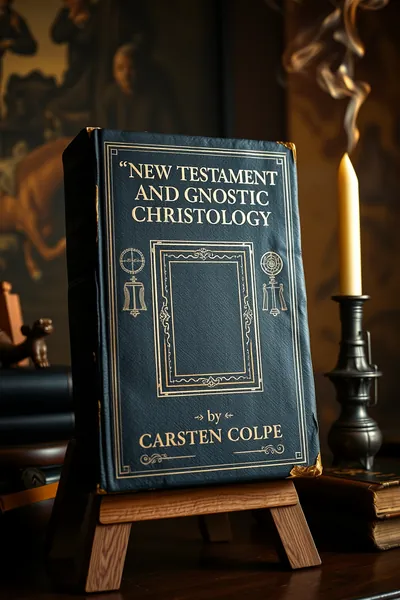
Einleitung in die Schriften aus Nag Hammadi

 78
78

Einleitung in die Schriften aus Nag Hammadi
Carsten Colpe's "Einleitung in die Schriften aus Nag Hammadi" functions as a competent, albeit dry, academic primer. Colpe's strength lies in his precise categorization of the varied texts within the Nag Hammadi corpus and his clear delineation of Gnostic cosmology. He meticulously unpacks the concept of the Demiurge, a recurring antagonist in many of these writings, demonstrating its role in Gnostic thought as distinct from orthodox Jewish or Christian theology. However, the work occasionally suffers from an overabundance of scholarly apparatus, which can obscure the more mystical dimensions of the texts for a less specialized reader. The section on the Gospel of Thomas, while informative, could benefit from more interpretive engagement with its unique sayings. Ultimately, this introduction serves well as a foundational text for understanding the scholarly consensus on the Nag Hammadi library, but it prioritizes factual exposition over evocative exploration.
📝 Description
78
### What It Is Einleitung in die Schriften aus Nag Hammadi offers a critical overview of the Gnostic texts discovered near the town of Nag Hammadi in Egypt in 1945. Carsten Colpe, a prominent scholar of early Christianity and Gnosticism, provides an academic yet accessible introduction to this pivotal archaeological find. The work examines the content, historical background, and theological implications of these codices, which shed significant light on diverse early Christian and Gnostic movements.
### Who It's For This volume is intended for students of religion, history, and philosophy, particularly those interested in the origins of Christianity and early Gnostic traditions. It serves scholars seeking a concise yet authoritative guide to the Nag Hammadi library and individuals curious about the heterodox spiritual currents that coexisted with nascent orthodox Christianity. No prior deep knowledge of Gnosticism is presumed, making it suitable for motivated general readers.
### Historical Context The discovery of the Nag Hammadi library in 1945, a collection of Coptic Gnostic texts, revolutionized the study of early Christianity and Gnosticism. These texts, mostly dating from the 2nd to 4th centuries CE, offered direct access to Gnostic thought previously known only through the polemics of their opponents, such as Irenaeus of Lyons. Colpe's work situates these writings within the complex intellectual milieu of the Hellenistic and Roman periods, where various philosophical and religious ideas, including Platonism, Stoicism, and mystery cults, were in dialogue.
### Key Concepts Colpe's introduction illuminates core Gnostic concepts present in the Nag Hammadi corpus. These include dualism (the tension between a transcendent, unknowable God and a flawed material world), the figure of the Demiurge (often identified with the Old Testament God, seen as a lesser creator), Sophia (wisdom) and her fall, the concept of gnosis (salvation through esoteric knowledge), and the divine spark within the human soul. The work analyzes how these ideas are expressed across various texts, such as the Gospel of Thomas and the Apocryphon of John.
💡 Why Read This Book?
• Gain a scholarly framework for understanding the 1945 discovery of the Nag Hammadi library, placing these Gnostic texts within their historical context. • Grasp core Gnostic doctrines like the Demiurge and Sophia's fall, as articulated by Carsten Colpe, to differentiate them from mainstream early Christian beliefs. • Appreciate the specific theological and philosophical currents of the 2nd to 4th centuries CE that informed the creation of texts like the Gospel of Thomas.
⭐ Reader Reviews
Honest opinions from readers who have explored this book.
❓ Frequently Asked Questions
What is the significance of the 1945 Nag Hammadi discovery?
The discovery of the Nag Hammadi library in 1945 unearthed thirteen Coptic Gnostic codices, offering direct access to texts previously known only through hostile accounts, profoundly impacting the study of early Christianity and Gnosticism.
Who was Carsten Colpe and what is his contribution to Gnostic studies?
Carsten Colpe (1929-2007) was a German scholar specializing in early Christianity and Gnosticism. His 'Einleitung' provides a systematic academic introduction to the Nag Hammadi texts, analyzing their content and historical context.
What are the primary Gnostic concepts discussed in the book?
The book explores key Gnostic ideas such as dualism, the figure of the Demiurge, the role of Sophia (wisdom), the concept of gnosis (salvific knowledge), and the divine spark within humanity.
Which specific texts from the Nag Hammadi library are examined?
Colpe's work typically discusses foundational texts within the Nag Hammadi corpus, including the Gospel of Thomas, the Apocryphon of John, and other significant codices that reveal Gnostic cosmology and soteriology.
Is this book suitable for beginners interested in Gnosticism?
Yes, 'Einleitung in die Schriften aus Nag Hammadi' is designed as an introduction. While academic, it assumes no prior deep knowledge, making it accessible for motivated readers and students of religious studies.
How does this book differ from orthodox Christian teachings of the same era?
Colpe highlights the Gnostic divergence from emerging orthodox Christianity, particularly concerning the nature of God, the material world's perceived flaw, and the path to salvation through esoteric knowledge (gnosis) rather than faith alone.
🔮 Key Themes & Symbolism
Gnostic Cosmology and Dualism
The work meticulously details the dualistic worldview prevalent in many Nag Hammadi texts, positing a fundamental division between a transcendent, perfect spiritual realm and a flawed, material creation. Colpe explains how this leads to the concept of a lesser creator, the Demiurge, often identified with the Old Testament God, who fashioned the imperfect physical universe. This cosmological framework is central to understanding the Gnostic perception of humanity's predicament and the path toward spiritual liberation.
The Concept of Gnosis
Central to the Nag Hammadi writings is the idea of 'gnosis,' or salvific knowledge. Colpe elucidates that for Gnostics, salvation is not achieved through faith or good works in the conventional sense, but through an immediate, intuitive apprehension of divine truth. This knowledge liberates the divine spark trapped within the material body, allowing the soul to ascend back to the Pleroma, the divine fullness. The book explores how this concept manifests in various texts, often through revelations or esoteric teachings attributed to Christ or other divine figures.
The Figure of Sophia
Carsten Colpe's analysis frequently addresses the complex figure of Sophia (Wisdom) within Gnostic mythologies. Often depicted as an aeon within the divine realm, her longing or error is frequently cited as the catalyst for the creation of the material world and the subsequent entrapment of divine light. The work examines how different Nag Hammadi texts portray Sophia's fall, her repentance, and her role in the salvific process, highlighting the diverse interpretations of this crucial feminine divine principle.
Christology in Gnostic Texts
The book investigates the unique Christological interpretations found in the Nag Hammadi library, particularly in texts like the Gospel of Thomas. Unlike orthodox Christianity, these Gnostic traditions often present Jesus not as a unique divine-human savior who atones for sin, but as a revealer of secret knowledge. Colpe explains how Jesus's teachings in these texts emphasize the awakening of inner potential and the recognition of the divine within, offering a distinct perspective on the figure and mission of Christ.
💬 Memorable Quotes
“The texts from Nag Hammadi reveal a diverse landscape of early Christian and Gnostic thought.”
— This statement emphasizes that the discovery was not of a monolithic belief system but a collection representing various, often competing, spiritual and philosophical traditions that flourished in antiquity.
“Gnosis offers liberation from the material world's perceived imperfections.”
— This succinctly captures the core Gnostic soteriology: salvation is achieved through esoteric knowledge, which allows the individual to transcend the limitations and corruptions of the physical existence.
“The Demiurge is often portrayed as a flawed creator, distinct from the true, transcendent God.”
— This highlights a key Gnostic theological concept, differentiating their creator deity from the supreme, unknowable divine being and explaining the origin of evil or imperfection in the cosmos.
“The Gospel of Thomas presents Jesus as a dispenser of wisdom rather than a sacrificial redeemer.”
— This interpretation points to a significant divergence in Christology, where Jesus's primary role is seen as imparting secret teachings for spiritual awakening, aligning with the Gnostic emphasis on knowledge.
“Early Christianity was not a singular, unified movement in its formative centuries.”
— This observation underscores the historical reality that the Nag Hammadi discoveries help illustrate: the period of early Christianity was characterized by a multiplicity of theological ideas and practices before certain doctrines became dominant.
🌙 Esoteric Significance
Tradition
This work engages deeply with the Gnostic tradition, a complex set of religious and philosophical movements prominent in the early centuries CE. While often categorized as a deviation from or heresy of nascent Christianity, Gnosticism represents a distinct spiritual path focused on esoteric knowledge (gnosis) for salvation. Colpe's analysis places these Nag Hammadi texts within this lineage, exploring how they articulate a worldview characterized by dualism, the concept of a flawed creator (Demiurge), and the divine spark within humanity seeking return to the Pleroma.
Symbolism
Key symbols explored include the Pleroma, representing the fullness of the divine realm from which emanations descend. The figure of Sophia, often depicted as an aeon whose fall precipitates creation, is central. The Demiurge, frequently identified with the God of the Old Testament, symbolizes the imperfect architect of the material world. The divine spark within humanity represents the trapped essence of the divine, yearning for liberation through gnosis.
Modern Relevance
Contemporary esoteric thought, particularly in circles influenced by Jungian psychology and modern Gnostic revivals, continues to draw from the Nag Hammadi library. Thinkers exploring consciousness, the nature of reality, and alternative spiritual paths often reference these texts for their radical critiques of material existence and their emphasis on inner knowing. Schools of Western esotericism also engage with Gnostic cosmology and its symbolic language.
👥 Who Should Read This Book
• Students of comparative religion and early Christianity seeking to understand the diversity of ancient spiritual thought beyond orthodox dogma. • Scholars of Gnosticism and religious history requiring a foundational academic overview of the Nag Hammadi corpus and its key texts. • Individuals interested in the philosophical underpinnings of esoteric traditions, particularly those drawn to dualistic worldviews and the concept of salvation through knowledge.
📜 Historical Context
Carsten Colpe's "Einleitung in die Schriften aus Nag Hammadi" was first published in 2011, but its subject matter originates from the pivotal discovery of the Nag Hammadi library in 1945. This archaeological find in Upper Egypt unearthed thirteen Coptic codices containing a wealth of Gnostic texts, largely from the 2nd to 4th centuries CE. Prior to this, knowledge of Gnosticism was predominantly filtered through the condemnations of Church Fathers like Irenaeus of Lyons in the late 2nd century. Colpe's work situates these texts within the Hellenistic and Roman periods, an era marked by intense intellectual and religious ferment, including the development of Neoplatonism and various mystery religions. The availability of these primary Gnostic sources challenged earlier scholarly reconstructions and revealed the diversity within early Christianity, prompting extensive reevaluation of the period's theological landscape. The reception of the Nag Hammadi texts among scholars has been ongoing, with figures like Elaine Pagels significantly contributing to their broader understanding.
📔 Journal Prompts
The Gnostic concept of the Demiurge and its relation to the Old Testament God.
Sophia's role in the Gnostic creation myth and its implications.
The meaning of 'gnosis' as presented in the Gospel of Thomas.
Reflecting on the dualistic worldview presented in the Apocryphon of John.
The significance of the divine spark's entrapment in the material world.
🗂️ Glossary
Gnosis
Greek for 'knowledge.' In Gnosticism, it refers to a special, intuitive, and salvific knowledge that leads to spiritual liberation and understanding of the true divine nature.
Demiurge
In Gnostic cosmology, the inferior creator god responsible for the material world, often identified with the God of the Old Testament, seen as ignorant or malevolent compared to the supreme God.
Pleroma
The spiritual fullness or totality of the divine realm in Gnostic thought, inhabited by aeons (divine emanations) emanating from the supreme, transcendent God.
Aeon
Divine beings or emanations that populate the Pleroma in Gnostic systems. They represent various aspects of the divine and are often involved in the process of creation and salvation.
Sophia
Greek for 'Wisdom.' A key figure in Gnostic mythology, often an aeon whose desire or error leads to the creation of the material world and the entrapment of divine light.
Coptic
The final stage of the Egyptian language, written using a modified Greek alphabet. Many of the Nag Hammadi texts are preserved in Coptic translations.
Codex
An ancient book manuscript consisting of pages bound together, typically made of papyrus or parchment. The Nag Hammadi library was discovered in codex form.