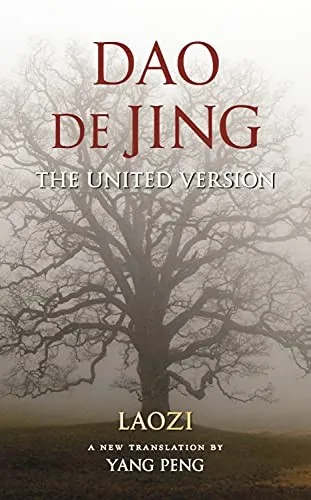
Dao de Jing
 73
73

Dao de Jing
The Dao de Jing, in its essence, is not a book to be merely read but to be inhabited. Yang Peng’s translation grapples with the profound simplicity that defines this ancient Chinese text, a challenge few editions fully meet. The work’s enduring power lies in its paradoxical directives, urging us toward strength through yielding and understanding through stillness. For instance, Chapter 64’s insistence on the difficulty of managing great things by attending to small ones is a potent reminder of foundational principles often overlooked in the pursuit of grand achievements.
However, the very nature of translating such a text means some nuance is inevitably lost. While Peng’s work is commendable for its clarity, the ethereal quality of the original, particularly its poetic resonance, can feel somewhat muted. The challenge remains how to convey the spirit of the Dao without succumbing to overly literal or anachronistic interpretations.
Read more ↓
Ultimately, the Dao de Jing, regardless of translation, offers a unique lens through which to view existence, one that prioritizes naturalness and intuitive wisdom over societal constructs. It is an indispensable text for anyone seeking a different mode of being.
📝 Description
73
The Dao de Jing, attributed to Laozi, was composed in ancient China during the Spring and Autumn period.
This text is a central work in Taoism, originating in ancient China. It establishes a philosophical and spiritual system built around the concept of the 'Dao,' often translated as 'the Way.' The Dao de Jing emerged during a time of significant intellectual and social change in the Zhou Dynasty, offering an alternative to the strict social order promoted by Confucianism.
It speaks to individuals seeking deeper understanding of Eastern thought and contemplative practices. The book guides readers toward ethical living, an appreciation for natural principles, and a path toward inner peace. Its message transcends purely academic study, aiming for practical application in life and personal harmony.
The Dao de Jing is a foundational text for Taoism, an ancient Chinese tradition concerned with living in harmony with the fundamental principles of the universe. It describes the ineffable 'Dao' as the source and underlying order of all reality. Unlike more structured religious systems, Taoism, as presented here, emphasizes naturalness, spontaneity, and a non-interfering approach to life and governance. The text's teachings on Wu Wei and alignment with natural rhythms place it within a lineage of contemplative and wisdom literature focused on inner transformation and cosmic understanding.
💡 Why Read This Book?
• Learn the principle of Wu Wei, understanding how yielding and natural action can achieve greater results than forceful striving, as exemplified in the text's discussions on leadership and governance. • Grasp the concept of the Dao as an ineffable, fundamental reality that underpins all existence, encouraging a more harmonious relationship with the natural world and its inherent patterns. • Explore the virtue of humility and simplicity as pathways to genuine strength and contentment, contrasting with the often-pursued but ultimately hollow virtues of ambition and control.
⭐ Reader Reviews
Honest opinions from readers who have explored this book.
❓ Frequently Asked Questions
When was the Dao de Jing originally written?
The Dao de Jing is traditionally attributed to Laozi, a philosopher who may have lived in the 6th century BCE. However, scholarly consensus suggests the text was compiled in its current form later, likely during the Warring States period (475–221 BCE).
What is the central concept of the Dao de Jing?
The central concept is the Dao (the Way), an ineffable, fundamental principle that governs the universe. The book encourages living in harmony with this natural, spontaneous order, often through practices like Wu Wei (effortless action).
Who is Laozi (老子)?
Laozi is the philosopher to whom the Dao de Jing is attributed. He is considered a seminal figure in Taoism, though his historical existence and the precise authorship of the text remain subjects of scholarly debate.
How does the Dao de Jing relate to Confucianism?
The Dao de Jing offers a philosophical contrast to Confucianism. While Confucianism emphasizes social order, ritual, and ethical governance through active cultivation, the Dao de Jing advocates for naturalness, spontaneity, and governance through non-interference (Wu Wei).
What does 'Wu Wei' mean in the Dao de Jing?
Wu Wei translates to 'non-action' or 'effortless action.' It does not mean doing nothing, but rather acting in accordance with the natural flow of things, without force, strain, or excessive intention, achieving results organically.
Is the Dao de Jing a religious text or a philosophical one?
It is considered both. Philosophically, it lays the groundwork for Taoism's worldview. Religiously, it has become a central scripture for Taoist practice, influencing meditation, ethics, and cosmology across centuries of Chinese history.
🔮 Key Themes & Symbolism
The Nature of the Dao
The text posits the Dao as the primordial, ineffable source of all existence, beyond human comprehension and language. It is the underlying principle that governs the universe, characterized by its spontaneity, naturalness, and ceaseless transformation. The Dao de Jing emphasizes aligning oneself with this cosmic flow, finding balance and harmony by observing its subtle yet powerful influence on all phenomena. Understanding the Dao is presented not as an intellectual exercise but as a direct, intuitive apprehension of reality's fundamental workings, leading to a life lived in accord with nature.
Wu Wei: Effortless Action
Central to the Dao de Jing is the concept of Wu Wei, often translated as 'non-action' or 'effortless action.' This principle advocates for acting in harmony with the natural course of events, without coercion or excessive striving. It suggests that true efficacy arises from understanding and working with inherent tendencies rather than imposing one's will. This approach is applied to governance, personal conduct, and the cultivation of virtue, advocating for a subtle, responsive, and ultimately more powerful way of engaging with the world.
Simplicity and Humility
The Dao de Jing consistently champions the virtues of simplicity, humility, and yielding. It critiques societal values that emphasize artificiality, ambition, and the pursuit of external validation. By embracing a life of unassuming naturalness, one can achieve a deeper, more authentic form of strength and contentment. The text suggests that true power lies not in dominance but in adaptability and receptivity, much like water that yields yet can wear away stone over time. This focus on inner cultivation offers a profound counterpoint to conventional notions of success.
The Cycle of Existence
A recurring theme is the cyclical and transformative nature of reality. The Dao de Jing observes that all things arise, develop, and eventually return to their source, in a continuous process of change. Birth and death, expansion and contraction, presence and absence are presented as interconnected phases of the same fundamental reality. Embracing this cyclical perspective encourages acceptance of impermanence and fosters a more profound appreciation for the present moment, understanding that apparent endings are merely precursors to new beginnings.
💬 Memorable Quotes
Direct passages from the work, attributed to the author.
“The Dao that can be told is not the eternal Dao.”
— This opening statement immediately establishes the ineffable nature of the Dao. It suggests that any attempt to define or describe the ultimate reality in words will inevitably fall short, as the Dao transcends human language and conceptualization.
“To know not knowing is best.”
— This highlights the virtue of intellectual humility. True wisdom, according to the text, lies not in accumulating knowledge but in recognizing the limits of one's own understanding and remaining open to deeper truths.
“The sage stays behind, and thus is ahead; keeps to himself, and thus is held.”
— This illustrates the principle of Wu Wei. The most effective leaders or individuals are those who do not seek overt recognition or control, but rather act subtly and allow their actions to speak for themselves, thus gaining genuine respect and influence.
“Nature does not hurry, yet everything is accomplished.”
— This powerful aphorism underscores the efficiency of natural processes. It advocates for patience and trust in the unfolding of events, suggesting that forcing outcomes is often less effective than allowing things to develop at their own pace.
“When people see some things as beautiful, other things become ugly.”
— This observation points to the relativity of human judgment and values. The creation of dualistic concepts like beauty and ugliness arises from our subjective categorizations, obscuring the underlying unity of existence.
🌙 Esoteric Significance
Tradition
While foundational to Taoism, the Dao de Jing holds significant esoteric weight within broader mystical traditions. Its emphasis on the ineffable Dao, the cultivation of inner stillness, and the attainment of a state of natural, unforced being aligns with contemplative practices found in Hermeticism, Zen Buddhism, and various forms of Western mysticism. It offers a non-dualistic perspective that appeals to Gnostic ideas of returning to a primordial source and provides a framework for understanding universal principles through direct experience rather than dogma.
Symbolism
Key symbols include the 'Dao' itself, representing the ultimate, unnamable principle of existence. Water is a potent symbol of Wu Wei, embodying flexibility, yielding, and persistent strength. The 'uncarved block' (pu) symbolizes original, unadulterated nature, free from artificial distinctions and desires, representing a state of pure potentiality and simplicity that the practitioner seeks to embody.
Modern Relevance
Contemporary thinkers and practitioners in fields ranging from mindfulness and conscious leadership to eco-philosophy and systems theory draw heavily on the Dao de Jing. Its principles of interconnectedness, natural flow, and effortless action offer valuable counterpoints to modern society's emphasis on rapid progress, control, and individualistic striving. Schools of thought exploring integral spirituality and holistic living often reference its teachings on balance and harmony.
👥 Who Should Read This Book
• Students of comparative philosophy and Eastern religions seeking to understand the foundational texts of Taoism and their unique worldview. • Individuals interested in contemplative practices and mindfulness who wish to explore a wisdom tradition that prioritizes naturalness and inner peace. • Leaders and aspiring leaders looking for alternative models of governance and influence based on principles of humility, receptivity, and effortless action (Wu Wei).
📜 Historical Context
The Dao de Jing emerged from the intellectual ferment of China’s Spring and Autumn period (771-476 BCE) and the subsequent Warring States period. This era was marked by widespread social and political upheaval, a decline in the authority of the Zhou dynasty, and the rise of various philosophical schools seeking to restore order. The text's emphasis on naturalness, spontaneity, and a subtle, yielding approach to governance stood in marked contrast to the prescriptive social ethics and hierarchical structures advocated by Confucianism, a major competing school of thought. While traditionally attributed to the sage Laozi, a figure sometimes considered a contemporary of Confucius, modern scholarship often places the compilation of the Dao de Jing later, possibly in the 4th century BCE. Its influence, however, was profound, shaping not only philosophical discourse but also religious and artistic traditions throughout East Asia and beyond.
📔 Journal Prompts
The concept of the Dao as the mother of ten thousand things: how does this perspective reframe your understanding of origins?
Reflect on an instance where yielding and non-force (Wu Wei) proved more effective than direct action.
The 'uncarved block' (pu): what aspects of your own nature feel most unadorned and authentic?
Consider the 'valley spirit' and its connection to profound stillness. What does this stillness represent for you?
How does the cyclical nature of existence, as described in the Dao de Jing, influence your perception of challenges and successes?
🗂️ Glossary
Dao (道)
The fundamental, ineffable principle that underlies and governs all existence. Often translated as 'The Way,' it represents the natural order, the source, and the ongoing process of the universe.
De (德)
Virtue, integrity, or the inherent power or quality that flows from living in accordance with the Dao. It is the manifestation of the Way within individuals and things.
Wu Wei (無為)
Literally 'non-action' or 'effortless action.' It signifies acting in accordance with the natural flow of things, without force, strain, or excessive intention, achieving results organically.
Pu (朴)
The 'uncarved block'; represents original, natural simplicity and wholeness before being shaped by external influences, desires, or societal conventions. It signifies a state of pure potentiality.
Ziran (自然)
Self-so, naturally. It refers to the state of being spontaneous, authentic, and in accordance with the natural course of the Dao, without artificiality or imposition.
Xuan (玄)
Mysterious, profound, dark. Often used to describe the enigmatic and unfathomable nature of the Dao and its workings.
Hui (惠)
Benefit, favor, kindness, often implying a gentle, yielding, or nurturing quality associated with the Dao.
🔮 Readers Also Liked
Browse all →









More Free Occult Philosophy Books
View all →