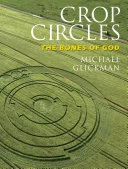
Crop Circles
 81
81

Crop Circles
Michael Glickman’s *Crop Circles* approaches its subject with an admirable lack of sensationalism, a rare quality in literature dealing with anomalous phenomena. The book’s strength lies in its methodical deconstruction of the mystery, presenting a wealth of visual evidence alongside detailed analysis of the geometric complexities. Glickman avoids easy answers, instead focusing on the questions the formations pose about perception, communication, and the human drive to find patterns. One particularly striking aspect is the detailed comparison of various formations, revealing an evolution in design complexity that challenges simplistic explanations. However, the sheer volume of technical detail, while commendable for its thoroughness, might occasionally prove dense for the casual reader. Despite this, the work serves as a solid reference, particularly its careful cataloging of designs and dates. Glickman's objective tone provides a valuable counterpoint to more speculative accounts, making *Crop Circles* a significant contribution to the serious study of this phenomenon.
📝 Description
81
Michael Glickman's 1994 book analyzes crop circles as more than mere formations.
Michael Glickman's *Crop Circles* offers a thorough examination of the geometric patterns appearing in fields globally. The book goes beyond presenting images to investigate the phenomenon's origins, development, and the various interpretations it has generated. Glickman examines the physical evidence, the psychological effects on those who witness the formations, and the cultural weight these designs have gained since their modern appearance. He moves past simple explanations to confront deeper questions about intent and meaning.
The book is for anyone interested in unexplained events who wants a serious, researched look at crop circles. It aims to give readers, whether skeptical or believing, the information and analytical tools needed for thoughtful consideration. Those interested in the connections between art, geometry, folklore, and consciousness will find much to consider. It is also useful for students of aerial anomalies and the psychology of belief when faced with the unknown.
Published in 1994, Glickman's work arrived during a period of heightened interest in New Age thought, ufology, and alternative spiritualities. The modern crop circle phenomenon, which gained prominence from the late 1970s, particularly in England, was often seen through lenses of psychic communication or extraterrestrial contact. Glickman's analysis engages with this context, attempting a structured approach to a subject that had captured widespread imagination and fueled speculation about non-ordinary intelligence or consciousness.
💡 Why Read This Book?
• Understand the evolution of crop circle designs from simple rings to complex fractals, as detailed through Glickman's analysis of formations appearing from the late 1970s onwards. • Explore the mathematical and geometric principles that underpin many formations, gaining insight into concepts like sacred geometry relevant to esoteric traditions. • Grasp the socio-cultural impact of crop circles as a modern phenomenon, learning how they have functioned as a canvas for collective interpretation and belief since their resurgence.
⭐ Reader Reviews
Honest opinions from readers who have explored this book.
❓ Frequently Asked Questions
What is the primary focus of Michael Glickman's book on crop circles?
Glickman's *Crop Circles* focuses on a rigorous, evidence-based examination of the geometric formations appearing in fields, analyzing their patterns, complexity, and the diverse interpretations they generate, moving beyond sensationalism.
When did the modern crop circle phenomenon gain widespread attention?
The modern crop circle phenomenon began to gain significant public attention from the late 1970s, with an explosion of complex designs appearing throughout the 1980s and 1990s.
Does the book suggest a definitive origin for crop circles?
No, Glickman's work emphasizes the analytical investigation of the phenomenon itself rather than positing a single, definitive origin. It explores various possibilities and the questions raised by the formations.
Who would benefit most from reading *Crop Circles*?
Readers interested in unexplained phenomena, sacred geometry, pattern analysis, and the cultural impact of mysteries will find this book particularly valuable for its detailed research.
What kind of evidence does Glickman present?
Glickman presents photographic evidence of numerous crop circle formations, alongside detailed analysis of their geometric structure, mathematical properties, and historical appearance.
Is this book suitable for beginners to the topic?
Yes, while thorough, the book is structured to inform readers new to crop circles, providing foundational context and detailed analysis without assuming prior expert knowledge.
🔮 Key Themes & Symbolism
Geometric Precision
The book meticulously details the sophisticated geometric and mathematical precision found in many crop circle formations. It delves into concepts akin to sacred geometry, exploring how patterns often adhere to principles of proportion, fractals, and symmetry. Glickman analyzes specific examples, illustrating how these designs can be far more complex than simple tramlines, suggesting a sophisticated underlying intelligence or natural process at play. This focus highlights the inherent order and aesthetic principles that can manifest in unexplained phenomena.
Pattern Recognition and Interpretation
A central theme is the human tendency to seek and impose patterns, especially in ambiguous or mysterious phenomena like crop circles. Glickman examines how observers interpret these formations, considering whether the meaning is inherent or projected. The work scrutinizes the psychological and cultural factors that influence our understanding, questioning the nature of communication when the source is unknown. It prompts reflection on how we construct narratives around the unexplained.
Socio-Cultural Phenomenon
Beyond the physical formations, *Crop Circles* explores their impact as a modern cultural event. The book addresses how these ephemeral artworks have become subjects of folklore, media fascination, and speculative inquiry. It discusses the emergence of a 'crop circle culture,' complete with dedicated researchers, artists, and believers, and how the phenomenon has been integrated into broader discussions about UFOs, consciousness, and the search for meaning in the contemporary world.
The Question of Origin
While avoiding definitive pronouncements, the book consistently circles back to the fundamental question of origin. Glickman presents evidence and arguments that challenge simplistic explanations, whether purely terrestrial hoaxes or extraterrestrial landings. The work implicitly encourages readers to consider a spectrum of possibilities, from natural phenomena and complex human ingenuity to more unconventional hypotheses, fostering an open yet critical approach to the mystery.
💬 Memorable Quotes
“The appearance of intricate geometric designs in agricultural fields represents a significant challenge to conventional explanations.”
— This statement highlights the core tension of the book: crop circles defy easy categorization, demanding a deeper look beyond simple pranks or established scientific models.
“Understanding the geometry of the formations is crucial to appreciating their complexity.”
— This emphasizes Glickman's analytical approach, suggesting that the mathematical and spatial relationships within the designs are key to unlocking their significance.
“Many formations exhibit a level of precision and scale that prompts questions about their creators.”
— This interpretation focuses on the sheer artistry and technical execution observed in crop circles, raising the query of who or what possesses the capability to produce such works.
“The interpretation of crop circles often reflects the observer's own framework of belief.”
— This points to the subjective element in understanding the phenomenon, suggesting that meaning is frequently found through the lens of the viewer's personal worldview.
“The phenomenon has evolved considerably since its initial widespread appearance in the late 1970s.”
— This highlights the dynamic nature of crop circles, noting a progression in their design complexity and frequency over time, which is a critical factor in their analysis.
🌙 Esoteric Significance
Tradition
While not strictly adhering to a single esoteric lineage, Glickman's exploration of crop circles aligns with traditions that explore symbolic communication and cosmic intelligence. It touches upon principles found in Pythagoreanism and sacred geometry, which posit mathematical relationships as fundamental to universal order. The work resonates with modern esoteric interests in consciousness, non-human intelligence, and the potential for symbolic messages embedded in natural or anomalous phenomena.
Symbolism
Key symbols examined include intricate geometric patterns, often mirroring mandalas or complex celestial charts, suggesting a form of universal language. The spiral motif, frequently appearing, is a potent symbol across many traditions representing evolution, cosmic cycles, and the journey of consciousness. The sheer scale and precision of formations like those appearing in 2000 at locations such as Stonehenge also symbolize a challenge to human understanding and a potential connection to forces beyond our immediate comprehension.
Modern Relevance
Contemporary thinkers in fields like consciousness studies, ufology, and even some branches of art and design continue to reference crop circles as a significant modern mystery. Glickman's analytical approach informs discussions on pattern recognition, non-human intelligence, and the potential for symbolic communication. Researchers exploring the intersection of art, nature, and the unexplained find value in his detailed examination, which encourages critical thinking about anomalous phenomena and their impact on human perception and belief systems.
👥 Who Should Read This Book
• Researchers of anomalous phenomena: Individuals seeking a detailed, evidence-based analysis of the crop circle mystery will find Glickman’s meticulous cataloging and geometric breakdown invaluable. • Students of sacred geometry and pattern: Those interested in the mathematical underpinnings of the universe and how they manifest visually will appreciate the book's focus on design complexity. • Skeptics and open-minded inquirers: Anyone curious about unexplained events who prefers analytical rigor over sensationalism will benefit from Glickman's balanced and fact-oriented approach.
📜 Historical Context
Michael Glickman's *Crop Circles*, first published in 2005, emerged during a period where interest in unexplained aerial phenomena (UAP) and anomalous events was significant, though often relegated to fringe discussions. The late 20th century saw the crop circle phenomenon, particularly in England, transform from simple rings into astonishingly complex geometric artworks appearing from the late 1970s onwards. This era coincided with the rise of New Age thought, ufology, and a broader cultural fascination with mysteries. Glickman's work navigated this landscape, seeking to provide a more structured, analytical perspective than many sensationalist accounts. While competing explanations ranged from elaborate hoaxes, championed by figures like Doug Bower and Dave Chorley, to extraterrestrial or interdimensional origins, Glickman’s book aimed to dissect the evidence itself. The reception within academic circles was mixed, with many mainstream scientists dismissing the phenomenon, yet it continued to capture the public imagination and inspire dedicated research communities.
📔 Journal Prompts
Analyze the geometric complexity of a specific formation discussed in the book.
Reflect on the role of pattern recognition in interpreting the crop circles.
Consider how the 'socio-cultural phenomenon' aspect of crop circles has evolved since 2005.
Explore the concept of 'communication' as presented in relation to unknown origins.
Examine the relationship between precision and mystery in the crop circle designs.
🗂️ Glossary
Sacred Geometry
The study of geometric shapes and proportions believed to have divine or symbolic significance, often seen as fundamental to the structure of the universe and its creation.
Fractal
A complex geometric shape that exhibits self-similarity, meaning it looks similar at different scales of magnification; patterns repeat themselves infinitely.
Ufology
The study of unidentified flying objects (UFOs) and related phenomena, often involving investigation into sightings, alleged encounters, and their potential origins.
Pattern Recognition
The ability of the human brain to identify patterns, regularities, and structures in data or sensory input, crucial for understanding complex phenomena.
Anomalous Phenomena
Events or observations that deviate from established norms, scientific understanding, or expected behavior, often prompting investigation and speculation.
Geometric Precision
The exactness and accuracy of geometric measurements and constructions within a formation, often implying deliberate design and sophisticated execution.
Socio-Cultural Impact
The effects that a phenomenon has on the structure, beliefs, customs, and behavior of a society or culture.