Crop circles

 84
84

Crop circles
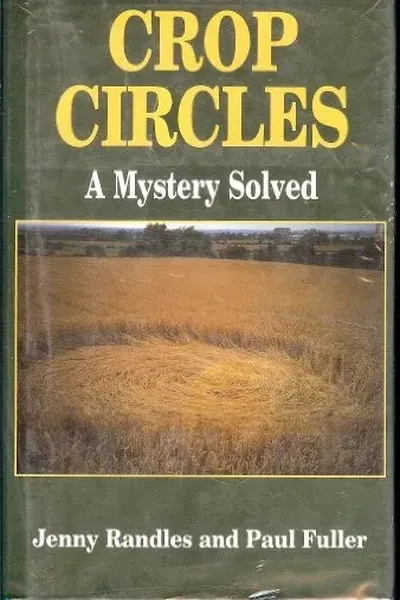
Jenny Randles' "Crop Circles" provides a solid, if somewhat dated, introduction to the phenomenon. Its strength lies in its comprehensive cataloging of early formations and its balanced presentation of competing theories, avoiding the sensationalism that often plagued the subject. The detailed descriptions of formations from the 1980s offer a valuable historical snapshot. However, the book's primary limitation is its inability to account for the subsequent advancements in hoaxing technology and the scientific scrutiny that has since emerged. For instance, Randles explores the possibility of natural causes like plasma vortices, a concept that has largely been superseded by more terrestrial explanations for many formations. Despite this, the work remains a commendable effort to document and analyze the mystery during its formative years, offering a foundational understanding for anyone interested in the subject's early history.
📝 Description
84
### What It Is Jenny Randles' "Crop Circles" offers a foundational exploration into the phenomenon of geometric patterns appearing in agricultural fields. First published in 1990, the work examines the historical emergence of these formations, their increasing complexity, and the various explanations proposed. It presents a balanced overview of early research, considering both skeptical and more speculative viewpoints without definitively endorsing any single theory. The book serves as an early catalog and analysis of a perplexing modern mystery.
### Who It's For This book is geared towards individuals intrigued by unexplained aerial phenomena and the intersection of folklore, science, and popular culture. It will appeal to those interested in the initial wave of crop circle investigations, particularly before the widespread advent of digital manipulation techniques. Readers seeking a comprehensive, early look at the subject matter, presented in a clear and accessible manner, will find value here. It is suitable for newcomers to the topic and those who recall the phenomenon's rise in public consciousness.
### Historical Context Published in 1990, Randles' work emerged during a period of intense public fascination with crop circles. The early 1980s had seen a significant increase in formations, moving from simple circles to more elaborate designs. This era predated widespread internet access, meaning information dissemination relied heavily on books, documentaries, and media reports, amplifying the mystery. Skeptical explanations often pointed to hoaxes, while proponents explored theories ranging from atmospheric plasma to more esoteric origins. Randles' book fits within a growing body of literature attempting to document and rationalize these events, alongside contemporaries like Colin Andrews.
### Key Concepts The book details the evolution of crop circle designs, noting the shift from simple rings to complex geometric patterns, a development that fueled speculation about sophisticated origins. It discusses the prevailing theories of the time, including natural phenomena (like whirlwinds or plasma vortices) and deliberate human creation, often through sophisticated surveying techniques or even more covert means. Randles also touches upon the psychological impact of these formations on observers and the media's role in shaping public perception.
💡 Why Read This Book?
• Gain an understanding of the early evolution of crop circle designs, from simple rings to complex geometric patterns, as documented by Randles prior to the widespread impact of digital hoaxing techniques. • Explore the spectrum of early explanations for crop circles, including natural phenomena and early theories of their creation, as presented in the book's analysis of the 1980s. • Appreciate the historical context of crop circle investigations, understanding how the phenomenon captured public imagination before the internet age, as detailed in Randles' 1990 publication.
⭐ Reader Reviews
Honest opinions from readers who have explored this book.
❓ Frequently Asked Questions
When was Jenny Randles' book on crop circles first published?
Jenny Randles' "Crop Circles" was first published in 1990, capturing the early wave of interest and investigation into these enigmatic agricultural patterns.
What kind of explanations does the book offer for crop circles?
The book examines various explanations proposed during its publication era, including natural phenomena, sophisticated human hoaxes, and more speculative theories, presenting a balanced overview.
Does the book discuss specific locations where crop circles appeared?
Yes, the book likely details specific regions and farms where notable crop circle formations were reported and studied, providing geographical context to the phenomenon.
How does Jenny Randles approach the topic of crop circles?
Randles adopts an analytical and investigative approach, aiming to document the phenomenon and explore the evidence for different theories without necessarily taking a definitive stance.
Is this book suitable for someone new to the topic of crop circles?
Absolutely. As an early work, it provides a solid foundational understanding of the phenomenon's emergence and the initial debates surrounding it, making it ideal for newcomers.
What distinguishes this book from later works on crop circles?
This 1990 publication predates many later developments in hoaxing techniques and scientific analysis, offering a unique perspective on the phenomenon as it was understood in its early stages.
🔮 Key Themes & Symbolism
Evolution of Patterns
The work meticulously documents the increasing complexity of crop circle designs from simple circles to intricate geometric and fractal patterns. This evolution is presented as a key factor that challenged simple hoax explanations and fueled speculation about more advanced origins. Randles highlights how the sheer variety and scale of formations observed, particularly in the late 1980s, suggested a developing intelligence or natural process behind their creation, moving beyond rudimentary human efforts.
Skepticism vs. Speculation
Randles navigates the polarized debate surrounding crop circles, presenting both the skeptical arguments, primarily focused on human artistry and deception, and the more speculative theories. These speculative ideas range from atmospheric phenomena like plasma vortices to more fringe concepts. The book's strength lies in its attempt to bridge these viewpoints, examining the evidence presented by both sides without definitively siding with either, acknowledging the genuine mystery that persisted.
Documentation and Research
A significant theme is the importance of careful documentation and early research methodologies applied to the crop circle phenomenon. Randles emphasizes the need for precise recording of formation details, dimensions, and locations. The book showcases the efforts of early investigators who meticulously mapped and photographed these ephemeral artworks, laying the groundwork for subsequent analysis and study of this perplexing subject.
Public Perception and Media
The book implicitly or explicitly addresses how the media played a role in shaping public understanding and perception of crop circles. The rapid spread of information, often sensationalized, contributed to the phenomenon's cultural impact. Randles' work serves as a record of this early public fascination, examining how the mystery entered popular consciousness and the diverse reactions it elicited from the public and scientific communities.
💬 Memorable Quotes
“The sheer variety of formations increased dramatically throughout the 1980s.”
— This observation underscores the central mystery: the rapid development and diversification of designs suggested something beyond random chance or simple imitation, prompting deeper investigation.
“Explanations ranged from atmospheric phenomena to elaborate hoaxes.”
— This highlights the core dichotomy in early crop circle research, showcasing the spectrum of possibilities considered, from natural forces to deliberate human intervention, reflecting the ongoing debate.
“Early investigators meticulously mapped and photographed the formations.”
— This points to the scientific impulse to document and analyze the phenomenon, emphasizing the foundational work done to record these ephemeral patterns for study.
“The complexity challenged simple explanations.”
— This concise statement captures how the escalating intricacy of crop circle designs forced observers to reconsider more conventional or simplistic theories about their origin.
“Public fascination grew alongside the formations.”
— This interpretation reflects the symbiotic relationship between the appearance of new patterns and the increasing media attention and public interest in the phenomenon.
🌙 Esoteric Significance
Tradition
While not explicitly tied to a single established esoteric lineage like Hermeticism or Kabbalah, "Crop Circles" engages with the broader tradition of exploring earth mysteries and unexplained phenomena. It fits within a contemporary esoteric interest in geodetic anomalies and symbolic patterns appearing in nature, akin to sacred geometry or ley lines. The work shares a spirit with Theosophical inquiries into hidden natural laws and the possibility of non-human intelligence interacting with the physical world.
Symbolism
The primary symbols are the geometric patterns themselves. Simple circles can represent wholeness, unity, or portals. More complex designs, often featuring fractals, spirals, and interlocking shapes, evoke concepts of sacred geometry, mathematical precision, and potentially coded messages. The placement within agricultural fields also adds symbolism, connecting the patterns to the earth, fertility, and the cycles of nature, suggesting a dialogue between celestial or unknown intelligences and terrestrial life.
Modern Relevance
Contemporary thinkers and practitioners in fields like ufology, archaeoastronomy, and proponents of sacred geometry continue to reference early crop circle research. The phenomenon's enduring mystery fuels ongoing speculation about artificial intelligence, advanced extraterrestrial or interdimensional communication, and the potential for patterned information embedded within natural or created phenomena. Randles' work provides historical context for understanding the evolution of these modern esoteric discussions.
👥 Who Should Read This Book
• Amateur investigators and researchers interested in the historical development of unexplained phenomena, particularly concerning aerial or geometric anomalies in the landscape. • Individuals fascinated by the intersection of folklore, science, and popular culture, seeking to understand how mysteries like crop circles capture public imagination. • Students of earth mysteries and ufology looking for foundational texts that document the early phases of investigation and debate surrounding the crop circle phenomenon.
📜 Historical Context
Published in 1990, Jenny Randles' "Crop Circles" arrived at a pivotal moment in the phenomenon's history. The 1980s had witnessed an explosion in the number and complexity of formations, shifting the discourse from mere curiosity to serious investigation for many. This era was characterized by a burgeoning interest in unexplained phenomena, with books and documentaries widely disseminating images and theories. Randles' work contributed to a growing body of literature attempting to catalogue and analyze these events, alongside contemporaries like Colin Andrews, who was also actively researching and promoting the subject. While skeptical explanations, often centering on outright hoaxes, were prevalent, the intricate designs observed frequently challenged these dismissals. The intellectual currents of the time included New Age thinking and a general openness to exploring alternative explanations for mysteries, contrasting with a more rigid scientific establishment that often dismissed such topics. Randles' balanced approach sought to engage with the mystery itself, reflecting a broader cultural fascination with the unknown.
📔 Journal Prompts
The evolution of crop circle designs from simple rings to complex geometric forms.
The spectrum of explanations considered for crop circle formation in the 1980s.
Early documentation methods used by crop circle researchers.
The impact of media coverage on public perception of crop circles.
The enduring mystery of formations appearing in agricultural fields.
🗂️ Glossary
Formation
A term used to describe the geometric patterns or designs that appear in crops, such as wheat, barley, or corn fields.
Hoax
An act intended to deceive or trick, often used by skeptics to explain crop circles as deliberate human creations.
Plasma Vortex Theory
A speculative explanation suggesting that crop circles could be formed by rotating columns of ionized air or plasma, possibly of atmospheric or unexplained origin.
Sacred Geometry
The study of geometric shapes and patterns believed to hold symbolic or spiritual meaning, often seen as fundamental to the universe's design.
Earth Mysteries
A broad category encompassing unexplained phenomena related to ancient sites, earth energies, ley lines, and unusual natural occurrences.
Geodetic Anomalies
Unusual or inexplicable features or patterns detected on the Earth's surface, often studied in relation to ancient sites or natural phenomena.
Investigator
An individual who studies or researches unexplained phenomena, such as crop circles, often involving fieldwork and analysis of evidence.