Crop Circles
 81
81

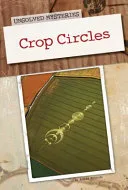
Crop Circles
Andrea Pelleschi’s "Crop Circles" offers a commendable attempt to catalog the myriad explanations for these enigmatic formations. The strength lies in its breadth; it touches upon nearly every major theory, from the extraterrestrial to the terrestrial hoaxer, providing a useful primer for newcomers. Pelleschi’s exploration of the human creation theories, detailing the tools and techniques used by artists like Doug Bower and Dave Chorley, is particularly well-documented. However, the book sometimes feels like a list of theories rather than a deeply analytical examination. The sheer volume of hypotheses, while comprehensive, can dilute the focus. For instance, the section on 'power of thought' theories, while intriguing, lacks the rigorous scientific grounding present in other parts of the book. Despite this, "Crop Circles" serves as a valuable, if occasionally superficial, compilation for those seeking an overview of this enduring mystery.
📝 Description
81
Andrea Pelleschi's "Crop Circles" scrutinizes hypotheses from extraterrestrial involvement to microwave frequencies.
Andrea Pelleschi's "Crop Circles" examines the enduring mystery of geometric patterns appearing in agricultural fields. The book moves past sensationalism to trace the phenomenon's history, from early reports to contemporary, large-scale formations. It investigates various explanations, including alien activity, psychic energy, and the influence of water and microwave frequencies. The work is intended for anyone curious about unexplained aerial phenomena and earth mysteries, appealing to readers interested in investigative journalism, historical analysis, and the intersection of science and the unconventional.
Pelleschi structures the discussion around numerous theories attempting to explain crop circles. This includes examining 'power of thought' ideas, which propose a connection to human consciousness, and hypotheses focused on microwave energy. The book also gives considerable attention to the human factor, detailing accounts of hoaxers and their methods, as well as scientific attempts to uncover the origins of these formations. It acknowledges documented cases and the subsequent scientific and pseudoscientific investigations, providing a historical perspective on how the phenomenon has evolved and how our understanding of it has shifted.
This book engages with the tradition of earth mysteries and unexplained phenomena that has roots in 20th-century spiritualist and New Age thought. These traditions often seek explanations for anomalies beyond conventional scientific paradigms, frequently linking them to consciousness, unseen energies, or extraterrestrial intelligences. "Crop Circles" fits within this lineage by systematically reviewing a spectrum of explanations, from the mundane to the extraordinary, and situating them within a historical and investigative framework.
💡 Why Read This Book?
• Gain a comprehensive understanding of crop circle theories, from ancient sightings to modern artistic interpretations, including the specific methods used by hoaxers like Doug Bower and Dave Chorley. • Explore the scientific and pseudoscientific investigations into crop circles, learning about tools and technologies like aerial photography and soil analysis used in research. • Analyze the relationship between crop circles and other phenomena, such as theories linking them to water systems or microwave energy, providing a unique perspective on earth mysteries.
⭐ Reader Reviews
Honest opinions from readers who have explored this book.
❓ Frequently Asked Questions
When did crop circle sightings become more frequent and complex?
While anecdotal sightings exist earlier, crop circle phenomena gained significant public attention and complexity from the late 20th century onwards, particularly from the 1970s and 1980s, with increasingly intricate designs appearing annually.
What are some of the key human creation theories discussed in the book?
The book details theories involving human artists and pranksters, exploring the documented efforts of individuals like Doug Bower and Dave Chorley who admitted to creating early, simpler designs using basic tools.
Does the book discuss alien involvement in crop circles?
Yes, Andrea Pelleschi's work extensively covers the popular theory that extraterrestrial beings are responsible for creating crop circles, examining the arguments and evidence presented by proponents of this extraterrestrial hypothesis.
What is the 'Tools and Clues' section about?
This section highlights the practical aspects of crop circle research, detailing the various tools, technologies, and investigative methods employed by researchers and enthusiasts attempting to understand the origins and meaning of these formations.
Are there any scientific investigations mentioned?
Certainly. The book references scientific investigations into crop circles, discussing attempts to analyze soil composition, electromagnetic anomalies, and plant physiology to find objective evidence regarding their creation.
What other theories besides alien creation are explored?
The book delves into diverse theories including the 'power of thought' (consciousness-based creation), relationships to water phenomena, microwave energy theories, and natural atmospheric or geological explanations.
🔮 Key Themes & Symbolism
The Human Element
Pelleschi dedicates considerable attention to the role of human creators, including detailed accounts of the methods and motivations of known hoaxers. This section probes the artistic impulse and the desire to create elaborate designs, often with sophisticated techniques, challenging purely paranormal explanations and highlighting the ingenuity of terrestrial artists.
Extraterrestrial Hypotheses
A significant portion of the book explores theories attributing crop circles to alien intelligence. It examines the arguments made by proponents of this view, considering the complexity and scale of some formations as evidence for non-human intervention, and discussing the cultural fascination with UFOs and their potential connection to earth mysteries.
Consciousness and Energy
The work investigates less conventional theories, such as the 'power of thought' hypothesis, which suggests that human consciousness or collective psychic energy might play a role in the formation of crop circles. It also touches upon theories involving natural energies like microwave frequencies or connections to water systems, seeking explanations beyond the purely physical or extraterrestrial.
Investigative Methodologies
The 'Tools and Clues' section is central to understanding the book's approach, detailing the scientific, technological, and observational methods used to study crop circles. From aerial photography and ground surveys to analyzing soil and plant samples, this theme underscores the ongoing effort to apply rigorous inquiry to a phenomenon that often defies easy categorization.
💬 Memorable Quotes
“Early crop circle sightings and the theories behind them.”
— This introductory concept highlights the book's commitment to tracing the phenomenon's origins, distinguishing between initial, perhaps simpler, occurrences and the more complex patterns that emerged later, setting the stage for diverse explanatory frameworks.
“Alien creation theories.”
— This phrase encapsulates one of the most popular and debated hypotheses regarding crop circles, suggesting a direct link between these formations and extraterrestrial intelligence, often viewed as a primary explanation by many enthusiasts.
“Power of thought theories.”
— This points to explanations that posit a connection between human consciousness, collective belief, or psychic energy and the manifestation of crop circles, moving beyond physical or extraterrestrial agents to explore mind-matter interactions.
“Human creation theories.”
— This covers explanations that attribute crop circles to terrestrial human activity, including artistic endeavors, hoaxes, and deliberate deceptions, emphasizing the role of human ingenuity and intent in creating these patterns.
“Tools and Clues section.”
— This refers to a specific part of the book dedicated to the practical methods and equipment used in crop circle research, offering insights into how investigators approach the phenomenon from an analytical and evidence-gathering perspective.
🌙 Esoteric Significance
Tradition
While not strictly adhering to a single lineage, "Crop Circles" touches upon themes resonant with earth mysteries and consciousness studies, areas that intersect with modern esoteric thought. It explores concepts like psychokinesis and the potential for terrestrial phenomena to carry symbolic or energetic messages, aligning with broader interests in ufology and paranormal investigation that have roots in earlier occult traditions.
Symbolism
The geometric precision of crop circles themselves serves as a primary symbol, often interpreted within esoteric circles as sacred geometry or coded messages. The book examines how these patterns, ranging from simple circles to complex fractal designs, are seen by some as representing cosmic order, astronomical alignments, or even energetic conduits.
Modern Relevance
Contemporary thinkers in fields like consciousness research, ufology, and even art and design continue to draw inspiration from crop circles. The phenomenon's visual impact and the mystery surrounding its origin fuel ongoing speculation and artistic interpretation, keeping it relevant in discussions about intelligence, communication, and the unknown aspects of our world.
👥 Who Should Read This Book
• Enthusiasts of earth mysteries and unexplained phenomena seeking a comprehensive overview of crop circle theories and historical context. • Skeptical inquirers interested in the documented evidence and investigative methods used to study crop circles, including human creation aspects. • Researchers of popular culture and modern folklore interested in how phenomena like crop circles reflect societal anxieties and fascinations.
📜 Historical Context
Published in 2012, Andrea Pelleschi's "Crop Circles" arrived at a time when the phenomenon, which gained widespread public attention from the late 1970s onwards, had already spawned numerous books, documentaries, and a dedicated community of researchers. The intellectual climate of the early 21st century was characterized by a growing interest in fringe science and unexplained phenomena, coexisting with increased skepticism and sophisticated debunking efforts. Pelleschi's work engages with a lineage of crop circle literature that stretches back to early reports and the sensationalism of the 1980s and 90s. Notably, the book implicitly addresses the ongoing debate with figures like Colin Andrews, a prominent crop circle researcher who championed the idea of a non-human origin, and the ongoing work of scientific skeptics who focused on human agency, such as the documented confessions of Doug Bower and Dave Chorley in 1991.
📔 Journal Prompts
The complexity of crop circle designs and their potential meanings.
The role of human creativity versus external intelligence in pattern creation.
Investigative methods for unexplained phenomena.
Theories linking crop circles to consciousness or energy fields.
Historical evolution of crop circle reports and public perception.
🗂️ Glossary
Crop Circles
Geometric patterns or designs that appear in agricultural fields, typically formed by flattening crops such as wheat, barley, or corn.
Alien Creation Theories
Hypotheses suggesting that crop circles are created by extraterrestrial beings, often linked to UFO sightings and the idea of interplanetary communication or visitation.
Power of Thought Theories
Explanations positing that crop circles may be manifestations of human consciousness, collective psychic energy, or directed mental intention.
Microwave Energy Theories
Speculative explanations suggesting that crop circles might be formed by unusual atmospheric or electromagnetic phenomena, potentially involving microwave radiation.
Human Creation Theories
Explanations attributing crop circles to human activity, including intentional hoaxes, artistic expression, or elaborate pranks.
Tools and Clues
A section within the book that details the methods, technologies, and observational techniques used by researchers to investigate crop circles.
Scientific Investigations
Attempts to study crop circles using scientific methodologies, analyzing physical evidence such as plant damage, soil composition, and electromagnetic readings.