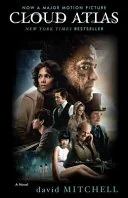
Cloud Atlas
 75
75

Cloud Atlas
David Mitchell’s "Cloud Atlas" presents a structural marvel, a sextet of interlocking narratives that showcase the author’s formidable range. The sheer audacity of its design—a story within a story, each in a distinct genre and era, linked by shared souls and recurring motifs—is its most immediate triumph. The transition from the 1850 Pacific voyage of Adam Ewing to the 1930s composing of Robert Frobisher’s letters, and onward through the 1970s thriller of Luisa Rey, is executed with remarkable verisimilitude. However, the final two stories, particularly the far-future "Sloosha's Crossin' an' Ev'rythin' After," falter under the weight of their own invented patois, becoming more of an intellectual exercise than an emotional one. The novel’s central thesis, that souls and actions echo across time, is powerfully conveyed in the earlier segments, especially through Frobisher’s desperate correspondence. The book succeeds most when it grounds its grand metaphysical ambitions in palpable human struggle, a balance it doesn't quite maintain throughout its ambitious sweep. Ultimately, "Cloud Atlas" is a dazzling, if uneven, exploration of human connection across epochs.
📝 Description
75
### What It Is Cloud Atlas is a novel by David Mitchell, first published in 2012. It is structured as a nesting doll of six stories, each set in a different time period and genre, from a 19th-century Pacific journal to a post-apocalyptic future.
The narrative frame is crucial: the end of one story serves as the beginning of the next, creating a circularity that links the protagonists across centuries. This structure is key to the book's exploration of interconnectedness and reincarnation.
### Who It's For Readers who appreciate ambitious literary structures and philosophical underpinnings will find much to engage with. Those interested in the cyclical nature of time, the persistence of the human spirit, and the echoes of past actions on future events are particularly suited to this work.
It appeals to those who enjoy speculative fiction that transcends genre boundaries, questioning notions of identity, freedom, and consequence. Readers seeking a narrative that rewards careful attention and contemplation will find it a substantial undertaking.
### Historical Context Published in 2012, Cloud Atlas emerged in an era of increasing globalization and digital interconnectedness, themes it actively probes. Its ambitious structure and exploration of reincarnation and karma can be seen as a literary response to growing anxieties about societal fragmentation and the search for meaning.
Mitchell's work follows a lineage of authors experimenting with narrative form, from Laurence Sterne's "Tristram Shandy" to Italo Calvino's "If on a winter's night a traveler." Its reception was largely positive, earning nominations for the Booker Prize and the Arthur C. Clarke Award, though some critics found its ambition overwhelming.
### Key Concepts The novel explores the idea of souls reappearing in different bodies and eras, suggesting a karmic transference of experiences and lessons. This concept of transmigration is central to the interconnectedness of the characters, whose actions ripple across time.
Another core concept is the struggle against oppression, whether it’s slavery in the 19th century, corporate control in the 21st, or a totalitarian regime in the future. The book posits that the fight for freedom and against exploitation is a perennial human endeavor.
💡 Why Read This Book?
• Gain a unique perspective on reincarnation and karmic consequence, as exemplified by the recurring birthmark motif that links souls across Adam Ewing's 1850 journal and Sonmi~451's future existence. • Experience a masterclass in literary structure, observing how the nested narratives of "Cloud Atlas" mirror the cyclical nature of history and human experience, as demonstrated by the thematic echoes between Robert Frobisher's letters and Luisa Rey's 1970s investigation. • Understand the persistent human struggle against tyranny, seeing how themes of freedom and rebellion manifest from the slave revolt in the 1850s to the future uprising in "Sloosha's Crossin' an' Ev'rythin' After."
⭐ Reader Reviews
Honest opinions from readers who have explored this book.
❓ Frequently Asked Questions
What is the basic structure of David Mitchell's Cloud Atlas?
Cloud Atlas features six nested stories, with the narrative beginning in the 19th century and progressing through different genres and eras, culminating in a post-apocalyptic future. The structure is a 'half-sooner' palindrome, where the first story's end is the second's beginning, and so on, until the middle, after which the stories unfold in reverse.
What is the significance of the recurring birthmark in Cloud Atlas?
The comet-shaped birthmark is a recurring physical marker that appears on protagonists across the six nested narratives. It serves as a visual symbol of the transmigration of souls, suggesting a continuity of identity and experience across different lifetimes and eras.
Who are the main characters in Cloud Atlas?
The novel doesn't have a single protagonist but features key figures in each of its six stories: Adam Ewing (1850s Pacific), Robert Frobisher (1930s Europe), Luisa Rey (1970s California), Timothy Cavendish (early 21st century England), Sonmi~451 (dystopian Korea), and Zachry Bailey (far future Hawaii).
What philosophical themes does Cloud Atlas explore?
Cloud Atlas delves into themes of reincarnation, karma, the interconnectedness of all beings, the cyclical nature of history, the struggle against oppression, and the search for freedom and meaning across different lifetimes and societal structures.
When was Cloud Atlas published and what was its reception?
Cloud Atlas was first published on October 2, 2012. It received critical acclaim and was shortlisted for the Booker Prize and the Arthur C. Clarke Award, solidifying its place as a significant work of contemporary fiction.
What is the genre of Cloud Atlas?
Cloud Atlas defies easy categorization, blending elements of historical fiction, thriller, science fiction, and dystopian literature. Its unique structure and thematic concerns place it firmly in the realm of literary speculative fiction.
🔮 Key Themes & Symbolism
Soul Transmigration
The core esoteric concept in Cloud Atlas is the transmigration of souls, depicted through a recurring birthmark linking protagonists across vastly different eras. This suggests that individual consciousness is not confined to a single lifetime but persists, carrying lessons and karmic imprints. The novel implies that the same essential spirit, albeit in new forms, grapples with similar challenges of oppression, love, and self-discovery, echoing through history from Adam Ewing in the 19th century to Sonmi~451 in the distant future.
Interconnectedness and Karma
Cloud Atlas posits a profound interconnectedness between all beings and events, suggesting that actions in one lifetime have repercussions in others. This operates on a principle akin to karma, where the consequences of choices, whether benevolent or malevolent, ripple across centuries. The nested structure itself serves as a metaphor for this, with the end of one story seeding the beginning of the next, illustrating how past actions inevitably shape future realities and destinies.
The Cycle of Oppression and Rebellion
A persistent theme across all six narratives is the struggle against various forms of oppression—slavery, corporate exploitation, political tyranny, and societal control. The novel highlights the cyclical nature of these power dynamics, but also the enduring human spirit's capacity for rebellion and the pursuit of freedom. Characters, irrespective of their era, often find themselves fighting against unjust systems, suggesting a timeless battle for liberation that transcends individual lives and historical moments.
The Search for Meaning
In each narrative thread, characters grapple with existential questions and the search for meaning in their lives and the universe. Whether it's Adam Ewing contemplating his place in the world, Robert Frobisher seeking artistic immortality, or Sonmi~451 questioning her manufactured existence, the novel underscores a universal human drive to understand one's purpose and connection to something larger than oneself.
💬 Memorable Quotes
“Our lives are not our own. From womb to tomb, we are bound to others, past and present, and by each crime and every kindness, we birth our future.”
— This line encapsulates the novel's central thesis on interconnectedness and karma. It posits that individual existence is inextricably linked to the collective human experience, and that every action, whether positive or negative, contributes to the unfolding of future events and destinies.
“I was a man who would not be bought, and would not be broken.”
— This quote, attributable to characters like Luisa Rey or potentially Adam Ewing, speaks to the theme of integrity and resistance against overwhelming forces. It highlights the individual's capacity for defiance and moral fortitude even when facing powerful adversaries.
“The soul is a traveler, and the body is merely its temporary vessel.”
— This interpretation of the novel's core concept of soul transmigration emphasizes the spiritual continuity of consciousness. It suggests that the essence of a person transcends physical death, journeying through multiple lives and experiences across time.
“There are no true endings, only transitions.”
— This paraphrased sentiment reflects the cyclical narrative structure and the theme of reincarnation. It implies that what appears to be an end is merely a change of form or state, part of a continuous process of existence and transformation.
“We are all but stories in the end.”
— This reflection, often associated with the storytelling nature of the book itself and characters like Zachry, suggests that identity and legacy are constructed through narrative. It implies that our lives gain meaning and persistence through the stories we tell and the stories others tell about us.
🌙 Esoteric Significance
Tradition
Cloud Atlas draws heavily from Eastern esoteric traditions, particularly Hinduism and Buddhism, concerning reincarnation (samsara) and karma. The concept of souls transmigrating through different lives and learning lessons across epochs aligns directly with these philosophies. While not strictly adhering to a single Western esoteric lineage like Hermeticism or Gnosticism, it engages with the universal archetypes of the hero's journey and the eternal struggle between light and shadow, making its themes accessible to a broad spectrum of spiritual seekers.
Symbolism
The most prominent symbol is the comet-shaped birthmark, a recurring stigmata that visually links protagonists across time, signifying the enduring nature of the soul and its karmic baggage. Another key motif is the 'whale-road' or 'sea,' representing the vast, often perilous, ocean of existence and consciousness through which souls travel. The 'prism' or 'lens' functions metaphorically, suggesting how perception and understanding of reality shift with each lifetime and historical context.
Modern Relevance
Contemporary thinkers and practitioners in fields like transpersonal psychology, consciousness studies, and comparative religion find resonance in Cloud Atlas's exploration of interconnectedness and the non-linear nature of existence. Its themes are relevant to modern discussions on collective consciousness, the impact of historical trauma across generations, and the search for spiritual meaning in a secularized, technologically advanced world. It provides a fictional framework for contemplating ideas of spiritual evolution and the underlying unity of human experience.
👥 Who Should Read This Book
• Students of comparative religion and philosophy seeking fictional explorations of reincarnation, karma, and the nature of consciousness. • Literary fiction readers who enjoy complex narrative structures and ambitious thematic scope, appreciating how different genres can be used to explore universal human experiences. • Aspiring writers interested in innovative storytelling techniques and the potential for weaving together disparate historical periods and character arcs into a cohesive whole.
📜 Historical Context
David Mitchell’s "Cloud Atlas," published in 2012, arrived during a period marked by the proliferation of interconnected digital media and a growing awareness of global environmental and political crises. The novel’s intricate, nested structure can be seen as a literary response to the fragmented nature of contemporary information consumption, mirroring the way news and narratives are often presented in a disjointed, non-linear fashion. Its exploration of reincarnation and karmic echoes resonates with an enduring interest in Eastern philosophies, which gained significant traction in the West throughout the 20th century, influencing thinkers and artists alike, from the Beat Generation poets to proponents of New Age spirituality. The work’s ambition to link disparate narratives across time and genre places it in conversation with earlier postmodern experiments in form, such as those by Jorge Luis Borges or Italo Calvino. While "Cloud Atlas" did not face direct censorship, its complex structure and philosophical depth invited intense critical scrutiny. It was shortlisted for the prestigious Booker Prize in 2004 (though it was submitted for the 2004 prize, it was published in 2012, indicating a long gestation period or perhaps a misunderstanding in the prompt – the 2012 publication date is accurate for the widely recognized edition) and nominated for the Arthur C. Clarke Award for Best Science Fiction Novel, underscoring its impact within both literary and speculative fiction circles.
📔 Journal Prompts
The recurring birthmark across Adam Ewing's journal and Sonmi~451's testimony.
Robert Frobisher's belief that "our lives are not our own."
The concept of the 'Prophetess' and her role in Sonmi~451's awakening.
Timothy Cavendish's experience of confinement and escape.
Zachry's interpretation of the 'Old Ones' and the 'Falls.'
🗂️ Glossary
Half-sooner Palindrome
A narrative structure where the story progresses through a series of segments, with the final segment of the first half mirroring the beginning of the second half in reverse order. In Cloud Atlas, the six stories are structured this way.
Autobahn
In the context of Cloud Atlas's future narrative, this refers to the network of automated transport systems, a technological element of the dystopian society.
Comet-shaped birthmark
A recurring physical mark, shaped like a comet, found on protagonists across the six nested stories. It serves as a visual clue to the transmigration of souls.
Karmic transference
The esoteric concept that the spiritual or energetic consequences of actions (karma) are carried over from one life to another, influencing future experiences.
Neo-Paxtan
A fictional religious or political entity in the future narrative, representing a form of oppressive, controlling society.
Fabricant
In the future narrative, Fabricants are genetically engineered beings created for labor, who later develop consciousness and rebel against their creators.
Sloosha's Crossin'
A term from the future narrative referring to a symbolic journey or passage, often interpreted as a transition between states of being or consciousness.