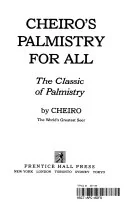
Cheiro's Palmistry for All
 74
74

Cheiro's Palmistry for All
Cheiro's Palmistry for All offers a remarkably systematic approach to a practice often shrouded in vague pronouncements. Its strength lies in its granular detail; the dissection of each mount, line, and finger segment feels almost cartographic. I found the section detailing the various combinations of Head and Heart lines particularly illuminating, presenting a nuanced view of how intellect and emotion interact. However, the book's primary limitation is its pervasive assumption of determinism. While it presents the hand as a map, it can sometimes feel like a rigid itinerary rather than a flexible guide to potential. The explanation of the Saturn finger's significance, particularly its length and any associated lines, provides a solid example of how Cheiro links physical attributes to specific life challenges and potentials. Ultimately, this work serves as a thorough primer, though readers seeking a more fluid or less fatalistic interpretation of palmistry might need to look elsewhere.
📝 Description
74
Cheiro's Palmistry for All, first published in 1988, breaks down the art of reading hands.
This book serves as a manual for understanding chiromancy, detailing the study of the hand from its mounts and lines to finger and nail shapes. The author's aim is to make the practice clear and accessible, presenting the hand as a map of character, destiny, and potential. Readers receive guidance to interpret the hand's 'language'.
It is written for those interested in esoteric knowledge and self-discovery. The book is particularly useful for beginners in palmistry seeking a structured guide. It also appeals to those curious about divination, character analysis, or the link between physical traits and inner life. Skeptics interested in historical divination systems will find a clear introduction here.
Published in 1988, Cheiro's Palmistry for All arrived during a time of growing interest in metaphysical subjects. While Cheiro himself was active in the late 19th and early 20th centuries, this edition makes his work available to a new generation. The book continues a tradition of popularizing esoteric practices seen in figures like Helena Blavatsky, who aimed to blend Eastern and Western mystical ideas. Its publication places it in a line of guides that make occult subjects more approachable.
💡 Why Read This Book?
• Learn to interpret the seven planetary mounts on the palm, such as the Mount of Venus, to understand core desires and vitality, a concept Cheiro meticulously details. • Decipher the intricate meanings of the major palm lines – Life, Head, and Heart – and their variations, as Cheiro explains how these lines map out potential life experiences. • Understand the influence of finger shapes and nail characteristics on personality, a specific analytical layer introduced by Cheiro that adds depth to hand readings.
⭐ Reader Reviews
Honest opinions from readers who have explored this book.
❓ Frequently Asked Questions
When was Cheiro's Palmistry for All originally published?
The edition available from Esoteric Library was first published in 1988, though the author Cheiro was active much earlier, writing significant works on palmistry in the late 19th and early 20th centuries.
What is the primary focus of Cheiro's Palmistry for All?
The book's primary focus is on the art and science of chiromancy, providing a detailed guide to interpreting the lines, mounts, fingers, and other features of the human hand.
Is Cheiro's Palmistry for All suitable for beginners?
Yes, the book is designed to be accessible to beginners, offering systematic instruction and clear explanations of palmistry concepts.
Who was the author known as Cheiro?
Cheiro was the pseudonym of Count Louis Hamon, an Irish-born palmist and astrologer who gained international fame in the late 19th and early 20th centuries for his writings on divination.
Does the book discuss the meaning of specific palm lines?
Absolutely. The book dedicates significant attention to the major lines like the Life Line, Head Line, and Heart Line, explaining their individual meanings and how they interact.
What are the 'mounts' in palmistry according to Cheiro?
In Cheiro's system, the mounts are fleshy, raised areas on the palm, each associated with a planet and believed to indicate specific personality traits and potentials.
🔮 Key Themes & Symbolism
Hand as a Microcosm
The central thesis is that the human hand serves as a complete map of an individual's character, destiny, and potential. Cheiro posits that every feature – from the curvature of the mounts to the length of the fingers and the twists of the lines – reflects specific aspects of the owner's psyche and life trajectory. This perspective aligns with hermetic principles of correspondence, suggesting that the microcosm (the hand) mirrors the macrocosm (the universe and human experience). The book meticulously details how to read these correspondences, treating the palm as a living document.
Planetary Influences on the Palm
Cheiro integrates astrological principles into his palmistry by associating specific areas of the palm, known as mounts, with the seven classical planets: Sun, Moon, Mercury, Venus, Mars, Jupiter, and Saturn. Each mount's prominence, or lack thereof, is interpreted as indicating the degree to which the planet's associated qualities influence the individual. For example, a well-developed Mount of Jupiter suggests leadership qualities, while a strong Mount of Mercury points towards communication skills. This linkage provides a framework for understanding innate tendencies and potentials.
The Language of Lines and Fingers
Beyond the mounts, the book offers an in-depth analysis of the palm's major and minor lines, including the Life Line, Head Line, and Heart Line, as well as finger shapes and nail characteristics. Cheiro details how variations in these elements – such as the depth, clarity, and breaks in a line, or the form of a finger – can signify specific events, mental aptitudes, emotional patterns, and even health predispositions. This detailed lexicon allows for a nuanced interpretation of an individual's life story as inscribed on their hands.
Practical Application of Chiromancy
Cheiro's Palmistry for All is framed as a practical guide, moving beyond theoretical concepts to offer actionable insights. The author's stated aim is to equip the reader with the ability to perform readings for themselves and others. The book provides clear illustrations and step-by-step instructions, encouraging readers to engage actively with the material by examining their own hands. This emphasis on practical application democratizes the art of palmistry, making it accessible for personal growth and understanding.
💬 Memorable Quotes
“The hand is a map, and the lines are the routes.”
— This concise statement encapsulates the book's core premise: that the physical features of the hand are not random but rather symbolic representations of an individual's life path and inherent characteristics.
“Each mount corresponds to a planet and its influence.”
— This highlights the integration of astrological concepts into Cheiro's palmistry system, where the fleshy pads on the palm are seen as indicators of planetary energies affecting personality.
“The length and shape of the fingers reveal character.”
— This points to the detailed analysis of finger morphology, suggesting that not just the palm lines but also the physical form of the digits provides crucial clues to an individual's disposition and capabilities.
“A broken Life Line may indicate a significant interruption.”
— This exemplifies the interpretative nature of palmistry as presented in the book, where specific markings on the hand are correlated with potential life events or changes.
“Clarity of the Heart Line signifies emotional stability.”
— This demonstrates how the condition and appearance of a major palm line, such as the Heart Line, are interpreted as directly reflecting the state of the individual's emotional and relational life.
🌙 Esoteric Significance
Tradition
Cheiro's work is firmly rooted in the Western esoteric tradition of chiromancy, which has historical connections to ancient Greek and Roman practices, as well as influences from Vedic and Chinese physiognomy. While not strictly aligned with Kabbalistic or Gnostic systems, his approach shares with Hermeticism the belief in a correspondence between the physical world and hidden truths, and with Theosophy a broad interest in ancient wisdom and spiritual development. His system is largely empirical and observational, aiming for practical application rather than deep metaphysical speculation.
Symbolism
Key symbols in Cheiro's palmistry include the seven planetary mounts (e.g., Mount of Jupiter symbolizing ambition and leadership, Mount of Apollo representing artistic talent and success) and the major palm lines (Life Line indicating vitality and major life events, Head Line reflecting mental faculties and thought processes). The shape and length of fingers also carry symbolic weight, with different finger types associated with distinct personality archetypes, such as the philosophical Saturn finger or the communicative Mercury finger.
Modern Relevance
Contemporary interest in Cheiro's work persists among practitioners of modern palmistry and those exploring self-help and personal development through esoteric means. His systematic approach makes it a foundational text for many who seek to understand the hand as a tool for self-discovery. While some modern interpretations may diverge, Cheiro's framework remains a significant reference point for anyone interested in the practical application of chiromancy in the 21st century.
👥 Who Should Read This Book
• Aspiring palmists seeking a structured, step-by-step introduction to reading hands, complete with clear diagrams and interpretations. • Individuals interested in comparative divination systems who wish to understand a popular and historically significant method of chiromancy. • Those curious about character analysis and self-discovery through esoteric lenses, looking for practical techniques to explore personal potential and tendencies.
📜 Historical Context
The 1988 publication of Cheiro's Palmistry for All arrived during a resurgent wave of interest in occultism and esoteric studies, a trend amplified by New Age movements and a general societal curiosity for alternative spiritualities. While Cheiro himself, Count Louis Hamon, was a prominent figure in the late 19th and early 20th centuries, known for his influential palmistry works, this specific edition brought his teachings to a new generation. His contemporaries included figures like Arthur Edward Waite, a prominent occultist and co-creator of the Rider-Waite tarot deck, who also explored various divinatory arts. Cheiro's approach, though popular, sometimes stood in contrast to more academic or theosophically-influenced explorations of mysticism, focusing on practical, accessible readings. The continued demand for such texts in the late 20th century reflected a persistent fascination with self-knowledge and divination outside mainstream religious or scientific frameworks.
📔 Journal Prompts
The prominence of the Mount of Venus and its associated lines.
Variations in the clarity and path of the Head Line.
The relationship between finger lengths and overall character.
Interpreting breaks or islands on the Life Line.
The significance of the Mount of Apollo on the palm.
🗂️ Glossary
Chiromancy
The practice of fortune-telling or discerning character by studying the lines, mounts, and other features of the hand. It is synonymous with palmistry.
Mounts
The fleshy, raised pads found at the base of the fingers and palm, each named after and associated with one of the seven classical planets (Sun, Moon, Mercury, Venus, Mars, Jupiter, Saturn).
Life Line
A prominent curved line on the palm running from below the thumb towards the wrist; it is traditionally interpreted as indicating vitality, physical health, and significant life events.
Head Line
A line extending horizontally across the palm, generally from the area between the thumb and index finger; it is read to understand a person's mental faculties, intellect, and thought processes.
Heart Line
A line running horizontally across the upper palm, beneath the fingers; it is interpreted in relation to emotional capacity, romantic relationships, and emotional well-being.
Fate Line
A vertical line, often found running up the center of the palm towards the fingers; it is associated with career, destiny, and major life influences.
Phalanges
The segments of the fingers, typically three per finger (except the thumb, which has two). The size and shape of these phalanges are considered significant in palmistry.