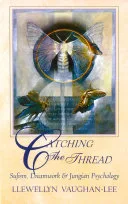
Catching the Thread
 73
73

Catching the Thread
Llewellyn Vaughan-Lee and Irina Tweedie's "Catching the Thread" offers a compelling synthesis, presenting Sufi teachings not merely as historical or theological artifacts, but as living psychological frameworks. The strength lies in its direct presentation of Sufi masters' perspectives, particularly the teachings of Irina Tweedie's own Murshid, and their juxtaposition with Jungian concepts. The book's exploration of the *nafs* as a psychological entity ripe for transformation provides a concrete point of engagement. However, the integration can occasionally feel more additive than truly symbiotic; at times, the Jungian lens seems applied to Sufi concepts rather than arising organically from them. The discussion of divine love, while central to Sufism, could benefit from a more robust psychological unpacking beyond its spiritual manifestation. Nevertheless, for those seeking to understand the practical psychology inherent in a major mystical tradition, the work provides valuable, if sometimes uneven, access.
📝 Description
73
### What It Is
"Catching the Thread" is a significant work that bridges the spiritual teachings of Sufism with the analytical framework of Carl Jung's psychology. Originally published in 1998, it presents a dialogue between traditional mystical experience and modern psychological understanding. The book draws heavily on the spiritual lineage of Sufism, a path emphasizing the purification of the heart and direct experience of the Divine. It explores how these ancient practices and insights can inform and enrich contemporary psychological exploration.
### Who It's For
This book is for individuals interested in the intersection of spirituality and psychology, particularly those drawn to Eastern mystical traditions or Jungian thought. It appeals to readers seeking a deeper understanding of the soul's journey, both through traditional religious or spiritual disciplines and through the lens of psychological development. Those familiar with Jungian concepts like archetypes and the individuation process will find connections to Sufi ideas about the ego and the higher self. It is also relevant for scholars of comparative religion and mysticism.
### Historical Context
Published in 1998, "Catching the Thread" emerged during a period of increasing interest in cross-cultural spiritual dialogues and the integration of psychology with esoteric traditions. Sufism, with its rich history dating back to the early Islamic period, experienced a resurgence of interest in the West throughout the 20th century, often viewed through lenses that emphasized its mystical and poetic dimensions. Simultaneously, Jungian psychology, pioneered by Carl Jung in the first half of the 20th century, continued to influence thinkers exploring the depths of the psyche and the symbolic language of dreams and myths. The book arrived at a time when Western esotericism was diversifying and seeking more integrated understandings of ancient wisdom.
### Key Concepts
The core concepts revolve around the integration of the ego and the soul, the role of the spiritual teacher (Murshid) in guiding psychological maturation, and the understanding of spiritual states as psychological realities. It examines the Sufi concept of the *nafs* (ego or lower self) and its transformation, drawing parallels with Jung's exploration of the shadow and the persona. The book also delves into the nature of divine love (*ishq*) and its relationship to psychological healing and wholeness, presenting Sufi practices as a pathway to self-realization that complements and informs psychological work.
💡 Why Read This Book?
• Gain insight into the Sufi concept of the *nafs* and its transformation, learning how this traditional spiritual discipline can map onto modern psychological growth, a focus explored extensively in the book's discussion of ego-work. • Understand the role of the Murshid (spiritual guide) as presented in the context of Irina Tweedie's experiences, offering a perspective on guidance that integrates spiritual authority with psychological support. • Explore the Sufi understanding of divine love (*ishq*) as a transformative force, mirroring psychological healing processes and providing a spiritual anchor for personal development, as detailed in the book's teachings from 1998.
⭐ Reader Reviews
Honest opinions from readers who have explored this book.
❓ Frequently Asked Questions
What is the primary connection between Sufism and Jungian psychology in 'Catching the Thread'?
The book connects Sufism's emphasis on ego transformation and direct spiritual experience with Jungian psychology's focus on individuation and the integration of the unconscious. It explores how Sufi practices offer a psychological pathway to wholeness.
Who was Irina Tweedie and what was her role in this book?
Irina Tweedie was a British Sufi disciple who documented her spiritual journey and the teachings of her Murshid, often referred to as 'The Lamb'. Her experiences and insights form a significant part of the book's content.
When was 'Catching the Thread' first published?
The book was first published on July 10, 1998, making it a relatively contemporary exploration of ancient Sufi wisdom through a modern psychological lens.
What does the Sufi concept of 'nafs' mean in the context of this book?
In 'Catching the Thread,' the 'nafs' is explored as the ego or lower self, understood as the seat of desires and attachments. Its purification and transformation are central to the Sufi path towards spiritual realization, aligning with Jungian ideas of ego development.
Does the book offer practical exercises for readers?
While primarily an exploration of concepts and teachings, the book implicitly guides readers toward introspection and spiritual awareness. The journal prompts provided suggest areas for personal reflection inspired by the text's themes.
Is 'Catching the Thread' suitable for beginners in Sufism or Jungian psychology?
It is best suited for those with some familiarity with either Sufism or Jungian psychology, or those interested in comparative spiritual and psychological studies. It assumes a certain level of engagement with esoteric concepts.
🔮 Key Themes & Symbolism
Ego Transformation
The work deeply examines the Sufi concept of the *nafs*, or ego, as the primary obstacle to spiritual realization. It presents the Sufi path as a rigorous process of purifying the ego's attachments, desires, and illusions. This aligns with Jungian psychology's focus on the shadow and the persona, suggesting that understanding and transforming the ego is crucial for psychological wholeness and spiritual awakening. The book illustrates this through the teachings of Sufi masters, highlighting practices aimed at dissolving the self-centered ego into a wider consciousness.
The Role of the Spiritual Guide
Central to the Sufi tradition discussed is the indispensable role of the *Murshid*, or spiritual guide. The book details how this figure, often depicted as a master of both inner and outer realities, facilitates the disciple's journey. The *Murshid* is not merely an instructor but a catalyst for profound psychological and spiritual change, helping the seeker navigate the complexities of the inner landscape. This echoes Jung's concept of the Wise Old Man archetype, but within a specific, living lineage of direct transmission and mentorship.
Divine Love as Healing
The concept of *ishq*, or divine love, is presented as a potent force for healing and transformation. The book suggests that the Sufi's devotion and longing for the Divine are not just emotional states but active agents that dissolve psychological barriers and reveal the true nature of the self. This divine love acts as a purifying fire, burning away impurities of the ego and leading to a state of ecstatic union, which can be understood as a profound psychological integration and spiritual fulfillment.
Sufism and Psychology
This theme underpins the entire work, exploring the synergistic relationship between Sufi mysticism and Jungian psychology. It posits that Sufism offers a comprehensive system for understanding the soul's journey, while Jungian psychology provides a framework for articulating these inner experiences in modern terms. The book demonstrates how ancient esoteric practices can illuminate contemporary psychological struggles, offering a bridge between the spiritual and the psychological, and validating inner experience across different paradigms.
💬 Memorable Quotes
“The ego is the greatest illusion.”
— This concisely captures a core Sufi tenet: the self-centered ego, with its desires and identifications, is the primary veil obscuring one's true, divine nature. Its dissolution is key to spiritual realization.
“Love is the path to God.”
— This highlights the central role of *ishq* (divine love) in Sufism. It's not merely an emotion but an active, transformative force that guides the seeker towards union with the Divine.
“The Murshid sees the soul.”
— This emphasizes the spiritual authority and insight of the Sufi teacher, who possesses the capacity to perceive the disciple's true essence and guide them appropriately on the spiritual path.
“One must die to the self to be reborn.”
— This paraphrase reflects the Sufi emphasis on spiritual annihilation (*fana*). It signifies the process of shedding the limited egoic identity to experience a higher, spiritual existence.
“The inner journey is the true work.”
— This principle underscores the focus of both Sufism and Jungian psychology on introspection and the exploration of the inner world as the most crucial aspect of human development and spiritual growth.
🌙 Esoteric Significance
Tradition
The work is firmly rooted in the esoteric tradition of Sufism, specifically a lineage emphasizing direct experience, the purification of the heart, and the transformative power of divine love (*ishq*). It departs from purely theological or legalistic interpretations of Islam, focusing instead on the inner dimension and the practical path of the disciple. Its integration with Jungian psychology represents a modern esoteric endeavor to contextualize ancient mystical paths within contemporary frameworks of consciousness and the psyche.
Symbolism
Key symbols include the thread, representing the unbroken chain of spiritual transmission and the subtle connection between the seeker and the Divine. The heart (*qalb*) is central, seen as the organ of spiritual perception and the seat of divine presence. The concept of the *nafs* (ego) also functions symbolically, representing the lower, untamed self that must be disciplined and transformed through spiritual practice to reveal the higher self.
Modern Relevance
Contemporary thinkers in depth psychology, transpersonal psychology, and those exploring contemplative practices draw on this work. It provides a valuable resource for understanding how ancient spiritual disciplines, like Sufism, can offer practical frameworks for psychological integration and spiritual growth in an era often characterized by existential anxiety and a search for meaning. Its insights remain relevant for contemporary spiritual seekers and mental health professionals interested in holistic approaches.
👥 Who Should Read This Book
• Students of Jungian psychology interested in cross-cultural applications and the psychological dimensions of religious experience. • Seekers of spiritual wisdom who are drawn to Sufism but prefer a framework that integrates with modern psychological understanding. • Comparative religion scholars and practitioners of mysticism looking for works that bridge Eastern esoteric traditions with Western analytical psychology.
📜 Historical Context
Published in 1998, "Catching the Thread" emerged during a period of significant cross-pollination between Western psychology and Eastern spiritual traditions. The late 20th century saw a growing academic and popular interest in mysticism, with Sufism, in particular, gaining traction beyond its traditional Islamic context. Figures like Idries Shah had already been instrumental in introducing Sufi concepts to Western audiences, often emphasizing their universal psychological and philosophical dimensions. Simultaneously, Jungian psychology continued its influence, with scholars and practitioners exploring its applications to comparative religion and esoteric traditions. The book's synthesis of Sufi teachings, particularly those transmitted through Irina Tweedie's lineage, and Jungian thought positioned it within a broader intellectual current seeking to bridge ancient wisdom with modern psychological understanding, offering an alternative to more purely academic or purely devotional approaches.
📔 Journal Prompts
The ego's illusion of separateness, as described in the text, and its impact on your perception of connection.
The concept of the Murshid as a guide for inner transformation, and what qualities you seek in guidance.
Moments where divine love (*ishq*) has acted as a catalyst for personal change or healing in your life.
The 'thread' of spiritual lineage and its significance for your own path of seeking.
Reflections on the purification of the *nafs* and its relation to your personal challenges and growth.
🗂️ Glossary
Nafs
In Sufism, the ego or lower self, characterized by desires, attachments, and illusions. Its purification is central to the spiritual path.
Murshid
A spiritual guide or master in Sufism, responsible for leading disciples on the path to realization.
Ishq
Divine love or passionate longing for God, seen as a powerful transformative force in Sufism.
Fana
An annihilation or dissolution of the ego or false self in the Divine, a key stage in the Sufi path.
Qalb
The heart, understood in Sufism not just as an emotional center but as the spiritual organ of perception and divine presence.
Sufism
The mystical dimension of Islam, focused on inner purification, direct experience of God, and spiritual realization through disciplined practice.
Individuation
A central concept in Jungian psychology referring to the process of integrating one's conscious and unconscious elements to achieve psychological wholeness.