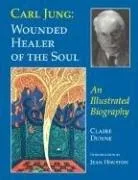
Carl Jung
 79
79

Carl Jung
Claire Dunne's "Carl Jung" provides a commendably clear distillation of a notoriously intricate thinker. The strength of this 2000 publication lies in its methodical approach, breaking down Jung's vast conceptual architecture into digestible parts. Dunne's explanation of the anima/animus complex, for instance, is particularly lucid, offering a balanced view of these archetypal dynamics. However, the book occasionally feels constrained by its introductory nature; the section on Jung's later theoretical developments, while present, could benefit from a more expansive treatment. The exploration of Jung's engagement with alchemy, while informative, remains somewhat superficial. Nevertheless, for readers seeking an unvarnished introduction to Jungian psychology, Dunne's work offers a solid foundation.
📝 Description
79
### What It Is Claire Dunne's "Carl Jung" offers a focused examination of the life and seminal work of the Swiss psychiatrist whose theories profoundly reshaped psychology. Published in 2000, this volume serves as an accessible entry point into Jung's complex ideas, tracing his intellectual evolution and the development of key concepts that continue to influence fields beyond clinical practice.
### Who It's For This book is aimed at students of psychology, philosophy, and esoteric studies seeking to understand the foundational principles of Jungian thought. It is particularly relevant for those interested in archetypes, the collective unconscious, and the analytical psychology that diverged from Freudian psychoanalysis. Readers new to Jung will find it a valuable primer.
### Historical Context Dunne's work emerged in the early 2000s, a period of renewed interest in the broader psychological landscape beyond the dominant behavioral and cognitive paradigms. It contextualizes Jung's contributions within the intellectual ferment of the early 20th century, a time when figures like Sigmund Freud, Alfred Adler, and later, figures in the burgeoning fields of anthropology and comparative religion, were charting new territories of the human psyche.
### Key Concepts The text explores Jung's distinctive concepts, including the individuation process, the persona, the shadow, anima and animus, and the Self. It elucidates how Jung differentiated his theories from those of Freud, particularly regarding the nature of the libido and the significance of the unconscious. The exploration delves into the symbolic language of dreams and myths as pathways to understanding the psyche.
💡 Why Read This Book?
• Gain a foundational understanding of Jung's concept of individuation, tracing its development from his early work in the 1910s and 20s. • Grasp the core distinctions between Jungian analytical psychology and Freudian psychoanalysis, particularly regarding the libido and the unconscious. • Understand the significance of archetypes like the Shadow and Anima/Animus as frameworks for self-exploration, as presented in the text.
⭐ Reader Reviews
Honest opinions from readers who have explored this book.
❓ Frequently Asked Questions
What is the primary difference between Jungian psychology and Freudian psychoanalysis according to Claire Dunne?
Dunne highlights that while Freud viewed the libido primarily as sexual energy, Jung expanded this concept to encompass a generalized psychic energy. Furthermore, Jung placed greater emphasis on the collective unconscious and archetypes, diverging from Freud's focus on repressed personal experiences.
When was Carl Jung's work first published?
While Carl Jung's career spanned many decades, Claire Dunne's book examining his work was first published in 2000. Jung himself lived from 1875 to 1961.
What are Jung's key archetypes discussed in the book?
The book details several of Jung's major archetypes, including the Persona (the social mask), the Shadow (the repressed aspects of the self), and the Anima/Animus (the contrasexual aspect within the psyche).
How does Dunne explain the concept of the collective unconscious?
Dunne explains the collective unconscious as a universal, inherited layer of the psyche, distinct from the personal unconscious. It contains archetypes, which are primordial images and patterns of behavior shared by all humanity.
What is the individuation process as described by Jung and Dunne?
Individuation, as presented by Dunne, is Jung's term for the lifelong psychological process of integrating conscious and unconscious aspects of the personality to become a whole, unique individual.
What historical figures influenced Carl Jung?
Dunne's work situates Jung within a rich intellectual milieu, acknowledging influences from figures like Sigmund Freud, though it also details their eventual theoretical split.
🔮 Key Themes & Symbolism
Archetypes and the Collective Unconscious
The book meticulously unpacks Jung's revolutionary concept of the collective unconscious, a shared reservoir of psychic material inherited by all humans. Dunne illustrates how archetypes—primordial patterns such as the Hero, the Mother, or the Trickster—manifest in myths, dreams, and fairy tales across cultures. This theme is central to understanding Jung's departure from purely personalistic psychoanalytic theories, offering a bridge to universal human experiences and symbolic expressions.
The Process of Individuation
Central to Jungian psychology is the journey of individuation, the process by which an individual becomes a psychologically whole and integrated self. Dunne explains this as a lifelong endeavor involving the conscious confrontation and integration of unconscious elements, particularly the Shadow and the contrasexual archetypes (Anima/Animus). It is portrayed not as a state of perfection, but as an ongoing dialectic between the ego and the Self.
The Shadow and Persona
Dunne dedicates significant attention to the Shadow, the disowned and often repressed aspects of the personality, and the Persona, the social mask we present to the world. The interplay between these two is crucial for psychological development. The book explores how confronting the Shadow, rather than projecting it onto others, is a vital step in the individuation process, leading to greater self-awareness and authenticity.
Jung's Divergence from Freud
A significant thread throughout Dunne's analysis is Jung's intellectual separation from his mentor, Sigmund Freud. The work details key points of contention, notably Jung's broader conception of libido as psychic energy rather than solely sexual drive, and his emphasis on future potential and spiritual dimensions, contrasting with Freud's more deterministic, past-oriented approach.
💬 Memorable Quotes
“The collective unconscious is the mother of all psychic experiences.”
— This statement encapsulates Jung's view of a foundational, transpersonal layer of the psyche. It suggests that our individual experiences are not isolated but are deeply rooted in a shared human heritage of instinct and imagery.
“Individuation is the process of becoming who you already are.”
— This paradoxical phrasing highlights that individuation isn't about creating a new self, but about unfolding and realizing one's inherent potential and true nature, integrating all aspects of the psyche.
“The Shadow is the dark twin, the part we refuse to acknowledge.”
— This highlights the often-unpleasant but essential nature of the Shadow. It represents the aspects of ourselves that we deem unacceptable, which must be integrated for wholeness.
“Dreams are messages from the unconscious, speaking in a symbolic language.”
— This emphasizes Jung's belief in the diagnostic and therapeutic value of dreams. He saw them not as random firings, but as meaningful communications from the deeper layers of the psyche.
“The Anima is the feminine soul in the man, the Animus the masculine soul in the woman.”
— This defines Jung's contrasexual archetypes. Dunne uses this to explain how these unconscious projections influence relationships and our understanding of the opposite gender.
🌙 Esoteric Significance
Tradition
Jung's work occupies a unique position, bridging empirical psychology with esoteric traditions. While not strictly aligned with any single lineage, his theories draw heavily from Gnosticism, Hermeticism, Kabbalah, and alchemy, which he studied extensively. He sought to understand these traditions not as mere historical curiosities, but as expressions of universal psychic patterns. His emphasis on the Self and the individuation process can be seen as a modern psychological reinterpretation of ancient spiritual quests for wholeness.
Symbolism
Key symbols explored in Jung's work, and by extension in Dunne's analysis, include the Mandala, representing psychic totality and the Self; the Serpent, often symbolizing transformation, healing, and chthonic wisdom; and the Alchemical Rebis, which embodies the union of opposites and the achievement of psychic integration. These symbols function as archetypal images emerging from the collective unconscious, pointing towards the path of individuation.
Modern Relevance
Contemporary thinkers and practitioners across various fields continue to draw from Jungian psychology. His concepts of archetypes and the collective unconscious are influential in depth psychology, mythology studies, and literary criticism. Modern psychoanalytic schools, transpersonal psychology, and even some branches of neuroscience exploring consciousness engage with his ideas. Practices like dream analysis and active imagination remain relevant in therapeutic and personal growth contexts.
👥 Who Should Read This Book
['• Students of psychology and philosophy seeking to understand the origins and core tenets of analytical psychology, particularly its divergence from Freudian models.', '• Individuals interested in comparative mythology, symbolism, and the archetypal patterns that recur across human cultures and spiritual traditions.', '• Seekers of personal growth and self-understanding looking for frameworks to explore their inner lives, dreams, and the integration of their unconscious aspects.']
📜 Historical Context
Claire Dunne's "Carl Jung," published in 2000, arrived at a time when academic psychology was increasingly re-engaging with the depth psychology of the early 20th century. Jung, active from the late 19th century until his death in 1961, developed his theories in parallel with, and often in opposition to, Sigmund Freud's psychoanalysis. While Freud focused on repressed sexuality and the personal unconscious, Jung expanded his scope to include the collective unconscious, archetypes, and spiritual dimensions. The era Jung worked in was marked by intellectual ferment, with figures like Alfred Adler also proposing alternative psychological frameworks. Jung's work also intersected with anthropology and comparative religion, notably his correspondence and intellectual engagement with scholars like Mircea Eliade. The reception of Jung's ideas has been varied, often praised for its depth and criticized for its perceived mysticism, but his concepts have endured in various schools of psychotherapy and philosophical thought.
📔 Journal Prompts
The Shadow's projection onto external figures.
Mapping personal archetypal influences.
Individuation as a lifelong unfolding.
The symbolic language of your own dreams.
The tension between Persona and authentic self.
🗂️ Glossary
Archetype
Universal, archaic patterns and images that derive from the collective unconscious and are the psychic counterpart of instinct. They are forms without content, which provide the organizing principle of psychic experience.
Collective Unconscious
A deeper layer of the unconscious psyche, inherited and shared by all humanity, containing archetypes and primordial images.
Individuation
The lifelong psychological process of integrating the conscious and unconscious aspects of the personality to become a psychologically whole and unique individual.
Persona
The social mask or role that an individual presents to the world, often concealing their true nature or inner self.
Shadow
The unconscious, repressed, or disowned aspects of the personality, often containing qualities that the ego deems undesirable or unacceptable.
Anima/Animus
The contrasexual aspect of the psyche: the Anima is the feminine principle in the male psyche, and the Animus is the masculine principle in the female psyche.
Self
In Jungian psychology, the Self is the totality of the psyche, encompassing both the conscious and unconscious. It is the central archetype of order and wholeness, the goal of individuation.