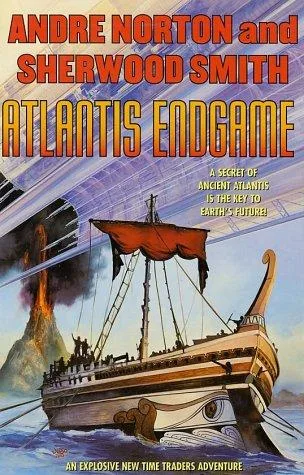
Atlantis Endgame
 83
83

Atlantis Endgame
Andre Norton's universe, as continued by Sherwood Smith in Atlantis Endgame, presents a peculiar blend of pulpy adventure and deep-seated mythos. The narrative structure, inherited from Norton's style, often prioritizes the unfolding mystery of Xica's past over conventional pacing, which can feel both deliberate and occasionally frustrating. One particularly effective element is the depiction of the sentient artifacts and their ambiguous influence on the present inhabitants, a concept that feels both alien and disturbingly familiar. However, the character motivations, while serviceable, sometimes lack the granular development one might expect from a more contemporary psychological exploration. The book’s strength lies in its imaginative scope and its continuation of a unique science-fantasy legacy. Despite some narrative inertia, Atlantis Endgame remains a noteworthy entry for those invested in Norton's expansive cosmos.
Verdict: A solid continuation of a distinct science-fantasy legacy, best suited for devoted followers.
📝 Description
83
### What It Is Atlantis Endgame is a science fiction novel co-authored by Andre Norton and Sherwood Smith, first published in 2002. It continues the lore established in Norton's previous works, particularly those involving the fictional planet of Xica, a world with a complex and ancient history. The narrative centers on characters navigating the remnants of a highly advanced civilization and confronting its lingering dangers.
### Who It's For This book appeals to established fans of Andre Norton's extensive bibliography, especially those familiar with her explorations of lost civilizations and alien worlds. Readers who enjoy intricate world-building, character-driven plots with elements of mystery, and a blend of adventure and speculative fiction will find much to engage with. It is also suited for those interested in archetypal themes of legacy, power, and the consequences of past actions.
### Historical Context Published in 2002, Atlantis Endgame emerged during a period when science fiction continued to explore themes of post-apocalyptic societies and the ethical implications of advanced technology. Andre Norton, a prolific author since the 1950s, had already cemented her reputation for creating vivid alien landscapes and compelling female protagonists. Her collaboration with Sherwood Smith, who continued her work after her passing, ensured the continuation of her established narrative universe and thematic concerns, bridging generations of speculative fiction.
### Key Concepts The novel engages with concepts of inherited legacies, both technological and societal, left behind by an advanced precursor race. It examines the challenges of understanding and interacting with the remnants of such a civilization, where the past directly influences the present. Themes of survival, adaptation, and the cyclical nature of power and conflict are central to the unfolding plot.
💡 Why Read This Book?
• Gain an understanding of the legacy of Andre Norton's Xica universe, specifically how the remnants of an advanced civilization impact present-day survival as depicted in the novel's exploration of Xica. • Experience a narrative that blends adventure with archetypal themes of power and consequence, particularly through the characters' struggle with inherited technologies and societal structures. • Engage with a unique science-fantasy world built on intricate lore, offering a distinct flavor of speculative fiction that builds upon decades of established narrative, exemplified by the 2002 publication date.
⭐ Reader Reviews
Honest opinions from readers who have explored this book.
❓ Frequently Asked Questions
Is Atlantis Endgame a standalone novel or part of a series?
Atlantis Endgame is part of a larger series initiated by Andre Norton. While it can be enjoyed on its own, reading earlier Xica-focused books by Norton can provide deeper context for the world and characters.
What are the main themes explored in Atlantis Endgame?
The novel primarily explores themes of inherited legacies, the dangers of advanced technology, societal collapse and rebuilding, and the confrontation with the past. It examines how ancient civilizations' actions shape the present.
Who are the primary authors of Atlantis Endgame?
The book is co-authored by Andre Norton, the original creator of the Xica universe, and Sherwood Smith, who continued the series after Norton's passing. It was first published in 2002.
What kind of world is Xica?
Xica is a fictional planet in Andre Norton's universe, characterized by its ancient, highly advanced civilizations whose remnants and mysteries dominate the present inhabitants' lives. It's a world steeped in history and danger.
Does Atlantis Endgame feature magic or psionics?
While primarily science fiction, Norton's works often blend elements. Atlantis Endgame focuses more on the technological and societal remnants of advanced races, but the alien nature of these remnants can evoke a sense of the mystical.
What is the significance of the title 'Atlantis Endgame'?
The title likely alludes to themes of lost civilizations and ultimate confrontations, drawing parallels to the mythical Atlantis. It suggests a climactic or decisive phase concerning a forgotten, advanced society.
🔮 Key Themes & Symbolism
Inherited Legacies
The novel delves into the concept of legacies left behind by advanced, long-vanished civilizations. These are not merely ruins but active forces, technological artifacts, and societal structures that continue to influence the present day. The characters must grapple with understanding and controlling these inheritances, which often pose as much danger as they offer potential. This theme highlights the long-term consequences of past actions and the challenges of navigating a world shaped by forgotten powers.
Confronting the Past
A central driving force in Atlantis Endgame is the imperative to confront the remnants of Xica's past. This involves deciphering ancient technologies, understanding historical conflicts, and dealing with the entities or forces that persist from previous eras. The narrative suggests that the past is never truly buried and that its active engagement is necessary for survival and progress. This confrontation is often perilous, requiring courage and insight from the protagonists.
Survival and Adaptation
In the shadow of a fallen empire, the inhabitants of Xica are engaged in a constant struggle for survival and adaptation. They must learn to live with and around the dangerous remnants of their predecessors. This theme explores humanity's (or the dominant species') resilience in the face of overwhelming historical and technological legacies. It questions how societies rebuild and find their place in a world not entirely their own, shaped by forces beyond their immediate comprehension.
The Nature of Power
Atlantis Endgame examines the corrupting influence and inherent dangers of unchecked power, particularly when wielded by advanced civilizations whose motives and methods are long lost. The artifacts and knowledge left behind represent immense power, but their misuse or misunderstanding can lead to catastrophic consequences. The novel prompts reflection on who should control such power and the ethical responsibilities that accompany it.
💬 Memorable Quotes
“The past was a weight, not a foundation.”
— This concept suggests that the remnants of ancient civilizations, while offering potential knowledge or power, primarily act as a burden. They complicate the present and hinder genuine progress, acting as an obstacle rather than a stable base upon which to build.
“Understanding was the first step to control.”
— This interpretation emphasizes the intellectual approach required to deal with the advanced alien technologies and societal structures left behind. Before any practical application or defense can be mounted, a deep comprehension of their origins and functions is paramount.
“They walked among ghosts of giants.”
— This phrase evokes the sense of insignificance and awe experienced by the current inhabitants of Xica. They live in a world built and dominated by a vastly superior precursor race, making them feel like mere specters in a landscape shaped by titans.
“The silence of Xica held its own warnings.”
— This highlights the pervasive sense of unease and latent danger within the world of Xica. The absence of overt threats does not imply safety; rather, the stillness itself is presented as a form of communication, a precursor to or indicator of hidden perils.
“Legacy was a double-edged sword.”
— This idea suggests that the inheritance from past civilizations is inherently dualistic. While it may offer benefits, tools, or knowledge, it simultaneously carries significant risks, dangers, or unforeseen negative consequences that must be carefully managed.
🌙 Esoteric Significance
Tradition
While not explicitly tied to a single esoteric tradition like Hermeticism or Gnosticism, Atlantis Endgame engages with themes common in esoteric thought, particularly those concerning lost civilizations and ancient wisdom. It echoes concepts found in Theosophy and Atlantis lore, which posit advanced precursor races possessing profound knowledge. The novel explores the transmission of such knowledge and its impact, fitting within a broader occult fascination with hidden histories and forgotten powers.
Symbolism
The novel utilizes the concept of ancient, advanced technology as a form of symbolic representation for lost knowledge and power. Remnants of this technology, often inscrutable to the current inhabitants, symbolize the hidden forces and forgotten truths that underpin reality. The planet Xica itself can be seen as a symbol of a world bearing the indelible marks of a fallen golden age, where the present is perpetually overshadowed by the grandeur and folly of the past.
Modern Relevance
Contemporary interest in themes of ancient astronaut theories, lost civilizations, and the potential dangers of unchecked technological advancement finds echoes in Atlantis Endgame. Thinkers and writers exploring speculative history or the philosophical implications of advanced AI and societal collapse can draw parallels. The novel’s exploration of how societies grapple with incomprehensible legacies remains relevant in an era of rapid technological change and increasing awareness of historical cycles.
👥 Who Should Read This Book
• Fans of Andre Norton's extensive bibliography, particularly those familiar with her Xica novels, seeking a continuation of her established universe and thematic concerns. • Readers of science fiction who appreciate intricate world-building, character-driven plots, and speculative explorations of lost civilizations and their lingering impacts. • Individuals interested in archetypal narratives concerning legacy, power, and the consequences of past actions, presented within an adventurous science-fantasy framework.
📜 Historical Context
Published in 2002, Atlantis Endgame arrived at a time when the science fiction landscape continued to evolve, with authors like Ursula K. Le Guin and Iain M. Banks pushing the boundaries of speculative fiction. Andre Norton, already a foundational figure in the genre since the 1950s, had established a significant body of work concerning alien worlds and lost civilizations. Her collaboration with Sherwood Smith on this novel represented a continuation of her established narrative universe, particularly the lore surrounding the planet Xica. This was a period where post-apocalyptic themes and explorations of societal collapse and rebuilding remained prevalent, making Norton's focus on the aftermath of advanced civilizations particularly relevant. While not facing overt censorship, Norton's work often explored themes of female agency and complex world-building that appealed to a dedicated readership distinct from mainstream hard science fiction.
📔 Journal Prompts
The weight of Xica's past: How does the inherited legacy affect the characters' present choices?
Silent warnings: What might the 'silence of Xica' symbolize for contemporary societies?
Control versus understanding: Reflect on a situation where gaining knowledge was more crucial than immediate action.
Ghosts of giants: Consider the feeling of living in the shadow of immense, ancient achievements.
The double-edged sword of legacy: Analyze the benefits and drawbacks of a significant inheritance you've encountered.
🗂️ Glossary
Xica
A fictional planet central to several of Andre Norton's science fiction novels. It is characterized by its ancient history, the remnants of highly advanced civilizations, and the challenges faced by its present inhabitants.
Legacy
In the context of Atlantis Endgame, legacy refers to the inheritance—technological, cultural, or societal—left behind by precursor races. It is often complex, dangerous, and shapes the current environment and inhabitants' lives.
Precursor Race
An ancient, highly advanced civilization that existed on Xica long before the current inhabitants. Their technology, knowledge, and actions profoundly influence the planet's present state.
Artifacts
Objects or remnants created by the precursor race on Xica. These can range from complex machinery to enigmatic structures, often possessing unknown functions or dangers.
Endgame
Referring to the climax or final stage of a conflict or situation. In Atlantis Endgame, it suggests a critical confrontation or resolution related to the planet's ancient history and its lingering influence.
Sentient Artifacts
Advanced technological remnants from the precursor race that exhibit a form of awareness or agency, influencing events and characters in ways that are not fully understood.
Archetypal Themes
Recurring patterns or fundamental concepts in storytelling, such as the hero's journey, the wise elder, or the struggle between good and evil, which resonate across different cultures and eras.