Anselm Kiefer
 82
82

Anselm Kiefer
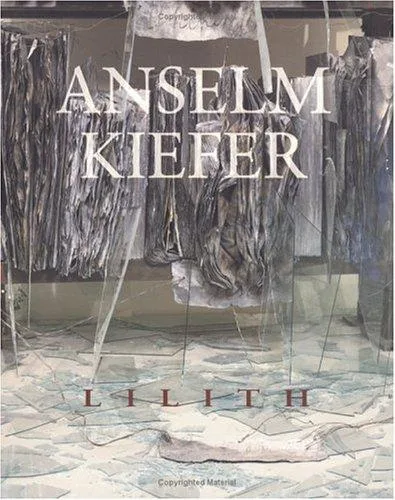
Anselm Kiefer's self-titled monograph offers a stark encounter with an artist who has consistently confronted history's specters. The raw power evident in pieces like his early works referencing Nazi-era iconography is palpable, even within the static medium of print. Michael Auping's introductory essay, penned around the book's initial 1978 publication, provides a crucial early lens on Kiefer's developing preoccupations. A particular strength lies in the reproduction of works that highlight Kiefer's innovative use of materials—straw, ash, lead—which imbue the canvases with a visceral sense of historical weight. However, the book's primary limitation is its archival nature; without the sheer scale and material presence of the actual artworks, some of the intended impact is necessarily diminished for the viewer experiencing it solely through reproduction. The section detailing Kiefer's *Markus* cycle, where the artist engages with the biblical figure through scorched earth and layered paint, exemplifies this potent, albeit mediated, connection to profound themes. This volume serves as a critical document of an artist wrestling with the ghosts of history.
📝 Description
82
### What It Is Anselm Kiefer presents a visual and conceptual exploration of history, myth, and memory. This work, initially published in 1978, showcases the artist's engagement with profound philosophical and historical themes through his distinctive artistic practice. It is not a narrative text but a collection of images and essays that invite contemplation on the weight of the past.
### Who It's For This volume is essential for artists, art historians, and individuals interested in the intersection of art and critical theory. It appeals to those who appreciate works that grapple with complex societal narratives and the enduring impact of cultural memory. Readers seeking a direct engagement with Kiefer's visual language and intellectual underpinnings will find substantial material here.
### Historical Context Emerging in the late 1970s, Anselm Kiefer's work gained prominence during a period when artists were re-examining historical trauma, particularly the legacy of World War II and the Holocaust in Germany. Kiefer’s approach, characterized by his use of unconventional materials and monumental scale, offered a stark contrast to minimalist or conceptual art prevalent at the time. His engagement with German mythology and history placed him in dialogue with thinkers like Martin Heidegger, whose ideas on being and temporality often inform interpretations of Kiefer's art.
### Key Concepts The work frequently addresses the concept of *Alemannia*, a multifaceted term referencing Germany and its historical, cultural, and spiritual dimensions. Kiefer also explores the role of myth, often drawing from Wagnerian opera and ancient sagas, as a means of confronting and processing collective memory. The materiality of his art—straw, lead, ash—serves as a direct conduit to historical resonance, transforming raw elements into symbolic representations of decay, regeneration, and the persistence of the past.
💡 Why Read This Book?
• Understand Kiefer's early engagement with historical trauma, particularly through his use of materials like straw and lead, as seen in works from the late 1970s, offering a unique artistic confrontation with Germany's past. • Gain insight into the symbolic weight of concepts like *Alemannia* and mythological references within Kiefer's oeuvre, as explored in the text and imagery, providing a framework for interpreting his complex historical narratives. • Appreciate Kiefer's unique artistic methodology, where the physical act of creation and the choice of materials are intrinsically linked to the historical and spiritual resonance of his subjects, as documented in this foundational publication.
⭐ Reader Reviews
Honest opinions from readers who have explored this book.
❓ Frequently Asked Questions
When was Anselm Kiefer's first major monograph published?
The initial publication of the monograph focusing on Anselm Kiefer, featuring contributions like Michael Auping's essay, dates back to 1978, capturing the artist's early thematic concerns.
What historical periods does Anselm Kiefer's work often address?
Kiefer's art frequently confronts the aftermath of World War II and the Holocaust, alongside broader themes of German history, mythology, and collective memory, particularly evident in works from the 1970s.
What are some characteristic materials Anselm Kiefer uses in his art?
Kiefer is known for incorporating unconventional and symbolic materials such as straw, ash, lead, shellac, and dried plants into his large-scale paintings and sculptures, imbuing them with historical and material resonance.
What does the term 'Alemannia' signify in Kiefer's work?
'Alemannia' in Kiefer's context refers to a complex evocation of Germany, encompassing its historical, cultural, and spiritual dimensions, often explored through potent imagery and symbolic landscapes.
How does Anselm Kiefer's art relate to philosophical concepts?
Kiefer's work often engages with existential and philosophical ideas, notably those of Martin Heidegger, concerning memory, history, being, and the weight of past events on the present consciousness.
What is the significance of mythology in Anselm Kiefer's artistic output?
Mythology, particularly from German sagas and Wagnerian opera, serves as a crucial vehicle for Kiefer to explore themes of national identity, historical recurrence, and the archetypal forces shaping human experience.
🔮 Key Themes & Symbolism
Materiality and Memory
Kiefer employs raw, often decaying materials like straw, ash, and lead not merely as pigments but as embodiments of historical weight. These substances carry the residue of time and trauma, directly linking the viewer to the physical and psychological landscapes of memory. His canvases become archaeological sites, where the very texture speaks of events and their lingering presence, challenging the viewer to confront the past through tactile and visual means. This deliberate use of found and elemental matter transforms the artwork into a potent archive of lived and historical experience.
Alemannia and National Identity
The concept of 'Alemannia' serves as a recurring motif, representing a complex and often fraught engagement with German identity, history, and landscape. Kiefer probes the cultural and spiritual legacy of Germany, frequently referencing its mythological underpinnings and historical scars. This exploration is not a simple celebration but a deep, often uncomfortable, reckoning with national narratives, seeking to understand how collective memory shapes identity. The works invite contemplation on the burden and persistence of history within a specific cultural context.
Myth and Archetype
Drawing heavily from Germanic mythology, biblical narratives, and figures from opera, Kiefer utilizes archetypal stories to explore universal human conditions and historical cycles. These myths are not merely decorative; they provide a framework for understanding recurring patterns of conflict, suffering, and regeneration. By recontextualizing these ancient tales within his contemporary artistic practice, Kiefer suggests that the fundamental dramas of human existence continue to echo through history, offering a lens through which to interpret collective trauma and resilience.
The Artist as Witness
Kiefer positions himself as an artist-historian, a witness confronting the difficult truths of the past. His monumental works, often imbued with a sense of gravitas and raw emotion, reflect a personal and collective struggle to process historical atrocities, particularly the Holocaust. This act of artistic testimony is a form of remembrance and an attempt to grapple with the ineffable weight of history. Through his art, Kiefer undertakes a critical examination of cultural memory, forcing viewers to confront uncomfortable historical realities and their enduring impact.
💬 Memorable Quotes
“History is not something that is past.”
— This statement encapsulates Kiefer's core artistic philosophy: the past is not a closed chapter but an active, persistent force that shapes the present. His art seeks to make this enduring presence tangible.
“The materials themselves carry the weight of memory.”
— Kiefer views his chosen materials—straw, lead, ash—as more than just mediums; they are imbued with historical resonance. Their physical properties directly evoke decay, time, and the residue of past events.
“Mythology offers a language for the unspeakable.”
— By drawing on ancient myths and sagas, Kiefer finds a way to articulate profound historical traumas and collective experiences that might otherwise be difficult to express directly.
“The landscape holds the echoes of history.”
— Interpretation: Kiefer often depicts vast, elemental landscapes that serve as a backdrop for historical events. These settings are not neutral but are saturated with the memory and impact of past occurrences.
“Art is a form of reckoning.”
— For Kiefer, the act of creating art is a process of confronting and coming to terms with difficult historical truths, both personal and collective, through intense engagement.
🌙 Esoteric Significance
Tradition
Kiefer's work draws from a broad, syncretic wellspring of Western esoteric thought, particularly Hermeticism and Gnosticism, blended with a deep engagement with Germanic mythology and national folklore. He doesn't adhere strictly to one lineage but synthesizes symbols and concepts that speak to a spiritual dimension underlying historical events. His practice can be seen as a form of modern alchemy, attempting to transmute the leaden weight of historical trauma into a spiritual understanding, akin to the Gnostic pursuit of hidden knowledge within material reality.
Symbolism
Key symbols in Kiefer's oeuvre include straw, often representing the fragility of life, the harvest of history, or even a connection to ancient pagan rituals. Lead, a dense and malleable metal, symbolizes both spiritual transformation (as in alchemy) and the heavy burden of history and memory. His use of scorched earth and ash points to destruction, purification, and the remnants of catastrophe, evoking sites of historical devastation while also suggesting potential for rebirth, echoing cyclical cosmologies.
Modern Relevance
Contemporary thinkers and artists interested in post-colonial discourse, memory studies, and the spiritual dimensions of art often reference Kiefer. His approach to confronting difficult histories through material and symbolic means remains influential for practitioners exploring trauma, identity, and the layered nature of reality. Schools of thought focusing on eco-criticism also find resonance in his use of elemental materials and landscapes charged with historical significance.
👥 Who Should Read This Book
• Art historians and critics specializing in post-war European art, seeking to understand Kiefer's foundational contributions to contemporary painting and his engagement with historical memory. • Students of cultural studies and German history, who can use Kiefer's visual language as a powerful case study for exploring national identity, trauma, and the role of art in historical reckoning. • Philosophically inclined readers interested in the intersection of art, history, and existential thought, particularly those drawn to figures like Martin Heidegger and concepts of memory and being.
📜 Historical Context
Published in 1978, this monograph emerged during a pivotal moment in post-war German art, where artists grappled intensely with national identity and historical culpability, particularly concerning the Nazi era. Anselm Kiefer's work, characterized by its monumental scale and visceral use of materials like straw and lead, stood in stark contrast to the prevailing minimalist and conceptual movements. His exploration of German mythology and history positioned him in dialogue with philosophers such as Martin Heidegger, whose ideas on history and being informed interpretations of Kiefer's engagement with the past. While not subject to widespread censorship, Kiefer's early works dealing with Nazi iconography generated significant debate and controversy within Germany and internationally. His artistic approach was seen by some as a courageous confrontation with repressed history and by others as potentially glorifying or appropriating problematic symbols. He was a contemporary of artists like Georg Baselitz and Sigmar Polke, who also engaged with German history, but Kiefer's unique material and thematic focus set him apart.
📔 Journal Prompts
The weight of *Alemannia* in your personal historical landscape.
Reflect on the symbolic resonance of straw and lead in your own life.
How does the concept of art as reckoning apply to current events?
The landscape as a repository of unseen histories.
Exploring the unspeakable through personal or collective narratives.
🗂️ Glossary
Alemannia
A term Kiefer uses to refer to Germany, encompassing its historical, cultural, and spiritual identity. It evokes a complex relationship with the nation's past and its symbolic representation.
Materiality
In art, the quality or character of a material as perceived by the senses. For Kiefer, materiality extends beyond aesthetics to embody historical and symbolic resonance.
Mythology
A collection of myths, especially one belonging to a particular religious or cultural tradition. Kiefer frequently draws upon Germanic and biblical myths to explore historical and existential themes.
Collective Memory
The shared pool of memories, knowledge, and information of a social group. Kiefer's work grapples with how societies remember and process historical events.
Alchemy
An ancient practice involving the transmutation of base metals into gold, often interpreted as a metaphor for spiritual purification and transformation. Kiefer's use of materials like lead can echo this symbolic process.
Iconography
The visual images and symbols used in a work of art or the study or interpretation of these. Kiefer's iconography is deeply tied to history and mythology.
Existentialism
A philosophical theory emphasizing the existence of each individual as a free and responsible agent determining their own development through acts of the will. Kiefer's work often explores themes of individual and collective responsibility in the face of history.