Acupuncture Medicine
 81
81

Acupuncture Medicine
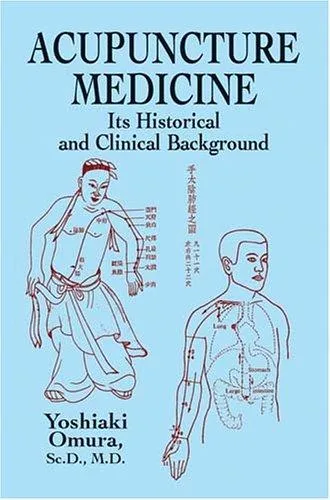
Yoshiaki Omura's Acupuncture Medicine offers a structured approach to a complex subject, beginning with its historical underpinnings before diving into the theoretical anatomy and pathology of Oriental medicine. The book's strength lies in its systematic presentation, particularly the detailed review of diagnostic methods, which are crucial for practical application. However, the reliance on 114 black-and-white illustrations, while informative, can sometimes feel less impactful than color diagrams might be for anatomical clarity, especially when explaining subtle energetic pathways. Omura's exploration of concepts like Qi, as presented in the text, provides a solid, if somewhat conventional, introduction to the energetic physiology that differentiates Eastern from Western medical thought. The work serves as a capable primer for those new to the field, though seasoned practitioners might seek more advanced discourse on specific therapeutic strategies or nuanced interpretations of classical texts.
📝 Description
81
### What It Is Acupuncture Medicine, authored by Yoshiaki Omura and first published in 2003, provides a comprehensive overview of acupuncture practice. The text systematically covers its historical roots, essential theoretical concepts of Oriental medicine, and detailed diagnostic methodologies. It aims to bridge the gap between historical understanding and contemporary application, serving as a foundational text for those seeking to grasp the intricacies of this ancient healing art.
### Who It's For This book is tailored for a dual audience. Lay practitioners interested in understanding the principles and methods of acupuncture will find a clear, accessible introduction. Simultaneously, healthcare professionals, from physicians to therapists, can utilize it as a reference for integrating acupuncture knowledge into their existing practice or for deepening their expertise. Its practical guidance and detailed illustrations make it suitable for various levels of engagement.
### Historical Context The work begins by tracing the historical background of acupuncture, exploring the origins and evolution of its core concepts. This section aims to ground the reader in the rich history that informs modern practice, presenting a narrative of how these healing techniques developed over centuries. It sets the stage for understanding the theoretical framework that underpins the physical interventions.
### Key Concepts Central to Acupuncture Medicine is the exploration of anatomical and pathophysiological concepts as understood within Oriental medicine. This involves examining concepts such as Qi, meridians, and organ systems from a traditional perspective. The book details diagnostic methods, including pulse and tongue diagnosis, offering readers the tools to assess imbalances and understand the energetic flow within the body.
💡 Why Read This Book?
• Gain a foundational understanding of acupuncture's historical trajectory, starting from its origins as detailed in the book, offering context unavailable in purely technical manuals. • Grasp the core anatomical and pathophysiological concepts of Oriental medicine, such as Qi and meridians, as presented in the book's dedicated sections. • Learn about specific diagnostic methods, including pulse and tongue analysis, as outlined in the text, providing practical skills for assessment.
⭐ Reader Reviews
Honest opinions from readers who have explored this book.
❓ Frequently Asked Questions
When was Acupuncture Medicine by Yoshiaki Omura first published?
Acupuncture Medicine by Yoshiaki Omura was first published on January 1, 2003. This initial publication date is important for understanding its place within the modern discourse on traditional medicine.
What are the main sections covered in Yoshiaki Omura's Acupuncture Medicine?
The book covers the historical background and origins of acupuncture concepts, the anatomical and pathophysiological principles of Oriental medicine, and a detailed review of diagnostic methods.
Who is the intended audience for Acupuncture Medicine?
The book is designed for both lay practitioners seeking an introduction to acupuncture and healthcare professionals looking to integrate its principles into their practice.
How many illustrations are included in Acupuncture Medicine?
Acupuncture Medicine includes 114 black-and-white illustrations to aid in understanding the concepts and practices discussed within the text.
Does the book focus on Western or Eastern medical concepts?
The book primarily focuses on the anatomical and pathophysiological concepts of Oriental medicine, contrasting them with Western approaches where relevant.
What kind of diagnostic methods are discussed in the book?
The book provides a detailed review of diagnostic methods essential to acupuncture, likely including techniques such as pulse diagnosis and tongue observation, which are central to Oriental medicine.
🔮 Key Themes & Symbolism
Foundations of Oriental Medicine
This theme delves into the fundamental principles that underpin acupuncture, moving beyond mere technique to explore the underlying philosophy. The work meticulously examines the historical development of concepts such as Qi (vital energy) and the meridian system, presenting them not as mystical forces but as integral components of a coherent medical framework. Understanding these foundational concepts is crucial for appreciating the diagnostic and therapeutic approaches discussed later in the book, offering a glimpse into a distinct paradigm of health and illness prevalent in traditional Chinese medicine.
Diagnostic Methodologies
A significant focus is placed on the systematic review of diagnostic methods central to acupuncture practice. The book details traditional techniques, likely including pulse palpation and tongue observation, explaining how these are interpreted within the context of Oriental medicine to identify imbalances in the body's energetic system. This emphasis on diagnosis provides readers with the tools to assess a patient's condition from an Eastern medical perspective, bridging the gap between theoretical knowledge and practical clinical application.
Bridging Ancient Wisdom and Modern Practice
Acupuncture Medicine strives to connect the historical legacy of acupuncture with contemporary healthcare needs. By presenting the origins, theories, and diagnostic tools in a structured manner, the book facilitates the integration of these ancient practices into modern medical understanding. It serves as a practical guide for both newcomers and established professionals, demonstrating how to apply traditional knowledge effectively in contemporary settings, supported by clear explanations and visual aids.
💬 Memorable Quotes
“Starting with historical background, including the origins and meanings of concepts essential to the practice of acupuncture...”
— This opening highlights the book's commitment to providing a comprehensive understanding, emphasizing that mastery of acupuncture requires knowledge of its historical evolution and conceptual framework, not just its mechanics.
“...proceeds to a discussion of the anatomical and pathophysiological concepts of Oriental medicine...”
— This indicates a structured approach, moving from history to theory, focusing on how Oriental medicine conceptualizes the body's structure and disease processes differently from Western medicine.
“...concluding with a detailed review of diagnostic methods.”
— This signals the book's practical orientation, ensuring that theoretical knowledge is coupled with the skills needed for actual assessment and treatment in acupuncture practice.
“A practical guide for lay practitioners as well as healthcare professionals.”
— This statement underscores the book's broad appeal and utility, aiming to serve as an accessible yet thorough resource for anyone interested in learning or applying acupuncture principles.
“114 black-and-white illustrations.”
— This factual detail points to the book's visual support, suggesting that complex anatomical and conceptual information is presented through diagrams to enhance reader comprehension.
🌙 Esoteric Significance
Tradition
While rooted in the pragmatic tradition of Traditional Chinese Medicine (TCM), Acupuncture Medicine touches upon esoteric principles through its exploration of Qi and meridian theory. These concepts, while often explained in physiological terms, carry metaphysical weight, suggesting an underlying energetic matrix that governs life. The work fits within a broader esoteric lineage that views the body not merely as a material construct but as a vessel of vital force, aligning with Hermetic ideas of 'as above, so below' when considering the energetic correspondences within the microcosm of the human body.
Symbolism
Key symbols within acupuncture include the concept of Qi, representing vital life force, and the intricate network of meridians, which function as energetic pathways akin to cosmic currents within the body. The diagnostic tools, such as pulse and tongue observation, also carry symbolic weight, acting as microcosmic reflections of the body's macrocosmic energetic state. These elements symbolize the interconnectedness of all bodily functions and the vitalistic philosophy central to Oriental medicine.
Modern Relevance
Contemporary thinkers and practitioners in fields like integrative medicine, energy psychology, and even certain branches of bioenergetic therapy draw upon the foundational principles outlined in works like Omura's. The book's clear exposition of Qi and meridian theory provides a framework for understanding practices that aim to influence the body's energetic field, resonating with modern explorations into consciousness, subtle energies, and holistic healing modalities that seek to go beyond purely materialist explanations of health.
👥 Who Should Read This Book
• Aspiring acupuncturists and TCM students seeking a structured introduction to the core theories and diagnostic methods of the practice. • Healthcare professionals interested in understanding the foundational principles of acupuncture to potentially integrate it into their patient care. • Individuals curious about the historical and theoretical underpinnings of Oriental medicine and its distinct approach to anatomy and pathology.
📜 Historical Context
Published in 2003, Yoshiaki Omura's Acupuncture Medicine entered the discourse on traditional medicine at a time when Western scientific methodologies were increasingly being applied to validate or scrutinize ancient healing systems. The early 2000s saw a growing interest in complementary and alternative medicine (CAM) within Western healthcare, prompting a demand for clear, structured texts that could bridge the gap between disparate medical paradigms. Omura's work emerged within this context, aiming to provide a systematic foundation in acupuncture for both practitioners and academics. While not directly engaging with specific contemporary authors in its blurb, the book implicitly addresses a field that was being actively explored by figures like Andrew Weil, who popularized CAM, and researchers seeking to understand mechanisms like Qi flow through biophysics. The reception of such works often involved discussions about efficacy and integration, positioning Acupuncture Medicine as a valuable reference for understanding the theoretical underpinnings sought by a curious Western medical establishment.
📔 Journal Prompts
The historical origins of acupuncture concepts: what initial discovery surprises you most?
Pathophysiological concepts of Oriental medicine: how does the concept of Qi differ from Western biological models?
Diagnostic methods in acupuncture: compare and contrast pulse diagnosis with conventional Western diagnostic techniques.
The role of meridians: visualize the flow of Qi through the body's meridian system.
Integrating lay practitioner and professional knowledge: how can this book serve both audiences effectively?
🗂️ Glossary
Qi
The fundamental vital energy or life force that animates all living beings and processes in Oriental medicine. It is believed to flow through the body along specific pathways known as meridians.
Meridians
A network of channels or pathways throughout the body through which Qi and Blood circulate. They connect the internal organs with the external body surface and are the basis for acupuncture point selection.
Pathophysiology (Oriental Medicine)
The study of the functional changes associated with a disease or injury from the perspective of Oriental medicine, focusing on imbalances in Qi, Blood, Yin, and Yang, and organ system disharmony.
Anatomy (Oriental Medicine)
The study of the structural organization of the body according to Oriental medicine principles, often emphasizing the energetic and functional relationships between organs and systems rather than purely physical structure.
Diagnostic Methods
Techniques used in Oriental medicine to assess a patient's health status and identify patterns of disharmony. Common methods include observation (tongue), listening/smelling, inquiry (symptoms), and palpation (pulse).
Lay Practitioner
An individual who practices or studies a discipline, such as acupuncture, without formal professional licensing or certification, often for personal interest or application outside a clinical setting.
Healthcare Professional
An individual licensed and trained to provide medical services, who may be exploring acupuncture as a complementary modality or seeking to deepen their understanding of related practices.