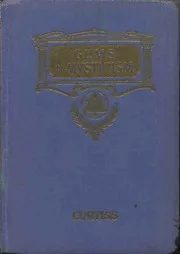
Llama de amor viva
 73
73

Llama de amor viva
The 1934 rendition of John of the Cross's 'Llama de amor viva' presents the dual power of the saint's original Spanish verse and his subsequent prose exposition. The commentary, while dense, is indispensable for grasping the poem's intricate theological and mystical architecture. Lewis and Zimmerman's editorial hand provides a scholarly anchor, though at times the annotations can interrupt the flow of John's ecstatic pronouncements. A notable strength lies in the precise language used to describe the soul's journey through the purgative and illuminative ways, particularly the depiction of the 'living flame' as an active, purifying agent of divine love. However, for readers unacquainted with scholastic theological terminology, the commentary might present a significant barrier. The poetic sections, conversely, are luminously clear in their emotional and spiritual import. This edition serves best those who seek a rigorous, academic engagement with one of Western mysticism's most profound articulations of divine union.
📝 Description
73
Saint John of the Cross wrote 'The Living Flame of Love' in the late 16th century.
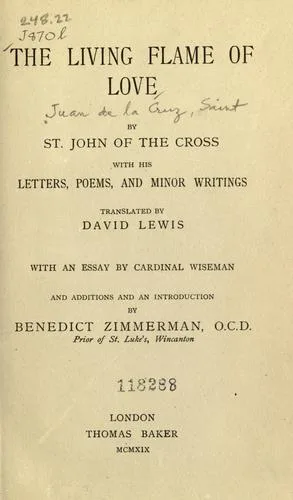
Saint John of the Cross's 'Llama de amor viva,' or 'The Living Flame of Love,' is a spiritual poem accompanied by his own commentary. Written in Spanish, it describes the soul's progression toward union with God. The work details the necessary stages of purification and illumination that lead to ecstatic communion. This 1934 edition includes scholarly notes from David Lewis and Benedict Zimmerman, making the original text accessible.
It is a significant text for serious students of Christian mysticism and the contemplative path. Scholars of religious literature, theologians, and individuals focused on spiritual development will find value in its discussion of advanced inner transformation. The book combines rigorous theological argument with poetic expression of spiritual states.
Composed during Spain's Counter-Reformation, 'The Living Flame of Love' emerged from a rich tradition of Spanish mysticism. John of the Cross, who worked with Teresa of Ávila, presented descriptions of divine encounters that, while celebrated, also drew suspicion from some church officials. This work sits within a historical moment of intense religious discourse, where mystical experiences were both deeply revered and carefully examined.
💡 Why Read This Book?
• Gain an understanding of the 'dark night of the soul,' a core concept in Christian contemplative practice, as articulated by John of the Cross himself. • Explore the symbolic meaning of the 'living flame,' representing the Holy Spirit's transformative action on the soul, as detailed in the poem's commentary. • Appreciate the mystical ascent described in the poem, charting the soul's progression towards divine union, a journey central to the Spanish mystics' tradition.
⭐ Reader Reviews
Honest opinions from readers who have explored this book.
❓ Frequently Asked Questions
What is the historical period of the original 'Llama de amor viva' composition?
Saint John of the Cross composed 'Llama de amor viva' and its commentary in the late 16th century, during a period of significant religious discourse in Spain.
Who are the key figures associated with the 1934 edition of 'Llama de amor viva'?
The 1934 edition features contributions from David Lewis and Benedict Zimmerman, providing scholarly context and commentary on John of the Cross's original work.
What is the central theme of 'The Living Flame of Love'?
The central theme is the soul's passionate journey toward complete union with God, guided by divine love and the purifying action of the Holy Spirit, symbolized by the 'living flame'.
What does the 'dark night of the soul' concept refer to in this work?
The 'dark night of the soul' refers to the stages of spiritual purification where the soul is detached from sensory and spiritual consolations to foster deeper reliance on God.
Is 'Llama de amor viva' a poem or prose?
'Llama de amor viva' is primarily a poem, but it is famously accompanied by a prose commentary written by Saint John of the Cross himself, exploring its spiritual depths.
What esoteric tradition does John of the Cross's work belong to?
John of the Cross's work is a cornerstone of Christian mysticism, specifically within the Carmelite tradition, focusing on the direct, experiential knowledge of God.
🔮 Key Themes & Symbolism
The Dark Night
The concept of the 'dark night' is central, representing stages of purification necessary for spiritual growth. It's not about despair, but a divine process of detaching the soul from spiritual comforts and sensory pleasures. This stripping away allows the soul to rely solely on faith and God's presence, preparing it for direct, unmediated union. John of the Cross details both the 'night of the senses' and the more profound 'night of the spirit,' guiding the contemplative through these challenging yet transformative phases.
Divine Union
The ultimate aim articulated in 'Llama de amor viva' is ecstatic union with the Divine. This union is depicted not as a mere intellectual understanding but as a profound, transformative merging of the soul with God. The 'living flame' symbolizes the Holy Spirit actively consuming the soul's imperfections and infusing it with divine love and light, leading to a state of blissful communion where the soul recognizes its source.
The Living Flame
The titular 'living flame' is a potent symbol of divine love and the active presence of the Holy Spirit. It is portrayed as a purifying, transformative force that both ignites the soul with divine ardor and consumes its remaining imperfections. This flame represents the intense, active nature of God's love working within the mystic, drawing the soul upward and outward in ecstatic devotion.
Spiritual Ascent
The poem and commentary meticulously trace the soul's upward journey toward God. This ascent is not linear but involves periods of trial, purification, and profound spiritual insight. It moves from initial yearning through stages of detachment and surrender, culminating in a state of intimate, loving union. The work maps this path with precision, offering a guide for those seeking deeper spiritual realization.
💬 Memorable Quotes
Direct passages from the work, attributed to the author.
“How gently you wake me, in my breast you reside, breathing from lilies the tranquil air.”
— This poetic line captures the gentle yet profound awakening of the soul to divine presence. The 'breast' signifies the inner self, while the 'lilies' and 'tranquil air' evoke purity and peace, suggesting the Holy Spirit's subtle, life-giving influence.
“My soul is now married to the deep wisdom of love.”
— This expresses the culmination of the spiritual journey: the soul's complete integration and union with the Divine. The 'marriage' signifies a profound, intimate bond, and 'deep wisdom' points to the transformative knowledge gained through this ecstatic connection.
“The flame that I feel now burns with such force, that it consumes my pain and my will.”
— This highlights the purifying power of divine love, symbolized by the 'flame.' It illustrates the surrender of the self, where suffering and individual desires are transmuted by the intensity of God's love, leading to liberation.
“O, night that guided me, O, night more lovely than the dawn.”
— This paradoxical statement refers to the 'dark night of the soul.' It suggests that the periods of spiritual darkness and detachment, though seemingly difficult, are crucial guides leading to a deeper, more profound experience of the divine than superficial spiritual consolations.
“I am all His, and I give myself to Him.”
— This is a declaration of complete surrender and self-offering to God. It embodies the essence of mystical union, where the individual will is fully aligned with the divine will, resulting in a profound sense of belonging and devotion.
🌙 Esoteric Significance
Tradition
John of the Cross's work is a paramount expression of Christian Mysticism, specifically within the Carmelite tradition. It focuses on the direct, experiential union of the soul with God, employing concepts of purification and divine indwelling. While rooted in orthodox Christianity, its emphasis on ecstatic experience and the soul's journey through profound spiritual trials aligns with broader esoteric currents seeking direct communion with the divine principle.
Symbolism
The 'living flame' is a central symbol, representing the active, purifying presence of the Holy Spirit and divine love that ignites and transforms the soul. The 'dark night' symbolizes the necessary process of spiritual purification, where the soul is stripped of sensory and spiritual consolations to achieve a more profound reliance on God. The 'union' or 'marriage' signifies the ultimate goal: an ecstatic, loving integration of the soul with the Divine essence.
Modern Relevance
Contemporary contemplative practitioners, spiritual directors, and scholars of mysticism continue to draw heavily on John of the Cross's precise descriptions of the soul's journey. His articulation of the 'dark night' remains a touchstone for understanding spiritual desolation and purification. Modern Christian contemplative movements, as well as some broader mindfulness and esoteric practices seeking deep inner transformation, find in his work a profound map of the inner life.
👥 Who Should Read This Book
• Students of Christian Mysticism: Those seeking to understand the pinnacle of contemplative experience within the Western tradition, particularly the Carmelite path. • Scholars of Religious Literature: Individuals interested in the intersection of poetry, theology, and spiritual autobiography from the Spanish Golden Age. • Seekers of Deep Spiritual Transformation: Individuals on a dedicated path of inner development who wish to comprehend the rigorous stages of purification and union with the Divine.
📜 Historical Context
Saint John of the Cross penned 'Llama de amor viva' in the latter half of the 16th century, a period marked by the Counter-Reformation and a flourishing of Spanish mystical literature. This era saw intense theological debate and, at times, suspicion towards ecstatic religious experiences. John, a key figure in the Carmelite Reform alongside Teresa of Ávila, operated within a tradition that sought direct, experiential knowledge of God, often through rigorous asceticism and contemplation. His writings, while deeply rooted in Catholic doctrine, pushed the boundaries of devotional expression. His contemporary, Teresa of Ávila, also navigated similar spiritual landscapes and ecclesiastical scrutiny. Unlike purely scholastic theological treatises, John's work combined poetic intensity with profound spiritual direction, influencing generations of mystics and theologians. The 1934 edition, by Lewis and Zimmerman, situates this seminal text within a modern academic framework.
📔 Journal Prompts
The concept of the 'living flame' igniting the soul.
Reflect on the paradox of the 'dark night' as a guide.
The soul's 'marriage' to divine wisdom.
The nature of spiritual ascent described by John of the Cross.
Experiences of divine presence evoked by the poem's imagery.
🗂️ Glossary
Llama de amor viva
Spanish for 'The Living Flame of Love,' the title of the poem and its subsequent commentary by Saint John of the Cross, detailing the soul's journey to divine union.
Dark Night of the Soul
A concept articulated by John of the Cross, describing stages of spiritual purification where the soul undergoes detachment from sensory and spiritual comforts to achieve deeper union with God.
Divine Union
The ultimate goal of the mystical path, characterized by an ecstatic, transformative merging of the soul with the Divine essence through intense love and knowledge.
Living Flame
A central symbol in the work, representing the Holy Spirit and divine love, which purifies, transforms, and unites the soul with God.
Contemplation
A form of prayer or meditation focused on direct, loving union with God, characterized by stillness, interiority, and a passive reception of divine grace.
Spiritual Ascent
The process of the soul's upward journey toward God, involving stages of purification, transformation, and increasing union, as meticulously described in mystical literature.
Carmelite Tradition
A branch of Christian mysticism associated with the Carmelite Order, emphasizing devotion to the Virgin Mary, contemplative prayer, and the pursuit of direct experience of God.
🔮 Readers Also Liked
Browse all →








More by John of the Cross, Lewis, David, Benedict Zimmerman
All books →

More Free Mysticism & Contemplation Books
View all →