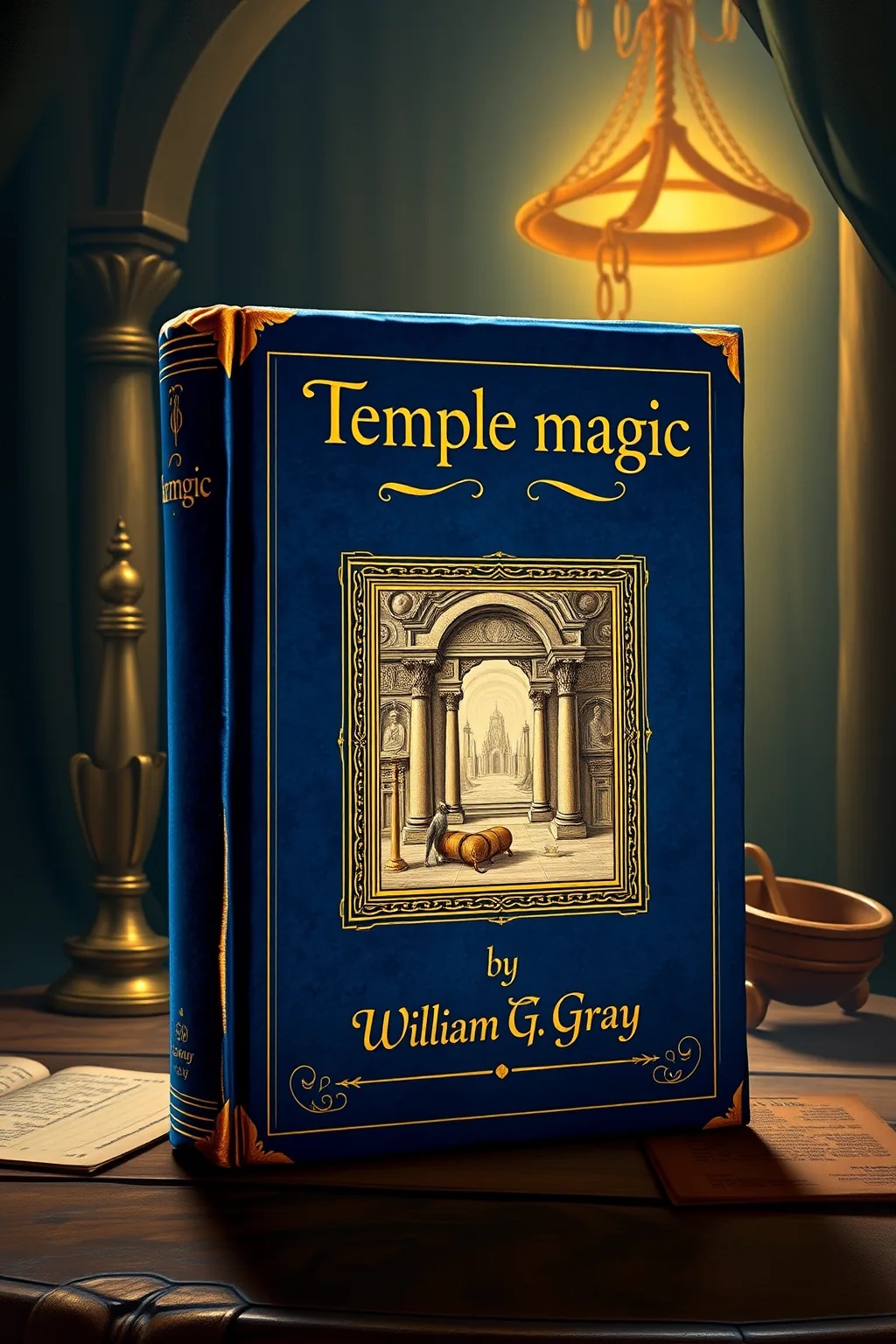
Temple magic
 73
73

Temple magic
William G. Gray's "Temple Magic" is a rare offering in the often-obscure field of ceremonial magic: a manual that prioritizes construction and practical application. Gray’s focus on the tangible elements of building and consecrating a magical space, rather than solely on abstract theories, is its primary strength. He details the rationale behind specific architectural choices and symbolic placements with a clarity that is often missing. A notable section discusses the consecration of tools, explaining the energetic imprinting required for effective ritual work. However, the prose can occasionally feel dense, assuming a prior familiarity with certain esoteric concepts that might leave absolute beginners feeling adrift. Despite this, the book's methodical, step-by-step guidance makes it an indispensable resource for anyone serious about establishing a dedicated magical locus. It provides the blueprint for the practitioner's workshop.
📝 Description
73
### What It Is William G. Gray's "Temple Magic," first published in 1988, offers a practical manual for understanding and enacting ceremonial magic. It moves beyond theoretical discussions to provide concrete instructions for constructing and operating a magical temple space. Gray emphasizes the psychological and energetic principles underlying ritual, presenting magic not as supernatural intervention but as a disciplined art form.
### Who It's For This work is aimed at serious students of Western Esotericism, particularly those interested in the mechanics of ritual magic. It suits practitioners who seek to establish their own working space and understand the foundational elements of temple construction, consecration, and the use of symbolic tools. Those frustrated by overly abstract or esoteric texts will find Gray's direct, instructional approach refreshing.
### Historical Context Published in the late 1980s, "Temple Magic" emerged during a period of renewed interest in practical occultism, following earlier waves inspired by figures like Aleister Crowley and Dion Fortune. Gray's approach, rooted in a more personal interpretation of ceremonial traditions, distinguished itself from more academic or purely theoretical works. It offered a bridge between classical ceremonial magic and contemporary magical practice.
### Key Concepts The book systematically breaks down the components of a magical temple, covering everything from the choice of location and materials to the symbolic significance of colours, directions, and implements. Gray introduces concepts such as the "inner temple" and the importance of focused intention in creating a sacred and potent working environment. The text also touches upon the psycho-spiritual effects of ritualistic actions.
💡 Why Read This Book?
• Learn the precise, step-by-step process for constructing and consecrating a dedicated magical temple space, moving beyond theoretical concepts to practical implementation as detailed in Gray's chapters on temple construction. • Understand the energetic and psychological underpinnings of ritual architecture, gaining insight into why specific colours, directions, and symbols are employed, as explained through Gray's analysis of temple symbolism. • Acquire methods for consecrating magical tools, ensuring they are properly attuned for effective ritual work, a critical process elaborated upon in Gray's practical instructions.
⭐ Reader Reviews
Honest opinions from readers who have explored this book.
❓ Frequently Asked Questions
What year was William G. Gray's Temple Magic first published?
William G. Gray's "Temple Magic" was first published in 1988, offering practitioners a practical guide to ceremonial magic during a period of renewed occult interest.
Is Temple Magic suitable for absolute beginners in magic?
While "Temple Magic" offers practical guidance, its dense prose and assumption of some esoteric knowledge may make it challenging for absolute beginners. It is best suited for those with some foundational understanding of magical principles.
What are the core components of a magical temple according to Gray?
Gray's work details essential components including location, materials, colours, directions, and symbolic implements. He emphasizes the intentional creation of a potent working environment through these elements.
Does the book discuss the consecration of magical tools?
Yes, "Temple Magic" includes detailed discussions and instructions on the consecration of magical tools, explaining the energetic imprinting necessary for their effective use in ritual.
What is the significance of the 'inner temple' concept in this book?
The "inner temple" refers to the practitioner's focused intention and psychological state, which Gray posits are crucial for creating and activating the external magical temple space.
What distinguishes Gray's approach to temple magic?
Gray's approach is distinguished by its strong emphasis on practical construction and detailed, step-by-step instructions for creating a physical temple, moving beyond purely theoretical discussions.
🔮 Key Themes & Symbolism
Temple Construction
Gray meticulously outlines the practical aspects of building a magical temple. This involves not just the physical structure but also the energetic consecration of the space. The work details the selection of materials, the placement of symbolic elements, and the alignment with cardinal directions, all contributing to the creation of a potent locus for ritual work. It treats the temple as a vital instrument for focusing magical will and energy.
Consecration of Tools
A significant portion of "Temple Magic" is dedicated to the proper consecration of magical implements. Gray explains that tools are not merely symbolic props but require energetic attunement to function effectively within a ritual context. This process involves specific rituals and invocations designed to imbue the tools with the necessary spiritual and psychic energies, making them extensions of the practitioner's will.
The Inner Temple
Beyond the physical architecture, Gray emphasizes the importance of the 'inner temple' – the practitioner's own state of consciousness and focused intention. The external temple serves as a reflection and amplifier of this internal sacred space. The book guides readers on how to cultivate the necessary mental discipline and psychic preparedness to effectively engage with and utilize the temple environment.
Symbolic Architecture
Gray explores the deep symbolic meanings embedded within the design and contents of a magical temple. Colours, geometric shapes, specific deities or angelic figures, and elemental representations are discussed in terms of their energetic impact and their role in creating a resonant environment. This symbolic language is presented as integral to the efficacy of the magical operations performed within the temple.
💬 Memorable Quotes
“A temple is not merely a building; it is a specially prepared space designed to facilitate a particular class of work.”
— This quote highlights Gray's functionalist approach, defining the temple by its purpose and preparation rather than its mere physical form. It underscores the active, intentional nature of creating a magical environment.
“The consecration of tools is essential to ensure they respond to the magician's will.”
— This emphasizes the practical necessity of tool preparation in Gray's system. It suggests that magical instruments require a specific energetic charge to become effective conduits for ritual power.
“The colours used in the temple should correspond to the energies being invoked.”
— This paraphrased concept points to the deliberate use of colour symbolism in temple design, linking specific hues to particular magical forces or planetary influences for targeted ritual effects.
“The outer temple is a projection of the inner.”
— This interpretation captures the relationship Gray posits between the practitioner's consciousness and the physical space. The external temple's efficacy is dependent on the internal state of the magician.
“Directional alignments are critical for drawing power from specific elemental forces.”
— This concept suggests that the orientation of the temple is not arbitrary but strategically chosen to harness energies associated with the cardinal directions and their elemental correspondences.
🌙 Esoteric Significance
Tradition
Gray's work sits within the Western Esoteric tradition, specifically drawing from the lineage of ceremonial magic. It aligns with Hermetic principles by emphasizing structured ritual, symbolic representation, and the disciplined cultivation of consciousness for magical effect. However, Gray's focus is less on intricate Kabbalistic or Qabalistic systems and more on the foundational mechanics of creating a potent working space, making it a practical manual rather than a deep theoretical text.
Symbolism
Key symbols in "Temple Magic" include the square (representing the material world and the structure of the temple), colours (used to denote elemental and planetary energies), and the cardinal directions (each associated with specific forces and intelligences). The altar, the triangle of manifestation, and the consecrated tools are also central, serving as focal points for invoking and directing magical energies within the prepared space.
Modern Relevance
Contemporary practitioners of ceremonial magic, particularly those involved in solitary or small-group work, continue to draw upon Gray's foundational principles. His emphasis on practical construction and intentional space-making remains relevant for modern occultists seeking to establish a serious magical practice. Schools focusing on practical ritual and temple work often reference "Temple Magic" as a core text for understanding the physical and energetic architecture of the magical environment.
👥 Who Should Read This Book
• Aspiring ceremonial magicians seeking to establish a dedicated ritual space, providing them with the practical blueprints and theoretical underpinnings for temple construction and consecration. • Experienced occultists looking to refine their understanding of sacred space, offering detailed insights into the energetic and symbolic significance of temple architecture and tool preparation. • Students of Western Esotericism interested in the practical application of magical principles, showing how theoretical concepts translate into the tangible creation of a magical working environment.
📜 Historical Context
William G. Gray's "Temple Magic," released in 1988, emerged from a fertile period in Western Esotericism. The late 20th century saw a resurgence of interest in practical magical traditions, partly as a reaction to the more theoretical or abstract spiritual movements of the time. Gray’s work offered a grounded, instructional approach, distinguishing itself from the highly ceremonial or esoteric writings of earlier figures like Aleister Crowley or the more psychological interpretations found in the works of Dion Fortune. While not engaging directly with academic circles, the book contributed to a growing body of literature aimed at the dedicated practitioner seeking to build and operate their own magical infrastructure. Its publication occurred during a time when occult bookstores and study groups were becoming more prevalent, fostering a community interested in hands-on magical work.
📔 Journal Prompts
The significance of the square in temple architecture.
Personal reflections on the energetic requirements for tool consecration.
How the concept of the 'inner temple' influences external ritual practice.
Mapping the symbolic colours of your desired temple space.
The role of directional alignments in magical operations.
🗂️ Glossary
Consecration
The act of dedicating or setting apart a person, object, or place for a sacred purpose. In magic, it involves ritualistic purification and energetic charging of tools or spaces.
Locus
A specific place or site, particularly one regarded as the center of activity or interest. In magic, a temple serves as a potent locus for ritual work.
Implement
A tool or piece of equipment used for a specific purpose. In ceremonial magic, 'implements' refers to ritual tools like wands, swords, cups, and pentacles.
Symbolic Architecture
The design and construction of a space that incorporates symbols and their associated meanings to influence consciousness and energy.
Elemental Forces
The fundamental energies often categorized as Fire, Water, Air, and Earth, believed to underpin the material and energetic realms in many esoteric systems.
Psychic Energy
The subtle energy associated with consciousness, thought, and emotion, believed to be manipulable through focused intention and ritual practice.
Cardinal Directions
The four principal compass points: North, South, East, and West, each often associated with specific elements, intelligences, or spheres of influence in magical traditions.