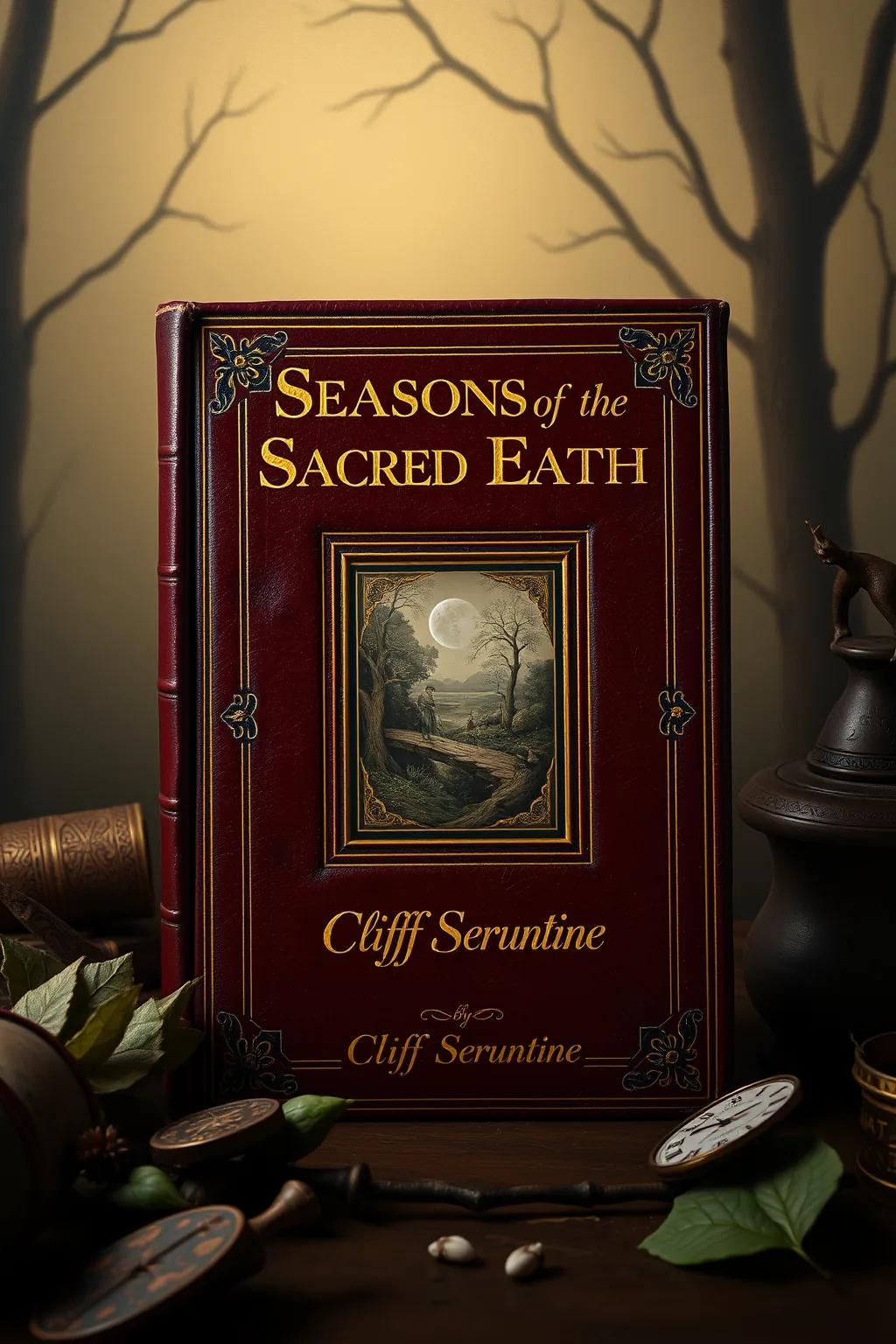
Seasons of the Sacred Earth
 62
62

Seasons of the Sacred Earth


Aurelia Blackwood (Occult Philosophy Critic) — 'Seasons of the Sacred Earth' is a luminous exposition on the deeply ingrained magical currents of the natural year. Cliff Seruntine possesses a rare gift for articulating complex esoteric concepts with clarity and evocative prose. This text resonates with the wisdom of ancient traditions, offering practitioners and scholars alike a profound lens through which to view the cyclical magic of life. Seruntine’s exploration of the psychological and spiritual dimensions of seasonal observances provides potent insights for personal transformation. It is an indispensable volume for anyone seeking to deepen their connection to the Earth's sacred cycles and unlock the inherent magic within.
📝 Description
62
Embark on a profound pilgrimage through the cyclical tapestry of existence with Cliff Seruntine's 'Seasons of the Sacred Earth.' This illuminating work unfurls the hidden currents of magic woven into the very fabric of nature's grand procession. More than a mere catalog of rituals, it is an invitation to perceive the divine spark resonating within the turning of the year, from the awakening whispers of spring to the deep slumber of winter. Seruntine masterfully deciphers the ancient symbolism embedded in festivals, customs, and the sacred geometries of the natural world, revealing a profound interconnectedness that transcends the mundane. For the discerning seeker yearning to reclaim their ancestral bond with the Earth's vibrant spirit, this book offers a pathway to deeper understanding, potent wisdom, and a revitalized sense of belonging within the cosmos. It is a guide for those who wish to live in conscious communion with the sacred rhythms that govern all life, transforming everyday moments into acts of profound reverence and magical practice.
✍️ Author
💡 Why Read This Book?
Immerse yourself in the potent magic of nature's cycles. 'Seasons of the Sacred Earth' offers profound esoteric insights into ancient rituals and forgotten wisdom. Ideal for spiritual seekers, nature mystics, and practitioners of earth-based magic yearning to deepen their connection to the Earth's sacred rhythm and unlock transformative personal power.
⭐ Reader Reviews
Honest opinions from readers who have explored this book.
❓ Frequently Asked Questions
What esoteric traditions does 'Seasons of the Sacred Earth' draw upon?
The book synthesizes wisdom from various earth-based traditions, including Paganism, Wicca, and shamanic practices, emphasizing the universal archetypes of seasonal change and their magical applications.
Is this book suitable for beginners in magic?
Yes, while it delves into profound concepts, Seruntine's accessible writing style makes it an excellent starting point for those new to esoteric studies and nature magic.
What kind of rituals are discussed?
The book explores a wide range of rituals, from personal meditations and simple offerings to more involved ceremonies for solstices, equinoxes, and harvest festivals, all grounded in seasonal energies.
How does the book connect nature to psychological well-being?
Seruntine illustrates how aligning with Earth's cycles can foster emotional balance, mental clarity, and a deeper sense of purpose, acting as a natural balm for modern stresses.
Can I use the knowledge in this book for practical magic?
Absolutely. The book provides a framework for understanding the energetic principles of each season, empowering readers to craft their own potent magical practices aligned with natural forces.
🔮 Key Themes & Symbolism
The Sacred Wheel of the Year
This theme explores the profound spiritual and magical significance of the eight major festivals that mark the turning of the seasons, from Yule and Imbolc to Beltane, Litha, Lughnasadh, Mabon, and Samhain. Seruntine delves into the archetypal energies inherent in each festival, revealing how they offer unique opportunities for personal growth, ritual practice, and communion with the divine forces of nature. It's a deep dive into the cyclical dance of life, death, and rebirth as mirrored in the Earth's annual journey.
Nature as a Living Temple
Seruntine posits that the natural world itself is a vast, sentient temple, teeming with divine energy and ancient wisdom waiting to be accessed. This theme focuses on perceiving the sacred in everyday landscapes, from the smallest wildflower to the grandest mountain. It encourages readers to develop a deep, reciprocal relationship with the Earth, understanding its subtle language through observation, intuition, and reverence. This approach transforms mundane environments into sacred spaces ripe for magical interaction and spiritual revelation.
The Psychology of Seasonal Rhythms
Beyond mere observation, 'Seasons of the Sacred Earth' examines the profound psychological and spiritual impact of aligning one's inner life with the outer rhythms of nature. Seruntine explores how each season influences our moods, energies, and spiritual inclinations, offering insights into harnessing these natural ebbs and flows for personal transformation. Understanding these cycles provides a powerful framework for self-discovery, resilience, and cultivating a balanced, harmonious existence throughout the year.
💬 Memorable Quotes
“The Earth breathes, and we breathe with her.”
— This quote encapsulates the core theme of interconnectedness, highlighting the vital, symbiotic relationship between humanity and the planet, emphasizing a shared life force.
“Magic is not found in spells alone, but in perception.”
— This profound statement shifts the focus of magic from external actions to internal awareness, suggesting that true power lies in how we observe and interpret the world around us.
“The seasons are nature's sacred clock.”
— This metaphor illustrates the predictable yet divinely ordered progression of the year, framing seasonal changes as divinely orchestrated events with inherent spiritual significance.
“To know the Earth is to know the divine.”
— This quote asserts a direct correlation between deep connection with the natural world and spiritual enlightenment, suggesting that divinity is immanent within the Earth.
“In stillness, we hear the Earth's whispers.”
— This emphasizes the importance of quiet contemplation and mindful presence in attuning oneself to the subtle energies and wisdom offered by the natural environment.
🌙 Esoteric Significance
Tradition
The book draws heavily from animistic, shamanic, and earth-centered spiritual traditions, particularly those found within Western Esotericism and indigenous cosmologies. It emphasizes the concept of the 'sacred grove' – the idea that divinity is immanent within nature, accessible through direct experience and ritual. This perspective aligns with traditions that view the Earth as a living entity, a manifestation of the divine, and a primary source of magical power and wisdom.
Symbolism
Key symbols explored include the Wheel of the Year, representing cyclical time and the transformations of the seasons; the four elements (Earth, Air, Fire, Water) as foundational forces; and archetypal figures associated with fertility, death, and rebirth. The book deciphers the symbolic language of plants, animals, celestial movements, and natural phenomena, revealing their deeper magical and spiritual meanings within the context of seasonal shifts and human experience.
Modern Relevance
In an age often characterized by technological detachment and environmental degradation, 'Seasons of the Sacred Earth' offers a potent antidote. It provides practical guidance for modern individuals to re-establish a vital connection with the natural world, fostering ecological consciousness and personal well-being. The book's emphasis on cyclical living and mindful observance resonates with contemporary desires for authenticity, sustainability, and a deeper sense of belonging in the universe.
👥 Who Should Read This Book
This illuminating text is a treasure trove for a diverse array of seekers. **Beginners** in esoteric studies will find Seruntine's clear prose and foundational explanations a welcoming gateway into earth-based magic and spirituality. **Scholars** of comparative religion and folklore will appreciate the deep synthesis of cross-cultural traditions and the rich historical context. **Spiritual seekers** yearning for a deeper connection to nature and the divine will find profound resonance and practical guidance. **Practitioners of magic** and ritual, particularly those drawn to nature-based paths, will discover potent insights and inspiration for their craft, enhancing their understanding of seasonal energies.
📜 Historical Context
Published in an era increasingly marked by a spiritual seeking and a growing disconnect from the natural world, 'Seasons of the Sacred Earth' emerged as a vital counter-narrative. The late 20th and early 21st centuries witnessed a resurgence of interest in Paganism, eco-spirituality, and indigenous wisdom traditions. In this context, Seruntine’s work tapped into a deep-seated yearning for reconnection with ancestral practices and the sacred rhythms of the Earth. It offered a bridge between ancient knowledge and contemporary anxieties, providing a framework for understanding the cyclical nature of life, death, and rebirth in a world often perceived as linear and fragmented. The book speaks to a generation grappling with environmental concerns and seeking a more holistic, Earth-centered worldview.
📔 Journal Prompts
Reflect on the current season: what energies does it embody for you, and how do they influence your inner state?
Describe a recent experience in nature that felt particularly sacred or magical. What did you observe and feel?
How can you incorporate a simple seasonal ritual into your weekly routine to honor the Earth's cycles?
Consider the symbolism of a plant or animal significant to the current season. What message might it hold for you?
In what ways does aligning with natural rhythms help you navigate personal challenges or celebrate life's joys?
🗂️ Glossary
Wheel of the Year
A cyclical calendar representing the eight major festivals of the Pagan and Wiccan year, marking the solstices, equinoxes, and cross-quarter days, symbolizing the eternal cycle of birth, growth, decay, and rebirth.
Imbolc
A festival celebrated around February 1st, marking the midpoint between the Winter Solstice and the Spring Equinox, often associated with the first stirrings of spring and the goddess Brigid.
Litha
The Summer Solstice, celebrated around June 21st, the longest day of the year, representing peak light, solar energy, and vitality.
Animism
The belief that all natural objects, phenomena, and the universe itself possess an independent spiritual or sentient essence, often leading to a reverence for nature.
Archetype
A universal, archaic pattern or image that derives from the collective unconscious and is believed to influence human behavior and perception, often embodied in myths and symbols.