Not Your Sidekick
 79
79

Not Your Sidekick
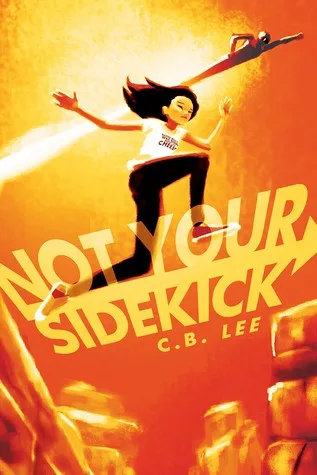
C. B. Lee’s *Not Your Sidekick* tackles the familiar YA trope of a protagonist overshadowed by a powerful legacy, but imbues it with a fresh, character-focused energy. The novel excels in portraying the protagonist’s internal struggle to define herself, particularly in relation to her family’s formidable superhero reputation. A standout element is the nuanced depiction of her evolving relationships, which feel earned and central to her journey. However, the pacing occasionally falters, particularly in the middle sections, where the narrative momentum seems to lag as it navigates intricate plot points. The introduction of varied factions and their complex histories, while ambitious, sometimes feels dense. Despite this, the emotional core remains strong, anchored by the protagonist’s authentic voice. The depiction of her attempts to forge her own identity, separate from the shadow of her parents, provides a compelling throughline. *Not Your Sidekick* is a solid entry in contemporary YA, offering a thoughtful exploration of selfhood within a high-stakes world.
📝 Description
79
### What It Is
*Not Your Sidekick* by C. B. Lee, first published in 2016, is a young adult novel that centers on the experiences of a young woman discovering her place in a world of superheroes and supervillains. It explores themes of identity, belonging, and the challenges of forging one's own path when surrounded by established legacies and expectations.
### Who It's For
This novel is primarily for young adult readers interested in character-driven narratives, particularly those who enjoy stories featuring diverse characters and exploring themes of personal growth. It appeals to those seeking relatable struggles within a speculative fiction framework, focusing on emotional development and interpersonal relationships.
### Historical Context
Published in 2016, *Not Your Sidekick* emerged during a period of increasing demand for diverse representation in young adult literature. The rise of superhero media across film and television also created a fertile ground for stories that deconstruct or reimagine these familiar archetypes. Lee's work contributes to a broader trend of YA fiction that interrogates power structures and individual agency within fantastical settings.
### Key Concepts
The book examines the concept of inherited destiny versus self-determination, particularly through the lens of a protagonist who grapples with expectations tied to her family's superhero lineage. It also delves into the complexities of found family and the formation of support systems outside traditional structures, highlighting how relationships can shape one's sense of self and purpose.
💡 Why Read This Book?
• You will explore the nuanced struggle of forging personal identity against familial expectations, as seen in the protagonist’s efforts to define herself apart from her superhero parents’ legacy, a core conflict presented in the 2016 publication. • You will experience the development of a found family dynamic, understanding how chosen relationships can provide crucial support and shape self-perception, a theme central to the characters’ interactions. • You will gain insight into the deconstruction of traditional superhero narratives, examining how individual agency and personal growth can be central even within a world of extraordinary powers and established archetypes.
⭐ Reader Reviews
Honest opinions from readers who have explored this book.
❓ Frequently Asked Questions
What is the main conflict in C. B. Lee's 'Not Your Sidekick'?
The primary conflict revolves around the protagonist's struggle to establish her own identity and purpose, separate from the immense legacy and expectations associated with her superhero parents, a theme explored throughout the 2016 novel.
Who are the main characters C. B. Lee introduces in 'Not Your Sidekick'?
The central character is a young woman grappling with her identity. She interacts with a diverse cast of allies and adversaries, including individuals connected to her family's superhero history and those she encounters as she carves her own path.
What themes does 'Not Your Sidekick' explore?
The novel delves into themes of identity, belonging, family (both biological and found), and the tension between destiny and self-determination. It examines how external pressures can impact an individual's journey of self-discovery.
Is 'Not Your Sidekick' part of a series?
Yes, 'Not Your Sidekick' is the first book in the 'Sidekick' series by C. B. Lee, with subsequent installments continuing the narrative and character arcs.
What is the publication year of 'Not Your Sidekick'?
The book was first published in 2016, positioning it within the contemporary young adult fiction landscape.
What makes 'Not Your Sidekick' relevant to discussions of identity?
The book's relevance lies in its direct portrayal of a character actively seeking to define herself outside of inherited roles or expectations, offering a relatable narrative for readers navigating similar questions of selfhood.
🔮 Key Themes & Symbolism
Identity and Self-Determination
The narrative centers on the protagonist's quest to define her own identity, moving beyond the shadow of her renowned superhero parents. This exploration is a core element, as she grapples with the expectations placed upon her versus her own desires and aspirations. The work highlights the internal conflict of understanding one's place in the world when defined by others, and the active process of forging a unique path. This theme is particularly potent in the context of superhero narratives, where lineage and power often dictate destiny, and Lee's story interrogates that very notion, emphasizing personal agency over inherited roles.
Found Family and Belonging
Beyond biological ties, *Not Your Sidekick* emphasizes the significance of chosen relationships in shaping an individual's sense of belonging. The protagonist finds support and understanding among a diverse group of individuals who become her chosen family, offering an alternative to the pressures of her familial legacy. These relationships are crucial for her emotional development and her ability to navigate the complexities of her world. The book illustrates how these connections can provide a foundation for self-acceptance and empowerment, demonstrating that true belonging often stems from mutual understanding and shared experiences, rather than solely from shared bloodlines or affiliations.
Deconstructing Superhero Archetypes
Published in 2016, the novel engages with the popular superhero genre by examining the personal toll and internal conflicts behind the capes and powers. It moves beyond simple heroic narratives to explore the human element – the doubts, fears, and challenges faced by those associated with extraordinary abilities. The work critiques the often-simplified portrayals of heroes and villains, instead focusing on the nuances of character and the ethical dilemmas that arise. By centering a character who is not yet a fully realized hero, Lee offers a perspective that questions the very nature of heroism and the societal pressures that create these archetypes.
Navigating Societal Expectations
The book adeptly portrays how societal and familial expectations can constrain individual growth and self-expression. The protagonist feels the weight of her parents' reputation, a powerful superhero duo, which dictates how others perceive her and what she is expected to become. This external pressure creates a significant internal conflict, pushing her to question the validity of these imposed roles. The narrative explores the difficulty of breaking free from such molds, especially when they are deeply ingrained within a community or family structure, and highlights the courage required to pursue an authentic self.
💬 Memorable Quotes
“I didn't want to be a sidekick. I wanted to be the hero of my own story.”
— This statement encapsulates the protagonist's central struggle: the desire for autonomy and self-definition, refusing to be relegated to a secondary role in her own life or in the grand narrative of superheroes.
“Sometimes, the greatest power isn't in the powers themselves, but in who you choose to stand with.”
— This sentiment highlights the theme of found family and the importance of relationships. It suggests that genuine strength and resilience come from chosen connections and mutual support, rather than inherent abilities.
“Being a hero isn't about having powers, it's about making the hard choices.”
— This interpretation of heroism focuses on moral fortitude and decision-making. It implies that true heroism lies in character and ethical action, particularly when faced with difficult circumstances, rather than just possessing extraordinary gifts.
“I had to figure out who I was, not who everyone else wanted me to be.”
— This reflects the core conflict of identity versus external pressure. The protagonist's journey is about shedding imposed identities and discovering her authentic self, a process that requires introspection and courage.
“Even in a world of gods and monsters, ordinary people can change the world.”
— This idea emphasizes the potential for impact by individuals who may not possess extraordinary abilities. It suggests that agency and the capacity for change are not limited to the superpowered, but are accessible to everyone.
🌙 Esoteric Significance
Tradition
While *Not Your Sidekick* does not explicitly align with any single esoteric tradition, its exploration of destiny, self-determination, and the power of will can be seen as a modern, secular interpretation of themes found in Hermeticism and Gnosticism. The emphasis on an individual's inner journey to define their reality and overcome external limitations echoes the Hermetic principle of 'As Above, So Below,' suggesting that internal states profoundly influence external circumstances. The protagonist's struggle against an imposed destiny and her search for authentic selfhood can be interpreted as a personal gnosis, a form of self-knowledge that liberates her from predetermined paths.
Symbolism
The concept of 'sidekick' itself functions as a potent symbol, representing the state of being secondary, defined by another's brilliance. The protagonist's rejection of this role symbolizes a desire to break free from imposed identities and claim agency. The presence of superheroes and supervillains, while literal within the narrative, can also be seen as symbolic archetypes of overwhelming forces – societal, familial, or internal – that individuals must confront to achieve self-realization. The 'powers' themselves can symbolize innate potentials or talents that need to be understood and controlled.
Modern Relevance
Contemporary thinkers and practitioners in fields like positive psychology and self-help often draw on narratives that emphasize personal agency and the power of mindset, aligning with the core message of *Not Your Sidekick*. The book's focus on building a supportive 'found family' is also relevant to modern discussions on chosen communities and mental well-being, particularly for marginalized groups. Its deconstruction of traditional power structures and heroic narratives speaks to ongoing dialogues in social justice and identity politics, encouraging readers to question established norms and seek authenticity.
👥 Who Should Read This Book
• Young adults grappling with identity formation and the pressure to meet external expectations, offering a relatable narrative of self-discovery. • Readers interested in a nuanced take on the superhero genre, who appreciate character-driven stories that explore the personal costs and ethical dimensions of power. • Fans of diverse YA fiction seeking stories with strong themes of friendship, chosen family, and the importance of forging one's own path, even against significant odds.
📜 Historical Context
Published in 2016, *Not Your Sidekick* emerged at a pivotal moment for young adult literature, which was increasingly diversifying its narratives and protagonists. The superhero genre, already a dominant force in popular culture through films and comics, was also being re-examined. Lee's novel contributed to a growing trend of YA fiction that deconstructed established tropes, offering a more complex and character-driven perspective on heroism and identity. This period saw authors like Rainbow Rowell and Victoria Schwab exploring similar themes of self-discovery within speculative frameworks. While not directly engaging with esoteric traditions, the novel's exploration of inherited legacies and the forging of individual destiny can be seen as a secular echo of older philosophical inquiries into fate versus free will, resonating with the spirit of questioning established orders that characterized many intellectual movements.
📔 Journal Prompts
The protagonist's struggle to define herself apart from her parents' legacy.
The formation of the protagonist's chosen family and its impact on her sense of belonging.
The symbolism of the 'sidekick' role and its rejection.
The difficult choices characters make when confronted with their abilities and responsibilities.
The balance between destiny and the power of individual will as depicted in the narrative.
🗂️ Glossary
Sidekick
In the context of *Not Your Sidekick*, this term refers to a subordinate companion or assistant to a more prominent figure, often a superhero. The protagonist's rejection of this label signifies her desire for independent identity and agency.
Found Family
A group of individuals who are not related by blood but form a strong, supportive bond, often becoming a primary source of emotional connection and belonging for each other. This concept is central to the protagonist's journey.
Legacy
The inheritance of personal qualities, beliefs, or traditions from one generation to the next. In the book, the protagonist grapples with the powerful and defining legacy of her superhero parents.
Self-Determination
The ability of individuals to make their own choices and control their own lives. This is a key theme as the protagonist strives to assert her own path rather than follow a predetermined one.
Archetype
A recurring symbol or motif in literature and mythology that represents universal patterns of human nature. The superhero and villain characters can be seen as archetypes within the narrative.
Gnosis
Knowledge of spiritual mysteries, often acquired through personal experience or intuition. In a secular sense, as explored in the book, it can relate to profound self-knowledge and understanding.
Agency
The capacity of individuals to act independently and make their own free choices. The protagonist's journey is largely about claiming and exercising her agency.