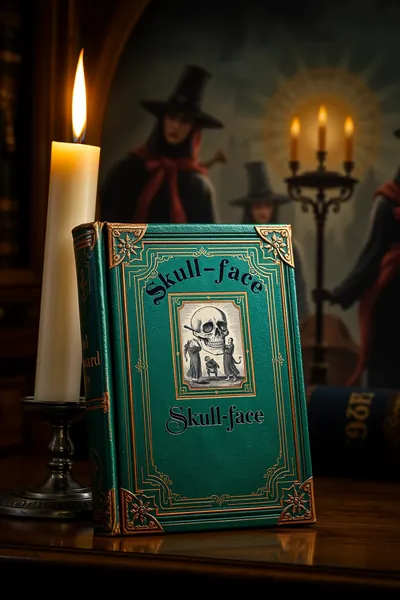
Cinderella Skeleton

 71
71

Cinderella Skeleton
Robert D. San Souci's Cinderella Skeleton presents a fascinating, albeit somber, twist on a universally recognized tale. The strength of this work lies in its unflinching portrayal of grief and its transformation into a potent, spectral force. The imagery of the mother's skeleton as a protective entity is both striking and original, offering a potent symbol of enduring connection beyond death. However, the narrative's relentless melancholy, while thematically consistent, can at times overshadow the potential for catharsis, making the protagonist's journey feel particularly bleak. The scene where the skeleton guides Cinderella to the ball, emphasizing the spectral rather than the magical, encapsulates this well. It’s a peculiar, potent read for those who prefer their fairy tales with a dose of existential dread.
📝 Description
71
Robert D. San Souci's 2000 novel Cinderella Skeleton reimagines the classic fairy tale with a dark, symbolic twist.
Cinderella Skeleton transforms the familiar tale of a mistreated protagonist into a story steeped in grief and spectral aid. The narrative centers on a young girl forced into servitude, whose sole comfort comes from the skeletal remains of her deceased mother. This is not a straightforward retelling; instead, it examines the nature of sorrow, the persistence of memory, and the latent powers that can surface from profound despair.
The work is suited for readers who appreciate the deconstruction of fairy tales and have an interest in gothic or macabre literature. It appeals to those who look for deeper symbolic meanings within traditional stories, especially those inclined toward psychological or archetypal readings. It also draws in individuals intrigued by the confluence of folklore and darker, more melancholic themes, providing an alternative to overly sentimental or didactic children's narratives.
Published in 2000, Cinderella Skeleton arrived during a period of heightened interest in folklore studies and revisionist fairy tales. Following in the vein of authors who reinterpreted traditional narratives with psychological and feminist depth, San Souci's work contributes to this discourse. It offers a unique perspective that emphasizes the spectral and sorrowful aspects of the tale, moving beyond simple social critique or empowerment narratives.
💡 Why Read This Book?
• Understand the symbolic power of the spectral mother figure, as embodied by the skeleton, offering a unique perspective on maternal bonds that transcend life and death, specifically as detailed in San Souci's narrative. • Explore how profound sorrow can be transmuted into a unique form of personal strength and guidance, a central theme evident in the protagonist's reliance on her mother's remains. • Appreciate a revisionist fairy tale that engages with gothic and macabre elements, providing a darker, more psychologically complex interpretation of the Cinderella archetype, distinct from earlier retellings.
⭐ Reader Reviews
Honest opinions from readers who have explored this book.
❓ Frequently Asked Questions
What is the central symbolic meaning of the skeleton in Cinderella Skeleton?
The skeleton symbolizes the enduring presence of the mother, representing an unbroken bond of love and protection that extends beyond death. It acts as a spectral guide and source of strength for Cinderella.
How does Robert D. San Souci's Cinderella Skeleton differ from traditional versions?
This version injects a significant gothic and melancholic tone, with the mother's skeletal remains serving as a magical aid instead of a fairy godmother. It emphasizes spectral influence over traditional enchantment.
When was Cinderella Skeleton first published?
Cinderella Skeleton was first published in the year 2000.
What are the primary themes explored in Cinderella Skeleton?
The book explores themes of grief, memory, enduring maternal love, the transformation of sorrow into strength, and the spectral connection between the living and the dead.
Is Cinderella Skeleton suitable for young children?
Given its gothic and somber themes, particularly the prominent role of a skeleton, it is likely more appropriate for older children, young adults, or adults who appreciate darker retellings of classic tales.
What is the author's background in fairy tale retellings?
Robert D. San Souci was a prolific author and illustrator known for his extensive work with fairy tales and folklore, often bringing a distinctive artistic style and thoughtful interpretation to classic stories.
🔮 Key Themes & Symbolism
Spectral Maternal Presence
The most striking element is the mother's skeleton, which transcends its physical form to become a sentient, protective entity. This embodiment of the spectral mother represents an unwavering love and guidance that persists beyond the veil of death. It’s not a ghost in the traditional sense, but an active, guiding force born from the very remains of the deceased. This concept explores how profound connections can manifest in unexpected, even macabre, ways, offering solace and agency to the protagonist through a distinctly non-corporeal influence.
Grief as a Catalyst
Rather than a purely destructive force, grief in Cinderella Skeleton becomes a catalyst for transformation and resilience. The protagonist's sorrow, amplified by her mother's spectral presence, fuels her ability to endure her harsh circumstances. The narrative suggests that acknowledging and integrating profound loss, even in its most chilling manifestations, can lead to a unique form of inner strength. This contrasts with typical fairy tale resolutions that often involve escaping hardship rather than transforming through it.
Archetypal Deconstruction
San Souci deliberately deconstructs the archetypal Cinderella figure. Her helplessness is tempered by a connection to the spectral realm, and her magical assistance comes not from benevolent enchantment but from the remnants of her own lineage. This revisionist approach questions the passive nature often attributed to the maiden in distress, suggesting that power can be found in unconventional sources, particularly those linked to ancestry and the darker aspects of existence.
The Macabre Aesthetic
The book embraces a decidedly macabre aesthetic, utilizing the imagery of bones and spectral presence to create a gothic atmosphere. This aesthetic choice is not merely for shock value but serves to underscore the themes of mortality, remembrance, and the liminal space between life and death. The skeletal form becomes a symbol of both death's inevitability and the enduring spirit's persistence, offering a unique visual and thematic language.
💬 Memorable Quotes
Direct passages from the work, attributed to the author.
“She wore her mother's bones like a shroud of protection.”
— This illustrates the dual nature of the skeletal remains: a symbol of death and mourning (shroud) that simultaneously acts as a protective, almost magical, shield for the protagonist.
“The spectral mother guided her steps through the darkness.”
— This interpretation emphasizes the active, guiding role of the maternal spirit. It suggests that even in the bleakest circumstances, a guiding influence, albeit supernatural, can lead the way.
“Sorrow became a strange, chilling strength.”
— This captures the core thematic transformation: how profound sadness and the awareness of mortality can forge a unique and potent form of resilience within the protagonist.
“Her gown was woven from moonbeams and her mother's sighs.”
— This poetic interpretation underscores the ethereal and sorrowful origins of Cinderella's magical attire, blending natural, mystical elements with the palpable grief tied to her mother's memory.
💡 Key Ideas
Editorial paraphrase of the work's core concepts — not direct quotes.
The skeleton of her mother was her fairy godmother.
This paraphrase directly contrasts the traditional fairy godmother with the book's central spectral figure, highlighting the story's combination of classic fairy tale elements and gothic horror.
🌙 Esoteric Significance
Tradition
While not explicitly tied to a single esoteric tradition, Cinderella Skeleton draws heavily from archetypal psychology and folk magic motifs. Its focus on the spectral mother and the transformation of grief aligns with Gnostic concepts of a divine feminine presence that endures beyond material decay and with certain animistic beliefs where ancestral spirits actively influence the living world.
Symbolism
The primary symbol is the skeleton, representing not just death but the enduring essence of the mother and a conduit for spectral power. The cinders symbolize the protagonist's abject state and connection to the earth/underworld, from which transformation arises. The midnight hour, a classic fairy tale trope, here signifies the peak of liminal power, where the veil between worlds is thinnest, allowing spectral intervention.
Modern Relevance
Contemporary practitioners of witchcraft and paganism often explore ancestral veneration and the power of liminal spaces, making the themes of the spectral mother and grief-fueled strength highly relevant. Thinkers in depth psychology and those interested in the darker aspects of archetypes might also find resonance, particularly in how the work addresses trauma and spectral connection in a non-traditional, potent manner.
👥 Who Should Read This Book
• Readers interested in Gothic literature and dark fairy tales who seek a unique, melancholic take on a familiar story. • Students of folklore and comparative mythology examining how classic tales are reinterpreted through modern psychological and symbolic lenses. • Individuals drawn to themes of ancestral connection, spectral influence, and the transformation of sorrow into personal power.
📜 Historical Context
Published in 2000, Robert D. San Souci's Cinderella Skeleton arrived during a vibrant period for children's literature and fairy tale revisionism. The late 20th century saw a surge in authors like Angela Carter and Roald Dahl deconstructing traditional narratives, often injecting them with feminist, psychological, or darkly humorous perspectives. San Souci's work fits within this trend, offering a gothic and spectral interpretation that diverges from the more overtly political or satirical retellings. It taps into a lineage of darker fairy tales that predates the sanitized versions often presented in the 19th and 20th centuries. While not directly engaging with contemporaries in a public debate, San Souci's contribution implicitly responded to the evolving range of folklore studies, which increasingly explored the psychological and anthropological dimensions of these enduring stories. The reception of such works often highlighted their departure from simpler, didactic versions, appealing to readers seeking more complex thematic explorations.
📔 Journal Prompts
The spectral mother's guidance and the protagonist's reliance on her bones.
Reflect on the symbolism of the cinders and their connection to transformation.
How does the midnight hour function as a point of transition in the narrative?
The unique manifestation of 'magic' through the skeletal remains.
Analyze the balance between sorrow and emerging strength in the protagonist's journey.
🗂️ Glossary
Spectral Mother
The disembodied spirit or lingering essence of the protagonist's deceased mother, embodied by her skeletal remains, which actively guides and protects her.
Gothic Aesthetic
A literary style characterized by elements of horror, death, decay, and the supernatural, often set in dark, atmospheric locations, creating a mood of suspense and dread.
Archetype
A universal, symbolic pattern or motif that recurs in literature and mythology, representing fundamental human experiences or concepts (e.g., the maiden, the wise elder).
Liminal Space
A transitional or in-between state or place, often associated with significant change or magical occurrences, such as the threshold between life and death or the witching hour.
Revisionist Fairy Tale
A retelling or reinterpretation of a traditional fairy tale that alters its plot, themes, or characters to offer a new perspective, often exploring darker, more complex, or critical ideas.
Folk Magic
Traditional magical practices and beliefs passed down through generations within a community, often involving natural elements, spirits, and ancestral connections.
Cinders
The ashes and remnants from a hearth fire, symbolizing the protagonist's lowly status and connection to the domestic sphere, from which her transformation eventually emerges.
🔮 Readers Also Liked
Browse all →






More by Robert D. San Souci
All books →

More Free Magic & Ritual Books
View all →