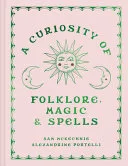
A Curiosity of Folklore, Magic and Spells
 83
83

A Curiosity of Folklore, Magic and Spells
Alexandrine Portelli and Sam McKechnie's "A Curiosity of Folklore, Magic and Spells" presents a meticulous exploration of occult traditions, avoiding the common pitfalls of sensationalism. The strength lies in its detailed cataloging of ritual components and their historical provenance, particularly a section detailing the specific correspondences of lunar phases to certain herbal concoctions, which feels grounded. However, the text occasionally suffers from an academic dryness that may deter readers seeking immediate practical application. The analysis of the 'Salve Regina' as a protective incantation, while informative, could have benefited from more direct comparative examples across different cultural iterations. It is a scholarly contribution that will likely appeal more to researchers than to casual dabblers.
📝 Description
83
Published in 2025, A Curiosity of Folklore, Magic and Spells analyzes the links between ancient practices and their continuing impact.
This book compiles folklore, magic, and spellcraft, examining the connections between historical practices and their lasting influence. It does not merely gather spells; it offers an analytical view of how magical traditions began and are used. The work is for anyone interested in the history and culture of magic, or practitioners wanting to grasp the theory behind their work. Students of folklore, comparative religion, and esoteric studies will find it relevant.
The book originated from a recent rise in interest in practical occultism and older magical systems. It touches on academic work that looks again at pre-Christian European beliefs and the effects of occult philosophy during the Renaissance, mentioning Agrippa von Nettesheim. The authors look at sympathetic magic, how symbols function in rituals, and how folk beliefs developed into structured magical systems. It also discusses the 'anima mundi' concept as a core idea in many magical worldviews.
This work situates itself within contemporary discussions of occultism and historical magical systems. It engages with scholarship that re-examines pre-Christian European beliefs and Renaissance occult philosophy, specifically referencing Agrippa von Nettesheim. The book's analysis of concepts like sympathetic magic and the 'anima mundi' connects it to longer traditions of Western esotericism that seek to understand the underlying principles of the cosmos and human interaction with it.
💡 Why Read This Book?
• Gain insight into the historical evolution of spell components, understanding how specific herbs and incantations, like those detailed in the chapter on folk charms, have been used across centuries. • Explore the theoretical framework behind sympathetic magic, learning how ancient practitioners believed in connection and correspondence, a concept central to many rituals discussed. • Discover the influence of Renaissance occultism, as the book examines figures like Agrippa von Nettesheim and their impact on later magical practices.
⭐ Reader Reviews
Honest opinions from readers who have explored this book.
❓ Frequently Asked Questions
When was "A Curiosity of Folklore, Magic and Spells" first published?
The book was first published on May 22, 2025, reflecting contemporary academic and practitioner interest in historical magical systems.
What is the primary focus of the book's content?
The book focuses on folklore, magic, and spellcraft, examining their historical development, theoretical underpinnings, and practical applications across various traditions.
Are there practical spells included in "A Curiosity of Folklore, Magic and Spells"?
While the book analyzes magical practices and their components, its primary aim is to provide historical and theoretical context rather than a direct spellbook.
Who are the authors of "A Curiosity of Folklore, Magic and Spells"?
The authors are Alexandrine Portelli and Sam McKechnie.
What historical periods or figures does the book reference?
The work references periods like the Renaissance and figures such as Agrippa von Nettesheim, exploring their contributions to occult philosophy and magical thought.
Is "A Curiosity of Folklore, Magic and Spells" suitable for beginners in occult studies?
It is suitable for beginners interested in the academic and historical aspects of magic, offering a solid foundation before delving into more advanced practical work.
🔮 Key Themes & Symbolism
Sympathetic Magic Principles
This theme examines the core tenets of sympathetic magic, exploring how practitioners historically believed in the power of connection and likeness to influence events or individuals. The work details the theoretical basis for 'like affects like' and 'contagion,' drawing examples from ancient Greek amulets to medieval European charms, illustrating how these principles manifest in tangible rituals and object consecration.
Evolution of Folk Beliefs
The book traces the transformation of widespread folk beliefs into more codified magical practices. It analyzes how everyday superstitions, regional deities, and oral traditions, particularly from pre-Christian European cultures, were later integrated into or influenced Renaissance occult philosophies and alchemical pursuits, providing a historical lineage for many modern esoteric practices.
Symbolism in Ritual
A significant aspect is the exploration of symbolic representation within magical operations. The work dissects the meaning behind specific sigils, planetary correspondences, and elemental associations commonly found in grimoires and spellcraft, arguing that these symbols are not merely decorative but integral to the efficacy and intent of the ritual itself.
Renaissance Occultism
This theme focuses on the intellectual climate of the Renaissance and its lasting impact on esoteric thought. It highlights the contributions of key figures like Heinrich Cornelius Agrippa, whose work 'De Occulta Philosophia' is discussed as an important text that synthesized classical, Hermetic, and Kabbalistic ideas, shaping the trajectory of Western magical traditions.
💬 Memorable Quotes
Direct passages from the work, attributed to the author.
“The principle of contagion posits that objects once in contact continue to influence each other.”
— This highlights a core tenet of sympathetic magic, suggesting that a physical link, once established, can maintain a connection for magical purposes, a concept relevant to the creation of talismans and curses.
“Lunar phases dictated not only agricultural cycles but also the efficacy of specific incantations.”
— This emphasizes the deep integration of celestial observation into magical practice, showing how time itself was considered a crucial factor in the success of spells and rituals.
“Agrippa's synthesis of diverse traditions provided a blueprint for subsequent occult scholarship.”
— This points to the foundational importance of Heinrich Cornelius Agrippa's work in consolidating and systematizing various streams of esoteric knowledge during the Renaissance.
“Folk charms often served a dual purpose: appeasing local spirits and invoking protective forces.”
— This interpretation underscores the practical, often pragmatic, nature of folk magic, which balanced placation of perceived supernatural entities with the desire for personal safety and well-being.
“The 'anima mundi' provides a framework for understanding the interconnectedness of all phenomena.”
— This concept, the world soul, is presented as a unifying philosophical idea that underpins many magical worldviews, suggesting a universal consciousness linking all things.
🌙 Esoteric Significance
Tradition
This work engages primarily with the Western Esoteric Tradition, drawing heavily on Hermeticism, Neoplatonism, and Renaissance ceremonial magic. It positions itself as an analytical exploration of these traditions, tracing their roots in ancient belief systems and their codification during periods like the Renaissance. The book aims to clarify the underlying philosophical and cosmological frameworks that informed these practices, offering a bridge between historical study and contemporary esoteric interests.
Symbolism
Key symbols explored include the pentagram, representing the microcosm and the five elements, and the serpent, often symbolizing wisdom, transformation, and chthonic energies. The work also studies the symbolic language of alchemical processes, interpreting them not just as material transformations but as metaphors for spiritual development and the pursuit of hidden knowledge.
Modern Relevance
Contemporary practitioners of ceremonial magic, neo-paganism, and witchcraft often draw upon the historical foundations detailed in this book. Thinkers and authors in modern occultism frequently reference the synthesized magical philosophies of the Renaissance, making works like this essential for understanding the lineage and theoretical underpinnings of current esoteric movements.
👥 Who Should Read This Book
• Students of Western Esotericism: Individuals seeking a structured, historically informed overview of magical traditions, from ancient folk practices to Renaissance ceremonial magic, will find valuable context. • Folklore Researchers: Those interested in the evolution of myth, belief systems, and ritual practices across different cultures and time periods will appreciate the book's analytical approach. • Practicing Magicians and Occultists: Readers looking to deepen their theoretical understanding of the spells and systems they engage with, exploring the historical provenance of magical concepts, will benefit.
📜 Historical Context
Published in 2025, "A Curiosity of Folklore, Magic and Spells" arrives during a period of renewed academic and popular engagement with historical occultism. The work situates itself within a scholarly trend that seeks to understand magic not as mere superstition but as a complex system of thought and practice. It implicitly engages with the legacy of early 20th-century occult revivalists and the subsequent academic reassessment of magical texts. The era's intellectual currents include critical approaches to folklore studies and the history of science, which often intersect with esoteric traditions. The book's analysis of Renaissance occultism, particularly referencing figures like Heinrich Cornelius Agrippa and his contemporaries such as Paracelsus, highlights a key period where magical and philosophical inquiry was deeply intertwined. This contrasts with the strict rationalism that dominated much of the Enlightenment and Victorian eras, which often marginalized or pathologized such beliefs.
📔 Journal Prompts
Reflect on the principle of contagion as described in the text and its application in personal ritual.
Consider the historical lineage of folk charms mentioned, tracing their potential evolution.
Analyze the symbolic meaning of the serpent motif as presented in the work.
How does the concept of 'anima mundi' inform your understanding of magical interconnectedness?
Examine Agrippa's synthesis of traditions and its impact on your own esoteric studies.
🗂️ Glossary
Sympathetic Magic
A form of magic based on the belief that like affects like, or that contact between two things can establish a magical connection, allowing influence over a person or object through a related item.
Anima Mundi
Latin for 'world soul,' a concept in Neoplatonic philosophy and various esoteric traditions positing a universal animating spirit or consciousness that pervades and connects all things in the cosmos.
Renaissance Occultism
A period, roughly from the 15th to 17th centuries, characterized by a revival of interest in ancient magical, astrological, and alchemical traditions, often synthesized with Christian theology and Neoplatonic philosophy.
Heinrich Cornelius Agrippa
A German occultist, theologian, astrologer, and alchemist whose work, particularly 'De Occulta Philosophia libri tres' (Three Books of Occult Philosophy), was highly influential in shaping Renaissance magic.
Folk Charm
A simple magical object or incantation intended to provide protection, luck, or ward off evil, typically originating from popular, non-codified traditions.
Sigil
A symbol or sign believed to possess magical power, often created through specific rituals or by abstracting letters or concepts into a unique design.
Microcosm
In esoteric thought, the belief that the human being (the 'small world') reflects the structure and principles of the universe (the 'great world' or Macrocosm).