The theory of business enterprise 1904

 80
80

The theory of business enterprise 1904
Veblen's 1904 examination of business enterprise offers a bracingly unsentimental view of industrial capitalism. He cuts through the prevailing economic optimism of his time, dissecting the mechanisms by which profit-seeking, rather than societal need, dictates production. The distinction Veblen draws between the "machine process" and the "pecuniary" aspect of business is particularly sharp; he argues that the latter, driven by credit and the manipulation of price, often works against the productive capacity inherent in the former. A notable strength is his analysis of "absentee ownership," which presciently identifies how detached financial interests can distort industrial logic. However, the prose can be dense, and the relentless focus on the negative aspects of business enterprise, while accurate in its critique, offers little in the way of alternative constructive models for economic organization beyond the implied rationality of the machine process itself. It remains a vital, if challenging, dissection of corporate motivation.
📝 Description
80
### What It Is This is a foundational text examining the evolution and operation of modern business enterprise, originally published in 1904 under the title "The Theory of Business Enterprise." It critiques the prevailing economic thought of its era, focusing on the shift from industrial production to a system dominated by finance and absentee ownership. The work analyzes the motivations and structures that drive corporate behavior, distinguishing between the machine process and the pecuniary aspects of business.
### Who It's For Scholars of economic history, sociology, and the history of ideas will find this book essential. It is particularly relevant for those interested in understanding the roots of contemporary capitalism, the dynamics of corporate power, and the psychological underpinnings of economic decision-making. Readers seeking to challenge mainstream economic narratives and explore alternative frameworks for understanding wealth creation and distribution will also benefit.
### Historical Context Published in an era of rapid industrialization and the rise of large corporations, "The Theory of Business Enterprise" emerged amidst significant economic and social upheaval. The Progressive Era in the United States saw widespread public debate about the power of trusts and monopolies, a context Veblen directly engages with. His critique of the profit motive and the separation of ownership from management challenged the neoclassical economics that was gaining prominence, particularly the ideas of Alfred Marshall. Veblen's work offered a starkly different perspective on the functioning of the economy, one that acknowledged the inherent conflicts and inefficiencies within the business system.
### Key Concepts The book introduces and elaborates on several critical concepts. Veblen distinguishes between the "machine process," which he sees as inherently productive and rational, and the "pecuniary" or "business" process, driven by the pursuit of profit and often leading to artificial scarcity and waste. He explores the role of "absentee ownership" – where those who control capital are detached from the actual process of production – and its impact on business strategy. The concept of "business enterprise" itself is analyzed not merely as a means of production but as a system of credit and finance where the primary goal is the augmentation of price rather than the satisfaction of material needs.
✍️ Author
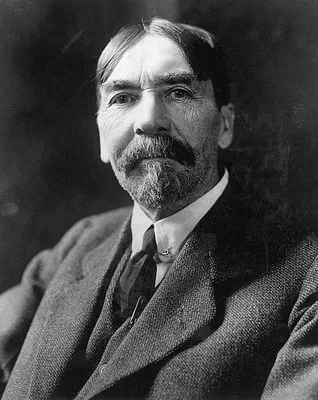
Thorstein Veblen
Thorstein Bunde Veblen ( THOR-styn VEH-blən; July 30, 1857 – August 3, 1929) was an American economist and sociologist who, during his lifetime, emerged as a well-known critic of capitalism. In his best-known book, The Theory of the Leisure Class (1899), Veblen coined the concepts of conspicuous consumption and conspicuous leisure.
💡 Why Read This Book?
• Gain insight into Veblen's critique of "absentee ownership," understanding how financial interests, detached from production, can shape corporate strategy and potentially lead to economic distortions unlike any other contemporary economic critique. • Grasp the fundamental distinction between the "machine process" and the "pecuniary" aspect of business, recognizing how Veblen argues the latter can undermine the former's inherent productivity and efficiency. • Understand the historical context of 1904 industrial capitalism, providing a unique perspective on the rise of corporate power and its societal implications that predates many later analyses.
⭐ Reader Reviews
Honest opinions from readers who have explored this book.
❓ Frequently Asked Questions
What is Thorstein Veblen's main argument in "The Theory of Business Enterprise"?
Veblen argues that modern business enterprise is primarily driven by the pursuit of profit through price manipulation and credit, rather than by the efficient production of goods and services. He distinguishes this "pecuniary" process from the productive "machine process."
When was "The Theory of Business Enterprise" first published?
The book was first published in 1904, though the provided information notes a first publication date of 1920 for a specific edition.
What does Veblen mean by 'absentee ownership'?
Absentee ownership refers to the situation where the owners of capital (shareholders) are removed from the direct management and operation of the business. Veblen posits this detachment leads to decisions prioritizing financial gain over industrial efficiency.
How does Veblen's work relate to the concept of the 'machine process'?
Veblen views the "machine process" as the realm of industrial production, characterized by technological advancement and inherent efficiency. He contrasts this with the "pecuniary" or business process, which he believes often interferes with and distorts the machine process for profit.
Is 'The Theory of Business Enterprise' considered an esoteric text?
While not traditionally classified as esoteric in the same vein as occult studies, its critical lens on economic systems, power structures, and the psychology of wealth accumulation can be interpreted through a lens of uncovering hidden societal mechanisms, aligning with certain esoteric interests in societal critique.
What economic school of thought did Veblen challenge with this book?
Veblen's work challenged the prevailing neoclassical economics of his time, particularly the focus on rational actors and market equilibrium. He offered a more critical, institutional perspective rooted in evolutionary and sociological observations.
🔮 Key Themes & Symbolism
The Pecuniary vs. Machine Process
Veblen meticulously separates the 'machine process'—the inherent logic and efficiency of industrial production—from the 'pecuniary process,' which governs business enterprise through credit, finance, and the pursuit of profit. He argues that the latter, driven by the need to augment price and maintain credit, frequently imposes artificial constraints and waste upon the former. This distinction is central to understanding his critique of modern capitalism, where financial manipulation often overshadows genuine productive capacity. The work implies that the 'spirit' of business enterprise is inherently at odds with the 'spirit' of efficient production.
Absentee Ownership and Corporate Power
A cornerstone of Veblen's analysis is the concept of 'absentee ownership.' He describes how the separation of ownership from management, a growing trend in the early 20th century, allows capital owners to exert influence without direct operational responsibility. This detachment, Veblen contends, fosters a focus on financial maneuvering and price inflation rather than on the quality or utility of goods. The book explores how this structure concentrates economic power and shapes business decisions to serve the interests of a detached financial class, often to the detriment of the broader industrial system and society.
Credit and the Business Cycle
Veblen delves into the intricate relationship between credit and the functioning of business enterprise. He portrays the credit system not merely as a facilitator of exchange but as a critical mechanism through which business enterprise operates and expands. The need to maintain and augment creditworthiness, Veblen argues, compels businesses to prioritize profitability and the appearance of success, even if it means engaging in practices that destabilize the economy or stifle innovation. This perspective highlights the inherent instability and speculative nature embedded within a credit-based capitalist system.
The Drive for Price Augmentation
Central to Veblen's thesis is the observation that the ultimate aim of business enterprise is not necessarily to produce goods or services, but to 'augment price.' This pursuit of higher prices, often achieved through controlling supply, limiting output, or employing marketing strategies, is depicted as the primary motivation driving corporate behavior. Veblen contrasts this with the intrinsic value and efficiency of the underlying industrial processes, suggesting a fundamental tension between the logic of business and the logic of production. This drive for price augmentation is presented as a core element of modern economic dysfunction.
💬 Memorable Quotes
“The machine industry is in great part subservient to the exigencies of the credit system.”
— This statement encapsulates Veblen's argument that the productive capacity of industrial machinery is often dictated and constrained by the demands of finance and credit. The need to satisfy financial obligations and maintain creditworthiness can override the potential for efficient, needs-based production.
“Business enterprise is a system of credit and price.”
— This highlights Veblen's view that modern business is fundamentally about managing financial instruments and market prices, rather than directly engaging with the physical processes of production. The focus is on financial value and market perception.
“The ultimate basis of the machine industry is the machine process.”
— This emphasizes Veblen's belief in the inherent logic and efficiency of industrial technology itself. The 'machine process' represents a rational, objective system capable of generating wealth, distinct from the often irrational motivations of business enterprise.
“Absentee ownership means that the owners of the industrial equipment have delegated the management of the business to others.”
— This defines Veblen's concept of absentee ownership, pointing to the structural shift where capital owners are detached from operational realities. This detachment, for Veblen, is a key factor in how business decisions are made.
“The ultimate aim of the business man is to make money rather than to produce goods.”
— This succinctly captures Veblen's core critique: the primary motivation in business enterprise is profit accumulation ('making money'), often prioritized above the actual production or utility of goods and services.
🌙 Esoteric Significance
Tradition
While not directly part of a specific esoteric lineage like Hermeticism or Kabbalah, Veblen's work can be seen as aligning with Gnostic critiques of material systems and societal illusions. His dissection of the "pecuniary" process as a distorting force that obscures true value and productive potential echoes Gnostic ideas of liberation from a flawed material world. The focus on uncovering hidden motivations and structures within economic systems also resonates with the Gnostic pursuit of hidden knowledge (gnosis) to achieve understanding and freedom from systemic control.
Symbolism
The "machine process" can be interpreted as a symbol of underlying order, rationality, and potential for genuine creation, akin to a divine blueprint or natural law. Conversely, the "pecuniary process" and "absentee ownership" function as symbols of corruption, illusion, and control by detached, unseeing powers. The "credit system" itself acts as a complex, abstract symbol of artificial value and the mechanisms by which this illusory system is maintained and expanded, often at the expense of tangible reality.
Modern Relevance
Veblen's concepts remain highly relevant for contemporary thinkers analyzing financialization, corporate governance, and economic inequality. Post-Keynesian economists and heterodox economists frequently draw upon his insights into the instability of credit and the motivations of business enterprise. His critique of consumerism and conspicuous consumption, explored in other works but implicit here, continues to inform critical theory and environmentalist discourse. Thinkers examining the power of financial institutions and the disconnect between economic activity and societal well-being find Veblen's framework essential.
👥 Who Should Read This Book
• Students of economic history and sociology seeking to understand the foundational critiques of industrial capitalism, particularly Veblen's unique institutional perspective. • Researchers interested in the evolution of corporate structures and the role of finance in modern economies, offering a counter-narrative to standard economic models. • Critical thinkers aiming to deconstruct prevailing economic orthodoxies and explore alternative frameworks for analyzing wealth, production, and societal well-being.
📜 Historical Context
Thorstein Veblen's "The Theory of Business Enterprise," published in 1904, emerged during a period of intense industrial expansion and growing corporate power in the United States. The Progressive Era was marked by widespread public concern over trusts, monopolies, and the influence of big business, creating a fertile ground for Veblen's critical analysis. His work directly challenged the dominant neoclassical economic theories of the time, such as those espoused by Alfred Marshall, which tended to view markets as largely self-regulating and efficient. Veblen's institutional and evolutionary approach, focusing on the role of habit, custom, and power, offered a starkly different perspective. Contemporaries like John Dewey, a fellow institutional thinker, were also exploring the social and philosophical implications of industrialization, though Veblen's focus remained distinctly economic. Veblen's critique of the "pecuniary" motives driving enterprise and his analysis of "absentee ownership" provided a significant counterpoint to the prevailing optimism about industrial progress.
📔 Journal Prompts
The "pecuniary process" as a veil over the "machine process": explore its manifestations.
Absentee ownership's impact on decision-making: analyze a modern corporate example.
How does the drive to 'augment price' conflict with societal needs?
Reflect on the symbolic meaning of the 'credit system' in contemporary life.
Consider the psychological drivers behind the "business enterprise" as Veblen describes.
🗂️ Glossary
Pecuniary Process
Veblen's term for the economic activities driven by the pursuit of money, profit, and price manipulation, as distinct from the direct production of goods and services.
Machine Process
The inherent logic and efficiency of industrial production and technology, characterized by mechanical principles and objective processes, separate from business considerations.
Absentee Ownership
A form of ownership where the owners of capital are detached from the direct management and operation of the enterprise, influencing decisions from afar.
Augment Price
The primary goal of business enterprise, according to Veblen, which involves increasing the monetary value or price of goods and services, often through controlling supply or market conditions.
Credit System
The network of financial instruments and institutions that facilitate business transactions, which Veblen analyzes as a fundamental driver and shaper of business enterprise.
Industrial Equipment
The physical means of production, including machinery, factories, and tools, which Veblen sees as the foundation of the 'machine process.'
Business Enterprise
Veblen's concept for the organized system of commerce and finance in modern capitalism, primarily focused on profit generation through price and credit mechanisms.










![CIA Reading Room cia-rdp84-00022r000200150084-5: ORIENTATION COURSE LECTURE ON 'SERVICES OF [ ] [ ]'](/img/thumb/cia-reading-room-cia-rdp84-00022r000200150084-5-orientation-course-lecture-on-services-of-cia-reading-room.webp)