The tarot
 81
81

The tarot
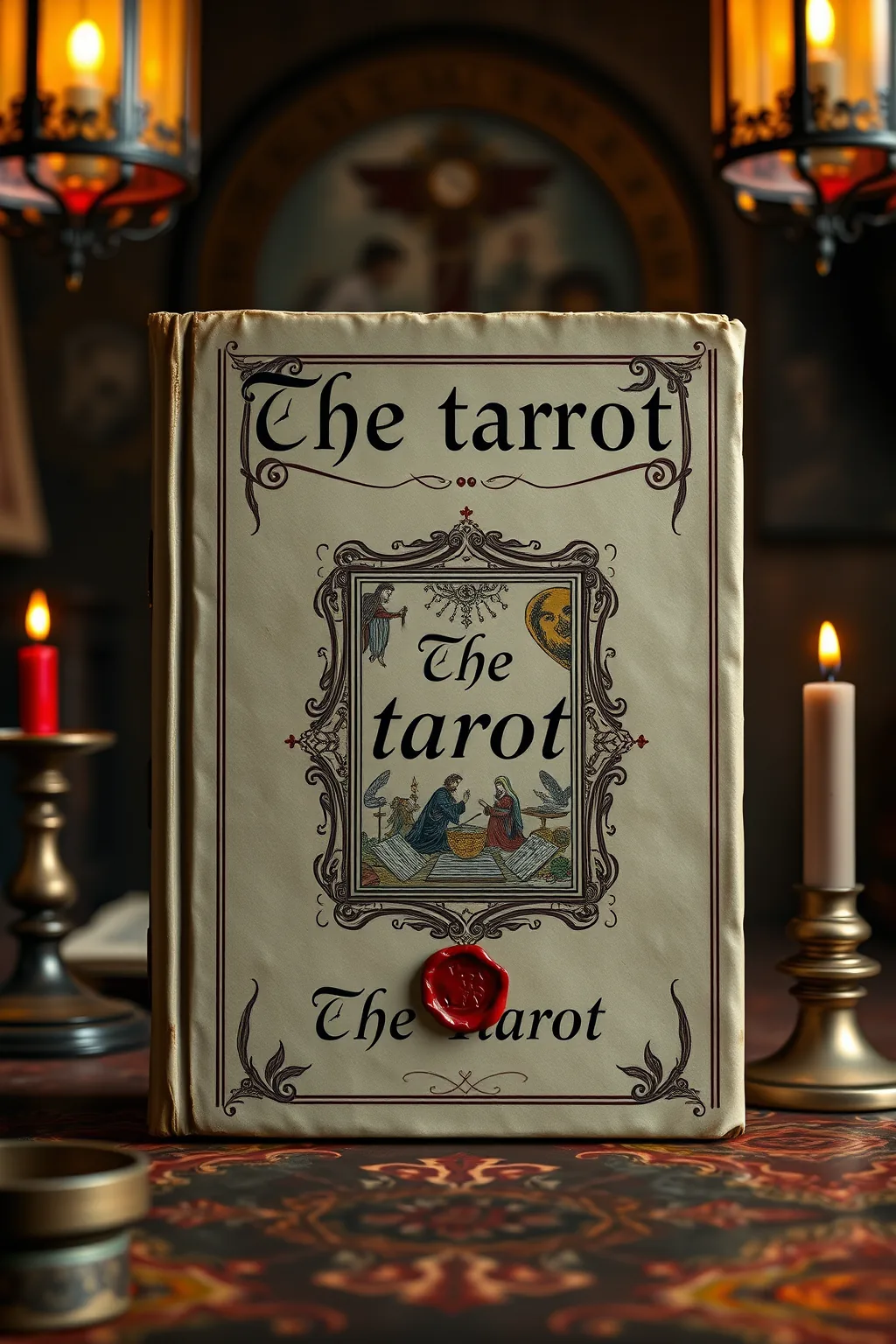
Thames and Hudson's 1995 presentation of The Tarot provides a solid, if somewhat conventional, overview of this ancient practice. Its strength lies in its breadth, cataloging numerous decks and historical interpretations without over-committing to any single esoteric lineage. The section detailing the evolution from 15th-century Italian playing cards to a divinatory tool is particularly well-handled, grounding the subject in tangible history. However, the book's primary limitation is its lack of a singular, compelling voice. It often feels like a well-curated encyclopedia rather than a critical analysis. For instance, while it lists many interpretations of the Three of Swords, it offers little original commentary on their psychological impact. It is an adequate primer for the curious, but offers little for the seasoned seeker looking for deeper hermeneutical engagement.
📝 Description
81
### What It Is The Tarot, published by Thames and Hudson in 1995, offers a comprehensive exploration of the iconic divinatory system. It moves beyond simple card meanings to examine the historical development and diverse interpretations of Tarot decks. The work traces the evolution of Tarot from its origins, likely as playing cards in 15th-century Italy, through its adoption into esoteric traditions, to its widespread use today.
### Who It's For This volume is aimed at individuals seeking a foundational understanding of Tarot. It serves those new to cartomancy and divination, providing essential context for beginners. Advanced practitioners might find value in its structured historical overview and the diverse examples of Tarot imagery presented. Scholars of occult history or symbolism will appreciate its encyclopedic approach.
### Historical Context The work traces the Tarot's lineage back to its presumed 15th-century Italian origins, a period when such illustrated decks were a novel form of entertainment and artistic expression. It then charts its transformation into a tool for divination, a significant shift that gained momentum in the late 18th and 19th centuries. This period saw figures like Antoine Court de Gébelin linking the cards to ancient Egyptian mysteries, a popular esoteric concept of the era.
### Key Concepts Central to the book is the idea of the Tarot as a symbolic language. It details the structure of a standard Tarot deck, typically comprising the 22 Major Arcana and the 56 Minor Arcana. Each card, from The Fool to The World, is presented not just as an image but as a carrier of archetypal meaning, influenced by various cultural and philosophical currents throughout its history.
💡 Why Read This Book?
• Gain a structured understanding of Tarot's historical trajectory, from its 15th-century Italian origins to its 19th-century esoteric revival. • Learn the fundamental symbolism of both the Major Arcana and Minor Arcana, recognizing them as distinct yet interconnected parts of the whole system. • Explore a visual compendium of various historical Tarot decks, appreciating the diverse artistic and cultural expressions of these archetypal images.
⭐ Reader Reviews
Honest opinions from readers who have explored this book.
❓ Frequently Asked Questions
When were Tarot cards first used for divination?
While Tarot cards originated in 15th-century Italy as playing cards, their widespread use for divination began to gain significant traction in the late 18th century and became more prominent in the 19th century.
What is the difference between the Major and Minor Arcana?
The Major Arcana consists of 22 cards representing significant life lessons and archetypal energies, while the Minor Arcana comprises 56 cards divided into four suits, detailing everyday experiences and challenges.
Who were some early proponents of Tarot divination?
Early figures who linked Tarot to esoteric knowledge include Antoine Court de Gébelin in the late 18th century, who connected the cards to ancient Egyptian wisdom, and later, occultists like Eliphas Lévi in the 19th century.
Does this book explain how to read Tarot cards?
The book provides the foundational knowledge and historical context for understanding Tarot symbolism, which is essential for learning to read cards, rather than offering a step-by-step guide to divination itself.
What is the historical origin of Tarot decks?
The earliest known Tarot decks emerged in Northern Italy around the 1440s. These decks, such as the Visconti-Sforza deck, were initially used for games and were distinct from their later divinatory applications.
How did Tarot transition from a game to an esoteric tool?
The transition occurred as mystics and occultists, particularly from the late 18th century onwards, began to interpret the images on the cards as symbolic representations of spiritual or philosophical concepts, infusing them with divinatory meaning.
🔮 Key Themes & Symbolism
Evolution of Divination
This work meticulously charts the transformation of the Tarot from its origins as a 15th-century Italian card game into a profound tool for divination and esoteric exploration. It highlights how interpretations shifted over centuries, particularly in the 18th and 19th centuries, when figures like Antoine Court de Gébelin began linking the cards to ancient, hidden knowledge, thus imbuing them with mystical significance beyond their original playful purpose.
Archetypal Symbolism
The core of the book lies in dissecting the symbolic language of the Tarot. It presents the 22 Major Arcana and 56 Minor Arcana as carriers of universal archetypes and psychological states. Each card is examined for its potential meanings, drawing connections to mythology, philosophy, and spiritual traditions, offering a framework for understanding these potent symbols as reflections of the human condition.
Deck Diversity
The Tarot showcases the vast array of visual representations that Tarot decks have taken throughout history. From early Italian patterns to more complex occult designs of the 19th century, the book illustrates how artistic style and cultural context influence the interpretation and perceived power of the cards. This visual survey underscores the adaptability of the Tarot's symbolic structure.
Esoteric Lineage
The book contextualizes Tarot within various esoteric traditions that have adopted and adapted it. It touches upon the Hermetic, Kabbalistic, and even alchemical associations that have been layered onto the cards by practitioners and theorists since the Enlightenment. This exploration reveals Tarot not as a static system, but as a dynamic nexus of esoteric thought.
💬 Memorable Quotes
“Tarot cards originated as playing cards in 15th-century Italy.”
— This factual statement grounds the often mystical subject in concrete historical reality, distinguishing its origins from its later esoteric applications and demonstrating the evolution of its purpose.
“The Major Arcana represent significant life lessons.”
— This concise description encapsulates the profound, archetypal nature of the 22 Major Arcana, suggesting they function as a map of spiritual or psychological development rather than mere fortune-telling tools.
“The Minor Arcana detail everyday experiences.”
— This highlights the practical, worldly aspect of the 56 Minor Arcana cards, contrasting them with the grander themes of the Major Arcana and emphasizing their role in reflecting daily life.
“Interpretations of Tarot shifted significantly in the 18th and 19th centuries.”
— This points to a crucial period of transformation where the cards moved from secular games to being imbued with mystical and divinatory significance by esoteric thinkers.
“Each card carries potential meanings influenced by cultural context.”
— This emphasizes the fluid nature of Tarot interpretation, acknowledging that symbols are not fixed but are shaped by the historical, philosophical, and artistic environments in which they are viewed.
🌙 Esoteric Significance
Tradition
This work engages with the Western Esoteric tradition, particularly its developments from the late 18th century onwards. It acknowledges how figures like Antoine Court de Gébelin and Eliphas Lévi integrated Tarot into systems of Hermeticism, Kabbalah, and occult philosophy. The book presents Tarot as a symbolic language capable of conveying profound spiritual and psychological truths, aligning with the tradition's emphasis on hidden knowledge and inner transformation.
Symbolism
Key symbols explored include the archetypal figures of the Major Arcana, such as The Fool representing beginnings and potential, and The World signifying completion and integration. The four suits of the Minor Arcana—Wands, Cups, Swords, and Pentacles—are also examined for their elemental associations (Fire, Water, Air, Earth) and their representation of different facets of human experience and action within the esoteric framework.
Modern Relevance
Contemporary practitioners of Western Esotericism, including modern ceremonial magicians, psychotherapists utilizing archetypal psychology, and enthusiasts of Jungian synchronicity, continue to draw upon the foundational symbolism and historical interpretations of Tarot presented in works like this. Its comprehensive overview serves as a reference point for those exploring Tarot's role in personal development and spiritual inquiry today.
👥 Who Should Read This Book
• Novice students of divination and esoteric symbolism seeking a clear introduction to Tarot's history and structure. • Researchers of Western Esotericism interested in the evolution of symbolic systems from the 15th century to modern occultism. • Art historians or cultural critics examining the visual language and cultural impact of playing cards and divinatory tools.
📜 Historical Context
Published in 1995, The Tarot by Thames and Hudson emerged during a period of renewed popular interest in esoteric subjects, following the New Age movements of the late 20th century. The work engages with the historical trajectory of Tarot, tracing its lineage from 15th-century Italian playing cards, exemplified by decks like the Visconti-Sforza, to its adoption by occultists in the 18th and 19th centuries. This era saw figures like Antoine Court de Gébelin and later Eliphas Lévi actively linking the cards to ancient Egyptian mysteries and Kabbalistic principles, a significant departure from their origins. While not a direct response to a specific contemporary debate, the book situates itself within the broader scholarly and popular discourse surrounding divination and Western esotericism, offering a comprehensive overview that contrasts with more narrowly focused academic studies or purely practical divination guides.
📔 Journal Prompts
The transition of Tarot from playing cards to a divinatory tool.
Symbolism of The Fool and its place in the Major Arcana.
Elemental associations of the four suits in the Minor Arcana.
The influence of 18th-century esoteric interpretations on modern Tarot.
Visual variations across historical Tarot decks.
🗂️ Glossary
Major Arcana
The set of 22 trump cards in a standard Tarot deck, typically depicting archetypal figures, concepts, and significant life events or lessons.
Minor Arcana
The 56 cards in a Tarot deck divided into four suits (Wands, Cups, Swords, Pentacles), representing more mundane events, actions, and situations.
Cartomancy
The practice of fortune-telling or divination using a deck of cards, most commonly referring to Tarot or standard playing cards.
Esotericism
Systems of thought and practice concerned with hidden knowledge or inner spiritual enlightenment, often involving symbolism, ritual, and mystical interpretation.
Archetype
In Jungian psychology and esoteric thought, a universal, archaic pattern or image that derives from the collective unconscious and is inherited.
Hermeticism
A philosophical and religious tradition based on the purported teachings of Hermes Trismegistus, emphasizing mystical knowledge, alchemy, and astrology.
Kabbalah
A system of Jewish mysticism that deals with the divine nature of God and the creation and structure of the universe, often represented by the Tree of Life.