Tarot Reading Journal
 78
78

Tarot Reading Journal
The Sweet Tooth Journals Tarot Reading Journal presents itself as a straightforward tool for practitioners. Its generous page count and standard notebook dimensions make it a functional choice for capturing the details of daily or occasional readings. The sturdy cover is a welcome feature, promising longevity for a volume likely to be consulted repeatedly. However, the journal's design offers minimal guidance; it is essentially a blank slate. While this affords maximum freedom for interpretation, users accustomed to more structured prompts might find it lacking. The 2018 publication date places it firmly in the modern era of accessible esoteric tools. A notable strength is its sheer usability for dedicated record-keeping. Its primary limitation is its lack of integrated educational elements or specific layout suggestions for complex spreads. It serves best as a repository for experienced practitioners' notes rather than a learning aid. This journal is a competent, no-frills companion for the diligent Tarot student.
📝 Description
78
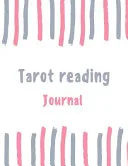
### What It Is The Tarot Reading Journal by Sweet Tooth Journals is a practical notebook designed for individuals engaged with Tarot divination. It offers 100 college-ruled pages, measuring 8.5" x 11", providing ample space for recording readings, personal reflections, and study notes. The composition notebook format features a durable cover and perfect binding, aiming for functionality and aesthetic appeal for its users.
### Who It's For This journal is intended for anyone actively practicing or studying Tarot. Its layout is suitable for beginners seeking to document their learning process and experienced readers who wish to maintain a detailed record of their card interpretations and spreads over time. The feminine design suggests a particular appeal to women interested in Tarot, though its utility is universal.
### Historical Context While this specific journal is a contemporary tool, its purpose is rooted in the long history of divination and esoteric study. The practice of recording insights from divination, including Tarot, gained prominence alongside the revival of occult studies in the late 19th and early 20th centuries. Figures like A.E. Waite, co-creator of the Rider-Waite-Smith deck in 1909, emphasized the importance of personal interpretation and study, which such a journal facilitates.
### Key Concepts The journal's core function revolves around the systematic recording and analysis of Tarot readings. Key concepts include the interpretation of individual cards within a spread, understanding the narrative flow of a reading, and tracking personal insights gained from the cards. It supports the development of intuitive skills and the formation of a personal lexicon for Tarot symbolism, moving beyond rote memorization of card meanings.
💡 Why Read This Book?
• Gain a dedicated space to meticulously document your Tarot readings, enhancing your ability to track patterns and personal interpretations of specific cards like The Fool or The Hierophant, a practice vital since the deck's popularization. • Develop a personal Tarot lexicon by consistently recording your unique insights into card meanings and their interactions within spreads, moving beyond generic interpretations found in books published around the Rider-Waite deck's era. • Foster a deeper connection with your intuition and the Tarot itself by regularly engaging with your recorded readings, allowing for self-reflection on themes that emerge over time, mirroring early esotericists' journaling practices.
⭐ Reader Reviews
Honest opinions from readers who have explored this book.
❓ Frequently Asked Questions
What is the primary purpose of the Tarot Reading Journal?
The journal's main purpose is to provide a dedicated space for users to record, interpret, and reflect upon their Tarot card readings, aiding in personal study and the development of divination skills.
How many pages does the Tarot Reading Journal contain?
The journal is equipped with 100 college-ruled pages, offering substantial room for extensive note-taking and recording multiple readings.
What are the dimensions of the journal?
The journal measures 8.5 inches by 11 inches, a standard size comparable to A4 paper, making it convenient for writing and storage.
Is this journal suitable for beginners in Tarot?
Yes, it's suitable for beginners as it provides a space to document their learning journey, practice interpretations, and track progress with card meanings.
What is the publication year of the Tarot Reading Journal?
The Tarot Reading Journal was first published on November 5, 2018, placing it within contemporary esoteric literature and tools.
Does the journal offer guided prompts for readings?
No, the journal is designed as a blank composition notebook, offering users the freedom to structure their notes without pre-set prompts.
🔮 Key Themes & Symbolism
Personalized Divination Practice
This journal emphasizes the personal nature of Tarot interpretation. It moves beyond a one-size-fits-all approach, encouraging users to develop their unique understanding of card meanings and their application in various spreads. By documenting each reading, users can observe recurring symbols and patterns, fostering a dialogue between their intuition and the archetypal imagery of the Tarot, particularly relevant since the popularization of decks like the Rider-Waite-Smith deck from 1909.
Systematic Record-Keeping
The core utility of this journal lies in its capacity for systematic record-keeping. It provides the structure necessary to log date, question, spread type, and individual card placements along with detailed interpretations. This methodical approach is crucial for tracking long-term trends, understanding the evolution of one's interpretive skills, and referencing past readings for comparative analysis, a practice valued in esoteric disciplines for its rigor.
Intuitive Development
While offering a blank canvas, the journal implicitly supports the development of intuitive faculties. The act of writing down interpretations, feelings, and connections associated with each card in a spread encourages deeper engagement than passive reading. Users are prompted to connect the imagery, such as The Magician or The High Priestess, to their own experiences and insights, thereby honing their psychic sensitivity and discernment over time.
Esoteric Study Aid
This journal functions as a practical aid for the study of esoteric sciences, specifically Tarot. It serves as a workbook where theoretical knowledge gained from texts or courses can be applied and tested. By recording the outcomes of readings and cross-referencing them with established meanings or personal hypotheses, practitioners can solidify their understanding and contribute to their personal body of esoteric knowledge.
💬 Memorable Quotes
“This composition notebook is perfect for note taking, journaling, write down ideas, everything you need to improve your Tarot reading skills.”
— This statement highlights the journal's versatility, positioning it not just for recording readings but also for broader personal development and skill enhancement within the context of Tarot study.
“This fun, stylish and feminine writing journal has 100 College Ruled Pages measuring 8.5" x 11" in size”
— This quote emphasizes the physical attributes and intended aesthetic of the journal, suggesting it is designed to be both a practical tool and an appealing personal item for its user.
“This notebook is perfect for note taking, journaling, write down ideas...”
— This paraphrased concept underscores the journal's utility beyond just Tarot readings, encompassing general journaling and idea generation, making it a multi-purpose notebook for creative and spiritual practitioners.
“This notebook is perfect for... everything you need to improve your Tarot reading skills.”
— This interpretation focuses on the journal's role as a developmental tool, implying that consistent use will directly contribute to the user's proficiency and understanding of Tarot.
“making a perfect gift for women who love Tarot reading.”
— This highlights the target demographic and gifting potential, suggesting the journal is thoughtfully designed with a specific audience in mind who engage with Tarot practices.
🌙 Esoteric Significance
Tradition
This journal operates within the broad tradition of Western Esotericism, specifically its application to divination. While not tied to a single lineage like Kabbalah or Hermeticism, it serves as a practical tool for practitioners engaging with systems that often draw upon these traditions. Its focus on personal interpretation and systematic recording echoes the disciplined approach advocated by many esoteric orders and teachers who view divination as a form of spiritual science requiring careful observation and analysis.
Symbolism
The journal itself, as a blank slate, symbolizes potential and the unfolding of personal understanding. The act of filling its pages represents the user's engagement with the symbolic language of the Tarot. Specific symbols from the Tarot deck, such as The Star (hope, inspiration) or The Tower (sudden change, upheaval), become focal points for journaling, allowing users to document their personal resonance with these archetypes and their manifestation in readings.
Modern Relevance
In contemporary esoteric circles, journaling is widely recognized as a vital practice for self-awareness and spiritual growth. This journal is relevant to modern practitioners of Tarot, witchcraft, and various forms of modern paganism and New Age spirituality. Thinkers and practitioners who emphasize psychological depth in divination, akin to the Jungian interpretations of archetypes, find such journals invaluable for tracking personal symbolic landscapes and the integration of unconscious material revealed through the cards.
👥 Who Should Read This Book
• Beginning Tarot students seeking a structured way to learn card meanings and practice interpretations, moving from basic memorization to applied understanding. • Experienced Tarot readers aiming to refine their skills by meticulously documenting readings, identifying personal patterns, and building a comprehensive record of their divinatory work. • Individuals interested in journaling as a spiritual or psychological practice, who wish to explore self-reflection and intuition through the lens of Tarot symbolism.
📜 Historical Context
The rise of the Tarot Reading Journal aligns with a broader resurgence of interest in esoteric practices and personal development that gained momentum in the late 20th and early 21st centuries. Following the foundational work of occultists like Aleister Crowley and the popularization of the Rider-Waite-Smith deck in 1909, interest in Tarot as a tool for divination and self-exploration grew significantly. Contemporary authors and practitioners, influenced by figures like Rachel Pollack, continued to explore its psychological and spiritual dimensions. This journal emerges in an era where digital tools are prevalent, yet it taps into a persistent need for tangible, analog methods of recording and reflection. Unlike the more theoretical or historical analyses found in academic works on divination, this journal offers a practical application, catering to a growing community seeking to integrate esoteric studies into daily life, often in contrast to the purely academic or skeptical approaches prevalent in mainstream historical scholarship.
📔 Journal Prompts
Reflect on the recurring symbolism of The Fool in your recent readings.
Document the narrative arc presented by the cards in your last three-card spread.
Analyze the interaction between The High Priestess and The Emperor in a specific reading.
Record your intuitive impressions before consulting the card meanings for The World.
Note any synchronicities observed between your journal entries and waking life events.
🗂️ Glossary
Tarot Spread
A specific arrangement of Tarot cards laid out to answer a particular question or explore a given situation. Common spreads include the three-card (past, present, future) and the Celtic Cross.
Card Interpretation
The process of understanding the meaning of an individual Tarot card within the context of a specific reading, considering its position, surrounding cards, and the querent's question.
Querent
The person for whom a Tarot reading is being performed. The journal is used by the reader to record the reading for the querent.
Archetype
In Tarot, archetypes are universal symbols or patterns of human experience represented by the Major Arcana cards, such as The Lover or The Hermit.
Divination
The practice of seeking knowledge of the future or the unknown by supernatural means. Tarot is one such method.
Rider-Waite-Smith Deck
A highly influential Tarot deck first published in 1909, known for its clear, symbolic imagery and full-bleed illustrations on the Minor Arcana.
College Ruled
Refers to the spacing of the lines in the notebook, typically 9/32 inch (approximately 7mm) apart, suitable for adult handwriting.