Tarot journeys
 72
72

Tarot journeys



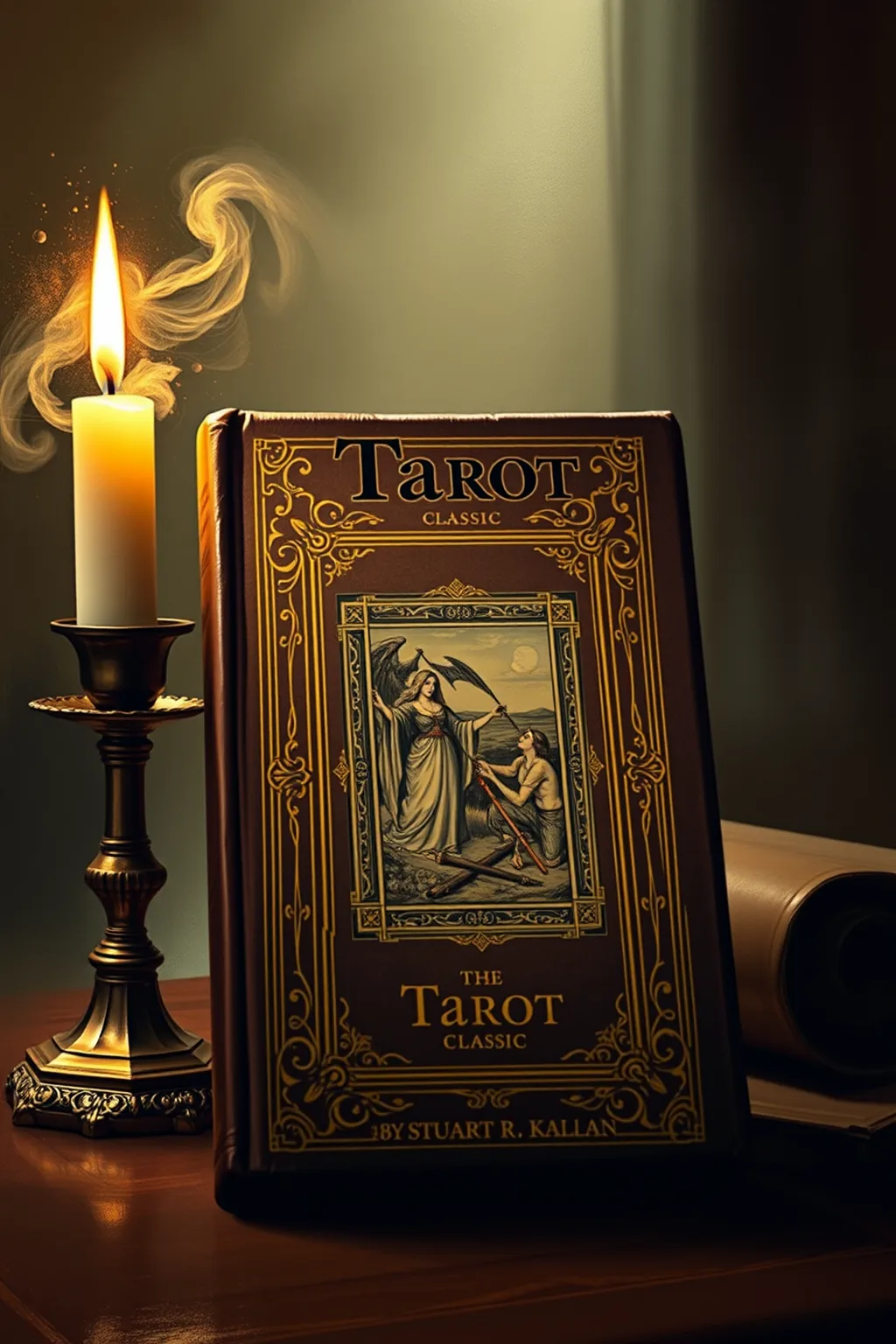
Yasmine Galenorn’s Tarot Journeys offers a solid, if familiar, psychological interpretation of the Rider-Waite-Smith deck. Its strength lies in its consistent framing of the cards as a developmental map, particularly the section detailing the Fool's progression through the Major Arcana. However, the work sometimes feels less like a groundbreaking analysis and more like a well-articulated summary of established archetypal interpretations prevalent since the mid-20th century. The limitation here is a lack of truly novel perspectives; it reiterates rather than reinvents. A passage discussing the Lovers card, for instance, focuses effectively on choice and integration, but doesn't present a view significantly distinct from other psychological Tarot texts. Overall, it serves as a competent guide for those new to the archetypal approach, but may not offer much for seasoned practitioners seeking fresh insights.
📝 Description
72
### What It Is Tarot Journeys by Yasmine Galenorn presents a unique exploration of the Tarot, moving beyond mere divination to examine the cards as archetypal symbols representing stages of personal development. The work unpacks the Rider-Waite-Smith system, offering interpretations that connect the Major and Minor Arcana to psychological and spiritual growth. It’s structured to guide readers through the narrative flow of the cards, encouraging a deeper understanding of their symbolic language.
### Who It's For This book is intended for Tarot enthusiasts seeking a more in-depth, philosophical approach to the cards than standard divinatory guides. It will appeal to individuals interested in Jungian psychology, archetypal studies, and personal transformation through symbolic systems. Those familiar with basic Tarot concepts but wishing to explore their deeper meanings and applications in self-discovery will find it particularly valuable.
### Historical Context Published in 1999, Tarot Journeys emerged during a period of resurgent interest in esoteric subjects and the practical application of Tarot beyond fortune-telling. The late 20th century saw a confluence of psychological theories, particularly Jungian archetypes, being integrated into occult studies. Galenorn’s work aligns with this trend, positioning Tarot as a tool for individuation, a concept popularized by Carl Jung. This era also saw a proliferation of Tarot books, distinguishing themselves by focusing on psychological depth or specific traditions, with Galenorn carving out a niche for her integrated approach.
### Key Concepts The core of Tarot Journeys lies in its conceptualization of the Tarot deck as a map of the human journey, from the Fool’s initiation to the World’s completion. It emphasizes the interconnectedness of the cards, viewing them not as isolated portents but as a cohesive narrative. The book likely explores concepts such as the Fool’s journey, the challenges presented by the Swords and Pentacles suits, and the transcendent aspects of the Wands and Cups suits, framing them within a framework of personal evolution and spiritual unfolding.
💡 Why Read This Book?
• Gain a structured understanding of the Rider-Waite-Smith deck as a map of personal development, particularly through the narrative of the Fool’s journey as presented in the Major Arcana sections. • Explore the archetypal symbolism of each card within a psychological framework, drawing parallels to concepts like individuation, as Galenorn likely discusses in relation to Jungian psychology. • Learn to interpret the suit progressions—Wands, Cups, Swords, Pentacles—as stages of growth and experience, a core interpretive method employed throughout the book.
why_read
⭐ Reader Reviews
Honest opinions from readers who have explored this book.
❓ Frequently Asked Questions
What specific Tarot deck does Yasmine Galenorn focus on in Tarot Journeys?
The book primarily centers on the Rider-Waite-Smith Tarot deck, which is widely recognized for its detailed imagery and has been a foundational influence on many modern Tarot systems since its initial publication.
When was Tarot Journeys first published and what was happening in esoteric studies then?
Tarot Journeys was first published in 1999. This period saw a significant resurgence in interest in esoteric subjects, with many practitioners and scholars integrating psychological theories, such as those of Carl Jung, into the study of Tarot and other divination systems.
Does Tarot Journeys focus on fortune-telling or personal growth?
The book emphasizes personal growth and psychological interpretation over traditional fortune-telling. It views the Tarot cards as archetypal symbols representing stages of human development and spiritual unfolding.
What is the main approach Galenorn uses to interpret the Tarot cards?
Galenorn employs an archetypal and psychological approach, framing the Tarot deck as a symbolic representation of the Fool's journey through life's challenges and transformations.
Is Tarot Journeys suitable for beginners?
Yes, while it offers depth, the book is accessible to beginners who are interested in understanding the Tarot beyond its divinatory applications and wish to explore its symbolic and psychological dimensions.
Are there any specific esoteric traditions mentioned or referenced in the book?
While not explicitly tied to a single lineage, the book draws heavily from Jungian psychology and archetypal symbolism, which have influenced various modern esoteric traditions and personal development philosophies.
🔮 Key Themes & Symbolism
The Fool's Journey Archetype
The central theme is the Tarot deck, particularly the Rider-Waite-Smith system, visualized as a narrative arc mirroring the Fool's progression. This journey begins with innocence and culminates in mastery, encompassing trials, learning, and spiritual awakening. Galenorn likely maps the Major Arcana as distinct stages, charting the individual's path toward self-realization. This concept aligns with Jungian ideas of individuation, where the psyche moves towards wholeness through confronting archetypal patterns.
Psychological Interpretation of Suits
Beyond simple divinatory meanings, the work delves into the psychological underpinnings of each suit: Wands (spirit, creativity), Cups (emotions, relationships), Swords (intellect, conflict), and Pentacles (material world, security). Galenorn likely interprets the sequences within each suit as representing different facets of human experience and development related to these core elements, encouraging readers to see the cards as reflections of their own inner states and external challenges.
Tarot as a Mirror for Self-Discovery
The book positions Tarot not just as a predictive tool but as a profound mirror for introspection and self-understanding. By examining the archetypal imagery and narrative flow of the cards, readers are invited to gain insight into their personal strengths, weaknesses, and life path. This approach encourages a dialogue with the unconscious, using the Tarot's symbolic language to illuminate personal growth and transformation.
Integration of Rider-Waite-Smith Imagery
A significant aspect is the detailed examination of the specific imagery found in the Rider-Waite-Smith deck. Galenorn likely uses the visual cues and established symbolism of Pamela Colman Smith's artwork to inform her interpretations. This focus grounds the psychological concepts in concrete visual elements, making the archetypal journey tangible and accessible through the familiar framework of this influential deck.
💬 Memorable Quotes
“The Fool's journey is not a linear path, but a cyclical unfolding of potential.”
— This interpretation suggests that the Fool's progression through the Major Arcana represents recurring themes and lessons rather than a simple step-by-step process, highlighting the dynamic and iterative nature of personal growth.
“Each suit represents a fundamental element of human experience and consciousness.”
— This statement frames the suits (Wands, Cups, Swords, Pentacles) as elemental forces that shape our lives, encouraging readers to analyze how these energies manifest and interact within their own psychological landscape.
“The Tarot offers a symbolic language for understanding the unconscious.”
— This highlights the book's core premise: that the cards are not merely random symbols but a structured system that can help us access and interpret the deeper, often hidden, workings of our own minds.
“Choice and consequence are central themes in the cards associated with duality.”
— This interpretation likely refers to cards like The Lovers, emphasizing that our decisions and their outcomes are a significant part of the archetypal journey depicted in the Tarot.
“The World card signifies completion, integration, and a return to the source.”
— This suggests that the final card of the Major Arcana represents a state of wholeness and understanding, marking not an end, but a renewed beginning or a higher level of consciousness.
🌙 Esoteric Significance
Tradition
The work draws heavily from the Western Esoteric tradition, particularly its modern psychological interpretations influenced by Jungian archetypes. While not strictly adhering to a single lineage like Hermeticism or Kabbalah, it integrates their symbolic language into a framework of personal individuation, a key concept in 20th-century esoteric psychology. It departs from purely divinatory or ritualistic applications by focusing on the Tarot as a psychospiritual development tool.
Symbolism
Central symbols include the Fool, representing the initiated journey of consciousness, and the four suits (Wands, Cups, Swords, Pentacles) which symbolize elemental forces and stages of human experience. The Major Arcana are interpreted as archetypal stages of the soul's journey, while the Minor Arcana depict the unfolding of these themes in everyday life, offering a rich symbolic vocabulary for self-reflection.
Modern Relevance
Tarot Journeys' emphasis on psychological depth and archetypal interpretation remains highly relevant. It speaks to contemporary practitioners and thinkers in fields like depth psychology, personal development coaching, and neo-pagan spirituality who seek symbolic systems for self-understanding and transformation. Its approach continues to influence online Tarot communities and modern guides that prioritize introspection over prediction.
👥 Who Should Read This Book
• Students of Jungian psychology and archetypal studies seeking practical applications of these theories in symbolic systems like the Tarot. • Tarot enthusiasts wishing to deepen their understanding beyond basic readings, exploring the cards as a map for personal and spiritual evolution. • Individuals interested in self-discovery and introspection who are looking for a structured, symbolic framework to examine their life path and inner world.
📜 Historical Context
Yasmine Galenorn's Tarot Journeys, published in 1999, emerged in a fertile period for esoteric studies, particularly the late 20th century's fusion of psychology and occultism. This era saw a significant adoption of Carl Jung's theories of archetypes and individuation into fields like Tarot interpretation. Many authors sought to move beyond simple divination, positioning the cards as tools for self-exploration. Galenorn’s work aligns with this trend, emphasizing the Tarot as a map of personal development. Contemporaries like Rachel Pollack were also exploring deeper symbolic meanings in Tarot. While not facing overt censorship, the growing popularity of such psychological interpretations positioned them against more traditional, predictive approaches to Tarot, marking a shift in mainstream esoteric discourse towards inner work and self-actualization.
📔 Journal Prompts
The Fool's initial leap: What unknown territory are you currently entering?
Reflect on the elemental energies of the suits (Wands, Cups, Swords, Pentacles) in your current challenges.
How does the concept of individuation, as explored through the Major Arcana, relate to your personal growth trajectory?
Analyze the symbolic imagery of a specific card (e.g., The High Priestess) and its message for your intuition.
Consider the cyclical nature of the Fool's journey in relation to a recurring pattern in your life.
🗂️ Glossary
Archetype
Universal, archaic patterns and images that derive from the collective unconscious and are the psychic counterpart of instinct. In Tarot, they represent fundamental human experiences and personality types.
Individuation
A psychological concept, particularly from Carl Jung, describing the process of developing one's own unique personality and achieving wholeness by integrating conscious and unconscious aspects of the self.
Major Arcana
The trump cards of the Tarot deck, typically numbered 0 (The Fool) to 21 (The World), representing significant life lessons, spiritual archetypes, and major turning points.
Minor Arcana
The four suits (Wands, Cups, Swords, Pentacles) of the Tarot deck, each containing cards numbered Ace through 10, plus the court cards (Page, Knight, Queen, King), which represent everyday events and circumstances.
Rider-Waite-Smith Deck
A highly influential Tarot deck created by Arthur Edward Waite and illustrated by Pamela Colman Smith, first published in 1909. It is known for its detailed, symbolic imagery, especially on the Minor Arcana cards.
Symbolic Language
A form of communication that uses symbols to represent abstract ideas, concepts, or emotions. In Tarot, the cards' imagery and arrangement form a complex symbolic language for introspection.
Psychological Interpretation
Analyzing the Tarot cards through the lens of psychological theories, focusing on their representation of inner states, motivations, personality dynamics, and developmental processes rather than solely predictive meanings.