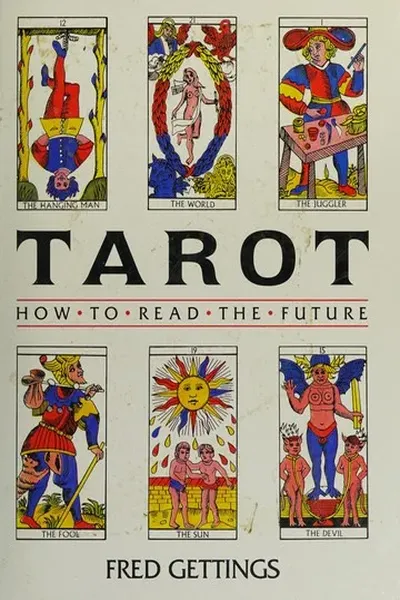
Tarot
 75
75

Tarot
Fred Gettings' "Tarot" offers a commendably grounded perspective on a subject often mired in speculative fantasy. He meticulously dissects the historical claims surrounding the Tarot's antiquity, pushing back against the more fanciful notions of Egyptian origins or direct links to ancient mystery schools. The section detailing the emergence of the Tarot as an occultic system in the late 19th century, particularly its connection to figures like Lévi, is particularly sharp. However, the work occasionally feels constrained by its adherence to established scholarship, perhaps at times sidestepping more speculative, yet equally influential, interpretations that have shaped modern Tarot practice. The analysis of the Marseille deck's structure is robust, but the leap to the Rider-Waite-Smith deck could benefit from further depth regarding its specific iconographic innovations. Overall, Gettings provides an essential, albeit sometimes conservative, foundation for understanding the Tarot's journey through history.
📝 Description
75
### What It Is Fred Gettings' "Tarot" is a detailed examination of the iconic card system, tracing its origins and evolution.
### Who It's For This work is suited for serious students of esoteric traditions and those interested in the historical development of symbolic systems. It appeals to readers seeking a scholarly approach rather than a purely divinatory guide.
### Historical Context Published in 1993, Gettings' "Tarot" emerged during a period of renewed academic and popular interest in occultism and Western esotericism. The field saw contributions from scholars and practitioners alike, with works exploring Tarot's connections to Hermeticism, Kabbalah, and various occult orders.
### Key Concepts The book explores the Tarot's potential roots in medieval card games, its transformation into an occult tool by figures like Eliphas Lévi in the 19th century, and its widespread adoption within various esoteric schools.
💡 Why Read This Book?
• Gain a nuanced understanding of the Tarot's historical journey from playing cards to occultic instrument, a process Gettings charts from its 15th-century beginnings. • Examine the influence of 19th-century occultists like Eliphas Lévi, who significantly shaped the esoteric interpretation of Tarot imagery. • Appreciate the scholarly dissection of Tarot symbolism, moving beyond modern interpretations to explore earlier conceptual frameworks.
⭐ Reader Reviews
Honest opinions from readers who have explored this book.
❓ Frequently Asked Questions
What is the primary historical argument Fred Gettings makes about the Tarot?
Gettings argues against the notion of ancient Egyptian origins for the Tarot, instead tracing its development from 15th-century Italian playing cards and its later adoption by occultists.
When was Fred Gettings' "Tarot" first published?
Fred Gettings' "Tarot" was first published in 1993, contributing to the late 20th-century resurgence of interest in esoteric studies.
Does Gettings discuss the Rider-Waite-Smith deck?
Yes, the work discusses the Rider-Waite-Smith deck and its place within the evolution of Tarot imagery and interpretation, though perhaps not with the exhaustive detail some modern practitioners might expect.
What esoteric traditions are linked to the Tarot according to Gettings?
Gettings links the Tarot to Western Esotericism, particularly its transformation in the 19th century through figures associated with Hermeticism and ceremonial magic.
Is this book suitable for absolute beginners in Tarot?
While informative, its scholarly approach might be dense for absolute beginners. It is best suited for those with some foundational knowledge or a strong academic interest in the subject.
What is the significance of the Marseille Tarot mentioned in the book?
The Marseille Tarot is presented as a crucial stage in the Tarot's development, representing a significant iteration of the design and symbolism before later occultic interpretations became widespread.
🔮 Key Themes & Symbolism
Historical Evolution
Gettings meticulously traces the Tarot's lineage, challenging romanticized notions of ancient origins. The work emphasizes its emergence from 15th-century Italian playing cards, detailing how these were gradually imbued with esoteric meaning. The 19th century marks a significant pivot, with figures like Eliphas Lévi reinterpreting the cards as a key to occult philosophy, linking them to Hermeticism and Kabbalistic principles. This section highlights the critical shift from secular game to sacred text within esoteric circles.
The Occultic Turn
A central theme is the Tarot's transformation into a tool for esoteric study and divination during the 19th and early 20th centuries. Gettings examines how occultists utilized the deck, assigning complex symbolic meanings to each card that extended far beyond their original pictorial representations. This era saw the Tarot become deeply integrated with Western Hermetic traditions, serving as a mnemonic device and a visual lexicon for spiritual and magical concepts.
Symbolic Systems
The book addresses the inherent symbolism within Tarot cards, exploring how these images function as a visual language. Gettings discusses the archetypal figures and narrative sequences within the Major Arcana, viewing them as representations of universal psychological and spiritual processes. The interpretation of these symbols is often contextualized within the frameworks of Hermeticism and Qabalah, revealing layers of meaning accessible to those initiated into these traditions.
The Marseille Deck
The Tarot de Marseille is presented as a pivotal iteration in the deck's history. Gettings analyzes its structure and iconography, recognizing it as a significant precursor to later occult decks. Its relatively unadorned yet potent imagery provides a crucial point of comparison for understanding the subsequent elaborations and symbolic overlays introduced by occultists seeking to codify spiritual knowledge within the cards.
💬 Memorable Quotes
“The Tarot is not an ancient book of wisdom, but a product of the Renaissance.”
— This statement directly challenges popular myths about the Tarot's origins, grounding its history in a specific European cultural and intellectual period, the Renaissance.
“Eliphas Lévi was instrumental in re-imagining the Tarot for occult purposes.”
— This highlights the pivotal role of Lévi in transforming the perception of the Tarot from simple playing cards to a complex system of esoteric symbolism and divination.
“The imagery of the Tarot contains archetypal patterns that reflect deeper psychological truths.”
— This interpretation suggests that the cards' visual elements tap into universal human experiences and psychological structures, aligning them with depth psychology concepts.
“The structure of the Marseille deck offers a foundational understanding of Tarot's visual language.”
— This emphasizes the Tarot de Marseille as a key historical and artistic stage, crucial for grasping the evolution of the deck's visual grammar before later esoteric additions.
“Early occult interpretations often linked Tarot imagery to the Hebrew alphabet and Kabbalistic notions.”
— This points to the significant influence of Kabbalah on the esoteric development of the Tarot, particularly in assigning correspondences and deeper meanings to the cards.
🌙 Esoteric Significance
Tradition
This work sits within the broader field of Western Esotericism, specifically engaging with the Hermetic and occult traditions that adopted and adapted the Tarot. Gettings examines how figures from the 19th-century occult revival, influenced by Hermeticism and Kabbalah, transformed playing cards into a complex symbolic system for spiritual and magical study.
Symbolism
Key symbols explored include the archetypal figures of the Major Arcana, such as The Fool, The Magician, and The High Priestess, which Gettings analyzes as carriers of profound philosophical and psychological concepts. He also touches upon the numerical and symbolic correspondences that later occultists, particularly those versed in Qabalah, assigned to the cards, creating intricate layers of meaning.
Modern Relevance
Contemporary practitioners of Western Esotericism, particularly those focused on ceremonial magic and Hermetic philosophy, continue to draw on historical analyses like Gettings' to understand the foundational interpretations of the Tarot. His work provides a critical lens for exploring the evolution of Tarot symbolism beyond purely divinatory applications.
👥 Who Should Read This Book
• Students of Western Esotericism: Those interested in the historical development of occult systems and how traditions like Hermeticism incorporated the Tarot. • Comparative Symbolism Researchers: Individuals studying the evolution of visual languages and archetypal imagery across different cultural and historical contexts. • Skeptical Inquirers: Readers seeking a historically grounded examination of the Tarot, moving beyond purely mystical claims to understand its origins and transformations.
📜 Historical Context
Fred Gettings' "Tarot," published in 1993, arrived during a period of intense academic and popular re-engagement with Western Esotericism. The late 20th century saw a surge in scholarly works examining occult traditions, moving beyond earlier sensationalist accounts. Gettings' work stands within this intellectual milieu, offering a more critical and historically grounded perspective. It implicitly engages with the legacy of 19th-century occultists like Eliphas Lévi and Papus, who had firmly established the Tarot's place within Hermetic and Kabbalistic systems. While Gettings doesn't shy away from this esoteric lineage, his approach often seeks to disentangle historical fact from later mystical accretions. His work can be seen as a counterpoint to more purely spiritualist or New Age interpretations prevalent at the time, situating the Tarot firmly within the history of card games and later occult revivals.
📔 Journal Prompts
The 15th-century origins of playing cards as a precursor to the Tarot.
Eliphas Lévi's reinterpretation of Tarot imagery.
The symbolic significance of The Fool.
How the Marseille deck's structure informs understanding.
The integration of Kabbalistic concepts into Tarot symbolism.
🗂️ Glossary
Hermeticism
A religious, philosophical, and esoteric tradition based on writings attributed to Hermes Trismegistus. It emphasizes divine knowledge, cosmic unity, and the interconnectedness of all things, often expressed through alchemy and astrology.
Kabbalah (Qabalah)
A system of Jewish mysticism and esoteric interpretation that seeks to understand God and the universe through symbolic analysis, most famously represented by the Tree of Life.
Tarot de Marseille
A specific style of Tarot deck originating in France, characterized by its distinct iconography and relatively simple design, considered a crucial historical iteration before later occult interpretations.
Eliphas Lévi
A highly influential French occultist of the 19th century, known for his writings on magic, the Qabalah, and his significant role in reviving and reinterpreting the Tarot as an esoteric tool.
Major Arcana
The trump cards of a Tarot deck, typically numbering 22 (from 0 to 21), which represent significant life lessons, archetypal situations, and spiritual stages.
Playing Cards
Card games played with a deck of cards. The historical development of the Tarot is linked to early forms of playing cards used in 15th-century Europe.
Archetype
A universal, archaic pattern or image that derives from the collective unconscious and is believed by psychologist Carl Jung to influence human behavior and perception.