How to choose your own tarot
 73
73

How to choose your own tarot
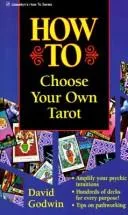
David Godwin’s How to Choose Your Own Tarot, a 1995 publication, offers a refreshing, albeit niche, perspective on the divinatory arts. It eschews the common practice of teaching how to read pre-existing decks and instead champions the radical idea of constructing one's own. The strength lies in its empowering premise: that the most potent tarot is one you build yourself, tailored to your psyche. However, its limitation is the significant creative demand placed upon the reader. The book introduces the concept of a 'personal symbolic language' as the foundation for one's custom deck, a notion explored in chapter three, which requires considerable introspection and symbolic literacy. While the ambition is admirable, the practical execution may prove daunting for those less inclined towards artistic or philosophical self-construction. Godwin’s work is a singular contribution for the dedicated creator.
📝 Description
73
### What It Is How to Choose Your Own Tarot presents a unique approach to the divination practice, moving beyond standard decks to encourage personal creation. First published in 1995 by David Godwin, this work challenges the notion of a singular, authoritative tarot deck. It posits that a tarot system is not merely a set of cards but a personalized symbolic language.
### Who It's For This book is aimed at individuals who feel a disconnect with existing tarot decks, or those seeking a deeper, more intuitive relationship with the cards. It appeals to artists, writers, and seekers interested in developing their own symbolic systems. Those who find traditional interpretations restrictive will find this an invitation to forge their own path.
### Historical Context The 1990s saw a burgeoning interest in personalized spirituality and a questioning of established esoteric doctrines. While many texts focused on interpreting existing decks like the Rider-Waite-Smith, Godwin's work emerged as an outlier, advocating for radical user-driven development. This period also saw increased academic and popular engagement with Jungian psychology, particularly concepts like archetypes and the collective unconscious, which inform personalized symbolic exploration.
### Key Concepts The central tenet is the creation of a 'personal deck' – a tarot system built from scratch by the user. This involves identifying core symbols, assigning meanings, and structuring the deck's narrative arc. The work emphasizes that the act of creation imbues the deck with a unique energetic signature, making it a more potent tool for self-discovery and divination.
💡 Why Read This Book?
• Learn to construct a personalized tarot system, moving beyond generic interpretations by identifying and assigning meanings to symbols relevant to your unique life experience, as detailed in the book's approach to a 'personal deck'. • Develop a deeper intuitive connection with divination by creating your own card meanings and structure, inspired by the book's emphasis on a 'personal symbolic language' rather than relying on established decks. • Understand the esoteric principle that a self-created tool, like a custom tarot deck, holds a more potent energetic signature due to the user's direct involvement, a core concept discussed from the book's 1995 publication.
⭐ Reader Reviews
Honest opinions from readers who have explored this book.
❓ Frequently Asked Questions
When was How to Choose Your Own Tarot first published?
How to Choose Your Own Tarot was first published in 1995, offering a unique perspective on tarot creation during a period of growing interest in personalized spirituality.
What is the main idea behind creating your own tarot deck?
The core idea is to build a tarot system that reflects your personal symbolic language and life experiences, making it a more potent and intuitive tool for divination and self-discovery.
Is this book for beginners or experienced tarot users?
It is best suited for those with some existing familiarity with tarot concepts who are looking to deepen their practice or feel creatively stifled by standard decks.
What are the benefits of using a self-created tarot deck?
A self-created deck offers a uniquely powerful energetic connection, enhanced intuition, and a more personalized form of divination tailored precisely to the user's individual journey.
Does the book provide specific exercises for creating a deck?
While the book lays out principles, it encourages a highly personal approach to creation. Readers are guided to identify their own symbols and meanings, rather than following rigid instructions.
Who is David Godwin, the author?
David Godwin is the author of How to Choose Your Own Tarot, a work that challenges conventional approaches to tarot by advocating for user-generated decks.
🔮 Key Themes & Symbolism
Personal Symbolic Language
The book posits that the most effective tarot is one built upon the user's unique 'personal symbolic language.' This moves beyond established archetypes found in decks like the Rider-Waite-Smith, encouraging individuals to identify symbols that hold genuine personal resonance and meaning. This theme emphasizes that true divination arises from an intimate dialogue between the seeker and their self-created symbolic system, rather than external interpretation.
The Empowered Creator
Central to Godwin's work is the concept of the reader as an active creator, not a passive recipient of predetermined meanings. The act of choosing or constructing one's own tarot deck is presented as a powerful spiritual and psychological endeavor. This theme empowers individuals to take agency in their spiritual practice, fostering a deeper connection to their intuition and inner wisdom.
Beyond Standard Decks
This theme directly challenges the widespread reliance on commercially produced tarot decks. The work argues that these pre-packaged systems, while useful, can limit the depth of personal connection and intuitive insight. By advocating for the creation of a 'personal deck,' the book offers an alternative path for those seeking a more authentic and individualized approach to tarot divination.
The Energetic Signature of Tools
How to Choose Your Own Tarot suggests that tools created by the individual possess a unique energetic signature, directly linked to the creator's intent and energy. This principle implies that a self-made tarot deck is inherently more powerful and attuned to the user's needs than a mass-produced one. This imbues the creative process with significant spiritual weight.
💬 Memorable Quotes
“The deck you choose or create becomes a mirror.”
— This simple statement highlights the core function of a tarot deck as presented in the book: a reflective tool. It suggests that the symbols and structure chosen by an individual will inevitably reflect their inner landscape, beliefs, and subconscious patterns.
“Meaning is not inherent but assigned.”
— This interpretation emphasizes the subjective nature of symbolism in tarot. It suggests that the power of a card comes not from a universal, fixed meaning, but from the personal significance the user imbues it with through their own creative process.
“Your personal deck is your own symbolic dialogue.”
— This captures the essence of the book's philosophy: tarot as an interactive conversation. By creating one's own deck, the user establishes a unique system of symbols that facilitates a direct and personal dialogue with their own psyche and higher consciousness.
“The act of creation is as vital as the reading.”
— This highlights the book's focus on the process. The author implies that the spiritual and psychological work involved in building a tarot system is an integral part of the divination practice itself, offering profound insights along the way.
“Beyond the Rider-Waite-Smith, lies your own path.”
— This statement directly contrasts the book's approach with the dominant tradition. It encourages readers to look beyond established systems, like the widely popular Rider-Waite-Smith deck, and forge their own unique divinatory practice.
🌙 Esoteric Significance
Tradition
This work aligns with principles found in Hermeticism and certain schools of Western Esotericism that emphasize individual gnosis and the creation of personal magical systems. It departs from traditions that rely heavily on fixed, divinely revealed systems, instead championing the Gnostic ideal of direct, unmediated knowledge derived from within. The book encourages a personal, almost alchemical, process of transforming ordinary symbols into a potent divinatory tool.
Symbolism
The core symbolism revolves around the concept of the 'personal deck' itself – a microcosm of the individual's psyche and worldview. Symbols such as the 'Tower' or the 'Fool' in traditional decks are re-envisioned not as fixed concepts, but as archetypal energies that the user must define and integrate into their own symbolic lexicon. The act of drawing, choosing, or assigning images becomes a key ritualistic act.
Modern Relevance
In contemporary practice, Godwin's ideas resonate strongly with the DIY culture and the increasing demand for personalized spiritual tools. Artists, creative writers, and independent practitioners of divination often draw inspiration from this work. Its emphasis on self-authorship aligns with modern trends in personalized branding and self-discovery, making it relevant for those seeking authentic expressions of their inner world through symbolic art and practice.
👥 Who Should Read This Book
• Aspiring tarot creators and artists seeking to develop their own unique deck, moving beyond established imagery to craft a deeply personal symbolic system. • Individuals feeling disconnected from conventional tarot decks or seeking a more intuitive and empowered approach to divination, looking to imbue their practice with personal meaning. • Students of comparative mythology and symbolism interested in exploring how individuals construct and utilize personal symbolic languages for self-understanding and spiritual growth.
📜 Historical Context
Published in 1995, David Godwin's How to Choose Your Own Tarot emerged during a period of significant evolution in esoteric thought. The 1990s witnessed a rise in New Age spirituality, characterized by an emphasis on personal empowerment, subjective experience, and the integration of diverse spiritual traditions. While many texts focused on interpreting established systems like the Rider-Waite-Smith deck, Godwin's work stood apart by advocating for radical personalization. This era also saw the continued influence of Carl Jung's work on archetypes and the collective unconscious, providing a psychological framework for understanding personalized symbolism. Unlike contemporaries who published extensive guides to existing decks, Godwin’s approach was more philosophical, encouraging a DIY ethos in spiritual tools. The book did not face significant censorship but represented a departure from mainstream tarot instruction, appealing to a more avant-garde segment of the esoteric community.
📔 Journal Prompts
Your personal deck's core symbols and their assigned meanings.
Reflections on the 'energetic signature' of a self-created tool.
The concept of 'assigned meaning' versus inherent symbolism.
Developing a 'personal symbolic language' for daily life.
How the act of creation transforms your relationship with tarot.
🗂️ Glossary
Personal Deck
A tarot system created by the individual user, featuring unique symbols, meanings, and structure tailored to their personal symbolic language and life experiences.
Personal Symbolic Language
The unique set of symbols, metaphors, and archetypes that an individual uses to understand and interact with the world, which forms the basis for a personal tarot deck.
Energetic Signature
The unique vibrational quality or spiritual imprint that a tool, such as a tarot deck, carries as a result of its creation process and the intent of its creator.
Assigned Meaning
The interpretation and significance that a user personally attributes to a symbol or card, rather than relying on pre-existing or universally accepted definitions.
Rider-Waite-Smith
A highly influential and widely used tarot deck, first published in 1909, known for its detailed illustrations and archetypal imagery, often serving as a benchmark for other decks.
Divination
The practice of seeking knowledge of the future or the unknown by supernatural means; in this context, primarily through the use of a tarot system.
Archetype
In Jungian psychology, a universal, archaic pattern and image that derives from the collective unconscious and is the experience of the mankind. These are often foundational concepts in tarot interpretation.