フルーツバスケット 1

 80
80

フルーツバスケット 1
Natsuki Takaya's Fruits Basket 1 immediately establishes a unique premise that is both whimsical and laden with underlying melancholy. The introduction of Tohru Honda, a character whose relentless optimism contrasts sharply with the Sohma family's guarded despair, is compelling. Takaya's artwork, particularly in conveying subtle emotions through character expressions, is a significant strength. The narrative's initial vulnerability, seen in Tohru's living situation and her gradual discovery of the zodiac curse, grounds the fantastical elements in relatable human struggles. However, the sheer number of Sohma family members introduced early on can feel somewhat overwhelming, potentially diluting the focus on initial character development. A standout moment is the initial encounter with Yuki Sohma, whose polite but distant demeanor hints at the deep emotional scars the curse imposes. The verdict is that this volume successfully lays the groundwork for a complex emotional saga, despite a crowded initial cast.
📝 Description
80
Fruits Basket 1, published in 1998, introduces Tohru Honda and the Sohma family's zodiac curse.
This is the first volume of Natsuki Takaya's manga series, which began serialization in Japan in 1998. The story follows Tohru Honda, an orphaned high school student. She encounters the reclusive Sohma family and learns their secret: they transform into animals of the Chinese zodiac when hugged by someone of the opposite sex or under significant stress.
The narrative blends slice-of-life elements with supernatural undertones and character drama. It addresses themes of emotional healing, family dynamics, and overcoming trauma through connection. Readers interested in folklore and mythology will find the zodiac curse a central element.
The Sohma family's zodiac curse draws from East Asian folklore, particularly the Chinese zodiac. Takaya uses this ancient concept as a metaphor for deep-seated emotional burdens and unresolved family issues. The curse represents inescapable familial legacies and the struggle for individual identity within oppressive structures. Tohru Honda's unconditional acceptance challenges the Sohmas' isolation, suggesting a path toward healing through empathy and connection within a found family structure.
💡 Why Read This Book?
• Gain insight into the concept of the Chinese Zodiac as a narrative device, moving beyond simple astrological identification to explore its metaphorical weight in character development, as seen with the curse affecting the Sohma family. • Experience Tohru Honda's unique approach to empathy and acceptance, observing how her persistent kindness can begin to mend the deep emotional wounds inflicted by the Sohma family's inherited burdens. • Understand the early narrative mechanics of inherited trauma, as the initial chapters of Fruits Basket 1 depict how the Sohma family's curse influences their interpersonal relationships and individual psyches.
⭐ Reader Reviews
Honest opinions from readers who have explored this book.
❓ Frequently Asked Questions
When was the manga series Fruits Basket first published in Japan?
The Fruits Basket manga series by Natsuki Takaya was first published in Japan in 1998, with this initial volume setting the stage for the narrative.
What is the central supernatural element in Fruits Basket 1?
The central supernatural element is the curse afflicting the Sohma family, causing them to transform into animals of the Chinese zodiac when hugged or under stress.
Who is the main protagonist introduced in Fruits Basket 1?
The main protagonist introduced is Tohru Honda, an orphaned high school student who discovers the Sohma family's secret.
What themes are explored in the early parts of Fruits Basket 1?
Early themes include coping with loss, the impact of family secrets, and the power of unconditional kindness in the face of deep-seated emotional pain.
Does Fruits Basket 1 include elements of Japanese folklore?
Yes, it prominently features the Chinese Zodiac, a significant element of East Asian folklore, as the basis for the Sohma family's curse.
What is the original language of Fruits Basket 1?
Fruits Basket 1 was originally written and published in Japanese by Natsuki Takaya.
🔮 Key Themes & Symbolism
The Zodiac Curse
The narrative hinges on the Sohma family's curse, a supernatural affliction tied to the Chinese Zodiac. This isn't merely a magical inconvenience; it's a profound metaphor for inherited trauma, familial obligation, and the struggle for self-definition against overwhelming ancestral legacies. Each transformation represents a loss of control, a physical manifestation of the emotional burdens carried by the family members since the curse's origin, which the work begins to explore through characters like Shigure and Yuki Sohma.
Found Family and Acceptance
Tohru Honda's arrival offers a stark contrast to the Sohma family's isolation. Her unwavering kindness and empathy form the basis of a 'found family.' This theme explores how genuine acceptance, free from judgment or obligation, can begin to dismantle deeply ingrained emotional defenses and offer a path toward healing, even for those bound by ancient curses. Her presence challenges the Sohmas' ingrained beliefs about love and connection.
Emotional Healing and Trauma
Beneath the fantastical premise lies a deep exploration of emotional wounds. The Sohma family members, particularly Akito, carry significant psychological scars stemming from their upbringing and the curse itself. The story, starting from this first volume, suggests that true healing involves confronting these traumas, understanding their roots, and finding healthy ways to process them, often facilitated by supportive relationships like the one Tohru builds.
The Nature of Belonging
The concept of belonging is central, both within the Sohma family structure and for Tohru herself, an orphan seeking a place to call home. The curse inherently isolates the Sohmas, making true belonging difficult. Tohru's journey is about finding her own sense of place while simultaneously offering the possibility of belonging to others who feel outcast or cursed by their circumstances.
💬 Memorable Quotes
Direct passages from the work, attributed to the author.
““I’m going to live my life… with all my might.””
— This reflects Tohru Honda's core philosophy – a determination to face life's difficulties with unwavering spirit, even when faced with immense personal loss and the bizarre circumstances of the Sohma household.
““If you can’t protect yourself, you can’t protect anyone.””
— This concept, often implied in Yuki Sohma's early interactions, highlights the personal struggle for self-preservation and inner strength before one can truly extend aid or protection to others.
““Everyone has their own burdens to bear.””
— A core thematic statement suggesting that hardship and emotional weight are universal experiences, even if the specific nature of those burdens, like the Sohma curse, varies dramatically.
💡 Key Ideas
Editorial paraphrase of the work's core concepts — not direct quotes.
“It’s okay to be sad. It’s okay to cry. But you have to get back up.”
A paraphrased sentiment embodying Tohru's empathetic approach, suggesting that acknowledging pain is crucial, but so is the resilience to move forward, a lesson she imparts and learns herself.
“The most important thing is to be kind to yourself.”
This paraphrased idea underscores the importance of self-compassion, a radical concept for characters like the Sohmas who are conditioned by their curse and family dynamics to feel shame or inadequacy.
🌙 Esoteric Significance
Tradition
While not explicitly aligned with a single Western esoteric tradition like Hermeticism or Kabbalah, Fruits Basket draws heavily on East Asian cosmological concepts, particularly the Chinese Zodiac. Its exploration of curses, inherited burdens, and spiritual afflictions places it in dialogue with broader themes found in folk magic and animistic beliefs. The narrative treats the zodiac animals not just as symbols but as potent forces that dictate and warp the lives of the Sohma family, echoing ideas of fate and spiritual entanglement found in various shamanic traditions.
Symbolism
The primary symbol is the Chinese Zodiac itself, representing the cyclical nature of time, destiny, and the animalistic urges or characteristics inherent in humanity. Each animal embodies specific traits that are both a source of power and a profound limitation for the Sohma family members. The cat, notably absent from the zodiac cycle in the story's lore, symbolizes exclusion, otherness, and the feeling of being an outcast, a crucial element in understanding the family's deep-seated anxieties and Akito's motivations.
Modern Relevance
Contemporary explorations of mental health, trauma, and the impact of family systems often find resonance in Fruits Basket. Thinkers and practitioners in fields like ecopsychology or those examining the intersection of folklore and psychology might reference the series. Its depiction of how external, seemingly magical conditions (the curse) mirror internal psychological states continues to be relevant for discussions on narrative therapy and understanding how societal or familial pressures can manifest as personal suffering.
👥 Who Should Read This Book
• Readers interested in how folklore influences modern storytelling, particularly those intrigued by the Chinese Zodiac beyond its astrological applications. • Individuals seeking narratives that explore complex family dynamics, inherited trauma, and the process of emotional healing through interpersonal relationships. • Fans of character-driven stories who appreciate protagonists with deep emotional resilience and empathetic approaches to challenging situations.
📜 Historical Context
Fruits Basket 1 emerged during a vibrant period for shojo manga, particularly in the late 1990s and early 2000s. Natsuki Takaya's work, serialized from 1998, contributed to a trend where stories began to tackle more profound emotional and psychological themes, moving beyond simpler romantic narratives. While drawing on the ancient Chinese Zodiac, a central to East Asian folklore, the series’ approach to its characters' internal struggles and familial dysfunction felt contemporary. This era saw a growing international appetite for Japanese pop culture, with manga like Fruits Basket finding dedicated audiences through early online fan communities and scanlation efforts, even before official translations were widespread. Unlike some contemporary works focusing purely on romance, Fruits Basket differentiated itself by foregrounding themes of inherited trauma and the search for belonging, positioning it within a burgeoning wave of emotionally complex storytelling.
📔 Journal Prompts
The Sohma family's curse and its connection to emotional states.
Tohru Honda's philosophy of persistent kindness in difficult circumstances.
Reflections on the symbolism of the absent cat in the zodiac cycle.
The concept of 'found family' as a source of healing.
Exploring the balance between acknowledging pain and finding the strength to move forward.
🗂️ Glossary
Chinese Zodiac
A traditional classification scheme based on the lunar calendar, assigning an animal and its reputed attributes to each year in a repeating 12-year cycle. In Fruits Basket, it manifests as a curse on the Sohma family.
Curse
In Fruits Basket, a supernatural affliction binding the Sohma family members to transform into the 12 animals of the zodiac under specific conditions, representing deep-seated familial trauma and obligation.
Tohru Honda
The optimistic and empathetic protagonist who, despite her own hardships, becomes a catalyst for healing within the cursed Sohma family.
Sohma Family
The central family afflicted by the zodiac curse, known for their wealth and the emotional isolation imposed by their unique condition.
Akito Sohma
The head of the Sohma family, whose complex and often tyrannical role is deeply intertwined with the family's curse and emotional suffering.
Shigure Sohma
An eccentric and playful author, one of the first Sohma family members Tohru encounters, who harbors less-obvious layers related to the family curse.
Yuki Sohma
Referred to as the 'Prince' of the school, Yuki is a kind but emotionally distant Sohma cursed with the rat spirit, struggling with his identity.
🔮 Readers Also Liked
Browse all →









More by 高屋奈月
All books →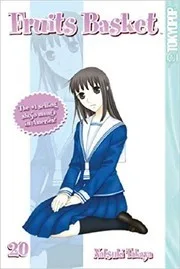





More Free Astrology & Cosmology Books
View all →