Year of the Horse
 79
79

Year of the Horse
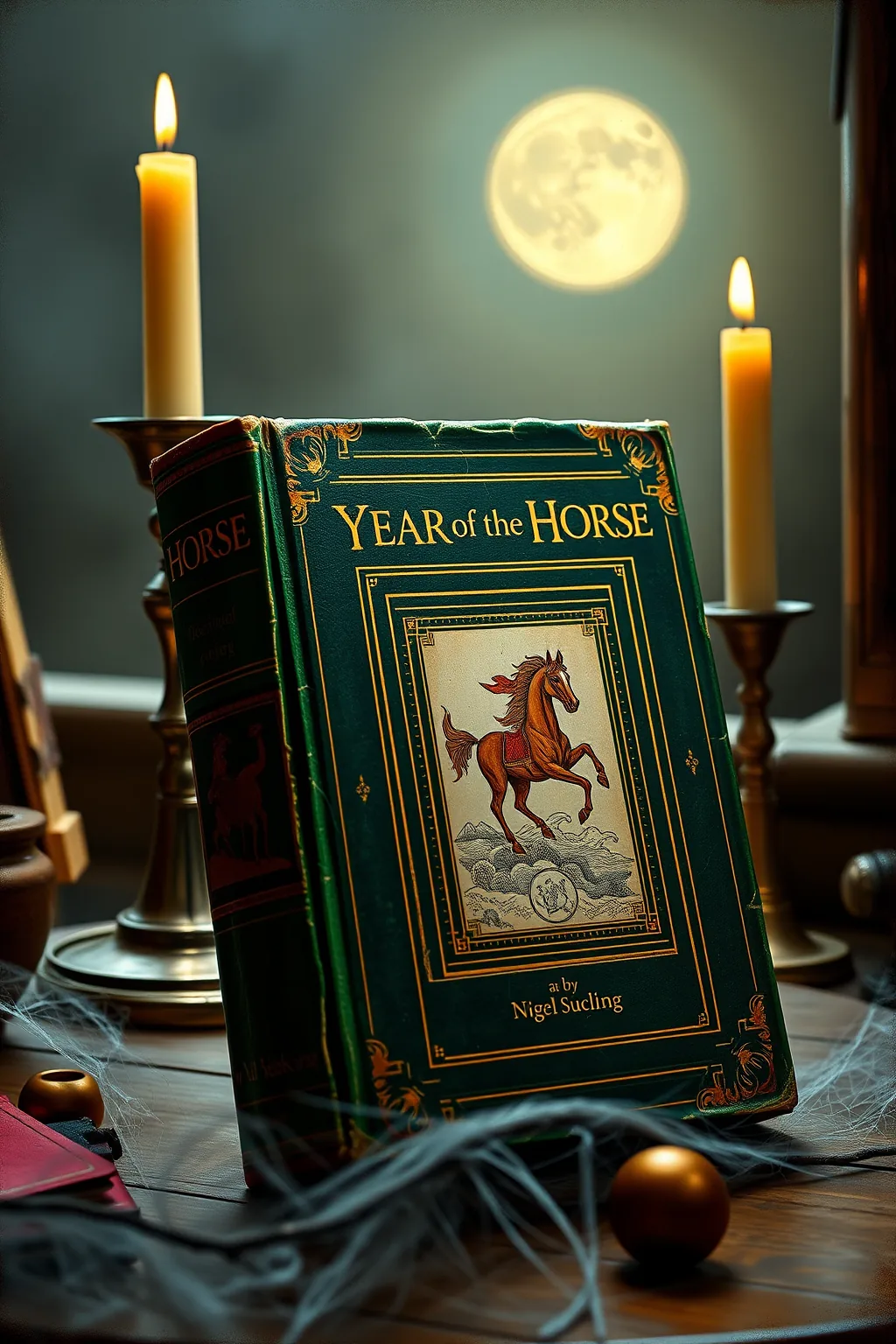
Nigel Suckling’s Year of the Horse, illustrated by Wayne Anderson, offers a surprisingly deep dive into the symbolism of the equine. Anderson’s evocative artwork, which graces the original 2002 edition, immediately sets a tone of mythic grandeur. Suckling’s prose, while occasionally leaning towards dense cataloging, provides a solid foundation for understanding the horse's multifaceted role across cultures. A particularly striking section details the horse's connection to thunder gods and elemental forces, moving beyond simple zodiacal interpretations. However, the book sometimes feels like a collection of disparate facts rather than a cohesive argument, occasionally lacking a clear thread to bind its extensive research. Despite this, it remains a valuable resource for anyone seeking to explore the animal archetype beyond superficial astrological charts. It is a worthy addition for serious students of comparative mythology and esoteric lore.
📝 Description
79
Published in 2002, Year of the Horse examines the horse's symbolic meanings across mythologies and occult philosophies.
Nigel Suckling and Wayne Anderson's 2002 book, Year of the Horse, moves beyond basic zodiac associations to investigate the horse's role in global mythologies, spiritual practices, and esoteric thought. The authors analyze its power, movement, and its connection to divine or primal energies. This work compiles lore from various cultures to construct a complete depiction of the equine archetype. It is written for readers with a strong interest in comparative mythology, esoteric symbols, and animal archetypes. Those who value in-depth research into the historical and cultural importance of animals within spiritual frameworks will find this text rewarding. It is especially suitable for students of Western esotericism, shamanism, and anyone aiming to grasp the deeper symbolic language of creatures that have long influenced human imagination and belief. Some familiarity with symbolic interpretation or mythology will aid engagement.
The early 2000s saw a rise in esoteric studies and a greater interest in cross-cultural mythologies. Year of the Horse appeared in this period, seeking to unify diverse strands of occult and symbolic knowledge for a modern audience. This era was characterized by a shift from purely academic studies to more integrated understandings of spiritual traditions. The book emerged alongside other works that examined ancient beliefs and technologies, indicating a wider intellectual movement focused on re-evaluating humanity's relationship with the natural world and its spiritual aspects.
💡 Why Read This Book?
• Gain a nuanced understanding of the horse as a psychopomp and soul guide, moving beyond common zodiacal interpretations, as explored in its mythical journeys. • Discover the specific cultural significance of the horse in ancient Vedic rituals like the Ashvamedha, revealing its role in solar worship and cosmic order. • Appreciate the visual language of Wayne Anderson's illustrations, which enhance the symbolic exploration of the horse as a representation of freedom and elemental power.
⭐ Reader Reviews
Honest opinions from readers who have explored this book.
❓ Frequently Asked Questions
When was Year of the Horse by Nigel Suckling first published?
Year of the Horse by Nigel Suckling, with illustrations by Wayne Anderson, was first published in 2002. This edition sought to present a comprehensive esoteric view of the horse archetype.
What is the primary focus of Year of the Horse?
The book focuses on the esoteric and symbolic meanings of the horse across various mythologies, spiritual traditions, and occult philosophies, rather than solely its astrological associations.
What kind of illustrations does Year of the Horse feature?
The book features illustrations by Wayne Anderson, known for his evocative and mythic style, which complements the esoteric themes explored by Nigel Suckling.
Does Year of the Horse cover the Chinese zodiac specifically?
While the title references the 'Year of the Horse,' the book's scope extends far beyond just the Chinese zodiac, delving into a wider array of cultural and esoteric significances of the equine.
Who would benefit most from reading Year of the Horse?
Students of comparative mythology, esoteric symbolism, animal archetypes, and Western esotericism would find this book particularly beneficial for its research and unique perspective.
What is the Ashvamedha ritual mentioned in Year of the Horse?
The Ashvamedha is an ancient Vedic horse sacrifice ritual, which Year of the Horse examines as a significant example of the horse's connection to solar deities and cosmic order in ancient India.
🔮 Key Themes & Symbolism
The Horse as Psychopomp
Year of the Horse examines the profound symbolism of the horse as a psychopomp, a conductor of souls between worlds. This role is explored through its association with deities of the underworld, its presence in funerary rites across cultures, and its function as a guide for the deceased. The book references instances where the horse bridges the mortal realm and the spiritual, embodying swift passage and transition. It moves beyond mere transportation to signify the soul's journey and the mysterious passage between life and death, rooted in ancient shamanic beliefs and mythological narratives.
Solar Deities and Elemental Power
A significant theme in Year of the Horse is the horse's connection to solar deities and elemental forces, particularly thunder and wind. The text details how the horse became a symbol of the sun's chariot, representing its fiery, life-giving, and destructive aspects. Its association with thunder gods highlights its power and speed, mirroring the suddenness and force of storms. The book also explores the horse as an embodiment of untamed natural energy, the spirit of the wind, and primal freedom, linking it to the wild, untamable aspects of the natural world and divine power.
Martial and Nomadic Archetypes
The book examines the horse as a central archetype for martial and nomadic cultures, symbolizing conquest, mobility, and freedom. Its role in warfare and expansion is presented not just as a practical advantage but as a manifestation of potent spiritual and cultural forces. The horse embodies the spirit of the wanderer, the conqueror, and the free spirit, intimately connected to the vast plains and open skies. This section of the work highlights how the horse shaped human societies, spiritual beliefs, and the very concept of power and dominion across different historical periods.
Ritual and Sacrifice
Year of the Horse critically analyzes the horse's role in ancient rituals and sacrifices, most notably the Vedic Ashvamedha. This ceremony is presented as a complex act of worship, political assertion, and cosmic renewal, where the horse's sacrifice was believed to ensure prosperity and divine favor. The book investigates other instances of equine sacrifice and ritualistic use across cultures, demonstrating how the animal was seen as a potent offering to deities, a means of appeasing cosmic forces, and a way to imbue communities with its perceived powers of speed, strength, and vitality.
💬 Memorable Quotes
Direct passages from the work, attributed to the author.
“The horse is a symbol of the wind, speed, and untamed freedom.”
— This interpretation captures the essence of the horse as an embodiment of natural forces and liberation. It suggests the animal represents not just physical swiftness but a spiritual unchaining from earthly constraints.
“Across mythologies, the horse often serves as a guide for the soul.”
— This highlights the horse's role as a psychopomp, a creature that facilitates passage between realms, particularly in spiritual or post-mortem journeys, underscoring its liminal significance.
“Its connection to solar deities speaks to its power and radiant energy.”
— This points to the horse's association with sun gods and celestial bodies, symbolizing its vital, energetic, and sometimes fierce nature, mirroring the sun's influence on life and the cosmos.
“The Ashvamedha ritual underscores the horse's sacred status in ancient India.”
— This refers to a specific historical practice, emphasizing the profound religious and political importance of the horse in Vedic culture, where it was central to ceremonies of power and divine connection.
“Wayne Anderson's art visualizes the mythic power of the equine.”
— This acknowledges the significant contribution of the illustrator, suggesting that the visual elements of the book are integral to conveying the deep, mythic qualities attributed to the horse.
🌙 Esoteric Significance
Tradition
Year of the Horse draws primarily from the Western esoteric tradition's interest in animal symbolism and comparative mythology, while also incorporating elements from Eastern spiritual thought, particularly Vedic practices. It fits within a lineage of occult authors who sought to create syncretic understandings of global spiritual traditions, viewing animals as potent archetypes and conduits of divine energy. The work departs from purely academic studies by emphasizing the symbolic and magical resonances of the horse, aligning it with practices that seek to harness these energies for spiritual growth or understanding.
Symbolism
Key symbols explored include the horse as a psychopomp, guiding souls across the threshold of death, a concept resonant in shamanic traditions. Its association with solar deities, such as Helios or Surya, imbues it with symbolism of divine power, swiftness, and the life-giving force of the sun. Furthermore, the horse represents untamed elemental power, particularly the wind and thunder, signifying freedom, natural forces, and the spirit's wild, uncontainable essence, a motif frequently found in creation myths and nature-based spiritualities.
Modern Relevance
Contemporary practitioners of Jungian psychology and archetypal studies might find resonance in the book's exploration of the horse as a universal symbol of power, freedom, and transition. Modern pagan and earth-based spiritual movements often draw upon the primal energy and connection to nature that the horse represents. Additionally, individuals engaged in contemporary shamanic practices or those interested in the symbolic language of animals within a spiritual context continue to find Year of the Horse a valuable reference for understanding this potent archetype.
👥 Who Should Read This Book
• Students of comparative mythology and religious studies seeking to understand the many-sided symbolic roles of animals across cultures. • Practitioners of Western esotericism interested in animal archetypes, their spiritual significance, and their place within occult traditions. • Artists and writers looking for inspiration in mythic imagery and symbolic representation, particularly concerning themes of power, freedom, and the spiritual connection to nature.
📜 Historical Context
The early 2000s saw a significant resurgence of interest in esoteric philosophy and comparative mythology, moving beyond purely academic circles. Nigel Suckling's Year of the Horse, published in 2002 with evocative illustrations by Wayne Anderson, emerged within this milieu. It aimed to synthesize a wide array of cross-cultural beliefs about the horse, presenting them through an esoteric lens. This period also witnessed a growing critique of Western rationalism, leading many to explore alternative cosmologies and the symbolic language of ancient traditions. While not directly engaging with a specific contemporary scholar in its text, the book’s approach aligns with a broader trend that saw authors like Graham Hancock questioning established historical narratives and scholars like Joscelyn Godwin exploring the history of Western esotericism. The work taps into a current of thought that sought to reclaim the spiritual significance of the natural world, a perspective gaining traction against the backdrop of increasing secularization.
📔 Journal Prompts
The horse as a psychopomp: Reflect on its symbolic journey between realms.
Reflect on the horse's association with solar deities and elemental power.
Consider the Ashvamedha ritual and its implications for understanding sacred sacrifice.
Analyze Wayne Anderson's visual representations of the horse's mythic power.
Explore the concept of the horse as a symbol of untamed freedom in your own life.
🗂️ Glossary
Psychopomp
A guide of souls to the place of the dead. In mythology and religion, psychopomps can appear in various forms, including animals, birds, or human figures, facilitating the transition of the soul.
Ashvamedha
An ancient Vedic Sanskrit word for a horse sacrifice ritual, performed by ancient Indian kings as a means of achieving sovereignty and divine favor. It is a significant example of equine ritualistic significance.
Archetype
In Jungian psychology, an archetype is a universal, inherited pattern of thought or imagery derived from the collective unconscious. The horse is often considered a powerful archetype.
Solar Deity
A god or goddess associated with the sun. Many cultures attribute solar qualities, such as power, light, and life-giving energy, to their principal deities, sometimes linking them to the horse.
Esotericism
Beliefs and practices that are concerned with the inner, hidden, or secret aspects of reality, often involving mystical or spiritual traditions beyond conventional religious or scientific understanding.
Equine
Relating to or resembling a horse. Used in a more formal or scientific context to describe things associated with horses.
Vedic
Relating to the Vedas, the oldest scriptures of Hinduism, originating in ancient India. The Vedic period is known for its rituals, cosmology, and early philosophical insights.
🔮 Readers Also Liked
Browse all →








More Free Astrology & Cosmology Books
View all →