Year of the dragon
 80
80

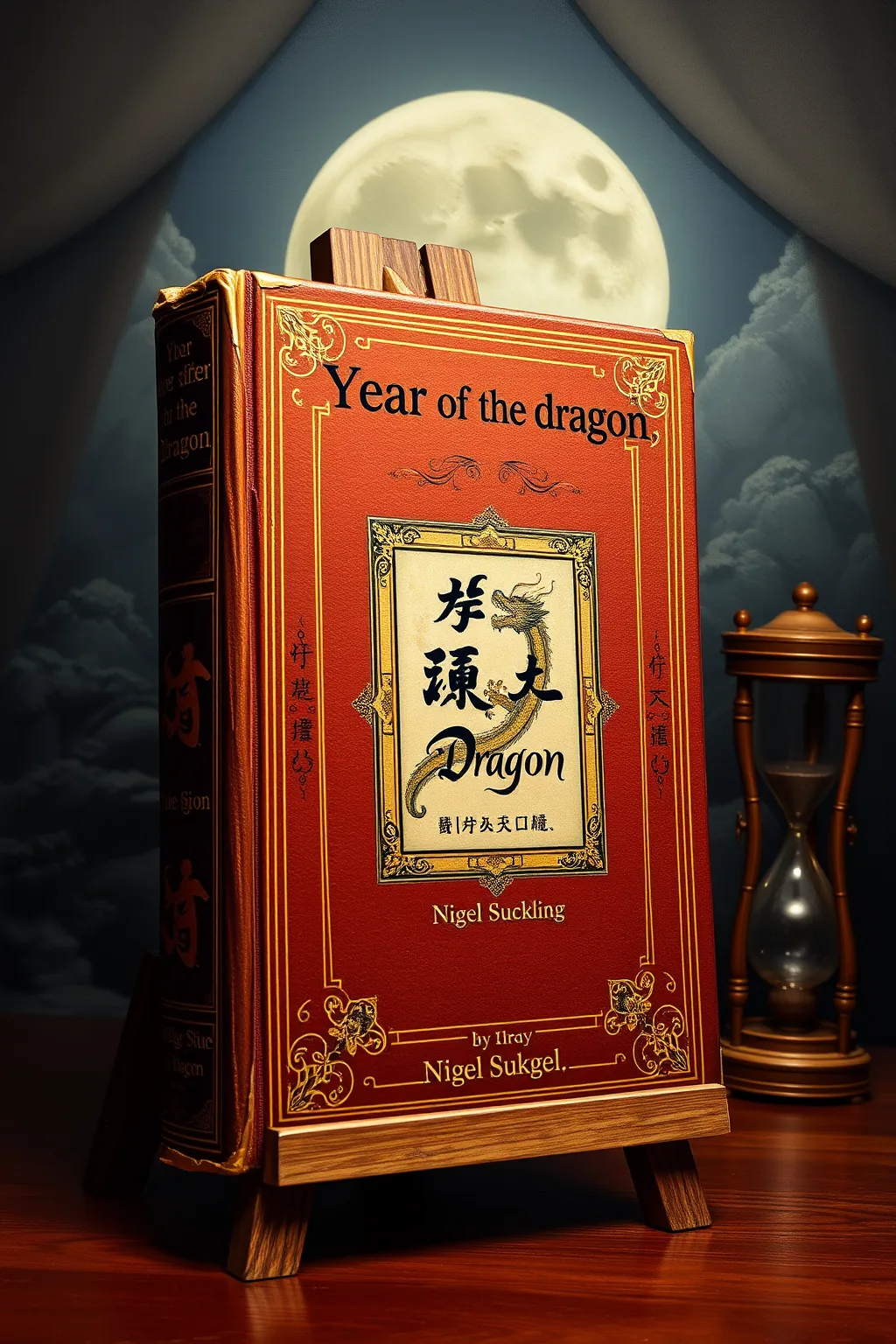
Year of the dragon
Nigel Suckling’s "Year of the Dragon" approaches a potent symbol with admirable academic rigor, charting its presence from ancient Mesopotamian myth to its more recent esoteric interpretations. Suckling’s strength lies in his ability to synthesize disparate cultural references, presenting the dragon not merely as a creature of fantasy but as a complex archetype embodying primal forces and transformative potential. The section detailing the Ouroboros, for instance, effectively links the serpent-dragon to alchemical principles of unity and cyclical renewal. However, the work sometimes feels overly academic, occasionally lacking the visceral impact one might expect when discussing such a potent symbol. The book could benefit from a more direct engagement with the lived experience or personal gnosis associated with dragon symbolism, rather than remaining solely in the realm of comparative analysis. Despite this, "Year of the Dragon" serves as a thorough and scholarly examination of a perennially significant figure in human symbolism.
📝 Description
80
Published in 2000, Nigel Suckling's "Year of the Dragon" examines the dragon archetype across cultures and spiritual traditions.
Nigel Suckling's "Year of the Dragon," published in 2000, is a detailed study of the dragon symbol. The book looks at how this creature appears in different mythologies and religious systems, comparing its varied meanings. Suckling seeks to reveal the deeper symbolism of the dragon, connecting it to ideas of change, raw power, and the structure of the universe.
This work is for people seriously interested in comparative mythology, occult symbols, and the history of religion. It will appeal to students and practitioners of Western esotericism, especially those who study alchemy, Gnosticism, and dragon myths. Readers wanting to grasp the dragon's place in spiritual stories and its psychological weight will find "Year of the Dragon" a useful guide. It is not a simple introduction; it requires careful attention to complex symbolic ideas.
The book appeared during a time in the late 20th and early 21st centuries when interest in esoteric traditions and comparative mythology grew. This period saw scholars and practitioners revisit ancient symbols for their modern relevance. Suckling's work builds on earlier explorations of archetypes, like those by Carl Jung, and aims to combine historical dragon imagery with current occult thought.
💡 Why Read This Book?
• Gain a nuanced understanding of the dragon archetype beyond common fantasy tropes, by examining its specific role in creation myths and its connection to elemental forces as detailed in the book's comparative analysis. • Explore the alchemical symbolism of the Ouroboros, understanding its representation of cycles of death and rebirth, a concept central to the book's exploration of transformation. • Discover the dragon's significance in diverse cultural and spiritual traditions, learning how its multifaceted meaning connects to concepts of primal energy and cosmic order, as presented through specific examples from Eastern and Western lore.
⭐ Reader Reviews
Honest opinions from readers who have explored this book.
❓ Frequently Asked Questions
What is the primary focus of Nigel Suckling's "Year of the Dragon"?
The book primarily focuses on the symbolic and mythological significance of the dragon across various cultures and esoteric traditions, exploring its representation as a primal force, a symbol of transformation, and a keeper of wisdom.
When was "Year of the Dragon" first published?
"Year of the Dragon" by Nigel Suckling was first published in the year 2000.
Does the book discuss dragon symbolism in Eastern cultures?
Yes, the book makes a point of comparing and contrasting Western dragon portrayals with their counterparts in Eastern philosophies and mythologies, highlighting both shared and distinct meanings.
What is the Ouroboros mentioned in relation to the dragon?
The Ouroboros, often depicted as a serpent or dragon eating its own tail, is discussed as a key alchemical symbol within the book, representing cycles of death and rebirth, unity, and the eternal return.
Is "Year of the Dragon" suitable for beginners in esoteric studies?
While accessible, the book is best suited for readers with a foundational interest in mythology and esoteric symbolism due to its comparative and analytical approach.
What kind of esoteric traditions does the book draw upon?
The book draws upon a range of esoteric traditions, including Hermeticism, alchemy, Gnosticism, and comparative mythology, to explore the dragon archetype.
🔮 Key Themes & Symbolism
The Dragon as Primal Force
The work posits the dragon as a manifestation of primordial energy, embodying both chaotic and creative aspects inherent in the cosmos. Suckling examines how this force is depicted in creation myths, where the dragon might represent the undifferentiated void or the initial surge of existence. This primal energy is not solely destructive but also generative, a core concept in many esoteric cosmologies, linking the dragon to the fundamental dynamism that underpins reality. The book illustrates this through specific mythological accounts from various cultures.
Alchemical Transformation and the Ouroboros
A significant focus is placed on the dragon's representation within alchemy, particularly the Ouroboros. This symbol of the serpent or dragon devouring its own tail is interpreted as a potent metaphor for cyclical processes: death and rebirth, dissolution and reintegration, the unity of opposites. Suckling connects this to alchemical operations, suggesting the dragon embodies the transformative fire or the prima materia undergoing purification and eventual perfection, a key stage in the Great Work.
Guardianship and Wisdom
Beyond its role as a primal force, the dragon is also explored as a guardian of sacred knowledge, treasures, or thresholds. This aspect highlights the dragon's association with hidden wisdom and the challenges one must overcome to attain it. Suckling draws parallels between these guardian figures in myths and the inner guardian of the psyche, suggesting that confronting the 'dragon' within is essential for spiritual development and achieving higher consciousness.
Cultural Syncretism of the Dragon
The book provides a comparative study of dragon imagery across diverse cultures, from ancient Babylonian and Egyptian traditions to European folklore and Eastern philosophies. It highlights how, despite variations in form and narrative, the dragon consistently embodies powerful, often dualistic, energies. This cross-cultural examination reveals a shared human engagement with archetypal forces, presenting the dragon as a universal symbol that transcends geographical and temporal boundaries.
💬 Memorable Quotes
Direct passages from the work, attributed to the author.
“The dragon represents the primordial energy that both creates and destroys.”
— This statement captures the book's core thesis, positioning the dragon not as a simple antagonist but as a fundamental force of nature and spirit, essential for cosmic cycles of renewal.
“The Ouroboros is the alchemical symbol of cyclical completion.”
— This highlights the specific alchemical interpretation of the dragon motif, emphasizing its role in representing the continuous process of transformation and the unity of opposing forces in the Great Work.
“Dragon myths often depict guardians of hidden knowledge.”
— This points to the dragon's role as a symbolic gatekeeper, representing the challenges and trials faced when seeking deeper spiritual understanding or esoteric wisdom.
“Eastern dragons embody celestial power and benevolence, unlike some Western portrayals.”
— This interpretation underscores the comparative aspect of the book, noting the nuanced differences in dragon symbolism between Eastern and Western cultural contexts.
“The dragon symbolizes the integration of primal forces within the psyche.”
— This suggests a psychological dimension to the dragon archetype, linking its exploration to the process of understanding and integrating one's own deep-seated energies and instincts.
🌙 Esoteric Significance
Tradition
This work primarily engages with Western esotericism, drawing heavily on Hermetic philosophy and alchemical traditions. It also incorporates comparative mythology, linking dragon symbolism to broader Gnostic and ancient spiritual concepts. Suckling's approach seeks to understand the dragon not just as a mythological creature but as an archetype representing fundamental cosmic and psychological principles relevant to spiritual development within these lineages.
Symbolism
Key symbols explored include the dragon itself as a representation of primal, often chthonic or celestial, energy. The Ouroboros, the serpent devouring its tail, is central, symbolizing cyclical time, self-sufficiency, and the resolution of duality in alchemy. The dragon also represents the guardian of hidden knowledge or the threshold to the unconscious, a potent motif in initiatory traditions.
Modern Relevance
Contemporary practitioners of Jungian psychology and archetypal studies find value in Suckling's analysis of the dragon as a powerful unconscious symbol. Furthermore, modern alchemists and those exploring animistic or nature-based spiritual paths may draw upon the book's insights into elemental forces and primal energies represented by the dragon archetype.
👥 Who Should Read This Book
• Students of comparative mythology: Those seeking to understand the cross-cultural prevalence and varied meanings of the dragon archetype across different historical periods and geographical regions. • Practitioners of Western esotericism: Individuals interested in the dragon's role within Hermeticism, alchemy, and Gnosticism, particularly its representation of primal energy and transformation. • Mythologists and symbolism enthusiasts: Readers fascinated by ancient lore and the enduring power of mythical figures, looking for a scholarly yet engaging exploration of a profound symbol.
📜 Historical Context
Published in 2000, "Year of the Dragon" emerged during a period of renewed interest in comparative mythology and esoteric studies, a trend influenced by scholars like Mircea Eliade and the continued impact of Carl Jung's work on archetypes. The late 20th century saw a broadening of esoteric discourse beyond purely academic circles, with increased accessibility to historical texts and a growing number of practitioners exploring symbolic systems. Suckling's work fits within this milieu, offering a scholarly yet accessible synthesis of dragon lore across cultures. It contributed to a larger conversation about enduring mythological figures and their relevance to contemporary consciousness. While not directly engaged in a major public debate or censorship controversy, the book implicitly addressed the ongoing dialogue between traditional religious views and emerging esoteric interpretations of ancient symbols, positioning itself as a bridge between historical research and modern spiritual inquiry.
📔 Journal Prompts
The dragon as a symbol of primal energy and its manifestation in your life.
Reflect on the Ouroboros's symbolism of cyclical completion in your personal journey.
Consider the dragon as a guardian: what thresholds have you faced?
Compare and contrast dragon symbolism in two different cultures explored in the text.
How does the dragon archetype represent the integration of destructive and creative forces?
🗂️ Glossary
Archetype
In Jungian psychology, a universal, inherited pattern of thought or imagery derived from the experiences of ancestors, manifesting in the unconscious mind and influencing behavior and perception.
Ouroboros
An ancient symbol depicting a serpent or dragon eating its own tail, representing cyclicality, eternity, the unity of opposites, and the Great Work in alchemy.
Hermeticism
A philosophical tradition based on the writings attributed to Hermes Trismegistus, emphasizing divine wisdom, the interconnectedness of all things, and the pursuit of spiritual enlightenment.
Gnosticism
A diverse set of religious beliefs and ideas prevalent in the early Christian era, characterized by the belief that salvation is achieved through secret knowledge (gnosis) and the rejection of the material world.
Prima Materia
In alchemy, the fundamental, undifferentiated substance from which all things are created; the raw material that the alchemist seeks to perfect.
Chthonic
Relating to the underworld or the deities, spirits, and forces associated with it; often associated with the earth, fertility, and the primal aspects of existence.
Esotericism
Belief systems, spiritual practices, and philosophies that are intended for or understood by only a small number of people with specialized knowledge or initiation.
🔮 Readers Also Liked
Browse all →









More by Suckling, Nigel.
All books →




More Free Astrology & Cosmology Books
View all →