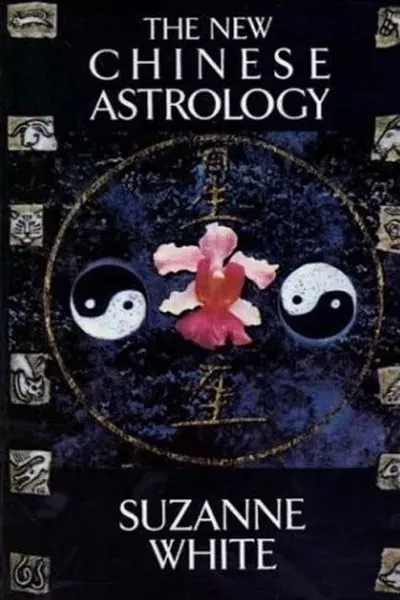
The new Chinese astrology

 77
77

The new Chinese astrology
Suzanne White’s *The New Chinese Astrology* moves beyond the surface-level animal signs to illuminate the subtler, yet more impactful, elemental influences. While the 2016 publication date situates it within contemporary esoteric discourse, its strength lies in grounding the reader in the ancient philosophical underpinnings of the Chinese system. White effectively explains the interplay of the five elements – Wood, Fire, Earth, Metal, Water – demonstrating how they modify the inherent traits of each animal sign. A minor limitation, however, is that the sheer volume of information on elemental combinations can, at times, feel overwhelming for a complete novice, requiring careful re-reading. The section detailing the compatibility between different elemental-animal pairings, particularly the nuanced explanations of why certain combinations are harmonious or challenging, is a standout feature. It provides a practical framework for understanding relationships that feels both insightful and actionable.
This book offers a solid, accessible entry into a sophisticated astrological tradition.
📝 Description
77
Suzanne White's 2016 book re-examines the Chinese zodiac with a focus on elemental interactions.
Suzanne White's *The New Chinese Astrology*, published in 2016, goes beyond the familiar twelve animal signs of the Chinese zodiac. It details how the five elements—Wood, Fire, Earth, Metal, and Water—interact and influence personality, destiny, and relationships. The book serves as an introduction for those new to Chinese astrology and a reference for those familiar with Eastern astrological ideas.
Readers interested in Chinese cosmology will find value in this work. It explains the cyclical nature of time in Chinese tradition, how animal and element cycles shape human experience, and offers practical applications for self-awareness and understanding interpersonal dynamics. The book covers the twelve animal signs and the five-element cycle, which together create 60-year cycles for more detailed interpretation.
The Chinese astrological system has ancient roots in Chinese philosophy and cosmology, particularly the Taoist concepts of Yin and Yang and the Five Elements theory. Formalized during the Han Dynasty, this tradition became more accessible in the West in the mid-20th century. White's 2016 publication engages with this tradition by presenting its complexities in a modern, understandable way, contrasting with some earlier Western interpretations.
💡 Why Read This Book?
• Gain insight into the 60-year elemental cycles, understanding how the five elements (Wood, Fire, Earth, Metal, Water) specifically modify the characteristics of the 12 animal signs, a depth not found in simpler zodiac guides. • Learn to analyze personal compatibility beyond just the animal sign, by exploring the elemental interactions between individuals, as detailed in the book's relationship sections. • Discover the significance of the Yin and Yang principles within Chinese astrology, and how their balance is expressed through the animal and elemental combinations, offering a deeper cosmological perspective.
⭐ Reader Reviews
Honest opinions from readers who have explored this book.
❓ Frequently Asked Questions
When was The New Chinese Astrology by Suzanne White first published?
Suzanne White's *The New Chinese Astrology* was first published in 2016, offering a contemporary perspective on this ancient system.
What are the five elements in Chinese astrology?
The five elements are Wood, Fire, Earth, Metal, and Water. These elements are integral to Chinese astrology, adding layers of complexity and nuance to the twelve animal signs.
How does Chinese astrology differ from Western astrology?
Chinese astrology is based on a 12-year cycle of animals and a 60-year cycle incorporating the five elements, rooted in Taoist philosophy. Western astrology typically uses a 12-month cycle based on constellations and planetary positions.
Can this book help me understand relationships?
Yes, *The New Chinese Astrology* explores compatibility between different animal signs and elemental combinations, providing insights into the dynamics of personal relationships.
Is The New Chinese Astrology suitable for beginners?
The book is designed to be accessible to newcomers while also offering depth for those already familiar with Chinese astrological concepts, explaining its core principles clearly.
What is the significance of the 60-year cycle in Chinese astrology?
The 60-year cycle combines the 12 animal signs with the five elements (in their Yin and Yang forms), creating a more detailed and individualized astrological profile for each year.
🔮 Key Themes & Symbolism
The Twelve Animal Signs
Each of the twelve animals—Rat, Ox, Tiger, Rabbit, Dragon, Snake, Horse, Goat, Monkey, Rooster, Dog, and Pig—represents a year within the Chinese zodiac. White details the inherent characteristics, strengths, and potential challenges associated with each sign. Understanding these archetypes is foundational to Chinese astrology, offering a lens through which to view personality traits and life paths. The book elaborates on how each animal sign interacts with the prevailing elemental energies of its birth year, adding significant depth beyond simple yearly predictions.
The Five Elemental Cycles
Central to *The New Chinese Astrology* is the concept of the five elements: Wood, Fire, Earth, Metal, and Water. These elements are not static but exist in a dynamic cycle of creation and destruction, influencing all aspects of life. White explains how each element is associated with specific years, creating a more complex astrological framework than the 12-year animal cycle alone. The interaction between an individual's birth element and their animal sign, as well as the elements of others, is crucial for understanding personal destiny and relationships.
Yin and Yang Balance
The principles of Yin and Yang, fundamental to Taoist philosophy, are deeply integrated into Chinese astrology. White explores how these complementary forces, representing feminine/passive and masculine/active energies respectively, manifest within the zodiac. Each animal sign and element possesses a Yin or Yang quality, and the balance or imbalance of these energies in an individual's chart is seen as significant for health, temperament, and overall life harmony. The book guides readers in recognizing and potentially harmonizing these energies within themselves.
Astrological Compatibility
Beyond basic animal sign pairings, *The New Chinese Astrology* looks at the intricate web of elemental and energetic compatibility. White provides detailed analyses of how different combinations of animal signs and birth elements interact, influencing romantic relationships, friendships, and business partnerships. Understanding these dynamics can help individuals navigate interpersonal relationships more effectively, recognizing potential areas of harmony and conflict based on the deep-seated energies of their birth charts.
💬 Memorable Quotes
Direct passages from the work, attributed to the author.
“The 60-year cycle is the true engine of Chinese astrology.”
— This highlights the author's view that the more complex 60-year cycle, which incorporates both the 12 animals and the 5 elements, offers a more profound and accurate astrological reading than the simpler 12-year animal cycle alone.
“Each animal sign has a Yin and a Yang aspect.”
— This emphasizes that the personality traits associated with an animal sign are not monolithic. The interplay of Yin and Yang energies, as explained in the book, adds nuance and complexity to an individual's astrological profile.
“Elemental clashes can create friction in relationships.”
— This interpretation points to the practical application of elemental analysis in understanding interpersonal dynamics. Recognizing potential elemental conflicts within a relationship can provide insight and strategies for managing disagreements.
“The Dragon is often seen as the most powerful sign.”
— This is a commonly held belief within Chinese astrology regarding the Dragon sign, often associated with imperial power and good fortune. White likely explores the specific elemental influences that contribute to the Dragon's perceived strength.
💡 Key Ideas
Editorial paraphrase of the work's core concepts — not direct quotes.
Wood fuels Fire, Fire creates Earth (ash), Earth bears Metal, Metal collects Water, Water nourishes Wood.
This quote expresses the 'creation cycle' of the five elements, illustrating their interdependent relationship. Understanding this cycle is key to interpreting how different elemental energies interact and influence each other within an astrological chart.
🌙 Esoteric Significance
Tradition
This work aligns with the broader tradition of Chinese cosmology, which is deeply intertwined with Taoism and ancient philosophical systems. It draws heavily on the principles of Yin and Yang and the Five Elements (Wu Xing), which are foundational to understanding the cyclical and interconnected nature of the universe in Chinese thought. While not strictly part of a Western esoteric lineage like Hermeticism or Kabbalah, it represents a significant branch of Eastern esoteric knowledge that has gained global recognition and study.
Symbolism
Key symbols include the twelve animals of the zodiac, each representing specific archetypes and cycles of time. The Five Elements (Wood, Fire, Earth, Metal, Water) are also potent symbols, representing fundamental forces and stages of transformation. Their cyclical interactions—generation and destruction—form a core symbolic language for understanding cosmic and human processes. The concept of Yin and Yang, often depicted as a balanced circle, symbolizes the complementary duality present in all phenomena.
Modern Relevance
Contemporary practitioners of mindfulness, comparative religion scholars, and those interested in holistic self-improvement often draw upon Chinese astrological principles. Schools of thought focusing on cyclical time, elemental balance, and personality typing, influenced by various global traditions, find resonance in White's explanations. The book serves as a bridge for modern audiences seeking to integrate ancient Eastern wisdom into contemporary life, particularly in areas of personal development and relationship dynamics.
👥 Who Should Read This Book
• Individuals curious about non-Western astrological systems, seeking to understand the fundamental concepts of the Chinese zodiac and its elemental influences. • Those interested in self-discovery and personal growth, looking for tools to analyze their personality, strengths, and potential challenges through the lens of Chinese cosmology. • Readers exploring relationship dynamics, wanting to learn how elemental and animal sign interactions can impact compatibility and interpersonal harmony.
📜 Historical Context
Suzanne White's *The New Chinese Astrology*, published in 2016, enters a field with a long and varied history. Chinese astrology, with its roots in ancient Chinese astronomy and philosophy, has been a continuous tradition for millennia, evolving alongside concepts like the Five Elements theory, which became prominent during the Han Dynasty (206 BCE – 220 CE). Western engagement with Chinese astrology surged in the 20th century, particularly from the 1970s onwards, as esoteric and Eastern philosophies gained wider traction. White's work is part of this modern wave, aiming to explain the system for a global audience. It engages with established interpretations while offering a contemporary, accessible framework. This contrasts with earlier, sometimes more academic, Western studies or simplified popularizations that might have focused solely on the 12 animal signs without fully integrating the elemental system.
📔 Journal Prompts
The specific combination of your birth animal and element.
The concept of elemental creation and destruction cycles.
How Yin and Yang manifest in your daily life.
The characteristics of the Rat and its elemental interactions.
Your personal compatibility with the Dragon sign.
🗂️ Glossary
Wu Xing
The Chinese term for the Five Elements: Wood, Fire, Earth, Metal, and Water. These are considered fundamental forces that influence all aspects of the universe and human life.
Yin and Yang
Two complementary and opposing forces that are fundamental to Chinese philosophy. Yin is associated with darkness, passivity, and femininity, while Yang is associated with light, activity, and masculinity.
Animal Signs
The twelve zodiac animals (Rat, Ox, Tiger, Rabbit, Dragon, Snake, Horse, Goat, Monkey, Rooster, Dog, Pig) that represent years in the Chinese lunar calendar, each with distinct characteristics.
Elemental Cycle
The dynamic interplay between the Five Elements, comprising both a productive (creation) and destructive cycle, which governs interactions and transformations in nature and astrology.
Ba Zi (Four Pillars of Destiny)
A complex system of Chinese astrology that uses an individual's birth date and time to create a chart based on the Heavenly Stems and Earthly Branches, including animal signs and elements.
Earthly Branches
The twelve Earthly Branches, which correspond to the twelve animal signs, used in Chinese astrology and calendar systems.
Heavenly Stems
The ten Heavenly Stems, which correspond to the five elements in their Yin and Yang forms, used in conjunction with the Earthly Branches in Chinese astrology.
🔮 Readers Also Liked
Browse all →








More by Suzanne White
All books →


More Free Astrology & Cosmology Books
View all →![Anonymous [notes on astrology in medical practice], undated](/img/thumb/anonymous-notes-on-astrology-in-medical-practice-undated.webp)