Let Us Learn Astrology
 73
73

Let Us Learn Astrology
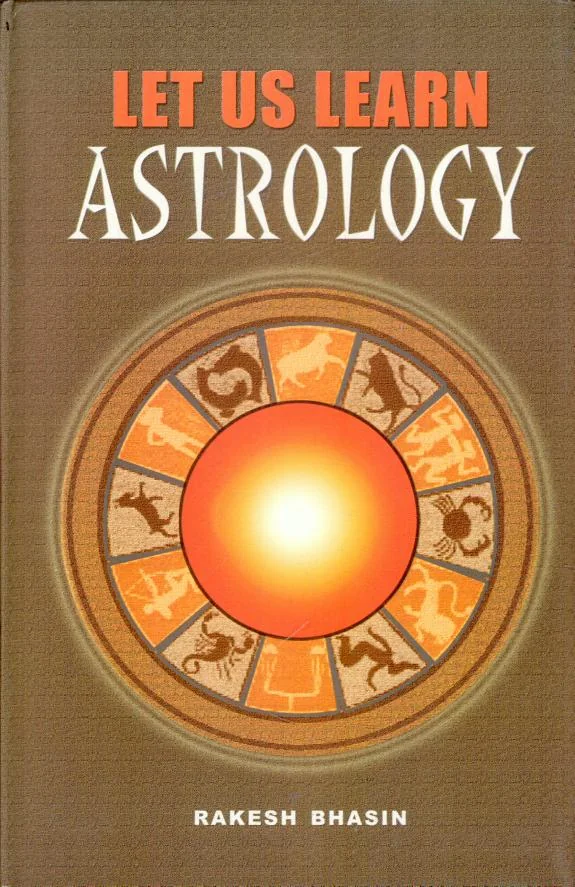
Rakesh Bhasin's 'Let Us Learn Astrology' attempts to bridge the gap between the popular, often superficial, understanding of horoscopes and the deeper, more complex system of astrological interpretation. The book's strength lies in its earnest effort to re-ground astrological concepts in their celestial origins, a refreshing counterpoint to purely symbolic or psychological approaches. It succeeds in highlighting how modern life has created a disconnect from the sky, a crucial point for anyone seeking genuine astrological literacy. However, the text occasionally feels like a foundational primer rather than an exploration of advanced astrological thought. While it details the building blocks – planets, signs, houses – it could benefit from more dynamic examples illustrating their intricate interactions and predictive applications beyond the initial setup. The section discussing the 'sky that is mapped in the horoscope' effectively captures the book's core thesis. Overall, it serves as a diligent, if somewhat dry, introduction for those willing to learn the mechanics.
📝 Description
73
Rakesh Bhasin's 2009 book, 'Let Us Learn Astrology,' demystifies astrological principles beyond horoscopes.
Published in 2009, 'Let Us Learn Astrology' by Rakesh Bhasin aims to reintroduce readers to the mechanics behind astrological interpretation. The book moves past the common understanding of astrology as simply horoscope readings. Instead, it focuses on how to read a horoscope as a map of the sky, connecting the cosmic background and its interpretation. Bhasin acknowledges how modern life often pulls attention away from the sky, making celestial patterns seem remote. The work is intended for those curious about astrology's core concepts, especially if they find simplified modern versions unsatisfying. It is suited for students of esoteric traditions who want a deeper grasp of planetary influences and charting methods. Readers interested in the historical links between astronomy and divination will find this book valuable. It also benefits those who have seen astrological charts but desire to understand the underlying logic and observational basis, not just predictive outcomes.
Bhasin's book addresses the historical development of astrology, noting its deep roots in ancient civilizations that meticulously recorded celestial observations. It traces the practice's evolution from Babylonian records to Hellenistic texts. The work appears at a time when astrology has largely divided into popular horoscopes and more specialized studies. The early 21st century saw a renewed interest in esoteric subjects, often as a response to secular materialism. This book fits within that intellectual current, seeking to re-establish a connection between the sky and its human interpretation.
Astrology's roots are deeply embedded in ancient civilizations across the East and West, where celestial observations were meticulously recorded to understand cosmic consequences. From Babylonian astronomical records to Hellenistic astrological treatises, the practice evolved over millennia. Bhasin's work arrives in an era where astrology has largely bifurcated into popular horoscopes and more academic or practitioner-focused studies. The early 21st century saw a resurgence of interest in esoteric subjects, often driven by a desire to find meaning beyond secular materialism. This book situates itself within that broad intellectual current, seeking to re-establish a connection between the sky and its human-interpreted significance.
💡 Why Read This Book?
• Gain a foundational understanding of how planets, signs, and houses form the bedrock of astrological interpretation, moving beyond simplistic horoscope readings. • Grasp the distinction between the actual celestial sphere and the symbolic map of a horoscope, as emphasized in the book's early chapters. • Connect with the historical roots of astrology by understanding its ancient observational basis, a perspective often lost in modern astrological discourse.
⭐ Reader Reviews
Honest opinions from readers who have explored this book.
❓ Frequently Asked Questions
When was 'Let Us Learn Astrology' first published?
'Let Us Learn Astrology' by Rakesh Bhasin was first published on January 1, 2009, making it a relatively contemporary guide to classical astrological principles.
What distinguishes this book from typical horoscope columns?
This book differentiates itself by focusing on the underlying celestial mechanics and the comprehensive mapping of the sky, rather than providing generalized daily horoscopes.
Is this book suitable for absolute beginners in astrology?
Yes, the book is structured to guide newcomers through the fundamental concepts, aiming to build a solid understanding from the ground up.
Does the book discuss the Western astrological tradition?
While the blurb mentions ancient civilizations broadly, the book's focus on planetary positions against fixed stars and horoscope mapping aligns with core tenets of Western astrology.
What is the author's perspective on modern life and astrology?
The author suggests that modern, busy lives disconnect people from observing the sky, leading to a superficial understanding of astrology divorced from its celestial origins.
Does the book require prior knowledge of astronomy?
While some familiarity with basic astronomical concepts can be helpful, the book is designed to introduce astrological principles, implying it provides necessary context.
🔮 Key Themes & Symbolism
Celestial Mechanics
The book emphasizes that true astrological understanding requires engaging with the actual positions and movements of celestial bodies. It argues against viewing astrology as merely symbolic prediction, instead stressing the importance of the 'sky that is mapped in the horoscope.' This involves recognizing the intricate dance of planets against the backdrop of fixed stars, a perspective rooted in ancient astronomical observation and calculation. Bhasin seeks to restore a connection to the tangible cosmos that informs astrological interpretation.
Horoscope as a Map
A central theme is the concept of the horoscope not as a static prediction, but as a dynamic map of celestial relationships at a specific moment. The work aims to illuminate how this map, derived from precise astronomical data, reflects potential influences and energies. It critiques the modern tendency to treat horoscopes as disconnected pieces of paper, advocating instead for an appreciation of the intricate celestial architecture they represent. This perspective encourages a deeper, more analytical engagement with astrological charts.
Reconnecting with the Sky
Bhasin addresses the challenge posed by modern, fast-paced lifestyles that often alienate individuals from the natural world, including the sky. The book posits that this detachment contributes to a superficial understanding of astrology. By encouraging readers to learn the principles of celestial mapping, it aims to foster a renewed awareness of the cosmos and its relationship to human experience, framing astrology as a bridge between the terrestrial and the celestial.
Ancient Wisdom
The work draws upon the historical practice of ancient civilizations that meticulously recorded planetary positions and their perceived consequences. It positions astrology as a continuation of this long-standing human endeavor to find meaning in celestial phenomena. By grounding its teachings in these historical precedents, the book seeks to lend authority and depth to its exposition, presenting astrology as a sophisticated system with ancient roots rather than a modern invention.
💬 Memorable Quotes
Direct passages from the work, attributed to the author.
“Astrology for us today ends up with a horoscope on a piece of paper; actually forgetting the sky that is mapped in the horoscope; as if these two were two different things.”
— This statement captures the book's primary critique of contemporary astrological practice. It highlights the disconnect between the symbolic representation (the horoscope) and its origin in the actual celestial configuration (the sky), suggesting a loss of fundamental understanding.
“Modern day life has become increasingly busy leaving no time to look up to the sky, even for a while.”
— This observation points to a societal shift that Bhasin sees as detrimental to astrological literacy. The fast pace of modern existence is presented as a barrier to the contemplative observation necessary for a deeper connection with celestial phenomena.
“Whether east or west almost all the ancient civilizations recorded the position of planets against the backdrop of fixed stars and the consequence thereof.”
— This highlights the universality and antiquity of astrological practice. It frames the study of astrology as a return to ancient wisdom and a recognition of a cross-cultural human impulse to understand cosmic influence.
“The sky remains too near yet too far.”
— This evocative phrase captures the paradoxical relationship modern individuals have with the cosmos. The celestial realm is physically present but psychologically and experientially distant due to cultural and lifestyle changes.
“Let Us Learn Astrology”
— The title itself serves as a direct invitation and directive. It positions the book as a pedagogical tool, encouraging active learning and engagement with astrological principles rather than passive consumption of predictions.
🌙 Esoteric Significance
Tradition
This work aligns with the Western Esoteric tradition, particularly its astrological branch. It draws upon the foundational principles shared across Hermeticism and other systems that view the cosmos as a reflection of divine order and human destiny. By emphasizing the study of planetary positions and their correspondences, Bhasin's book participates in the Hermetic principle 'As Above, So Below,' seeking to understand terrestrial events through celestial configurations.
Symbolism
The book engages with core astrological symbols: planets (representing archetypal forces), zodiac signs (detailing the qualities and energies of celestial segments), and houses (mapping these energies onto different areas of life). The 'sky mapped in the horoscope' is itself a primary symbol, representing the unique energetic imprint of a given moment. The juxtaposition of the 'near yet far' sky highlights the symbolic distance modern society perceives from the tangible cosmos.
Modern Relevance
Contemporary practitioners of evolutionary astrology, psychological astrology, and even some modern Vedic astrologers might find value in Bhasin's emphasis on foundational principles. Thinkers seeking to bridge the gap between ancient wisdom and modern scientific perspectives, or those interested in the historical development of astrological thought, also represent a modern audience. The work's call to reconnect with celestial observation appeals to current discussions on mindfulness and reconnecting with natural cycles.
👥 Who Should Read This Book
['• Beginning students of Western astrology seeking a structured introduction to core concepts like planets, signs, and houses.', "• Individuals interested in the historical relationship between astronomy and divination who want to understand astrology's observational roots.", '• Readers disillusioned with superficial horoscope readings, looking for a deeper, more mechanistic understanding of astrological charts.']
📜 Historical Context
Rakesh Bhasin's 'Let Us Learn Astrology' emerged in 2009, a period marked by a resurgence of interest in esoteric and metaphysical subjects, often as a counter-response to perceived limitations in purely materialistic worldviews. This era saw a proliferation of online resources and a renewed engagement with older traditions, though often through a fragmented lens. Historically, astrology itself has a lineage stretching back to Babylonian and Hellenistic periods, where astronomical observation and divination were intrinsically linked. By the early 20th century, figures like Dane Rudhyar were already attempting to synthesize astrological concepts with modern psychology. Bhasin's work enters this landscape seeking to re-establish a connection with the 'sky that is mapped,' a departure from purely psychological or predictive models. The reception of such works in the early 21st century often involved navigating a public sphere skeptical of astrology, while academic circles largely relegated it to the history of science or cultural studies, rarely engaging with contemporary practice directly.
📔 Journal Prompts
The concept of the 'sky that is mapped in the horoscope' and its perceived separation from the actual sky.
Modern life's impact on celestial observation and its consequence for astrological understanding.
The ancient civilizations' recording of planetary positions and their perceived 'consequence thereof'.
The feeling of the sky being 'too near yet too far'.
Personal experiences with horoscopes versus a deeper study of astrological charts.
🗂️ Glossary
Horoscope
A symbolic map representing the positions of celestial bodies at a specific moment in time, typically used for astrological interpretation.
Planets
In astrology, celestial bodies (Sun, Moon, Mercury, Venus, Mars, Jupiter, Saturn, Uranus, Neptune, Pluto) whose positions and movements are considered significant.
Fixed Stars
Celestial bodies that appear stationary relative to the solar system, distinct from the planets that move through the zodiac.
Celestial Mechanics
The study of the movements and physical-)(" relations of celestial objects, forming the observational basis for astrological calculations.
Zodiac Signs
Twelve divisions of the ecliptic, each spanning 30 degrees, associated with specific symbolic meanings and archetypes.
Houses
Twelve divisions of the celestial sphere, originating from the horizon and meridian at the time of birth, representing different life areas.
Consequence Thereof
Refers to the perceived effects or outcomes on terrestrial matters and human lives resulting from the positions and interactions of celestial bodies.
This book appears in 1 collection
🔮 Readers Also Liked
Browse all →









From the “Mundane Astrology” Collection
View all →









More Free Astrology & Cosmology Books
View all →