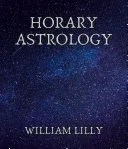
Horary Astrology
 71
71

Horary Astrology
William Lilly's *Horary Astrology* is not a gentle introduction; it is a direct, no-nonsense manual for a potent form of astrological divination. Lilly, writing with the authority of a seasoned practitioner, lays out the rules with an almost legalistic precision. The strength of this text lies in its unvarnished practicality. For instance, the detailed methods for calculating the disposition of planets in relation to the questioner and the queried subject offer a tangible framework for analysis that feels remarkably immediate. However, the sheer density of rules and exceptions, while comprehensive, can be daunting for the modern reader accustomed to more streamlined astrological systems. The section on 'accidental dignities and debilities' requires significant mental effort to fully integrate. Despite this challenge, the book remains a foundational text for anyone serious about understanding horary astrology as it was historically practiced and understood. It demands work, but the potential for direct insight is considerable.
📝 Description
71
William Lilly published Horary Astrology in 1647, a guide to answering specific questions through astrological charts.
Horary astrology, as detailed by William Lilly, is a system for providing direct answers to inquiries. It uses a horoscope cast for the exact moment a question is asked, distinguishing it from the analysis of a birth chart. Lilly lays out the core principles and practical methods for this divinatory practice. The book is aimed at dedicated students of astrology who want to engage with historical techniques. It offers a way to seek concrete answers for concerns ranging from lost items to financial and personal matters. Lilly believed that with focused study, even those of moderate intellectual ability could grasp its fundamentals.
Lilly's work comes from a long tradition of astrology in 17th-century England. His clear writing helped establish horary astrology within the Western esoteric tradition, even during times when occult practices faced suspicion. The book explains how to interpret the Ascendant, Midheaven, planets, signs, and aspects. It also covers the meanings of the twelve houses, which are essential for understanding the subject of any question. Lilly stressed the importance of the astrologer's sincere approach and readiness to receive insight.
William Lilly's *Horary Astrology* is a significant text from 17th-century England's rich astrological environment. It represents a practical application of astrological principles, distinct from natal interpretation. The book emerged during a period where astrology was both a recognized practice and subject to suspicion, particularly after the English Civil War. Lilly's methodical approach ensured the survival and transmission of horary techniques, placing it firmly within the Western esoteric canon alongside other divinatory arts and Hermetic traditions.
💡 Why Read This Book?
• Learn to cast and interpret horary charts, a practice dating back centuries, to gain direct answers to specific questions posed at a particular moment, as detailed in Lilly's foundational text. • Understand the specific astrological significations of the 12 houses and their application to various life areas, enabling you to address concerns about finance, relationships, or lost items. • Grasp the historical astrological methods prevalent in 17th-century England, offering a unique perspective distinct from modern natal astrology and its contemporaries.
⭐ Reader Reviews
Honest opinions from readers who have explored this book.
❓ Frequently Asked Questions
What is horary astrology according to William Lilly?
William Lilly defines horary astrology as a method to answer specific questions by casting a birth chart for the precise moment the question is understood by the astrologer, allowing for direct interpretation of the celestial configuration.
How quickly can one learn horary astrology from this book?
Lilly suggests that with moderate abilities, the elementary difficulties of horary astrology can be mastered in a few days, with full understanding and practice achievable in less than a quarter of a year.
What kind of questions can horary astrology answer?
The book implies that horary astrology can address a wide range of inquiries, from personal matters like relationships and health to practical concerns such as finding lost objects or determining the outcome of ventures.
What astrological knowledge is required before reading Horary Astrology?
While Lilly aims for accessibility, a foundational understanding of basic astrological concepts like planets, signs, houses, and aspects would significantly aid comprehension of the horary techniques presented.
Is this book suitable for beginners in astrology?
Yes, Lilly states that any person of moderate abilities can learn its elementary difficulties. However, a prior grounding in basic astrological principles would enhance the learning experience.
What is the significance of the Ascendant and Midheaven in horary charts?
In horary astrology, the Ascendant (or Rising Sign) typically represents the querent (the questioner), while the Midheaven often signifies the matter or core of the question being asked.
🔮 Key Themes & Symbolism
The Art of the Question
This work emphasizes that the precision of the astrological answer is directly tied to the clarity and sincerity of the question asked. Lilly details how the astrologer must 'receive' the question, making it an important moment. The book guides the reader on discerning when a question is radical and fit for judgment, and when it might be ill-formed or impossible to answer, highlighting the ethical and practical considerations inherent in divination.
Planetary Dignities and Debilities
A core component of Lilly's method involves understanding the essential dignities and accidental strengths or weaknesses of planets. This section meticulously outlines how planets fare in different signs (domicile, exaltation, triplicity, term, face) and discusses their condition based on house placement and aspects. Mastering these concepts is crucial for accurately assessing the power and influence of planetary forces in relation to the question.
The Twelve Houses of Judgment
Lilly systematically applies the twelve astrological houses to horary inquiries, assigning specific meanings to each. From the first house (the querent) to the twelfth (hidden enemies or self-undoing), each house provides a framework for understanding the domain of the question. The book illustrates how to identify which house relates to the subject matter and interpret the planets and signs within it.
Practical Application and Ethics
Beyond theoretical rules, Lilly stresses the practical application of horary astrology in daily life. He provides numerous examples and case studies to illustrate how the principles are used to resolve real-world dilemmas. Equally important is the ethical dimension, urging practitioners to act with integrity and to avoid casting charts for frivolous or malicious purposes.
💬 Memorable Quotes
Direct passages from the work, attributed to the author.
“Horary Astrology... may be speedily learned by any person of even moderate abilities.”
— This statement by Lilly suggests his belief in the inherent accessibility of horary techniques for those willing to apply themselves, countering notions that such arts are solely for the exceptionally gifted.
“If a proposition of any...”
— This fragment points to Lilly's methodical approach, indicating that the validity of a horary judgment depends on the specific conditions and 'propositions' surrounding the question.
“The significations of the Planets, Signs, and Houses, are the foundation upon which all Astrology is built.”
— This principle underscores the fundamental nature of astrological elements. Lilly asserts that a deep understanding of these building blocks is essential before one can effectively interpret a horary chart or any other astrological delineation.
“The Lord of the Ascendant is the principal significator of the Querent.”
— This highlights a key rule in horary interpretation: the ruler of the Ascendant sign is paramount in representing the person asking the question, setting the stage for how they are depicted in the chart.
“When the Moon is void of course, little or no resolution can be expected.”
— This refers to a specific astrological condition where the Moon, often a co-significator, makes no further major aspects before leaving its current sign. Lilly interprets this as an indicator that the matter in question is unlikely to resolve as anticipated.
🌙 Esoteric Significance
Tradition
Horary astrology, as codified by Lilly, firmly belongs to the Western Hermetic tradition, which integrates Neoplatonic philosophy, Pythagorean number theory, and ancient astrological principles. It functions as a practical application of Hermetic maxim 'As Above, So Below,' positing a direct correspondence between the celestial configuration at a specific moment and earthly events. Lilly's work represents a peak in the practical, divinatory branch of this lineage, emphasizing immediate revelation rather than long-term predictive cycles.
Symbolism
Key symbols in horary include the Ascendant, representing the querent, and the Midheaven, often signifying the core of the question or status. Planets act as agents of influence, with their signs and house placements detailing their role and strength. Aspects between planets symbolize the interactions and dynamics of the situation. The Moon, often a secondary significator, represents the unfolding events and the querent's emotional state, its 'void of course' condition being a potent symbol of non-resolution.
Modern Relevance
Contemporary practitioners of Western Esotericism, including many modern astrologers and occultists, still rely heavily on Lilly's methods. His systematic approach and detailed rules provide a robust framework for horary consultations. Thinkers and schools exploring psychological astrology often reinterpret Lilly's concepts through a lens of inner states, while survivalist occult traditions continue to use his techniques for direct, practical answers to pressing concerns.
👥 Who Should Read This Book
['• Aspiring horary astrologers seeking a foundational text that lays out the core principles and techniques with historical authority.', '• Students of Western Esotericism interested in the practical application of astrological divination within the Hermetic tradition.', '• Researchers of 17th-century intellectual history curious about the popular divinatory practices and their practitioners during that era.']
📜 Historical Context
William Lilly's *Horary Astrology*, first published in its complete form in the mid-17th century, emerged during a period of intense intellectual and political upheaval in England. Astrological practice, including horary, was widespread among scholars and the public alike, despite occasional condemnation from religious authorities. Lilly himself was a prominent figure, publishing works that gained significant readership. His approach to horary astrology was highly systematic, drawing on classical sources while refining techniques for practical application. Contemporaries like John Dee, though earlier, also explored similar divinatory arts. Lilly's work stood out for its clarity and comprehensiveness, becoming a standard text that would influence generations of astrologers, even as philosophical movements like the nascent scientific revolution began questioning older forms of divination. Its enduring popularity suggests a persistent human desire for direct answers facilitated by celestial interpretation.
📔 Journal Prompts
The Lord of the Ascendant's condition as depicted in the chart.
The Moon's significations when void of course.
How the Ascendant and Midheaven interact in a horary judgment.
The astrological representation of the querent's primary concern.
The role of accidental dignities in assessing planetary influence.
🗂️ Glossary
Horary Astrology
A branch of astrology focused on answering specific questions based on a chart cast for the exact moment the question is received and understood by the astrologer.
Ascendant
The zodiacal sign and degree rising on the eastern horizon at the moment of the chart's casting, typically representing the querent or the primary subject of the inquiry.
Midheaven (MC)
The highest point in the celestial sphere at the time of the chart's casting, often representing the main matter of the question, career, or public standing.
Lord of the Ascendant
The planetary ruler of the sign on the Ascendant; it is considered the primary significator of the person asking the question (the querent).
Void of Course
A term describing a planet (most critically, the Moon) that has made its last major aspect to another planet and will not make any further aspects before changing signs.
Essential Dignities
The inherent strengths or weaknesses a planet possesses based on its placement in a particular zodiacal sign (e.g., domicile, exaltation, detriment, fall).
Accidental Dignities
The strengths or weaknesses a planet gains or loses based on its position within the houses, its aspects, and its motion (e.g., in an angular house, direct motion).