Encyclopedia of Astrology

 72
72

Encyclopedia of Astrology
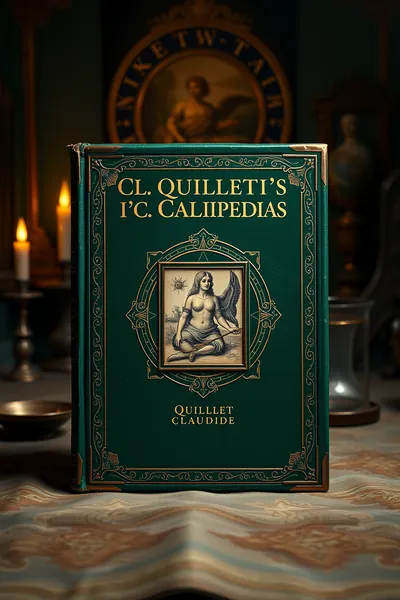
Nicholas DeVore’s Encyclopedia of Astrology presents a formidable attempt to catalog a discipline often perceived as nebulous. Its strength lies in its sheer scope; the work aims for completeness, touching upon myriad facets of astrological lore. I found the section detailing planetary dignities particularly well-articulated, offering a concise yet thorough explanation of essential concepts like essential dignity and accidental dignity. However, the book occasionally suffers from an overwhelming density of information, which, while comprehensive, can sometimes obscure rather than illuminate for the novice. The original blurb's claim of being "highly intelligent" holds true, but the presentation, while factual, could benefit from more interpretive depth in certain areas. It is a valuable reference, but perhaps less of a guided exploration. This encyclopedia serves best as a scholarly index to the vast world of astrological ideas.
📝 Description
72
Nicholas DeVore's Encyclopedia of Astrology was first published in July 2005.
Nicholas DeVore's Encyclopedia of Astrology is a reference work detailing astrological theory and practice. Published in 2005, it aims to present astrological knowledge in a clear, organized manner. The book covers a wide array of principles, including planetary dignities, aspects, house systems, and zodiacal symbolism. It also examines the mythological basis of celestial bodies and their perceived influences.
The work synthesizes centuries of astrological thought, from Hellenistic beginnings to modern psychological approaches. It traces the historical evolution of these concepts through various cultural and intellectual movements. The encyclopedia is structured to be informative and accessible, making it a resource for those studying celestial interpretation. It addresses a need for systematic texts in a field often marked by diverse traditions.
This encyclopedia situates itself within the long tradition of Western esotericism, which has historically incorporated astrology as a key divinatory and cosmological art. DeVore's work draws from a lineage that includes Hellenistic astrology, medieval Arab scholarship, Renaissance hermeticism, and later developments in psychological astrology. It acknowledges the historical role of astrology in understanding human experience and the cosmos, connecting ancient symbolic systems to contemporary interpretations. The book reflects a modern effort to codify and explain these complex traditions for a new generation of students.
💡 Why Read This Book?
• Gain a structured understanding of astrological principles, including concepts like planetary dignities and house systems, directly from a foundational text first published in July 2005, offering a clear reference point beyond ephemeral online interpretations. • Explore the historical lineage of astrological thought, tracing how ideas developed from ancient traditions to the early 21st century, providing context that is crucial for understanding contemporary astrological frameworks. • Access a consolidated overview of astrological symbolism and its mythological roots, enabling a deeper appreciation of the archetypes associated with planets and signs as presented in the work.
⭐ Reader Reviews
Honest opinions from readers who have explored this book.
❓ Frequently Asked Questions
What is the original publication date of the Encyclopedia of Astrology?
The Encyclopedia of Astrology by Nicholas DeVore was first published in July 2005. This edition aimed to consolidate a wide range of astrological knowledge into a single, comprehensive volume for practitioners and students.
Who is Nicholas DeVore and what is his background?
Nicholas DeVore was an author and researcher focused on esoteric and occult subjects. His work, including this encyclopedia, is known for its detailed examination of astrological systems and their historical context.
Does the book cover Western astrological traditions only?
While primarily focused on Western astrological traditions, the Encyclopedia of Astrology by Nicholas DeVore often touches upon the historical and philosophical underpinnings that connect it to broader esoteric and divinatory practices.
Is this book suitable for absolute beginners in astrology?
Yes, the encyclopedia's comprehensive nature makes it suitable for beginners seeking a thorough grounding. Its detailed explanations of concepts like planetary dignities and house systems provide a solid foundation for study.
What are the main subjects covered in the Encyclopedia of Astrology?
The book covers a wide range of subjects including planetary influences, zodiacal signs, astrological houses, aspects, chart interpretation techniques, and the historical development of astrology.
Can I find information on specific astrological techniques like rectification?
The Encyclopedia of Astrology aims for broad coverage. While it details many core techniques, readers interested in highly specialized methods like rectification might need to consult additional sources for in-depth, focused study.
🔮 Key Themes & Symbolism
Astrological Symbolism
The work meticulously details the symbolic language of astrology, exploring the archetypal meanings assigned to the twelve zodiacal signs and the planets. Each celestial body and sign is presented not merely as a marker but as a repository of mythic narratives and psychological energies. DeVore connects these symbols to their historical roots, illustrating how they have been interpreted across different eras and cultures, offering a rich understanding of their enduring significance in Western esotericism.
Planetary Dignities
A core component of the encyclopedia is its in-depth examination of planetary dignities, a system that assesses the strength and nature of a planet's placement within a zodiacal sign. This section clarifies concepts such as essential dignity (domicile, exaltation, triplicity, term, face) and accidental dignity, explaining how these factors influence a planet's expression in a natal chart. Understanding these dignities is presented as crucial for accurate astrological interpretation and prognosis.
House Systems and Interpretation
The encyclopedia provides a comprehensive overview of the twelve astrological houses, the divisions of the celestial sphere that represent different areas of human experience. It discusses various house systems, acknowledging their historical development and differing methodologies. The text elucidates how planets located within these houses, and the rulers of the houses themselves, contribute to the unfolding narrative of an individual's life path and potential challenges.
Historical Development of Astrology
DeVore situates astrology within its broader historical and intellectual context, tracing its evolution from ancient Mesopotamian and Hellenistic roots through medieval Islamic scholarship and Renaissance developments. The work acknowledges the impact of figures and movements that have shaped astrological thought, providing a framework for understanding how contemporary astrological practices are informed by centuries of accumulated knowledge and shifting philosophical paradigms.
💬 Memorable Quotes
Direct passages from the work, attributed to the author.
“Planetary dignities indicate the inherent strength of celestial influences.”
— This distilled idea emphasizes that the 'dignity' of a planet in a chart refers to its fundamental capacity to express its energies, whether harmoniously or discordantly, based on its placement within specific zodiacal signs.
“Aspects are the dynamic relationships between celestial bodies.”
— This interpretation focuses on the concept of aspects as the angular relationships between planets, signifying the interactive patterns and potential tensions or alliances that shape the overall astrological picture.
“The zodiac is a symbolic map of cosmic energies.”
— This statement captures the essence of the zodiac as more than just a division of the sky; it's a symbolic language describing universal forces and archetypes that influence earthly events and human psychology.
“Natal charts reveal potential, not immutable fate.”
— This interpretation underscores the deterministic vs. free-will debate in astrology, suggesting that a birth chart outlines inherent potentials and tendencies rather than a rigidly predetermined life course.
💡 Key Ideas
Editorial paraphrase of the work's core concepts — not direct quotes.
The astrological houses represent the stages of human experience.
This paraphrased concept highlights how the twelve astrological houses are not abstract divisions but are directly linked to the concrete circumstances and life areas of an individual, serving as a framework for understanding personal destiny.
🌙 Esoteric Significance
Tradition
This work firmly resides within the Western Esoteric Tradition, drawing heavily on Hermetic, Neoplatonic, and Kabbalistic streams that have historically informed astrological practice. It synthesizes ancient Hellenistic and medieval Arabic astrological knowledge with later developments, presenting a comprehensive view of a system often considered a form of celestial divination or a language of cosmic correspondences. DeVore's approach, while encyclopedic, implicitly upholds astrology's role as a tool for understanding the macrocosm and its reflection in the microcosm.
Symbolism
Key symbols extensively explored include the twelve zodiacal signs, each representing archetypal energies and stages of development, and the seven classical planets (Sun, Moon, Mercury, Venus, Mars, Jupiter, Saturn), seen as personified cosmic forces. The book details their mythological associations and their perceived influence on human affairs and character, providing a symbolic lexicon essential for interpreting celestial configurations within the esoteric framework.
Modern Relevance
Contemporary practitioners of psychological astrology, evolutionary astrology, and even those exploring mundane astrology (the astrology of world events) frequently reference DeVore's work for its thoroughness. It serves as a foundational text for understanding the classical underpinnings that inform many modern astrological techniques, providing a bridge between historical astrological systems and current interpretive approaches used by astrologers worldwide.
👥 Who Should Read This Book
• Aspiring astrologers seeking a detailed, foundational reference text to build a robust understanding of core astrological principles, including planetary dignities and house systems. • Students of Western Esotericism interested in tracing the historical development and symbolic language of astrology as a key component of occult traditions. • Experienced practitioners looking for a comprehensive compendium to cross-reference specific techniques, historical interpretations, and mythological associations of celestial bodies.
📜 Historical Context
Nicholas DeVore's Encyclopedia of Astrology, first published in July 2005, emerged during a period of renewed public and academic interest in esoteric subjects. The late 20th and early 21st centuries saw a significant resurgence of astrological practice, often intertwined with psychological theories and New Age philosophies, a departure from the more deterministic systems prevalent in earlier eras. DeVore's work aimed to provide a comprehensive, scholarly resource that could stand alongside earlier encyclopedic efforts like Alan Leo's works or the more astrological sections within Madame Blavatsky's Theosophical writings. While not directly engaging with specific contemporary figures in its initial reception, its detailed examination of traditional astrological concepts implicitly responded to the need for foundational texts amidst a proliferation of popularized astrological interpretations. The book’s publication date places it well after the peak of the Theosophical Society's direct influence on astrological literature, yet it benefits from that historical groundwork by offering a more systematized approach.
📔 Journal Prompts
The relationship between planetary dignities and personal strengths.
Symbolic interpretations of the twelve zodiacal signs in daily life.
The role of astrological houses in mapping life experiences.
Reflections on the historical evolution of astrological concepts.
The archetypal narratives of the classical planets.
🗂️ Glossary
Ascendant
The zodiacal sign and degree rising on the eastern horizon at the moment of birth, representing the individual's outward personality and initial approach to life.
Natal Chart
A snapshot of the celestial positions at the precise moment and location of a person's birth, used as the primary tool for astrological interpretation.
Aspect
The angular relationship between two or more planets or sensitive points in an astrological chart, indicating how their energies interact.
Domicile
A zodiacal sign over which a planet is considered to have rulership; it is the sign where the planet is considered most comfortable and strong.
Exaltation
A specific zodiacal sign in which a planet is believed to express its energies particularly powerfully and beneficently, though not necessarily its home sign.
Retrograde
The apparent backward motion of a planet in the sky as observed from Earth, often interpreted in astrology as an inward or re-evaluative influence.
Mundane Astrology
The branch of astrology concerned with the prediction and analysis of world events, politics, and collective phenomena, rather than individual horoscopes.
This book appears in 1 collection
🔮 Readers Also Liked
Browse all →

![ERIC ED476541: Animals of the Chinese Zodiac. [Lesson Plan].](/img/thumb/eric-ed476541-animals-of-the-chinese-zodiac-lesson-plan-eric.webp)





From the “Astrology” Collection
View all →









More Free Astrology & Cosmology Books
View all →