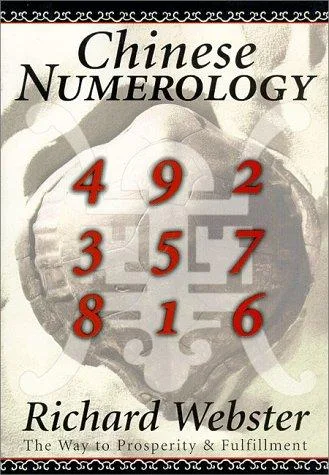
Chinese numerology

 71
71

Chinese numerology
Webster's "Chinese Numerology" presents a refreshingly direct account of a complex subject, eschewing the florid language often found in popular esoteric texts. Its strength lies in its clear exposition of foundational principles, particularly how concepts like the Five Elements (Wu Xing) are integrated with numerical meanings, a departure from purely Western Pythagorean systems. A notable passage details the significance of the number 4, often considered unlucky due to its phonetic similarity to the word for death, illustrating the cultural specificity of numerical symbolism. While the book provides a solid introduction, its analysis can sometimes feel superficial, particularly when attempting to connect ancient principles to modern psychological interpretations. The lack of extensive case studies or advanced predictive techniques might leave seasoned practitioners wanting more depth. Nevertheless, for an accessible overview of this distinct tradition, Webster's work is a competent and informative starting point.
📝 Description
71
### What It Is Richard Webster's "Chinese Numerology" offers a comprehensive guide to the ancient art of assigning numerical significance to people, events, and the cosmos as understood in traditional Chinese culture. It moves beyond simple calculations, exploring the philosophical underpinnings and practical applications of numbers within this rich tradition. The work details how different numbers are believed to influence personality, relationships, and fortune, providing a framework for understanding life through a numerical lens.
### Who It's For This book is for anyone intrigued by the symbolic power of numbers, particularly those interested in non-Western esoteric systems. It serves students of comparative spirituality, practitioners seeking to integrate diverse divinatory tools, and individuals curious about the cultural expressions of numerological thought. Readers seeking to understand the historical and cultural context of Chinese numerology will find it particularly valuable.
### Historical Context Webster's work situates Chinese numerology within its broader cultural and philosophical landscape. While modern Western numerology often traces its roots to Pythagoras and Kabbalah, Chinese numerology developed independently, deeply intertwined with concepts like Yin and Yang, the Five Elements, and the I Ching. This book acknowledges the long history of numerical symbolism in China, which predates many formalized Western esoteric traditions, and highlights its enduring presence in art, architecture, and daily life.
### Key Concepts The book systematically breaks down the meaning and influence of individual numbers, from the perceived auspiciousness of 8 to the challenges associated with 4. It explores how these numbers interact within personal charts, family dynamics, and even city planning, reflecting a worldview where numerical harmony is paramount. The text also touches upon the cyclical nature of time and destiny as perceived through numerical patterns, offering a distinct perspective compared to linear Western models.
💡 Why Read This Book?
• Gain practical insights into assigning numerical values to dates and names according to Chinese traditions, moving beyond Western approaches. • Understand the specific cultural interpretations of numbers like 4 and 8, which differ significantly from their Western counterparts, as discussed in the book's numerical breakdowns. • Explore the connection between numerology and the Five Elements (Wu Xing) theory, a core concept in Chinese philosophy absent in many Western numerology systems.
⭐ Reader Reviews
Honest opinions from readers who have explored this book.
❓ Frequently Asked Questions
What is the primary difference between Chinese and Western numerology?
Chinese numerology is deeply embedded in the nation's philosophical and cosmological systems, such as Yin and Yang and the Five Elements. Western numerology often draws from Pythagorean and Kabbalistic traditions, focusing more on personal destiny numbers derived from birth dates and names.
How does the number 4 fare in Chinese numerology?
The number 4 is generally considered inauspicious in Chinese numerology due to its pronunciation being similar to the word for 'death'. This phonetic association impacts its interpretation in various contexts, from addresses to phone numbers.
Can Chinese numerology be used for relationship compatibility?
Yes, the work explores how numerical interactions derived from birth dates and names can be used to assess compatibility between individuals within the Chinese framework, considering the harmonious or conflicting influences of numbers.
What role do the Five Elements play in Chinese numerology?
The Five Elements (Wood, Fire, Earth, Metal, Water) are integral, with numbers often associated with specific elements. Their interplay influences personality, fortune, and health, adding a layer of complexity to numerical interpretations.
Is Webster's 'Chinese Numerology' suitable for beginners?
Absolutely. The book is structured to introduce foundational concepts clearly, making it accessible for those new to numerology or specifically interested in Chinese systems without prior esoteric knowledge.
When was Richard Webster's 'Chinese Numerology' first published?
Richard Webster's "Chinese Numerology" was first published in 1998, making it a relatively contemporary entry into the study of traditional esoteric systems.
🔮 Key Themes & Symbolism
The Auspiciousness of Numbers
The book meticulously details how individual numbers are perceived within Chinese culture, highlighting those considered fortunate and those deemed unlucky. For instance, the number 8 is highly prized for its phonetic resemblance to the word for 'prosperity,' influencing everything from wedding dates to business ventures. Conversely, the number 4, sounding like 'death,' is often avoided. This section examines the cultural and linguistic roots of these associations, demonstrating how numerical symbolism is woven into the fabric of daily life and belief systems, impacting decisions and shaping perceptions of destiny.
Numerology and the Five Elements
A core aspect of Chinese numerology, as presented by Webster, is its integration with the Five Elements theory (Wu Xing): Wood, Fire, Earth, Metal, and Water. Each number is often linked to one or more of these elements, creating a dynamic system where numerical influences interact with elemental energies. This interplay is crucial for understanding personality traits, health predispositions, and the compatibility between individuals. The work explores how these elemental associations contribute to a holistic view of cosmic and human harmony.
Personal Destiny and Numerical Charts
Webster guides readers through constructing and interpreting personal numerological charts based on birth dates and names within the Chinese system. Unlike some Western methods, this approach often considers the cyclical nature of time and the specific influences of numbers on different life stages. The book explains how to analyze the combinations of numbers and their elemental associations to gain insights into an individual's character, potential challenges, and opportunities, offering a framework for self-understanding and foresight.
Cosmic Harmony and Numerical Order
The book posits that Chinese numerology is not merely a tool for personal divination but reflects a deeper philosophical understanding of the universe as an ordered system governed by numerical principles. Concepts like Yin and Yang, and the balance of elements, are seen as manifestations of this underlying numerical order. The text explores how this worldview influences various aspects of Chinese culture, from traditional medicine and martial arts to Feng Shui and the design of imperial palaces, emphasizing the pursuit of balance and auspiciousness.
💬 Memorable Quotes
“The number 8 is considered highly auspicious because it sounds like the word for prosperity.”
— This highlights the phonetic basis for much of Chinese numerology, where the sound of a number's name can be more significant than its abstract mathematical value, directly linking it to desired outcomes like wealth.
“The number 4 is often avoided due to its similarity in pronunciation to the word for death.”
— This illustrates the cultural specificity of numerical beliefs, showing how negative associations can arise from linguistic coincidences, leading to practical avoidance in naming, numbering, and scheduling.
“Understanding the interplay of numbers and the Five Elements is key to interpreting a personal chart.”
— This emphasizes that Chinese numerology is a complex system, not just about individual numbers, but their dynamic relationships and connections to broader cosmological principles like the Wu Xing.
“Harmony in numerology reflects cosmic balance.”
— This paraphrase suggests that the ultimate goal of applying numerological principles in a Chinese context is to align oneself with the perceived natural order of the universe, seeking balance and auspiciousness.
“Personal destiny is influenced by numerical patterns derived from birth information.”
— This interpretation points to the predictive aspect of the practice, suggesting that an individual's life path and fortune can be understood and potentially influenced by analyzing the numerical configurations associated with their birth.
🌙 Esoteric Significance
Tradition
Chinese numerology operates within a distinct esoteric lineage rooted in ancient Chinese cosmology and philosophy, rather than Western Hermetic or Kabbalistic traditions. It is intrinsically linked to Taoism, Confucianism, and indigenous folk beliefs. Its significance lies in its comprehensive integration with concepts like Yin and Yang, the Five Elements (Wu Xing), and the I Ching, offering a holistic worldview where numbers are not abstract symbols but active forces influencing the balance of the cosmos and human affairs.
Symbolism
Key symbols include the numbers themselves, each carrying specific energetic qualities and associations (e.g., 8 for prosperity, 4 for death). The Five Elements (Wood, Fire, Earth, Metal, Water) are paramount, acting as fundamental archetypes whose interactions, governed by numerical cycles, dictate harmony or conflict. The Yin and Yang duality also informs numerical interpretations, categorizing numbers and their influences as passive/receptive or active/assertive, contributing to a balanced understanding of cosmic forces.
Modern Relevance
Contemporary practitioners of Feng Shui often draw upon the numerical and elemental principles detailed in works like Webster's to harmonize living spaces. Furthermore, scholars of comparative religion and cultural anthropologists examine Chinese numerology as a vital aspect of Chinese cultural identity and belief systems. Its principles also subtly influence global interpretations of East Asian aesthetics and business practices, where auspicious numbers are still a consideration.
👥 Who Should Read This Book
• Students of comparative esoteric systems: Those seeking to understand how different cultures conceptualize numerical symbolism beyond the Western Pythagorean model. • Individuals interested in Chinese philosophy and culture: Readers curious about the practical application of concepts like Yin/Yang and the Five Elements in daily life and divination. • Aspiring practitioners of Feng Shui or Chinese astrology: Individuals looking for foundational knowledge on how numbers and elements interact to influence fortune and environment.
📜 Historical Context
Published in 1998, Richard Webster's "Chinese Numerology" emerged during a period of increased global interest in Eastern philosophies and esoteric practices, following the New Age movements of previous decades. While Western esoteric traditions like Hermeticism and Kabbalah had long been documented, detailed explorations of distinctly Chinese systems were less common in mainstream English-language publishing. Webster's work entered a landscape where comparative spirituality was gaining traction, offering an accessible entry point to a tradition deeply rooted in ancient Chinese cosmology, distinct from the Pythagorean systems prevalent in Western numerology. Its reception was part of a broader trend that saw practitioners and academics alike seeking to understand diverse cultural expressions of divination and symbolic thought, moving beyond Eurocentric perspectives. This book contributed to the growing body of literature making non-Western esoteric knowledge more widely available.
📔 Journal Prompts
The numerological significance of the number 8 in Chinese culture.
Personal reflections on the Five Elements (Wu Xing) and their relation to your birth date.
How the avoidance of the number 4 impacts daily life in Chinese communities.
Analyzing the numerical patterns in your own birth date using the principles from the book.
The concept of cosmic harmony as expressed through Chinese numerology.
🗂️ Glossary
Wu Xing
The Five Elements: Wood, Fire, Earth, Metal, and Water. They are fundamental forces in Chinese cosmology, believed to interact in cycles of creation and destruction, influencing all phenomena.
Yin and Yang
The concept of complementary, interconnected opposites that form a dynamic whole. In numerology, numbers can be classified as Yin (passive, receptive) or Yang (active, assertive).
Auspicious Numbers
Numbers considered lucky or fortunate in Chinese culture, often due to phonetic similarities with words for wealth, prosperity, or happiness (e.g., 8, 6, 9).
Inauspicious Numbers
Numbers considered unlucky or associated with negative concepts, typically due to pronunciation or historical context (e.g., 4, associated with death).
Personal Numbers
Numerical values derived from an individual's birth date and/or name, used to analyze personality traits, potential, and life path within the Chinese numerological system.
Phonetic Association
The practice of assigning meaning to numbers based on how their names sound in Mandarin or Cantonese, often linking them to positive or negative concepts.
I Ching
The ancient Chinese divination text, also known as the Book of Changes. While not solely numerological, its hexagrams and associated concepts often intersect with numerical systems.