Chinese Mathematical Astrology
 75
75

Chinese Mathematical Astrology
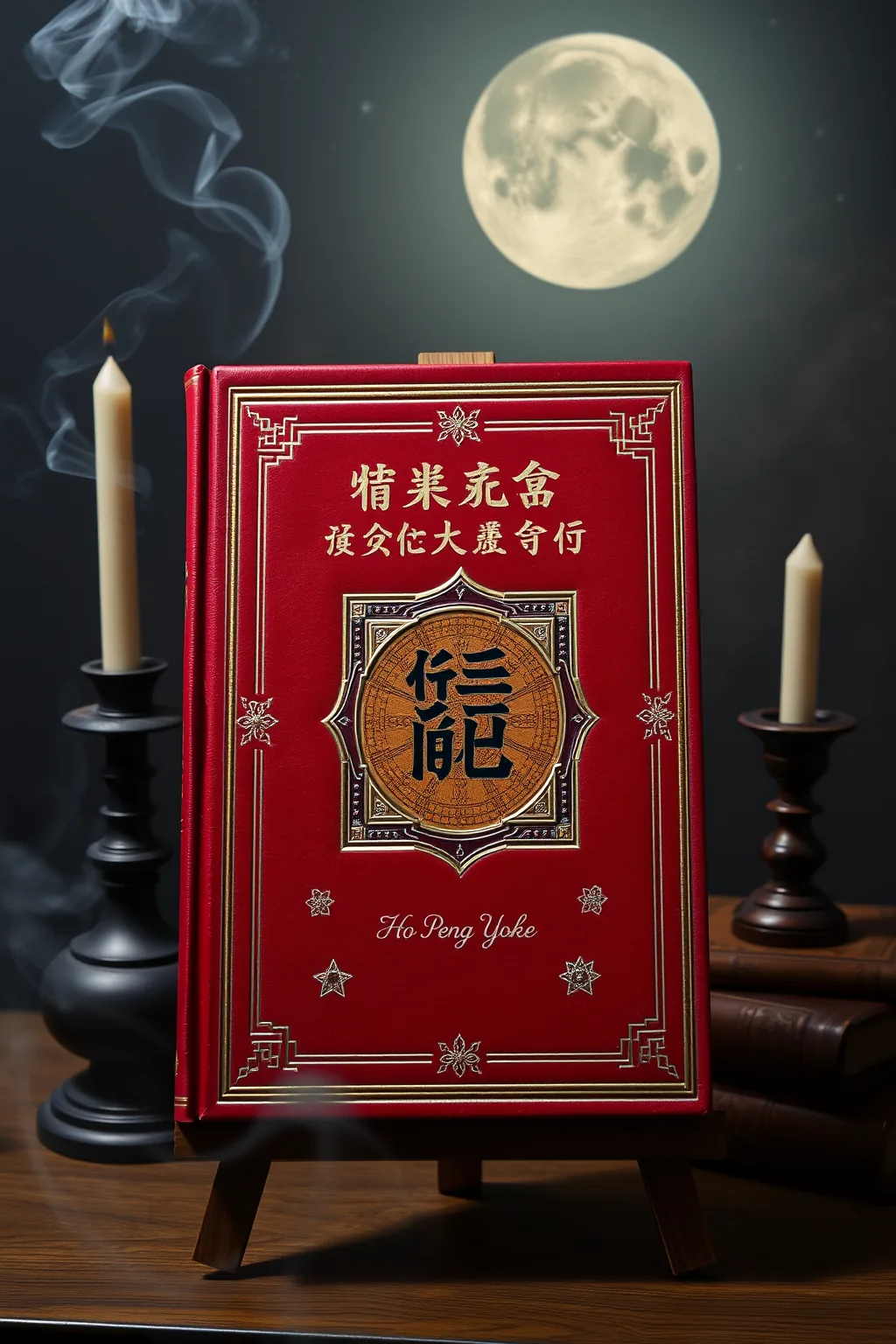
Ho Peng Yoke’s *Chinese Mathematical Astrology* offers a dense, scholarly dive into a subject often treated with a speculative hand. The book’s strength lies in its rigorous adherence to historical evidence and mathematical logic, demonstrating how early Chinese thinkers constructed elaborate systems of cosmic correlation. For instance, the detailed explanation of how calendrical calculations informed astrological interpretations provides a concrete example of this integration. However, the text’s academic density can be a hurdle; it assumes a familiarity with both mathematical concepts and Chinese philosophical traditions that may not be present in all readers interested in esoteric studies. A particularly insightful section discusses the influence of early Jesuit missionaries on Chinese astronomy in the 17th century, highlighting a fascinating point of cultural and scientific exchange that shaped later developments. While not a casual read, it is an invaluable resource for understanding the intellectual rigor behind these ancient arts.
📝 Description
75
Ho Peng Yoke's 2003 book details how Chinese astrology used mathematics to connect celestial events with human affairs.
Published in 2003, Ho Peng Yoke's *Chinese Mathematical Astrology* examines the sophisticated ways traditional Chinese culture integrated celestial observation, numerology, and calendrical systems. The book shows how mathematical principles were not just for predicting astronomical events but also for understanding cosmic influences on human lives and the state. Ho Peng Yoke moves past simple interpretations to reveal the underlying logic and philosophical structures that shaped these practices.
This work is for serious students of East Asian history, ancient science, and esoteric traditions. It will interest scholars of comparative cosmology, researchers focused on the historical development of astrology and divination, and practitioners who want a deeper, historically based grasp of Chinese calendrical and astrological arts. Readers should be prepared to engage with complex mathematical and philosophical ideas.
This study sits within the long tradition of correlating celestial movements with earthly events, a practice found across many cultures. In China, this was deeply intertwined with statecraft and philosophical systems like Yin-Yang and the Five Elements. The precise mathematical calculations used were not merely for scientific accuracy but also served to legitimize imperial power and provide a framework for understanding the order of the universe and humanity's place within it. The book highlights how these astrological systems were a vital part of a sophisticated worldview.
💡 Why Read This Book?
• Gain a precise understanding of the mathematical underpinnings of Chinese astrology, moving beyond symbolic interpretations to grasp the calculational methods used in ancient Chinese astronomy and calendrics, as detailed in the book's exploration of specific algorithms. • Discover the philosophical cosmology that shaped Chinese astrological thought, learning how concepts like Yin-Yang and the Five Elements (*Wuxing*) were mathematically integrated into celestial predictions and statecraft. • Appreciate the historical evolution of these practices, understanding how imperial courts utilized astronomical astrology for governance and how these systems interacted with other intellectual currents, as discussed in the book's historical context.
⭐ Reader Reviews
Honest opinions from readers who have explored this book.
❓ Frequently Asked Questions
What is the primary focus of Ho Peng Yoke's Chinese Mathematical Astrology?
The book's primary focus is the intricate connection between mathematical principles, astronomical observation, and astrological interpretation within traditional Chinese culture. It details how calculations were used for prediction and understanding cosmic influences.
When was Chinese Mathematical Astrology first published?
Ho Peng Yoke's *Chinese Mathematical Astrology* was first published in 2003, making it a relatively recent scholarly work on a historical subject.
What historical periods does the book cover regarding Chinese astrology?
The book delves into the historical development of Chinese mathematical astrology, referencing significant periods like the Han Dynasty (206 BCE – 220 CE) and later imperial eras where these systems were crucial for statecraft.
Does the book explain the mathematical concepts used in Chinese astrology?
Yes, it meticulously details the mathematical principles, algorithms, and calendrical systems employed in traditional Chinese astrology, offering a rigorous examination of their application.
Who is the author, Ho Peng Yoke?
Ho Peng Yoke was a distinguished scholar specializing in the history of Chinese science and technology, with a particular focus on astronomy, mathematics, and their cultural applications.
Is this book suitable for beginners interested in astrology?
While comprehensive, the book is written for a scholarly audience and assumes a certain level of familiarity with mathematics and Chinese philosophy. It is more suited for serious researchers than casual enthusiasts.
🔮 Key Themes & Symbolism
Calculational Cosmology
The work emphasizes that Chinese astrology was not merely symbolic but deeply rooted in precise mathematical calculations. It explores how astronomers and cosmologists developed sophisticated algorithms to chart celestial movements, predict astronomical events like eclipses, and construct complex calendrical systems. This focus on computation reveals a worldview where the cosmos operated according to predictable, quantifiable laws, and understanding these laws offered a path to harmonizing human affairs with celestial order.
Imperial Statecraft and Celestial Mandate
Ho Peng Yoke illustrates the critical role astrological knowledge played in traditional Chinese governance. The imperial court employed astronomers to interpret celestial phenomena as omens, determine auspicious dates for state ceremonies and military campaigns, and legitimize the ruler's mandate from Heaven. The book details how mathematical astrology served as a tool for maintaining social and political order, linking the stability of the empire directly to the perceived harmony between the earthly realm and the cosmic patterns.
Integration of Philosophy and Astronomy
A central theme is the seamless integration of core Chinese philosophical concepts, such as Yin-Yang and the Five Elements (*Wuxing*), with astronomical observation and mathematical modeling. The book demonstrates how these philosophical principles were not abstract ideas but were mathematically encoded into astrological charts and interpretations. This synthesis created a holistic worldview where every aspect of existence, from the movement of planets to the fortunes of individuals, was interconnected through a system of correspondences.
The Sexagenary Cycle and Calendrical Systems
The book provides detailed insight into the complex calendrical systems of China, particularly the ubiquitous sexagenary cycle (*Ganzhi*). It explains how this sixty-year cycle, formed by the combination of ten Heavenly Stems and twelve Earthly Branches, was used not only for dating but also as a fundamental framework for astrological interpretation, divination, and understanding the flow of time and cosmic energies across years, months, and days.
💬 Memorable Quotes
Direct passages from the work, attributed to the author.
“Mathematical astrology provided a framework for understanding the cosmic order.”
— This highlights the book's central argument: that Chinese astrological practices were built on a foundation of rigorous mathematical principles, intended to decode and align with the predictable workings of the universe.
“Calendrical calculations were essential for imperial statecraft.”
— This points to the practical application of astronomical and astrological knowledge in traditional China, where determining auspicious dates for state affairs was a crucial function of the imperial court.
“The Five Elements (*Wuxing*) were mathematically integrated into astrological charts.”
— This illustrates the synthesis of philosophical concepts with quantitative methods, showing how abstract principles of elemental interaction were given numerical and predictive weight within the astrological system.
“The sexagenary cycle structured temporal and astrological understanding.”
— This emphasizes the foundational importance of the *Ganzhi* cycle in Chinese cosmology, serving as a primary tool for organizing time and interpreting astrological influences across various scales.
“Early Chinese astronomy aimed to harmonize human affairs with celestial patterns.”
— This suggests a teleological aspect to ancient Chinese science, where the pursuit of astronomical knowledge was intrinsically linked to achieving balance and order in both the cosmos and human society.
🌙 Esoteric Significance
Tradition
This work connects to the broader esoteric traditions of East Asia, specifically the scholarly and imperial lineage of Chinese cosmology and divination. While distinct from Western Hermeticism or Kabbalah, it shares the fundamental esoteric principle of *as above, so below* – the belief that celestial patterns directly influence terrestrial events. It represents a highly systematized and intellectually rigorous approach to understanding these correspondences, rooted in mathematics and philosophy rather than purely mystical intuition.
Symbolism
Key symbols include the Yin-Yang duality, representing complementary cosmic forces, and the Five Elements (*Wuxing* – Wood, Fire, Earth, Metal, Water), which describe the cyclical processes of creation and destruction. These are not mere abstract concepts but are mathematically encoded within the calendrical systems, such as the sexagenary cycle, and form the basis for interpreting planetary influences and auspicious timings.
Modern Relevance
Contemporary practitioners of Chinese metaphysics, including Feng Shui consultants, astrologers, and martial arts practitioners who study traditional texts, continue to draw upon the foundational principles detailed in this book. Scholars in comparative religion and history of science also utilize Ho Peng Yoke's research to understand the sophisticated intellectual frameworks that underpinned ancient Chinese societies and their enduring influence on East Asian culture.
👥 Who Should Read This Book
• Researchers of East Asian history and philosophy seeking a detailed account of the mathematical underpinnings of ancient Chinese cosmology and its societal applications. • Students of comparative religion and the history of science interested in understanding the sophisticated interplay between observation, calculation, and belief systems in pre-modern societies. • Practitioners of traditional Chinese arts, such as astrology or Feng Shui, who desire a deeper, scholarly grasp of the historical and mathematical foundations of their discipline.
📜 Historical Context
Ho Peng Yoke's work emerges from a rich tradition of scholarship on Chinese science, building upon figures like Joseph Needham. The study of Chinese astronomy and astrology gained significant academic traction in the mid-20th century, often viewed through the lens of its sophisticated mathematical and technological achievements. This book situates itself within that lineage, examining practices that were integral to imperial Chinese society, particularly from the Han Dynasty (206 BCE – 220 CE) onwards, where astronomical observation and prediction were state functions. The integration of Western astronomy, notably through Jesuit missionaries like Ferdinand Verbiest in the late 17th century, presented a complex interplay of indigenous and foreign scientific currents, a facet explored within the broader context of Chinese calendrical reform and astrological development. The work implicitly engages with debates about the nature of ancient science, contrasting empirical observation and mathematical rigor with divination and cosmology.
📔 Journal Prompts
The mathematical framework of the sexagenary cycle: how might its cyclical nature inform personal goal-setting?
Interpreting the Five Elements (*Wuxing*): Reflect on a recent challenge through the lens of their interactions (creation/destruction).
Celestial omens in governance: Consider how perceived external patterns influence decision-making in contemporary leadership.
The role of precise calculation in understanding abstract concepts: How does this apply to your own field of study or practice?
Harmonizing human affairs with cosmic patterns: What personal practices could foster greater alignment with natural cycles?
🗂️ Glossary
Sexagenary Cycle (Ganzhi)
A traditional Chinese system of dating that cycles through 60 combinations of two series: the ten Heavenly Stems and the twelve Earthly Branches. It is fundamental to Chinese astrology, calendrics, and numerology.
Yin-Yang
A fundamental concept in Chinese philosophy representing dualistic, complementary forces that interact to form the natural world. Yin is typically associated with darkness, passivity, and femininity, while Yang is associated with light, activity, and masculinity.
Five Elements (Wuxing)
A Chinese philosophical concept that describes the dynamic relationships and cycles between five primary elements: Wood, Fire, Earth, Metal, and Water. These elements are interconnected through productive and destructive cycles, influencing natural phenomena and human affairs.
Heavenly Stems (Tiangan)
The ten cyclical signs (Jia, Yi, Bing, Ding, Wu, Ji, Geng, Xin, Ren, Gui) used in the Chinese sexagenary cycle, often associated with the Five Elements in both Yin and Yang aspects.
Earthly Branches (Dizhi)
The twelve cyclical signs (Zi, Chou, Yin, Mao, Chen, Si, Wu, Wei, Shen, You, Xu, Hai) used in the Chinese sexagenary cycle, famously associated with the twelve zodiac animals.
Imperial Astrology
The branch of Chinese astrology focused on interpreting celestial phenomena for the benefit and legitimacy of the ruling emperor and the state, often involving state-sponsored astronomers and diviners.
Calendrical Calculations
The complex mathematical processes used in traditional China to determine the accurate progression of days, months, and years, incorporating astronomical observations and astrological principles for an lunisolar calendar.
🔮 Readers Also Liked
Browse all →








More by Ho Peng Yoke
All books →

More Free Astrology & Cosmology Books
View all →