Chinese astrology
 82
82

Chinese astrology
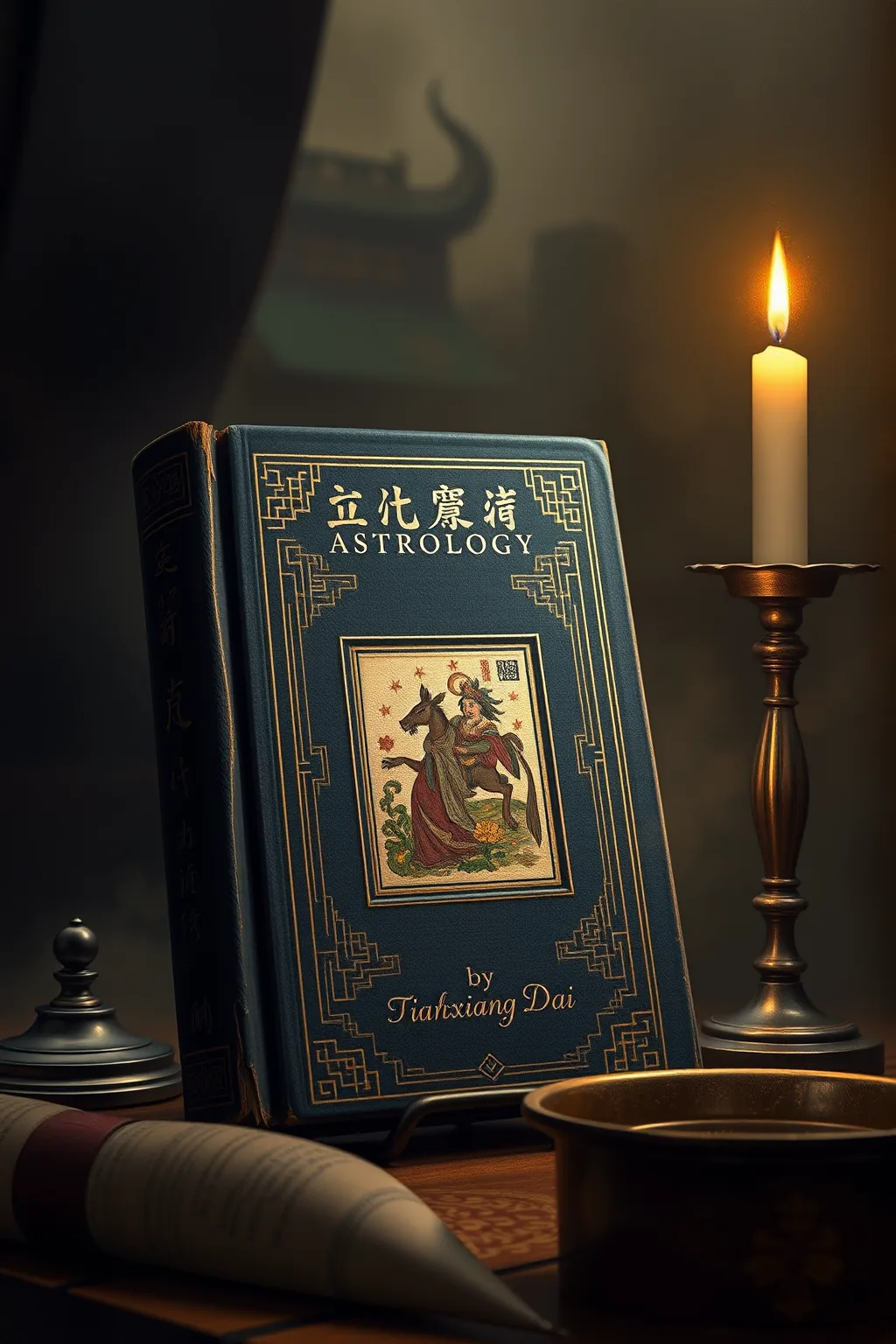
Tianxiang Dai’s Chinese Astrology provides a structured entry into a system often presented with more folklore than fact. The author meticulously breaks down the mechanics of the Twelve Earthly Branches and the Five Elements, offering a clear pathway for readers to understand their own astrological makeup beyond the commonly known animal year. A notable strength is the detailed explanation of element interactions, which significantly enriches the interpretation of individual charts. However, the work could benefit from more extensive case studies or examples to illustrate the practical application of these intricate calculations in predicting life events or compatibility. The section detailing the cyclical generation and destruction phases of the elements, while informative, feels somewhat dry without more dynamic illustrations. It’s a solid reference for the diligent student of the system.
📝 Description
82
Tianxiang Dai's Chinese Astrology details a system of celestial interpretation originating in China.
This work examines the fundamental principles of Chinese astrology, moving beyond simple horoscopes to offer a framework for understanding personality, destiny, and cyclical influences. It details the relationships between the twelve animal signs, the Five Elements, and the Heavenly Stems and Earthly Branches. These components form the bedrock of this ancient tradition.
The book is suited for individuals interested in non-Western astrological systems who seek a deeper understanding than is commonly available. It caters to students of comparative esotericism, cultural historians, and anyone curious about the philosophical underpinnings of Chinese cosmology. Those familiar with basic Chinese zodiac concepts will find this volume valuable for grasping the underlying mechanics and applications of the full system.
Chinese astrology's origins are tied to ancient Chinese astronomy, philosophy, and calendrical systems, dating back to at least the Han Dynasty. Influenced by Taoist principles and the concept of Yin and Yang, it centers on the cyclical movements of the sun and moon. Unlike Western astrology's focus on planetary positions, this system uses symbolic associations of animal signs and elemental interactions. It has developed through refinement over centuries, maintaining a consistent structure.
💡 Why Read This Book?
• Gain a foundational understanding of the Five Elements (Wood, Fire, Earth, Metal, Water) and their transformative cycles, enabling you to analyze the elemental influences within your own birth chart as presented in the text. • Learn to interpret the unique characteristics of each of the Twelve Earthly Branches, moving beyond the popular twelve-year cycle to grasp their individual significance and interaction with the elements. • Discover the principles of Yin and Yang as they apply to Chinese astrological calculations, providing a framework for understanding balance and duality within the cosmic order as outlined by Dai.
⭐ Reader Reviews
Honest opinions from readers who have explored this book.
❓ Frequently Asked Questions
What is the primary difference between Chinese and Western astrology?
Chinese astrology centers on the lunisolar calendar and the cyclical interplay of twelve animal signs and five elements, focusing on earthly and elemental energies. Western astrology primarily uses the solar year and planetary positions relative to the zodiac constellations in the ecliptic.
How are the Five Elements applied in Chinese astrology?
The Five Elements (Wood, Fire, Earth, Metal, Water) are crucial, representing different energies and phases. They interact in cycles of generation and destruction, influencing personality, relationships, and potential life events based on their presence in a person's birth chart.
Is Chinese Astrology only about the twelve animal signs?
No, while the twelve animal signs (like Rat, Ox, Tiger) are well-known, the system is far more complex. It integrates these animals with the Five Elements, Yin/Yang, and the Heavenly Stems and Earthly Branches for a nuanced interpretation.
When did Chinese astrology originate?
The origins are ancient, with evidence suggesting development and integration into Chinese culture as early as the Han Dynasty (206 BCE – 220 CE), evolving alongside astronomy and philosophy.
Can Chinese Astrology be used for compatibility analysis?
Yes, the system offers detailed methods for assessing compatibility between individuals based on their elemental makeup and animal sign interactions, often revealing underlying harmonies or conflicts.
What are the Heavenly Stems and Earthly Branches?
These are two series of characters used in the Chinese calendar and astrology. The ten Heavenly Stems represent cosmic energies, and the twelve Earthly Branches correspond to the animals of the zodiac. Together, they form the basis of the sexagenary cycle.
🔮 Key Themes & Symbolism
The Twelve Animal Signs
This theme explores the individual characteristics and symbolic meanings assigned to each of the twelve animals that cycle through the Chinese zodiac. Dai details the inherent traits, strengths, and potential challenges associated with being born under the sign of the Rat, Ox, Tiger, Rabbit, Dragon, Snake, Horse, Goat, Monkey, Rooster, Dog, or Pig. Understanding these archetypes is presented as a foundational step in deciphering personal destiny and interpersonal dynamics within the broader cosmological framework.
The Five Elements (Wu Xing)
Central to the work is the doctrine of the Five Elements: Wood, Fire, Earth, Metal, and Water. These are not merely physical substances but represent dynamic forces and phases of change. Dai elucidates their cyclical relationships – the productive (Sheng) and destructive (Ke) cycles – which govern the balance of the cosmos and influence all aspects of life. This elemental interplay adds profound depth to the astrological interpretations, moving beyond simple animal sign associations.
Yin and Yang Dynamics
The ancient Chinese philosophical concept of Yin and Yang is intricately woven into the astrological system. This theme examines how these complementary, opposing forces manifest within the animal signs and elements, influencing personality, relationships, and the flow of time. Dai demonstrates how the balance or imbalance of Yin and Yang energies within an individual's chart can indicate potential life paths and areas requiring attention for harmonious living.
The Sexagenary Cycle (Gan Zhi)
This theme focuses on the sophisticated calendrical system that underpins Chinese astrology, known as the Sexagenary Cycle or Ganzhi. It combines the Ten Heavenly Stems (Geng) with the Twelve Earthly Branches (Zhi), creating a sixty-year cycle. Dai explains how this framework allows for a precise dating of time and a detailed astrological analysis for any given moment, providing a much more granular understanding than the common twelve-year animal cycle alone.
💬 Memorable Quotes
Direct passages from the work, attributed to the author.
“The interaction of the Five Elements dictates the harmony or conflict within a chart.”
— This principle highlights that an individual's astrological makeup is not solely determined by their animal sign but by the complex relationships between the elemental energies present at their birth, influencing their life's trajectory.
“Each animal sign carries a unique set of inherent characteristics and potentials.”
— This emphasizes that the twelve zodiac animals are more than just symbols; they represent distinct archetypal energies that profoundly shape personality, behavior, and destiny.
“The cyclical nature of time is reflected in the repeating patterns of the elements and animals.”
— This concept underscores the idea that cosmic energies are not static but flow in predictable cycles, offering opportunities for understanding recurring themes and influences throughout life.
“Understanding elemental balance is key to achieving personal equilibrium.”
— This suggests that astrological analysis can serve as a guide for self-improvement, pointing towards areas where elemental energies might be out of sync and offering a path toward greater harmony.
“The twelve Earthly Branches are the fundamental building blocks of the personal astrological chart.”
— This highlights the critical importance of the animal signs and their associated terrestrial energies, forming the core structure upon which more complex astrological interpretations are built.
🌙 Esoteric Significance
Tradition
This work is firmly rooted in the Chinese esoteric tradition, particularly the cosmological and divination practices that developed alongside Taoism and Confucianism. It aligns with a worldview that sees the microcosm (human life) as a reflection of the macrocosm (the universe), governed by predictable celestial and elemental forces. Unlike Hermetic or Kabbalistic traditions which often focus on divine emanations or angelic hierarchies, Chinese astrology emphasizes the cyclical interactions of natural forces and their influence on human affairs.
Symbolism
Key symbols include the Twelve Animal Signs (Rat, Ox, Tiger, etc.), each representing distinct archetypal energies and characteristics, and the Five Elements (Wood, Fire, Earth, Metal, Water), which symbolize phases of change and interaction. The Yin and Yang duality is also paramount, representing the fundamental polarity that underlies all phenomena. These symbols are not merely decorative but are integral to the system's predictive and interpretive power, forming a complex language of cosmic influence.
Modern Relevance
Contemporary practitioners of holistic wellness, mindfulness, and comparative spirituality often draw upon Chinese astrological principles. Modern schools of Traditional Chinese Medicine (TCM) also utilize elemental theory, showing a continued relevance. Furthermore, individuals seeking alternatives or complements to Western astrology find value in its distinct approach to personality analysis and life path interpretation, particularly in understanding cyclical patterns and elemental dynamics.
👥 Who Should Read This Book
• Students of comparative esoteric systems seeking to understand a major non-Western astrological tradition, offering a detailed framework beyond superficial zodiac charts. • Individuals interested in Chinese philosophy and cosmology who wish to explore how celestial observation and elemental theory are applied to human destiny and personality. • Practitioners of divination or self-discovery who are looking to expand their toolkit beyond Western astrological models, gaining insights into elemental cycles and animal archetypes.
📜 Historical Context
Published in 1996, Tianxiang Dai's Chinese Astrology entered a Western esoteric landscape increasingly curious about non-Western systems, yet often encountering simplified or commercialized versions. This work emerged during a period when comparative mysticism and cross-cultural studies of divination were gaining academic and popular traction. Its detailed exposition contrasts with the more esoteric or philosophical treatments of Chinese cosmology prevalent at the time. Dai's approach is grounded in the practical application of the system, distinguishing it from purely academic analyses or the often-reductive 'Year of the [Animal]' popularizations. Its reception, while not marked by major public events, contributed to a growing body of accessible literature on traditional Chinese practices, standing alongside works by scholars like Joseph Needham who documented Chinese scientific and technological history, though Dai focuses specifically on astrological interpretation.
📔 Journal Prompts
The specific characteristics of your birth animal sign and its elemental association.
How the productive cycle of the Five Elements might manifest in your relationships.
Reflecting on the Yin and Yang balance in a challenging situation.
The significance of the Earthly Branches in the context of the Sexagenary Cycle.
Exploring the potential influence of the Metal element on your personal growth.
🗂️ Glossary
Earthly Branches (Di Zhi)
The twelve symbols (Rat, Ox, Tiger, etc.) that correspond to the months, hours, and years in the Chinese calendar. They represent terrestrial energies and are directly linked to the twelve zodiac animals.
Five Elements (Wu Xing)
The fundamental components of the universe in Chinese philosophy: Wood, Fire, Earth, Metal, and Water. They are understood through their cyclical interactions of creation and destruction, influencing all phenomena.
Heavenly Stems (Tian Gan)
A set of ten cyclical characters used in the Chinese calendar and astrology, representing cosmic or celestial energies. They are paired with the Earthly Branches to form the Sexagenary Cycle.
Sexagenary Cycle (Gan Zhi)
A sixty-year cycle created by the combination of the ten Heavenly Stems and the twelve Earthly Branches, used for dating years, months, days, and hours, and forming the basis of detailed astrological calculations.
Yin and Yang
The concept of complementary, dualistic forces that shape the universe. Yin represents passive, dark, and feminine principles, while Yang represents active, light, and masculine principles. Their balance is crucial.
Wu Xing
The Chinese term for the Five Elements (Wood, Fire, Earth, Metal, Water), emphasizing their dynamic and interconnected nature within the cosmos.
Sheng Cycle
The 'productive' or 'generating' cycle of the Five Elements, illustrating how one element nourishes or creates another (e.g., Wood feeds Fire). It's a key concept for understanding harmonious interactions.
🔮 Readers Also Liked
Browse all →









More by Tianxiang Dai
All books →
More Free Astrology & Cosmology Books
View all →