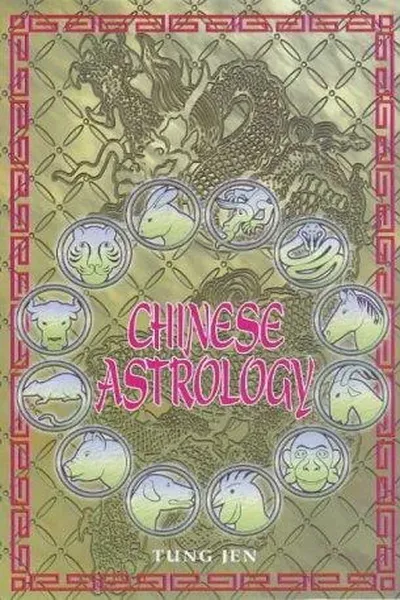
Chinese Astrology
 84
84

Chinese Astrology
Shelly Wu's Chinese Astrology offers a clear, if somewhat standard, introduction to a complex system. Its strength lies in its organized presentation of the twelve animal signs and the fundamental Five Elements. The explanations of element interactions, while not groundbreaking, are accessible for newcomers. A particularly useful section details the compatibility between signs, moving beyond simplistic pairings to explore the nuances of elemental influence in relationships. However, the work sometimes feels like a compilation of established knowledge rather than a deeply original exploration. The original blurb's absence is perhaps telling; while functional, it lacks the spark that might draw in a seasoned practitioner. The book's primary limitation is its adherence to conventional explanations, which, while accurate, may not satisfy those seeking esoteric interpretations beyond the commonly known. Wu presents the material competently, but a deeper dive into the philosophical underpinnings or historical evolution might have elevated it further. It serves as a solid primer, but not a revelation.
📝 Description
84
Shelly Wu's 2008 book explains the Chinese zodiac, its elements, and its deep cultural roots.
Published in 2008, Shelly Wu's "Chinese Astrology" offers a guide to the traditional zodiac system. The book covers the twelve animal signs, detailing their characteristics, elemental associations, and compatibility patterns. It explains the Chinese lunisolar calendar's cyclical nature and its impact on personal traits, relationships, and perceived destiny.
The work also examines the Five Elements—Wood, Fire, Earth, Metal, and Water—and their interactions, along with the complementary principles of Yin and Yang that shape the cosmology. This volume is intended for those interested in Eastern metaphysical traditions, newcomers to Chinese astrology, and individuals seeking to understand the system's principles through their birth year sign. It also appeals to those with prior astrological knowledge who want a structured overview, as well as readers interested in comparative spirituality, cultural studies, and personal growth via older frameworks. Practitioners of other astrological systems may find it useful for broadening their knowledge of global divinatory practices.
Chinese astrology is a tradition that developed alongside early astronomy and the lunisolar calendar. Its structure, incorporating the twelve zodiac animals and the Five Elements, became established during the Han Dynasty. Over centuries, it became integral to Chinese culture, influencing decisions from imperial policy to daily life. This system spread throughout East Asia, demonstrating its lasting appeal. Unlike Western astrology, which stems from different origins, Chinese astrology provides a distinct approach to understanding celestial influences on human life and events.
💡 Why Read This Book?
• Gain practical insights into the Chinese zodiac's 12 animal signs and their inherent traits, understanding how your birth year's animal influences personality, as detailed in the book's sign descriptions. • Learn about the Five Elements (Wood, Fire, Earth, Metal, Water) and their cyclical interactions, allowing you to analyze elemental balances in yourself and others, as explained in the elemental theory sections. • Discover specific compatibility dynamics between zodiac signs, moving beyond generalities to understand how different elemental energies interact in relationships, a concept elaborated upon in the relationship compatibility chapters.
⭐ Reader Reviews
Honest opinions from readers who have explored this book.
❓ Frequently Asked Questions
What are the 12 animals in Chinese Astrology and when is the Year of the Dragon?
The 12 animals are the Rat, Ox, Tiger, Rabbit, Dragon, Snake, Horse, Goat, Monkey, Rooster, Dog, and Pig. They cycle through the Chinese lunisolar calendar. The Year of the Dragon occurs in 2000, 2012, 2024, and will occur again in 2036.
How do the Five Elements affect Chinese Astrology?
The Five Elements—Wood, Fire, Earth, Metal, and Water—interact in cycles of creation and destruction. They modify the characteristics of each animal sign and influence the overall energy of a year, impacting personality, fortune, and relationships as outlined in the book.
Is Chinese Astrology the same as Western Astrology?
No, Chinese Astrology and Western Astrology are distinct systems. While both use celestial bodies and cycles, Chinese Astrology is rooted in the lunisolar calendar, the twelve animal signs, and the Five Elements, focusing on earthly cycles and elemental interactions.
What is the significance of Yin and Yang in Chinese Astrology?
Yin and Yang represent complementary opposites. In Chinese Astrology, these principles are applied to the animal signs and elements, contributing to the nuanced understanding of personality traits, compatibility, and the dynamic balance within the cosmic system.
How can I find out my Chinese Zodiac animal sign?
Your Chinese Zodiac animal sign is determined by your birth year according to the Chinese lunisolar calendar. The book provides tables or descriptions that allow you to identify your sign based on your year of birth.
When was Chinese Astrology first published by Shelly Wu?
Shelly Wu's book 'Chinese Astrology' was first published on August 21, 2008. This edition serves as a modern introduction to the ancient system for a contemporary audience.
🔮 Key Themes & Symbolism
The Twelve Animal Signs
The core of Chinese Astrology lies in the twelve distinct animal signs: Rat, Ox, Tiger, Rabbit, Dragon, Snake, Horse, Goat, Monkey, Rooster, Dog, and Pig. Each animal is believed to imbue individuals born in its year with specific personality traits, strengths, and weaknesses. The book details these characteristics, exploring how each sign's inherent nature interacts with the energies of the year. Understanding these archetypes is fundamental to deciphering one's own profile and those of others within the system.
The Five Element Theory
Beyond the animal signs, the Five Elements—Wood, Fire, Earth, Metal, and Water—play a crucial role. These elements are not static; they exist in dynamic cycles of generation (creation) and destruction. The book explains how the element associated with one's birth year, and the elements of other significant years or people, can enhance or conflict with the animal sign's influence. This elemental interplay adds a layer of complexity and nuance to astrological interpretations.
Compatibility and Relationships
Chinese Astrology offers a framework for understanding interpersonal dynamics. The book explores the inherent compatibilities and conflicts between the twelve animal signs, often explained through their elemental relationships. Certain signs are naturally harmonious, forming strong bonds, while others may present challenges. This insight is valuable for navigating friendships, family ties, and romantic partnerships, providing guidance on fostering balance and mutual understanding.
The Lunisolar Calendar Cycle
Unlike the solar-based Western calendar, Chinese Astrology is intrinsically linked to the lunisolar calendar. This means that the start of the astrological year shifts, typically falling between late January and mid-February. The book emphasizes the cyclical nature of this calendar, where each year is marked by a specific animal and elemental combination, creating a continuous flow of energies that influence events and individuals over time.
💬 Memorable Quotes
Direct passages from the work, attributed to the author.
“Each animal sign carries inherent characteristics that shape personality.”
— This highlights the foundational principle that one's birth year animal is not merely a label, but a powerful determinant of core traits and behavioral patterns within the Chinese astrological framework.
“The Five Elements create cycles of creation and destruction.”
— This points to the dynamic nature of the elemental system, where interactions are not fixed but involve constant flux, influencing how different energies support or impede one another.
“Compatibility between signs is often dictated by elemental harmony.”
— This suggests that successful relationships in Chinese Astrology are understood through the lens of how the fundamental energies (elements) of individuals interact, promoting synergy or discord.
“The lunisolar calendar dictates the flow of astrological energies.”
— This emphasizes the importance of the specific calendar system used, grounding the astrological interpretations in the observed cycles of both the moon and the sun.
“Understanding these principles aids in navigating personal destiny.”
— This conveys the practical application of Chinese Astrology, positioning it as a tool for self-awareness and guidance in understanding life's unfolding path.
🌙 Esoteric Significance
Tradition
Chinese Astrology belongs to the vast tradition of East Asian cosmological sciences, distinct from the Hermetic, Kabbalistic, or Gnostic lineages of the West. It is deeply intertwined with Taoist philosophy, emphasizing natural cycles, balance (Yin and Yang), and the Five Elements (Wu Xing). This work fits within this tradition by systematically explaining these core concepts, serving as a modern entry point for those unfamiliar with its specific philosophical underpinnings, which differ significantly from Western astrological paradigms.
Symbolism
Key symbols include the twelve animals of the zodiac, each representing archetypal energies and behaviors. The Dragon, for instance, symbolizes power, success, and auspiciousness. The Five Elements—Wood, Fire, Earth, Metal, and Water—are also potent symbols, representing fundamental forces and their dynamic interactions, akin to the classical Western elements but with a unique cyclical and relational framework. The interplay of Yin and Yang further symbolizes the complementary and interdependent nature of all phenomena.
Modern Relevance
Contemporary thinkers and practitioners in fields like comparative spirituality, mindfulness, and positive psychology draw upon principles found in Chinese Astrology. Its focus on cyclical rhythms, elemental balance, and understanding innate potentials appeals to modern self-help and personal growth movements. While not always explicitly cited, the underlying philosophy of harmony with natural cycles informs various wellness and holistic living approaches currently popular.
👥 Who Should Read This Book
• Aspiring students of comparative divination systems looking to understand a major non-Western astrological framework, gaining specific knowledge of the 12 animal signs and Five Elements. • Individuals interested in cultural studies and East Asian philosophies seeking concrete examples of how ancient cosmological beliefs shaped societal practices and personal understanding. • Self-improvement enthusiasts wanting to explore alternative methods of self-assessment and relationship analysis, using the book's insights on personality traits and compatibility.
📜 Historical Context
Shelly Wu's Chinese Astrology, first published in 2008, enters a field with deep historical roots. The system itself solidified during China's Han Dynasty (206 BCE – 220 CE), evolving from earlier astronomical observations and incorporating the twelve zodiac animals and the Five Elements. By the time of its publication, Chinese astrology had long been integrated into East Asian cultures, influencing societal norms, personal decisions, and even imperial policy for millennia. While Western astrology, with its Hellenistic origins and focus on planetary positions, represents a different stream of divinatory thought, Chinese astrology offers a parallel yet distinct cosmological framework. Wu's work arrives in an era where interest in Eastern spiritual traditions was growing globally, partly fueled by figures like Madame Blavatsky and the Theosophical Society in the late 19th and early 20th centuries, which broadly popularized Eastern philosophies. However, unlike some esoteric texts that faced historical censorship or niche academic reception, the basic tenets of Chinese astrology have achieved widespread cultural recognition, making Wu's book accessible rather than controversial.
📔 Journal Prompts
The Rat's adaptability versus the Ox's steadfastness: Where do you see these traits in your own approach to challenges?
Reflect on the generative cycle of the Five Elements (e.g., Wood feeding Fire). How can you apply this principle of supportive growth in your relationships?
Consider the symbolic meaning of the Dragon. What aspects of its power or auspiciousness do you wish to cultivate in your life?
Analyze the destructive cycle of the Five Elements (e.g., Metal cutting Wood). Identify a situation where such a conflict might be present and how to seek balance.
The inherent compatibility between the Tiger and the Horse: What does this suggest about fostering harmony when energies seem naturally aligned?
🗂️ Glossary
Earthly Branches
The twelve divisions of the Chinese zodiac cycle, each represented by an animal sign (Rat, Ox, Tiger, etc.). They correspond to specific periods of time and carry unique energetic qualities.
Five Elements (Wu Xing)
The fundamental forces of Wood, Fire, Earth, Metal, and Water that interact in generative and destructive cycles. They are central to understanding the nuances of Chinese Astrology and cosmology.
Lunisolar Calendar
A calendar system that tracks both the moon's phases and the sun's annual journey. The Chinese astrological year begins with the new moon following the winter solstice.
Yin and Yang
The Taoist concept of complementary, interconnected opposites. In Chinese Astrology, these principles are applied to the animal signs and elements to describe balance and duality.
Generative Cycle
The creative interaction between the Five Elements, where one element supports or gives birth to the next (e.g., Water nourishes Wood). This cycle promotes growth and harmony.
Destructive Cycle
The cyclical interaction where one element overcomes or controls another (e.g., Fire melts Metal). This cycle represents conflict or necessary checks and balances.
Animal Sign
One of the twelve animals assigned to each year in the Chinese zodiac cycle. Each sign is believed to bestow distinct characteristics upon individuals born during that year.