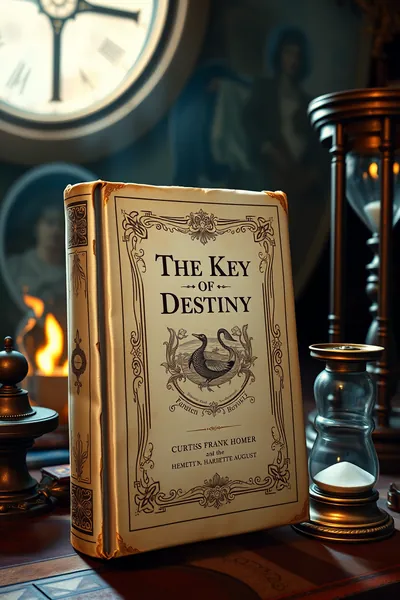
Chinese astrology

 84
84

Chinese astrology
Sabrina Liao’s "Chinese Astrology" presents a functional guide to a complex system. Its strength lies in its clear enumeration of the twelve zodiac animals and their associated traits, making it accessible for beginners. The book effectively outlines the mechanics of the elemental cycles and their interplay with the animal signs. However, it sometimes feels like a catalog of attributes rather than a deeply interpretive work. A passage detailing the compatibility between a Water Monkey and a Wood Rat, for instance, clearly lays out the traditional interactions but could benefit from more nuanced astrological commentary beyond simple elemental clashes or harmonies. While informative, the work lacks a certain philosophical depth that might engage seasoned esoteric scholars. It is a solid primer for the curious, but not a profound revelation.
📝 Description
84
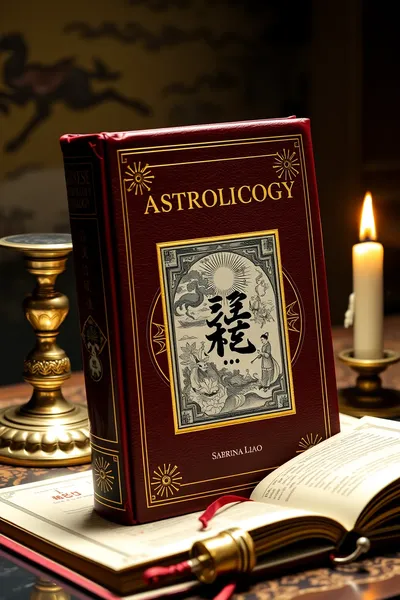
Sabrina Liao's 2017 book, Chinese Astrology, details the twelve animal signs and their cosmic connections.
Sabrina Liao's "Chinese Astrology" examines the ancient Chinese zodiac system, a tradition with roots stretching back thousands of years. The book covers the twelve animal signs—Rat, Ox, Tiger, Rabbit, Dragon, Snake, Horse, Goat, Monkey, Rooster, Dog, and Pig—along with their associated characteristics, ruling elements, and compatibility patterns. It also explains the cyclical nature of the Chinese calendar and how astrological interpretations connect to birth years and lunar cycles.
This work is suitable for anyone interested in Eastern astrological traditions, whether they want to understand their birth sign's influence or integrate Chinese cosmology into their existing studies. It addresses both beginners and those familiar with astrology who wish to expand their knowledge beyond Western frameworks. Liao clarifies how core concepts such as Yin and Yang, the Five Elements (Wood, Fire, Earth, Metal, Water), and the 60-year cycle shape personality, destiny, and relationships.
Chinese astrology is a complex system deeply tied to traditional Chinese philosophy and cosmology. Its principles are intertwined with the lunisolar calendar, influencing practices like traditional Chinese medicine and Feng Shui. Unlike some Western systems, Chinese astrology maintains a distinct lineage, focusing on the interplay of celestial bodies, earthly branches, and elemental forces to understand human character and fate.
💡 Why Read This Book?
• Learn the specific attributes of the twelve Chinese zodiac animals and their elemental associations, moving beyond generalized Western astrological concepts. • Understand the foundational principles of the Five Elements (Wu Xing) as they apply to birth year interpretations, offering a practical framework for analyzing personal charts. • Gain insight into the 60-year cycle, a unique calendrical and astrological construct that offers a different perspective on time and destiny compared to Western systems.
⭐ Reader Reviews
Honest opinions from readers who have explored this book.
❓ Frequently Asked Questions
When was Sabrina Liao's "Chinese Astrology" first published?
Sabrina Liao's "Chinese Astrology" was first published in the year 2000, making it a relatively modern compilation of ancient astrological principles.
What are the twelve animals in the Chinese zodiac?
The twelve animals are the Rat, Ox, Tiger, Rabbit, Dragon, Snake, Horse, Goat, Monkey, Rooster, Dog, and Pig, each representing a year in a repeating twelve-year cycle.
How do the Five Elements influence Chinese Astrology?
The Five Elements—Wood, Fire, Earth, Metal, and Water—are intrinsically linked to the zodiac animals and influence their characteristics, compatibility, and the overall energy of a given year.
Is this book suitable for someone unfamiliar with Eastern astrology?
Yes, the book is structured to introduce core concepts clearly, making it suitable for beginners interested in understanding the basics of Chinese astrology and its unique system.
Does the book cover compatibility between signs?
Yes, "Chinese Astrology" typically explores the compatibility between different zodiac signs, detailing harmonious and challenging relationships based on ancient traditions.
What is the significance of the lunisolar calendar in this context?
The lunisolar calendar is fundamental, as Chinese astrology aligns zodiac signs and their interpretations with the cycles of both the moon and the sun, influencing the timing of astrological periods.
🔮 Key Themes & Symbolism
The Twelve Animal Signs
Liao's work meticulously details the distinct personalities, strengths, and weaknesses attributed to each of the twelve animals: Rat, Ox, Tiger, Rabbit, Dragon, Snake, Horse, Goat, Monkey, Rooster, Dog, and Pig. Each sign is presented as a microcosm of human experience, influenced by its ruling element and its position in the twelve-year cycle. The book provides insights into how these animal archetypes manifest in individuals born under their influence, offering a framework for understanding personal traits and social dynamics.
The Five Elements (Wu Xing)
A central to Chinese cosmology, the Five Elements—Wood, Fire, Earth, Metal, and Water—are explored not merely as physical substances but as dynamic forces that govern interactions and transformations. Liao explains how these elements cycle through creation and destruction, shaping the characteristics of each zodiac animal and determining compatibility between them. Understanding the elemental balance is presented as crucial for interpreting the nuances of an individual's astrological chart and predicting life's flows.
The Lunar Calendar Cycle
The book emphasizes the importance of the Chinese lunisolar calendar, which dictates the twelve-year cycle of animal signs and the annual shifts in elemental energies. Unlike the fixed solar year of Western astrology, the Chinese system is fluid, tied to lunar phases and seasonal changes. Liao illustrates how birth year, month, day, and hour, all interpreted through this calendar, contribute to a unique astrological profile, offering a more intricate predictive model.
Compatibility and Relationships
A significant aspect of Chinese astrology is its focus on relational dynamics. Liao details the traditional affinities and conflicts between the twelve zodiac animals, often explained through elemental interactions and inherent archetypal characteristics. This analysis provides a practical guide for understanding interpersonal relationships, whether in family, friendship, or romantic partnerships, by identifying inherent harmonies and potential areas of friction based on birth signs.
💬 Memorable Quotes
Direct passages from the work, attributed to the author.
“The Ox year breeds diligence, but also stubbornness.”
— This highlights the dual nature of astrological influences. While the Ox is associated with hard work and reliability, its inherent traits can also manifest as inflexibility or resistance to change, a common theme in character analysis.
“Dragons crave recognition and often find it.”
— This captures the ambitious and charismatic essence of the Dragon sign. It suggests an innate drive for achievement and a natural ability to attract attention and success in their endeavors.
“Wood signs nourish Fire, fostering growth and expansion.”
— This interpretation of elemental interaction explains the generative cycle within Chinese cosmology. It illustrates how one element can support and enhance another, symbolizing progress and creative development.
“Metal signs can temper Wood, bringing structure and discipline.”
— This represents the controlling cycle of the Five Elements. It suggests how the Metal element can provide necessary order and restraint to the more expansive energy of Wood, preventing chaos.
💡 Key Ideas
Editorial paraphrase of the work's core concepts — not direct quotes.
The year of the Pig is marked by a genial disposition and a love for comfort.
This paraphrased concept emphasizes the approachable and pleasure-seeking qualities associated with the Pig. It points to a sign that values peace, good food, and pleasant surroundings.
🌙 Esoteric Significance
Tradition
Chinese astrology is a core component of Taoist cosmology and traditional Chinese metaphysics. It operates within a framework that views the universe as an interconnected web of energies (Qi), governed by principles of Yin and Yang and the Five Elements (Wu Xing). Unlike the Hermetic emphasis on macrocosm-microcosm correspondence or Kabbalistic emanations, Chinese astrology focuses on the cyclical, dynamic interplay of these forces as expressed through the lunisolar calendar and the twelve earthly branches, offering a unique path to understanding destiny and the human condition.
Symbolism
Central symbols include the twelve animal archetypes, each embodying specific virtues and challenges. The Dragon, for instance, symbolizes power, success, and imperial authority, while the Rabbit represents gentleness, art, and diplomacy. The Five Elements (Wood, Fire, Earth, Metal, Water) are also potent symbols, representing not just physical matter but phases of growth, transformation, and interaction within the cosmic order. The interplay between these animals and elements forms a complex symbolic language for interpreting life's patterns.
Modern Relevance
Contemporary practitioners of Feng Shui and traditional Chinese medicine routinely integrate principles from Chinese astrology into their work, using it to analyze energetic patterns in spaces and the body. Furthermore, many modern Western esotericists draw upon its cyclical view of time and its focus on elemental balance as a complementary system to Western astrology or other divination arts. Its emphasis on harmony with natural cycles appeals to current interests in ecological awareness and holistic well-being.
👥 Who Should Read This Book
• Individuals new to astrological systems, seeking a clear introduction to a non-Western framework with a long history. • Students of comparative religion and mythology, interested in understanding the archetypal symbolism within East Asian cultures. • Those exploring practical self-understanding tools, looking for insights into personality, relationships, and life pathing through a different lens.
📜 Historical Context
The principles underpinning Sabrina Liao's "Chinese Astrology" have evolved over millennia, with roots tracing back to the Han Dynasty (206 BCE – 220 CE). This system developed independently from Western astrology, becoming deeply embedded in Chinese culture, influencing everything from imperial decisions to personal relationships. It coexisted with other philosophical currents like Confucianism and Taoism, which provided the metaphysical framework for understanding cosmic order and human destiny. Unlike the Hellenistic astrology that dominated the West, Chinese astrology focused on a lunisolar calendar and a distinct set of planetary and animal archetypes. By the time Liao's work was first published in 2000, Chinese astrology had already seen a resurgence in global interest, partly fueled by figures like Lin Yutang who wrote about Chinese culture in the mid-20th century, making it accessible to a Western audience seeking alternative esoteric frameworks.
📔 Journal Prompts
The Rat's adaptability: how has your own resourcefulness been tested and proven?
Reflecting on the Five Elements: which element feels most dominant in your current life phase, and why?
The Dragon's pursuit of ambition: what goals are you currently striving for, and what elemental support do they require?
The Horse's need for freedom: identify an area where you crave more autonomy and map out practical steps.
Compatibility analysis: consider a significant relationship and analyze its dynamics through the lens of animal sign interactions.
🗂️ Glossary
Yin and Yang
The fundamental Taoist concept of complementary, opposing forces that are interconnected and interdependent in the natural world. Yin represents passive, feminine, dark, and receptive qualities, while Yang represents active, masculine, light, and assertive qualities.
Wu Xing
The Chinese term for the Five Elements: Wood (木), Fire (火), Earth (土), Metal (金), and Water (水). These elements are believed to be in constant, dynamic interaction, influencing all phenomena and forming the basis of much Chinese cosmology and medicine.
Heavenly Stems
A set of ten cyclical characters (Jia, Yi, Bing, Ding, Wu, Ji, Geng, Xin, Ren, Gui) often paired with the Earthly Branches to form the 60-year cycle in Chinese astrology and calendrics.
Earthly Branches
The twelve cyclical characters (Zi, Chou, Yin, Mao, Chen, Si, Wu, Wei, Shen, You, Xu, Hai) that correspond to the twelve animals of the Chinese zodiac and represent divisions of time and space.
Lunisolar Calendar
A calendar system that is based on the cycles of both the Moon (months) and the Sun (years). This is the basis for the Chinese traditional calendar and its astrological calculations.
Qi
The vital life force or energy believed to flow through all living things and the universe. Its balance and flow are central concerns in Chinese medicine, Feng Shui, and astrology.
BaZi
Literally 'Eight Characters,' this refers to the Four Pillars of Destiny, a form of astrology based on a person's birth year, month, day, and hour, using the Heavenly Stems and Earthly Branches.
🔮 Readers Also Liked
Browse all →







More by Sabrina Liao
All books →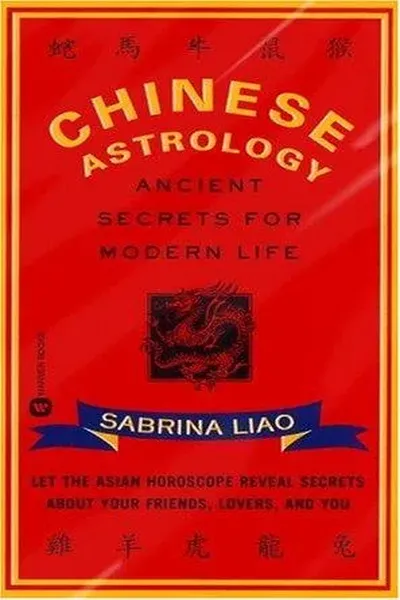

More Free Astrology & Cosmology Books
View all →