Chinese Astrology
 76
76

Chinese Astrology
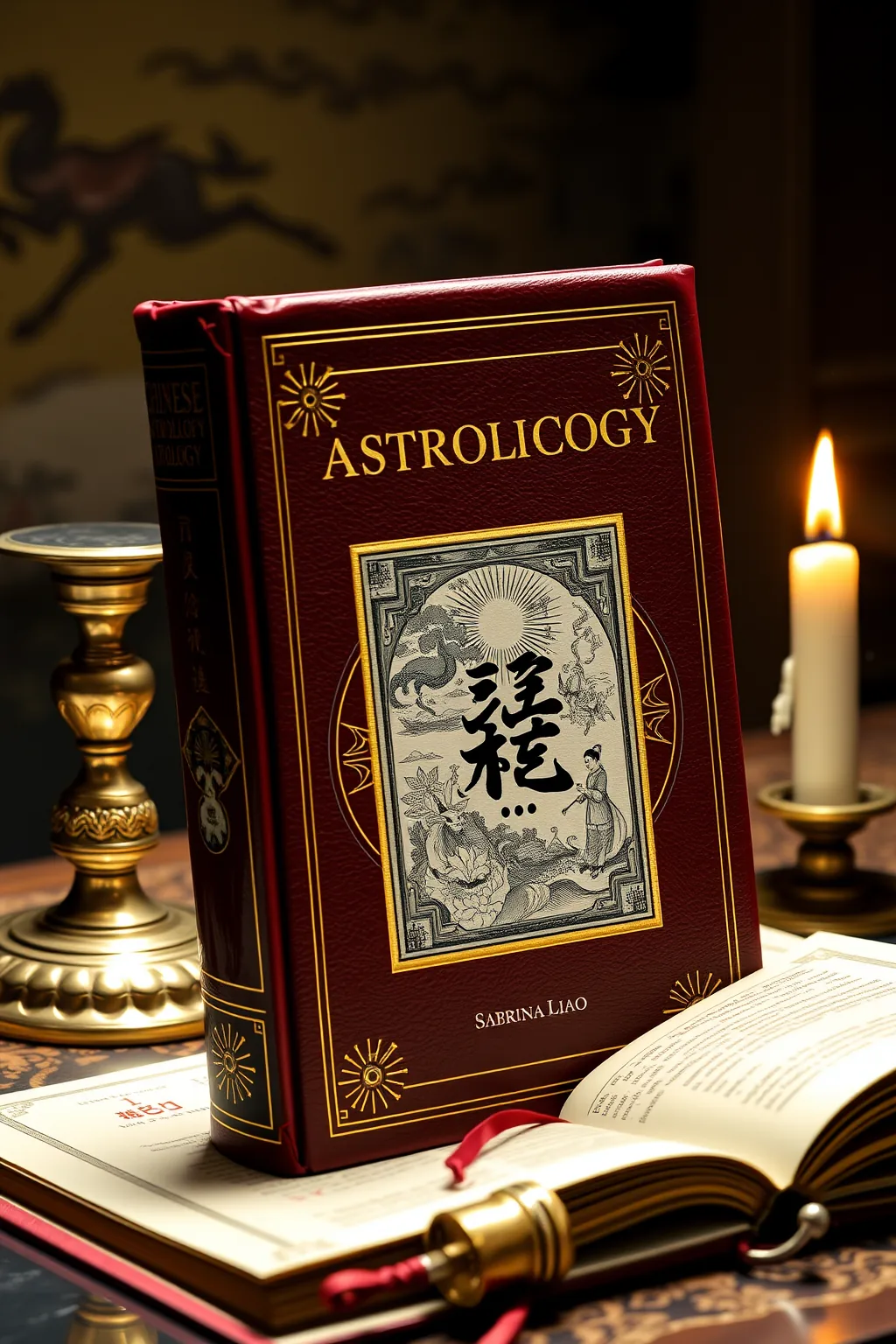
Sabrina Liao's Chinese Astrology offers a methodical breakdown of a system often presented superficially. The strength lies in its detailed explanation of the Five Elements (Wu Xing) and their dynamic interactions, moving beyond the animal signs to the underlying energetic principles. For instance, the chapter detailing the destructive and generative cycles of Wood, Fire, Earth, Metal, and Water provides a solid foundation for understanding the system's complexity. However, the book occasionally feels like a textbook, lacking the narrative flair found in some contemporary esoteric works. A passage discussing the compatibility of the Dragon and the Rabbit for marriage, while informative, could benefit from more illustrative examples of how these interactions manifest in relationships. Despite this, Liao’s work is a dependable resource for those seeking a structured introduction to Chinese astrological concepts.
📝 Description
76
Sabrina Liao's 2001 book examines the Chinese zodiac and its cosmological principles.
Published in 2001, Sabrina Liao's Chinese Astrology offers a detailed look at the ancient Chinese zodiac and its related cosmological ideas. The book explains the twelve zodiac animals, their characteristics, and how they affect personality and life paths. It goes beyond basic horoscopes to cover the systems of Yin and Yang, the Five Elements (Wu Xing), and the understanding of time through the lunisolar calendar.
This work is suitable for readers new to non-Western astrological systems. It appeals to those interested in comparative mythology, cultural studies, or esoteric traditions. Students of comparative religion and cultural anthropology will find its structured method for analyzing a global spiritual practice useful. Liao's text draws on centuries of astronomical observation and philosophical thought, particularly from dynasties like the Han (206 BCE – 220 CE), when these concepts were formalized. It responds to a global interest in Eastern philosophies that grew in the late 20th century.
This book is situated within the vast history of Chinese divination, a practice that predates the Common Era. Liao's text builds on millennia of astronomical study and philosophical developments, especially during periods like the Han Dynasty when many of these ideas were codified. It addresses a wider interest in Eastern philosophies that emerged in the late 20th century, often seen as an alternative to Western astrology. The core of Chinese Astrology lies in the interaction between the twelve Earthly Branches and the ten Heavenly Stems, which map out energetic blueprints for individuals.
💡 Why Read This Book?
• Learn the fundamental principles of the Five Elements (Wu Xing) and their cycles, offering a framework for understanding cosmic balance that differs significantly from Western elemental systems. • Discover your personal Bazi (Eight Characters) configuration, providing a unique energetic blueprint derived from your birth date and time, as detailed in the book's charts. • Grasp the historical lineage of Chinese divination, tracing concepts back to ancient Chinese dynasties and their cosmological frameworks, as explored in the text's historical sections.
⭐ Reader Reviews
Honest opinions from readers who have explored this book.
❓ Frequently Asked Questions
What is the significance of the Five Elements in Chinese Astrology?
The Five Elements—Wood, Fire, Earth, Metal, and Water—are fundamental to Chinese Astrology, representing dynamic forces that interact in generative and destructive cycles. They influence personality, relationships, and the overall energetic flow of time, as detailed in Sabrina Liao's work.
How does Chinese Astrology differ from Western Astrology?
Chinese Astrology is lunisolar, based on lunar cycles and a 12-year animal cycle, while Western Astrology is largely solar and based on the sun's position relative to constellations. The Chinese system also heavily emphasizes the Five Elements and Yin/Yang principles, as explained by Liao.
When was Chinese Astrology first documented?
While oral traditions are ancient, the systematic documentation of Chinese Astrology's core components, including the zodiac animals and Five Elements, can be traced back to the Han Dynasty (206 BCE – 220 CE) and earlier.
What is the Bazi or Eight Characters?
Bazi, or Eight Characters, represents an individual's unique energetic blueprint derived from their birth year, month, day, and hour. It's a core concept in Chinese Astrology, utilizing the Heavenly Stems and Earthly Branches to analyze destiny, as explored in the book.
Are there specific compatibility rules between zodiac animals?
Yes, Chinese Astrology outlines specific compatibility patterns between the twelve zodiac animals, based on their inherent elemental relationships and cycles. The book provides insights into these dynamics for relationships and partnerships.
What is the role of Yin and Yang in Chinese Astrology?
Yin and Yang are complementary opposites central to Chinese cosmology and astrology. In this system, they modify the influence of the Five Elements and the animal signs, adding layers of complexity to personality analysis and forecasting.
🔮 Key Themes & Symbolism
The Twelve Animals and Their Nature
The book meticulously details the personality traits, strengths, and potential challenges associated with each of the twelve zodiac animals: Rat, Ox, Tiger, Rabbit, Dragon, Snake, Horse, Goat, Monkey, Rooster, Dog, and Pig. Liao explains how these archetypes are not merely labels but represent distinct energetic qualities that influence an individual's character, life path, and interactions with others. Understanding one's birth animal is presented as the initial step in deciphering one's cosmic blueprint within this tradition.
The Five Elements (Wu Xing)
Beyond the animal signs, Chinese Astrology is deeply rooted in the theory of the Five Elements: Wood, Fire, Earth, Metal, and Water. Liao elucidates the cyclical relationships between these elements – their productive (Sheng) and destructive (Ke) cycles. This dynamic interplay is crucial for understanding compatibility, forecasting trends, and diagnosing imbalances, offering a more nuanced view than simple animal sign associations.
Yin and Yang Principles
The concept of Yin and Yang, the fundamental duality in Chinese philosophy, is integrated into the astrological system. Liao demonstrates how each animal sign and element can exhibit Yin or Yang characteristics. This polarity adds another layer of interpretation to an individual's chart, highlighting complementary forces and potential internal conflicts that shape personality and life experiences.
The Lunisolar Calendar and Cycles
Unlike the solar-focused Western system, Chinese Astrology operates on a lunisolar calendar. The book explains the significance of both lunar phases and the 60-year cycle (a combination of the 12 Earthly Branches and 10 Heavenly Stems). This cyclical understanding of time is integral to the practice, influencing annual forecasts and the interpretation of birth charts within a broader cosmic rhythm.
💬 Memorable Quotes
Direct passages from the work, attributed to the author.
“Each animal sign embodies a unique energetic signature.”
— This statement highlights that the zodiac animals are more than just symbols; they represent distinct vibrational qualities that influence personality and destiny within the Chinese astrological framework.
“The Five Elements are in constant, dynamic interaction.”
— This emphasizes that the elemental forces of Wood, Fire, Earth, Metal, and Water are not static but continuously influence each other through productive and destructive cycles, shaping events and relationships.
“Birth time adds crucial layers to the astrological chart.”
— This points to the Bazi (Eight Characters) system, where not only the year but also the month, day, and hour of birth contribute essential information to an individual's unique energetic blueprint.
“Compatibility is governed by elemental relationships.”
— This interpretation focuses on how the interactions between the Five Elements, as they manifest through the zodiac animals, determine the harmony or friction present in interpersonal relationships.
“Understanding cycles is key to forecasting.”
— This underscores the importance of the lunisolar calendar and the recurring energetic patterns in Chinese Astrology for predicting trends and understanding the flow of time.
🌙 Esoteric Significance
Tradition
This work is situated within the broad umbrella of East Asian cosmological traditions, deeply intertwined with Taoism and ancient Chinese philosophy. It represents a specific application of these principles to the art of divination and personal assessment. Unlike Hermeticism's focus on correspondence between macrocosm and microcosm via planetary influences, Chinese Astrology emphasizes the cyclical interplay of earthly and celestial energies as embodied by the animals and elements.
Symbolism
Key symbols include the twelve zodiac animals, each representing a distinct phase and energetic quality of the year's cycle. The Five Elements (Wu Xing) – Wood, Fire, Earth, Metal, Water – are also paramount, symbolizing fundamental forces of nature whose interactions (generative and destructive cycles) dictate cosmic harmony and individual destiny. The Yin and Yang duality further refines these symbolic meanings, adding layers of complexity.
Modern Relevance
Contemporary practitioners of holistic wellness, mindfulness, and personal development often draw upon Chinese Astrology for its insights into innate tendencies and life cycles. Modern interpretations, influenced by psychology and self-help movements, utilize the Bazi system for career counseling, relationship guidance, and understanding personal growth patterns, extending its application beyond traditional divination.
👥 Who Should Read This Book
['• Students of comparative cosmology: Individuals seeking to understand diverse systems of understanding the cosmos and human destiny beyond Western astrological frameworks.', '• Aspiring practitioners of East Asian esoteric arts: Those beginning their study of Feng Shui, Traditional Chinese Medicine, or other practices that rely on the Five Elements and Yin/Yang theory.', '• Curious individuals exploring personal growth: Readers interested in gaining a different perspective on their personality, life path, and relationships through an ancient, cyclical system.']
📜 Historical Context
Sabrina Liao's Chinese Astrology emerges in 2001, a period of heightened global interest in Eastern philosophies and esoteric systems, partly fueled by comparative religion studies and the rise of the internet. The work engages with traditions that have a documented history stretching back over two millennia, with significant codification occurring during the Han Dynasty (206 BCE – 220 CE). While Western astrology, influenced by figures like Ptolemy, dominated much of the esoteric landscape in the West, Liao's book offered a detailed exposition of a distinct, lunisolar system. It arrived at a time when scholars like Joseph Needham were meticulously documenting Chinese scientific and technological history, including its astronomical and cosmological practices. The reception of such works often occurred in niche academic circles and among practitioners of alternative spirituality, seeking to understand diverse systems of divination and self-understanding.
📔 Journal Prompts
The Rat's inherent resourcefulness and the Ox's steadfastness: how do these qualities manifest in your approach to challenges?
Reflect on the destructive cycle of Water over Fire; identify a situation where opposing forces led to a resolution.
Analyze the Bazi concept of the Heavenly Stems and Earthly Branches in relation to your own birth chart.
Consider the animal sign ruling your birth year: what core traits does it represent, and how do they align with your lived experience?
Explore the balance of Yin and Yang in your daily routines and decision-making processes.
🗂️ Glossary
Wu Xing
The Five Phases or Five Elements: Wood (木), Fire (火), Earth (土), Metal (金), and Water (水). These are fundamental forces in Chinese philosophy and cosmology, influencing astrology, medicine, and other disciplines.
Bazi
Literally 'Eight Characters', referring to the four pairs of Heavenly Stems and Earthly Branches that represent the year, month, day, and hour of a person's birth. It forms the basis of a Chinese astrological chart.
Heavenly Stems
The ten cyclical characters (Jia, Yi, Bing, Ding, Wu, Ji, Geng, Xin, Ren, Gui) that represent the Five Elements in their Yin and Yang forms. They are paired with the Earthly Branches.
Earthly Branches
The twelve cyclical animals (Rat, Ox, Tiger, Rabbit, Dragon, Snake, Horse, Goat, Monkey, Rooster, Dog, Pig) that represent phases of time and are associated with specific characteristics.
Yin and Yang
The fundamental concept of complementary opposites in Chinese philosophy, representing dualistic forces that interact to create a dynamic balance in the universe and within individuals.
Lunisolar Calendar
A calendar system that is based on the cycles of both the moon (lunar) and the sun (solar). The Chinese calendar is an example of a lunisolar system.
Sheng Cycle
The generative or productive cycle of the Five Elements, where each element nourishes or creates the next (e.g., Wood fuels Fire, Fire creates Earth as ash).
🔮 Readers Also Liked
Browse all →

![[ André Barbault] La Scienza Dell'astrologia(book 4you.org)](/img/thumb/andr-barbault-la-scienza-dell-astrologia-book-4you-org.webp)






More by Sabrina Liao
All books →


More Free Astrology & Cosmology Books
View all →