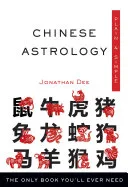
Chinese Astrology Plain & Simple
 81
81

Chinese Astrology Plain & Simple
Jonathan Dee’s "Chinese Astrology Plain & Simple" succeeds admirably in its stated goal: demystifying a complex system for a Western audience. Its strength lies in its lucid explanations of the twelve animal signs and the elemental cycles, presenting them without the arcane jargon that often plagues esoteric texts. Dee manages to convey the essence of the system’s predictive and descriptive power effectively. The book’s primary limitation, however, is its brevity. While aiming for simplicity, it sometimes feels that deeper nuances of elemental interactions or the influence of the hour/month/day animal signs are glossed over too quickly. A particularly illuminating section discusses the inherent compatibility and conflict between signs, such as the traditional animosity between the Horse and the Rat, illustrating the practical application of the system in understanding relationships. Despite this, Dee provides a solid foundation. It’s a competent, if not exhaustive, introduction to a rich astrological tradition.
📝 Description
81
Jonathan Dee's 2017 book explains Chinese astrology's lunar calendar and twelve animal cycles.
Jonathan Dee's "Chinese Astrology Plain & Simple" introduces the lunar calendar system of Chinese astrology. Unlike Western astrology, it uses a twelve-year cycle of animals, each with distinct characteristics and elemental associations. The book breaks down these core principles, aiming for clarity for newcomers. It presents Chinese astrology not just as a predictive tool, but as a method for self-understanding and improving relationships.
This guide is for individuals seeking a clear introduction to the subject, especially those finding Western systems complex or wanting an alternative perspective. Readers interested in comparative mythology, cultural studies, or a new way to consider personality and fate will find it useful. It provides a solid foundation before tackling more advanced texts.
The book connects Chinese astrology to ancient Chinese philosophy and cosmology. It discusses the historical emergence of these systems, showing how the lunar calendar and animal traits became a framework for interpretation and prediction. Understanding this background highlights the tradition's enduring influence on East Asian culture.
Chinese astrology, with roots stretching back to ancient Chinese cosmology and philosophy, offers a cyclical view of time and human character. It is based on the lunisolar calendar and a sixty-year cycle composed of twelve animal signs and five elements. This system provides a framework for understanding personality traits, relationships, and potential life paths, differing significantly from the solar-focused Western zodiac. Dee's work positions this tradition within a broader context of cosmic understanding that has shaped East Asian culture for centuries.
💡 Why Read This Book?
• Learn to calculate your primary Chinese zodiac animal sign and understand its core traits, a system originating from ancient Chinese calendrical traditions. • Discover the five elemental phases (Wood, Fire, Earth, Metal, Water) and how they interact with the animal signs to create a more personalized astrological profile. • Gain insight into the compatibility dynamics between the twelve animal signs, offering a unique framework for understanding relationships that has been culturally significant for centuries.
⭐ Reader Reviews
Honest opinions from readers who have explored this book.
❓ Frequently Asked Questions
When was Chinese Astrology Plain & Simple first published?
Jonathan Dee's "Chinese Astrology Plain & Simple" was first published on January 1, 2017. This edition aims to provide an accessible introduction to the ancient Chinese astrological system for contemporary readers.
What is the main difference between Chinese and Western astrology?
Western astrology is primarily based on the sun's position relative to constellations, following a solar calendar. Chinese astrology is based on a lunar calendar and a 12-year cycle of animals, incorporating elements and Yin/Yang principles.
How does the Chinese zodiac determine personality traits?
Each of the twelve animal signs (Rat, Ox, Tiger, etc.) is associated with a specific set of personality characteristics that are believed to influence individuals born in that particular year.
What are the five elements in Chinese astrology?
The five elements are Wood, Fire, Earth, Metal, and Water. They are integral to Chinese cosmology and interact with the animal signs to create a more detailed astrological profile, influencing fortune and character.
Can I use this book to understand compatibility with others?
Yes, "Chinese Astrology Plain & Simple" provides basic insights into the compatibility and potential conflicts between the twelve animal signs, offering a framework for understanding relationships.
Is Chinese astrology only about the 12 animal signs?
While the 12 animal signs are central, the system is more complex, incorporating the five elements, Yin and Yang, and the influence of the month, day, and even hour of birth, which Dee explains.
🔮 Key Themes & Symbolism
The Twelve Animal Signs
The core of Chinese astrology lies in its 12-year cycle, with each year dominated by an animal: Rat, Ox, Tiger, Rabbit, Dragon, Snake, Horse, Goat, Monkey, Rooster, Dog, and Pig. Dee details the distinct personality traits, strengths, and weaknesses associated with each sign. Understanding your birth year animal is presented as the first step in unlocking self-awareness, revealing inherent tendencies and life paths influenced by this ancient cyclical system.
Elemental Interactions
Beyond the animals, Chinese astrology incorporates the five elements: Wood, Fire, Earth, Metal, and Water. These elements are not static but interact in cycles of creation and destruction, profoundly influencing the characteristics of each animal sign and the events of a given year. Dee explains how these elemental energies, alongside Yin and Yang principles, add layers of complexity and nuance to an individual's astrological profile.
Lunar Calendar Basis
Unlike Western astrology's solar focus, Chinese astrology is fundamentally tied to the lunisolar calendar. The start of the Chinese New Year, which varies each year according to the moon's phases (typically falling between late January and mid-February), marks the transition between animal signs. This lunar foundation underscores the cyclical and naturalistic underpinnings of the system.
Self-Knowledge and Relationships
Dee positions Chinese astrology not merely as a predictive tool but as a profound method for self-understanding and improving interpersonal relationships. By mapping the inherent compatibility and conflicts between the twelve animal signs, the book suggests pathways to harmony and effective communication, viewing astrological knowledge as a practical guide to navigating social dynamics.
💬 Memorable Quotes
Direct passages from the work, attributed to the author.
“The twelve animals represent archetypes of human experience.”
— This interpretation suggests that the characteristics assigned to each zodiac animal are not arbitrary but reflect fundamental patterns of behavior and personality found across humanity, making the system a symbolic map of the self.
“Compatibility between signs is rooted in their inherent natures.”
— This idea emphasizes that the relationships between the twelve animals are not random but arise from their fundamental qualities, explaining why certain pairings are traditionally considered harmonious or discordant.
“The lunar year provides a distinct rhythm to destiny.”
— This concept underscores the importance of the lunar calendar in Chinese astrology, suggesting that the moon's cycles and the annual animal transitions impose a unique temporal structure on individual destinies.
“Each animal sign offers a unique perspective on life's challenges.”
— This interpretation frames the zodiac animals as lenses through which to view the world and its difficulties, implying that each sign possesses distinct coping mechanisms and approaches to problem-solving.
💡 Key Ideas
Editorial paraphrase of the work's core concepts — not direct quotes.
Understanding elemental cycles reveals the ebb and flow of fortune.
This paraphrased concept highlights the dynamic nature of Chinese astrology, where the interplay of elements like Wood and Fire is seen to influence periods of growth, challenge, or stability in one's life.
🌙 Esoteric Significance
Tradition
Chinese astrology is a core component of Chinese metaphysics, deeply interwoven with Taoist philosophy, Traditional Chinese Medicine (TCM), and cosmology. It operates within a framework that views the cosmos as a dynamic interplay of forces like Yin and Yang and the Five Elements (Wu Xing). Unlike Hermetic or Kabbalistic traditions that often focus on divine emanations or angelic hierarchies, Chinese astrology emphasizes the cyclical, naturalistic forces that govern the universe and human life, seeing humanity as an integral part of this cosmic order.
Symbolism
Key symbols include the twelve animals (e.g., the Dragon symbolizing power and good fortune, the Snake representing wisdom and intuition) and the Five Elements (Wood for growth, Fire for passion, Earth for stability, Metal for structure, Water for flow). These are not merely decorative but represent fundamental energies and archetypes. The concept of 'Qi' (life force) is also implicit, as the successful flow and balance of these energies are crucial for well-being according to the system.
Modern Relevance
Contemporary practitioners of Feng Shui and TCM often integrate principles of Chinese astrology into their work, using birth charts to inform environmental or health recommendations. Thinkers exploring comparative spirituality and ancient wisdom traditions also draw upon its cyclical worldview. Furthermore, in an era seeking holistic approaches to self-understanding, the system's emphasis on interconnectedness between individuals, time, and the natural world continues to resonate.
👥 Who Should Read This Book
['• Individuals curious about alternative astrological systems beyond the Western zodiac, seeking a comprehensive yet straightforward introduction to the Chinese animal signs and elements.', '• Students of comparative mythology and world cultures interested in understanding the historical and philosophical underpinnings of East Asian esoteric traditions.', '• Those looking for practical tools for self-reflection and relationship analysis, grounded in an ancient system that emphasizes cyclical patterns and elemental balance.']
📜 Historical Context
Published in 2017, Jonathan Dee's "Chinese Astrology Plain & Simple" entered a landscape where Western astrology, particularly the tropical zodiac, held greater popular recognition in many parts of the world. Its emergence reflects a continued global interest in diverse divinatory systems, moving beyond the dominance of Hellenistic traditions. While Chinese astrology has been a pillar of East Asian culture for millennia, its systematic explanation in English, particularly for a lay audience, has evolved over time. Books like Dee's stand in a lineage tracing back to early 20th-century attempts to translate and disseminate Eastern esoteric knowledge, often influenced by Theosophical or anthropological interests. Contemporaries like Martin Palmer, who also wrote on Chinese philosophy and cosmology, represent a broader scholarly engagement with these traditions. Dee's work, by contrast, focuses on the practical, accessible application of the astrological system, aiming for clarity rather than deep historical or philosophical exegesis, thereby serving a different but equally valid niche.
📔 Journal Prompts
The twelve animal archetypes: Which sign's core traits most closely mirror your own perceived strengths or weaknesses?
Elemental influence: How might the interaction of your birth year's element (e.g., Wood) with other elements shape your current life challenges?
Lunar cycles and destiny: Reflect on how a system tied to the moon's phases might offer a different perspective on personal timing than a solar one.
Inter-animal dynamics: Consider a relationship where the compatibility or conflict between the animal signs might explain underlying tensions or harmonies.
Self-knowledge via signs: How does understanding the inherent nature of your animal sign provide new insights into your motivations?
🗂️ Glossary
Animal Signs
The twelve zodiac animals (Rat, Ox, Tiger, Rabbit, Dragon, Snake, Horse, Goat, Monkey, Rooster, Dog, Pig) that form the basis of the 12-year cycle in Chinese astrology, each associated with distinct personality traits.
Five Elements (Wu Xing)
The fundamental forces of Wood, Fire, Earth, Metal, and Water that are believed to interact cyclically, influencing the characteristics of the animal signs and the flow of energy in the universe.
Yin and Yang
The complementary and opposing forces present in all things, representing concepts like feminine/masculine, passive/active, darkness/light, which are crucial for understanding balance in Chinese cosmology.
Lunar Calendar
A calendar system based on the cycles of the moon. Chinese astrology uses a lunisolar calendar, where the start of the year shifts annually, typically falling between late January and mid-February.
Chinese New Year
The festival marking the beginning of a new year according to the lunisolar calendar, signifying the transition from one animal sign to the next in the Chinese zodiac cycle.
Compatibility
The degree of harmony or potential conflict between different animal signs, often based on their inherent natures and elemental interactions, used to analyze relationships.
Qi (Chi)
The vital life force or energy that flows through all things. While not always explicitly defined in introductory texts, its balanced circulation is fundamental to health and fortune in Chinese metaphysics.